Creative Biolabs provides comprehensive services to monitor gut microbiota, including isolation/cultivation, pathogen identification, gene editing, and monitoring host responses via multi-omics.
Learn More →Longevity Gene related Mammalian Target of Rapamycin Complex 1 (mTORC1) Activity Modulation Service
The goal of longevity research is to achieve a state of dynamic, regulated cellular homeostasis—the exact low steady-state mTORC1 activity profile that has evolved in long-lived species. Our service at Creative Biolabs is specifically engineered to deliver modulators that achieve this critical balance, directly circumventing the severe metabolic and immune side effects, such as glucose intolerance and potential oncogenesis, associated with blunt, non-specific pathway inhibitors.
Background What We Can Offer Workflow Publication Why Choose Us FAQs Customer Review Related Services Contact Us
Introduction of Longevity Gene Related mTORC1 Activity Modulation
mTORC1 is the central nutrient sensor linking metabolism to aging, with hyperactivity accelerating senescence. While targeted inhibition via caloric restriction (CR) mimetics extends lifespan across diverse models, chronic suppression introduces severe metabolic and immunological risks. Our service offers a paradigm shift: targeting the gene regulatory networks (GRNs) to achieve an evolutionarily optimized low steady-state mTORC1 activity. This precision method ensures the pro-longevity benefits of autophagy are gained without the systemic toxicity of blunt, static pathway blockade, making it the most credible path for next-generation therapeutics.
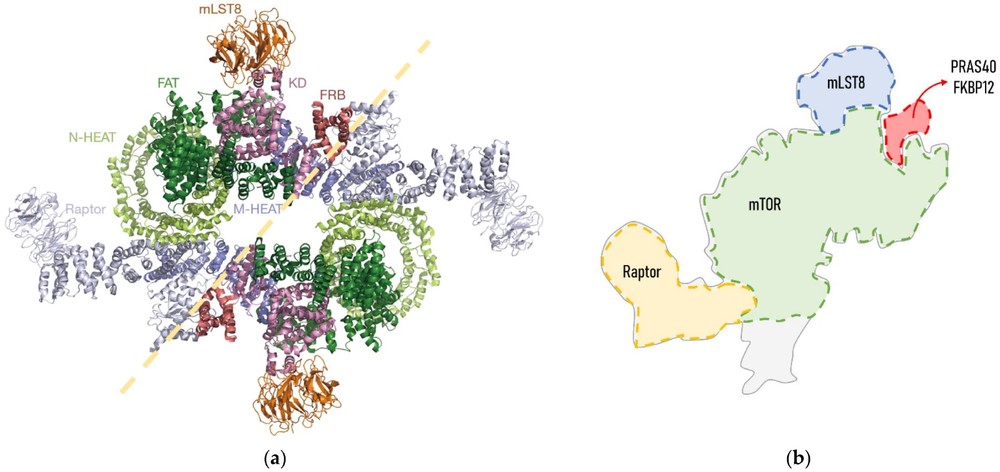 Fig.1 Structural insights into human mTORC1. 1, 3
Specific Solutions and Deliverables for Superior Therapeutic Development
Dynamic Profile Validation
We move beyond static assays to rigorously validate candidates that establish an evolutionarily optimized, low steady-state activity (quantified by mTORSer2448/mTOR ratio), ensuring true modulation, not just static inhibition.
Integrated Sex-Dependent Screening
We address the preclinical hurdle of sex-dependent toxicity and efficacy by incorporating mandatory pharmacological screening for both male and female models, ensuring greater safety predictability.
Selective Target Identification
We avoid profound metabolic dysfunction by focusing on compounds that act on upstream regulatory nodes, resulting in a more subtle and controllable mechanism of action than simple core inhibition.
Molecular Efficacy Confirmation through GRN Profiling
Our validation includes GRN profiling (transcriptomic/proteomic data) to confirm the upregulation of conserved pro-longevity gene signatures (FOXO family, sirtuins), providing molecular evidence of mTORC1 modulation efficacy.
To discuss how our dynamic profile validation can transform your therapeutic candidate, inquire with our specialist team today.
Workflow
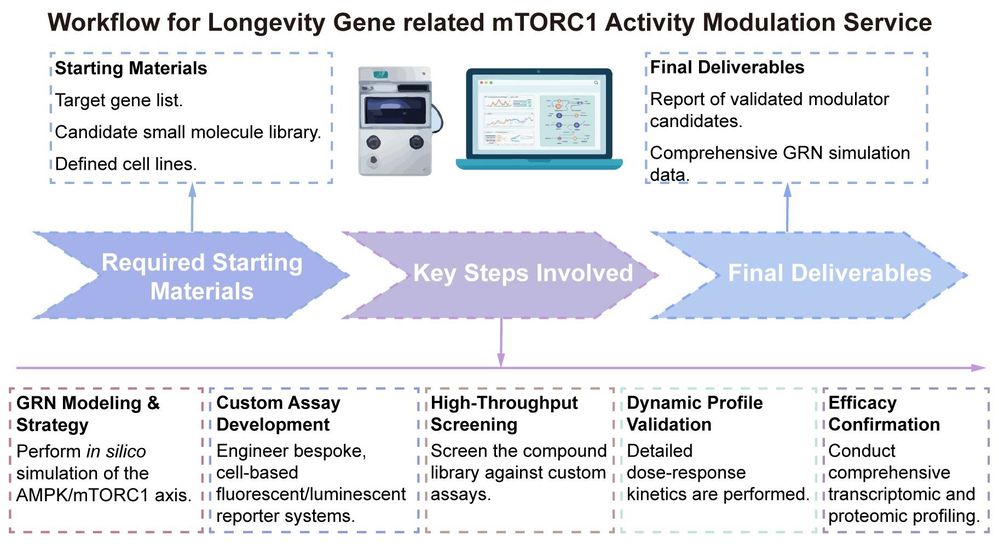
This comprehensive workflow is designed for transparency and is structured as a clear, phased process to move efficiently from concept to validated lead compound.
Publication
Rapamycin, a potent mTOR inhibitor, is a promising geroscience candidate for extending healthspan, despite its established roles as an immunosuppressant. While robust preclinical data show efficacy in model organisms and in monogenic disorders like tuberous sclerosis complex, its translation to polygenic aging is challenged by metabolic side effects, poor CNS penetration, and a lack of standardized biomarkers. This review highlights the dual promise and perils, arguing that successful application requires refined dosing regimens, rigorous clinical validation, and careful consideration of the risk-benefit ratio for otherwise healthy individuals using it off-label.
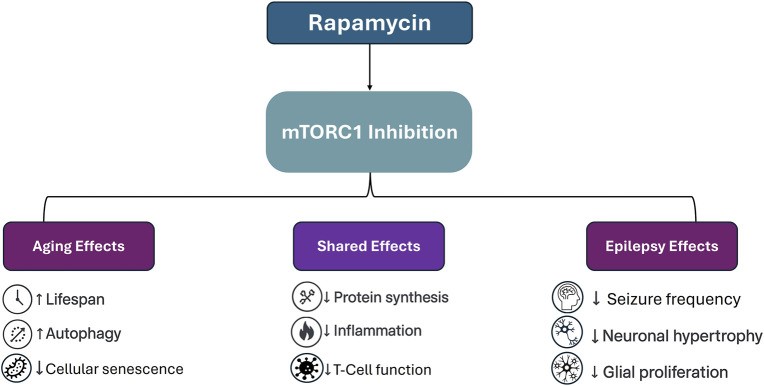 Fig.2 mTORC1 inhibition by rapamycin: From geroprotection to epilepsy therapy. 2, 3
Why Choose Us?
Creative Biolabs leads the shift from blunt pathway inhibition to sophisticated, dynamic modulation, specializing in GRNs to mimic nature's blueprint for long life. Our evolutionary expertise utilizes comparative biology principles to engineer a naturally programmed low steady-state mTORC1 activity, which directly mitigates serious clinical risks associated with non-specific, high-dose inhibition. We utilize proprietary dynamic, time-resolved assays (time-lapse kinetics) to measure the temporal dynamics of modulators, ensuring they produce the stable-state or oscillatory behavior necessary for true biological resilience and effective CR mimetic action.
See the data difference a dynamic assay makes—contact us for a detailed assay protocol demonstration and to discuss how time-resolved screening accelerates your project.
FAQs
Q1: We are concerned about the known sex-dependent toxicity of some mTORC1 inhibitors. How do you address this?
A1: Our dynamic profile validation includes mandatory sex-dependent pharmacological response screening. We generate data for both male and female models to identify optimized, safe administration patterns right from the lead identification stage.
Q2: How can you ensure that chronic modulation won't inadvertently promote cancer risk through enhanced autophagy?
A2: We mitigate oncogenesis risk by engineering an evolutionarily optimal low steady-state mTORC1 activity. Pathway crosstalk screening selectively enhances repair without promoting tumor survival.
Q3: Beyond mTORC1, are you able to screen for effects on other longevity pathways like AMPK?
A3: Our custom reporter systems track the mTORC1 to AMPK/autophagy axis ratio, ensuring your candidate stabilizes the entire energy-sensing GRN for true healthspan extension.
Customer Review
-
Exceptional Dynamic Control
Using Creative Biolabs' service in our research has significantly facilitated the identification of modulators that maintain a low basal activity while preserving homeostatic stress response. This contrasts sharply with pan-inhibitors, which introduced unacceptable systemic toxicity in our in vivo models. - Ja***on F -
Superior Computational Modeling
Using Creative Biolabs' service in our research has significantly improved/facilitated the accurate prediction of the system's kinetic resilience before any wet-lab work began. The GRN simulation data gave us high confidence in selecting targets like PRAS40 over more common approaches. – R***d P
Related Services
Creative Biolabs offers complementary services that are critical for achieving full pathway control and robust validation, ensuring your therapeutic project meets all necessary efficacy and safety criteria.
Targeted Monitoring of Gut Microbiota
Toxicity Assessment by Quantification of Electrolyte
Creative Biolabs provides comprehensive electrolyte quantification services for toxicity assessment. We use advanced methods like MS and ISE to monitor treatment-induced toxic effects.
Learn More →How to Contact Creative Biolabs
By shifting focus from static inhibition to the engineering of an evolutionarily proven low steady-state activity profile, we enable the development of safer, more effective CR mimetics. We provide the comprehensive GRN modeling, dynamic assays, and sex-dependent validation necessary to de-risk your lead candidates and accelerate your therapeutic path to market.
Don't let the liabilities of first-generation inhibitors derail your project. Partner with Creative Biolabs to achieve dynamic homeostasis and unlock true healthspan extension.
References
- Mota-Martorell, Natalia, Mariona Jové, and Reinald Pamplona. "mTOR Complex 1 Content and Regulation Is Adapted to Animal Longevity." International Journal of Molecular Sciences 23.15 (2022). https://doi.org/10.3390/ijms23158747
- Roark, Kelley M., and Philip H. Iffland. "Rapamycin for longevity: the pros, the cons, and future perspectives." Frontiers in Aging 6 (2025). https://doi.org/10.3389/fragi.2025.1628187
- Distributed under Open Access license CC BY 4.0, without modification.
 Download our brochure
Loading case studies...
Online Inquiry