Tumor tissues are dissociated into individual cell suspensions. Both tumor cells and PBMCs are then stained with a comprehensive panel of fluorescently labeled antibodies targeting key immune cell markers. The outcome is a ready-to-analyze cell suspension with specific immune populations labeled.
Immunophenotyping based Pancreatic Cancer Recognition Service
Background Service Workflow Advantages FAQs Related Sections Contact Us
Are you currently facing complex clinical trials or challenges in developing targeted therapies for pancreatic cancer? Creative Biolabs' Immunophenotyping based Pancreatic Cancer Recognition Service helps you streamline clinical trial processes and identify novel therapeutic targets through advanced flow cytometry. Our service provides a comprehensive understanding of the tumor immune microenvironment, accelerating the development of effective, personalized treatment strategies.
Unlocking Pancreatic Cancer Immunotherapy
Pancreatic cancer remains a highly challenging malignancy with a poor prognosis, primarily due to its complex and immunosuppressive tumor microenvironment (TME). Understanding the cellular composition of the TME is critical for developing effective immunotherapies. Published data, such as a study identifying four distinct immune subtypes (IS1-IS4) in pancreatic cancer, highlight the variability and prognostic significance of immune cell infiltration. Precisely recognizing these immunophenotypes is therefore essential for stratifying patients, predicting treatment response, and unlocking new therapeutic avenues in gene therapy and immunotherapy development.
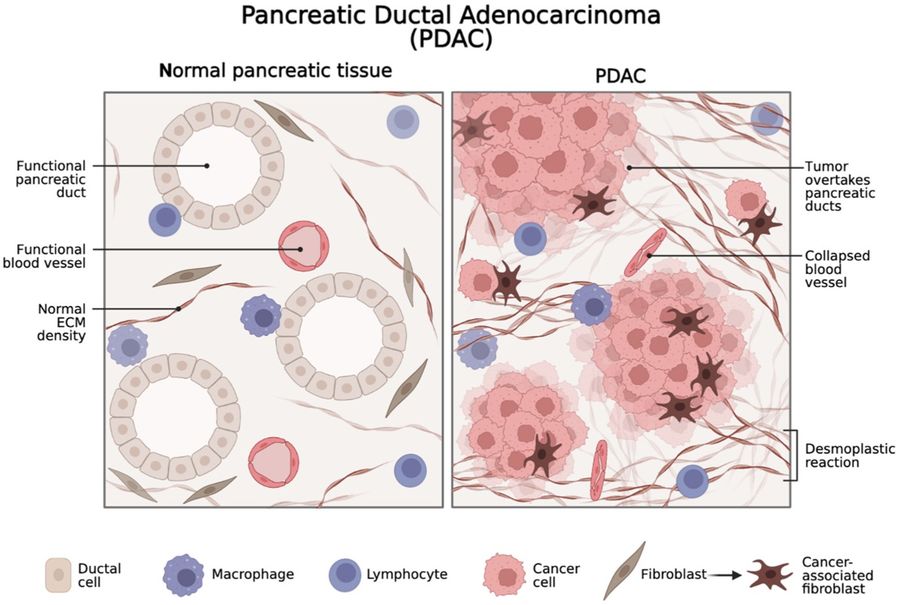 Fig.1 The pancreatic ductal adenocarcinoma (PDAC) TME.1
Immunophenotyping based Pancreatic Cancer Recognition Service at Creative Biolabs
Creative Biolabs offers an immunophenotyping based pancreatic cancer recognition service that provides a clear and actionable path to understanding the immune landscape of pancreatic cancer. we begin by processing your provided tissue or cell samples, followed by multi-color flow cytometry or individual cell analysis to generate high-dimensional data. This process, typically completed within 4 to 8 weeks depending on project scope, yields a comprehensive report that includes detailed breakdowns of immune cell populations, graphical representations, and a clear immunophenotype classification to guide your research and clinical decisions.
Workflow
Step 1: Sample Preparation and Staining
Step 2: Multi-Color Flow Cytometry or Individual Cell Analysis
The prepared samples are run through our state-of-the-art flow cytometry to acquire high-dimensional data on cell populations. This stage generates raw data files detailing the expression of multiple markers on millions of individual cells.
Step 3: Data Processing and Analysis
The raw data is processed using advanced bioinformatics pipelines to gate and identify specific immune cell populations, such as T cells, B cells, macrophages, and natural killer (NK) cells. The outcome is a detailed breakdown of the immune cell composition and an immunophenotype profile for each sample.
Step 4: Immunophenotype Classification
Using our proprietary algorithms, we classify the samples into distinct immune subtypes based on their comprehensive immunophenotype profiles. This step provides a clear classification that can be correlated with clinical outcomes or treatment response.
Step 5: Report Generation and Interpretation
A final, comprehensive report is compiled. It includes the raw data, analyzed population percentages, graphical representations, and a detailed interpretation of the findings. The outcome is a clear understanding of the immune landscape of your samples.
Our Service Highlights
Detailed & Quantitative Analysis
We provide a highly detailed, quantitative, and reproducible analysis of the pancreatic tumor immune microenvironment.
Accurate Patient Stratification
The service enables accurate patient stratification, which is critical for clinical trials and personalized medicine.

Accelerated Biomarker Discovery
By providing a deep understanding of the immune cells at play, our service helps to accelerate the discovery of novel biomarkers.
Supports Personalized Immunotherapies
The insights gained support the development of effective, personalized immunotherapies tailored to specific immune profiles.
FAQs
Q1: What type of samples can be analyzed using this service?
A1: We can process a variety of sample types, including fresh and frozen tumor tissues, as well as peripheral blood mononuclear cells (PBMCs). Our experts can advise you on the best sample preparation methods to ensure optimal results.
Q2: Can you customize the antibody panel for my specific research needs?
A2: Our service is highly flexible. We work closely with you to design a custom antibody panel that targets the specific immune cell markers and populations most relevant to your research questions.
Q3: How does this service help in drug discovery and development?
A3: By providing a deep understanding of the tumor immune microenvironment, our service helps you identify novel biomarkers, predict patient response to immunotherapy, and stratify patients for clinical trials. This accelerates the drug discovery process and increases the chances of developing successful therapies.
Q4: How does this service compare to standard immunohistochemistry (IHC) analysis?
A4: While IHC provides valuable spatial information, our immunophenotyping service offers a quantitative, high-dimensional analysis of a larger number of markers on millions of individual cells simultaneously, providing a far more detailed and comprehensive profile of the immune cell landscape.
Related Sections
Why Choose Creative Biolabs
Creative Biolabs' immunophenotyping based pancreatic cancer recognition service offers a robust and comprehensive solution for researchers and biopharmaceutical companies seeking to understand the complex tumor immune microenvironment. By leveraging our advanced platforms and expert analysis, you can accelerate your projects, identify new therapeutic targets, and drive the development of more effective treatments for pancreatic cancer. If you have any questions regarding our services, please don't hesitate to contact us.
Reference
- Argentiero, Antonella et al. "Decoding the Intricate Landscape of Pancreatic Cancer: Insights into Tumor Biology, Microenvironment, and Therapeutic Interventions." Cancers vol. 16,13 2438. 2 Jul. 2024, doi:10.3390/cancers16132438 Distributed under Open Access License CC BY 4.0, without modification.
 Download our brochure
Loading case studies...
Online Inquiry