Immunophenotyping based Stomach Cancer Recognition Service
Are you currently facing challenges in accurately stratifying stomach cancer patients or identifying effective therapeutic targets? Creative Biolabs' immunophenotyping based stomach cancer recognition service helps you accelerate precise cancer recognition and guide personalized treatment strategies through advanced, multi-parameter immune profiling technologies. Our service delivers deep insights into the tumor microenvironment, enabling more informed research and clinical decisions.
The Key Role for Immunophenotyping in Stomach Cancer
Stomach cancer (GAC) remains a significant global health burden with unsatisfactory patient outcomes, largely due to its heterogeneity and limitations of conventional diagnostics like inconsistent PD-L1 expression for immunotherapy prediction. Comprehensive immunophenotyping offers a critical solution by providing an in-depth understanding of the tumor immune microenvironment (TIME). Studies show distinct immune profiles, such as "inflamed" and "non-inflamed" tumor classes, correlate with specific mutations, clinical outcomes, and immunotherapy responses. The complex roles of immune cells, including regulatory T cells, further necessitate detailed analysis. Thus, developing advanced immunophenotyping services is crucial for identifying robust predictive biomarkers, effectively stratifying patients, and paving the way for personalized, efficacious immunotherapeutic strategies.
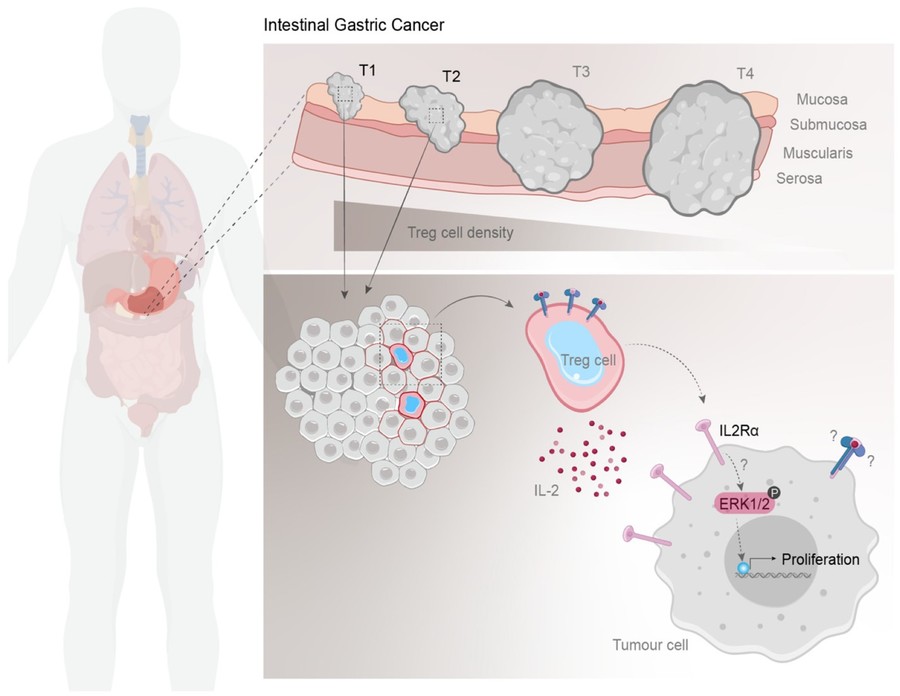 Fig.1 Diagram illustrating the distribution of regulatory T cells in gastric cancer of the intestinal type.1
Immunophenotyping based Stomach Cancer Recognition Service at Creative Biolabs
Creative Biolabs' immunophenotyping based stomach cancer recognition service provides comprehensive solutions for understanding the intricate immune landscape of gastric tumors, crucial for advancing research and clinical applications. Our service delivers precise immune cell profiling, identification of novel biomarkers, and insights into tumor-immune interactions, empowering you to stratify patients more accurately, discover new therapeutic targets, and optimize treatment strategies.
Workflow
Sample Processing & Preparation
Initial processing of client-provided samples, including tissue dissociation or sectioning, followed by rigorous quality control to ensure optimal integrity for analysis.
Immune Cell Profiling & Staining
Application of advanced immunophenotyping techniques, such as multi-color flow cytometry, or multiplex immunohistochemistry (mIHC)/immunofluorescence (mIF), using optimized antibody panels to identify and quantify diverse immune cell populations and their activation states within the tumor microenvironment and peripheral blood.
Data Acquisition & Bioinformatic Analysis
High-throughput data collection from stained samples using cutting-edge instrumentation. Subsequent bioinformatics analysis involves sophisticated algorithms for data normalization, dimensionality reduction, clustering, and statistical comparisons to reveal distinct immunophenotypes and significant biological differences.
Biomarker Correlation & Interpretation
Integration of immunophenotyping data with provided clinical information (e.g., patient response, survival, mutation status) to identify and validate potential prognostic or predictive immune-related biomarkers. Our experts provide in-depth biological interpretation of the findings.
Our Service Highlights
Enhanced Precision
Provides granular insights into the tumor immune microenvironment, surpassing conventional methods.
Personalized Strategies
Facilitates the identification of patient subgroups most likely to benefit from specific immunotherapies.
Accelerated Discovery
Streamlines the process of identifying novel prognostic and predictive biomarkers.

Robust Data
Generates high-quality, comprehensive data sets for confident decision-making.
Optimized Outcomes
Supports the development of more effective and targeted stomach cancer treatments.
Customer Reviews
-
Enhanced Patient Stratification: Using Creative Biolabs' Immunophenotyping based Stomach Cancer Recognition Service in our clinical research has significantly improved our ability to stratify gastric cancer patients for targeted immunotherapies. The detailed immune cell profiling helped us identify specific responder populations, which was crucial for our trial design.
– July 2024, Dr. L***a S.
-
Unprecedented Insights: Creative Biolabs' service provided unprecedented insights into the tumor microenvironment of our stomach cancer models. The comprehensive analysis of immune cell subsets and their spatial distribution revealed novel therapeutic targets that we are now actively pursuing. Their expertise in multiplex immunofluorescence was particularly valuable.
– June 2024, Prof. J***n D.
-
Reliable Biomarker Discovery: We struggled to find reliable predictive biomarkers for immunotherapy in gastric cancer until we engaged Creative Biolabs. Their immunophenotyping based stomach cancer recognition service not only identified a robust gene signature but also validated its prognostic value using Published Data, giving us confidence in our downstream drug development efforts.
– May 2024, Dr. M***l P.
FAQs
Q1: What types of samples can I submit for this service?
A1: We accept a variety of sample types to best suit your research needs, including Formalin-Fixed Paraffin-Embedded (FFPE) tissue blocks, fresh frozen tissue samples, and Peripheral Blood Mononuclear Cells (PBMCs). Comprehensive clinical data is also highly recommended to maximize the insights derived from our analysis. If you have a different sample type, please reach out to our team to discuss its suitability.
Q2: Can this service help identify patients who will respond to specific immunotherapies?
A2: Absolutely. A core strength of our service is its ability to provide detailed immune profiles that can be correlated with patient response data. By analyzing the composition and functional state of immune cells within the tumor and surrounding tissues, we can help identify specific immune signatures or biomarkers that are predictive of response to various immunotherapeutic agents, assisting in patient stratification for clinical trials or treatment decisions.
Q3: What precautions should I take when preparing and shipping my samples?
A3: Proper sample handling is crucial for accurate results. For FFPE blocks, ensure they are correctly fixed and stored. For fresh frozen tissues, rapid freezing and storage at -80°C are essential. PBMCs should be isolated and cryopreserved according to established protocols. We provide detailed sample submission guidelines upon project initiation to ensure optimal sample integrity during transit. Please contact us for specific instructions tailored to your sample type.
Q4: What if my project requires a customized immune profiling panel or specific data analysis?
A4: We understand that every research project is unique. Our service is highly flexible and can be customized to meet your specific requirements. Whether you need a bespoke antibody panel, targeted analysis of particular immune cell subsets, or specialized bioinformatics approaches, our expert team will work closely with you to design a tailored solution. Don't hesitate to inquire about your specific needs.
Related Sections
Why Choose Creative Biolabs
Creative Biolabs' immunophenotyping based stomach cancer recognition service is your premier partner for unraveling the complexities of gastric cancer immunology. By providing deep, actionable insights into the tumor microenvironment, we empower researchers and pharmaceutical companies to develop more effective diagnostic tools and personalized therapeutic strategies, ultimately improving patient outcomes. Ready to advance your stomach cancer research with precise immunophenotyping? Contact us for more information and to discuss your project.
Reference
- Rocha, Sara et al. "Immunophenotype of Gastric Tumors Unveils a Pleiotropic Role of Regulatory T Cells in Tumor Development." Cancers vol. 13,3 421. 23 Jan. 2021, doi:10.3390/cancers13030421. Distributed under Open Access License CC BY 4.0, without modification.
 Download our brochure