Anthocyanin Quantitative Analysis Service
Introduction of Anthocyanin
Are you currently facing challenges in precisely quantifying bioactive compounds, ensuring product authenticity, or optimizing the stability of natural ingredients? Creative Biolabs' anthocyanin quantitative analysis service helps you achieve accurate characterization and quality control of anthocyanin-rich products through advanced chromatographic and spectroscopic analytical technologies. Anthocyanins are a category of natural pigments that are soluble in water, commonly found in various plants, and classified within the flavonoid family. They typically display red, purple, or blue colors, giving many fruits and flowers their vibrant hues. Anthocyanins possess various bioactive properties, including antioxidant, anti-inflammatory, and cardiovascular protective effects, making them beneficial for health. Additionally, they are widely used as natural colorants in the food industry.
Anthocyanin Quantitative Analysis Service: Unlocking the Power of Bioactive Compounds for Your Success
Our anthocyanin quantitative analysis service delivers precise quantification, comprehensive purity assessment, and detailed identification of specific anthocyanin compounds within your samples. We provide critical data for quality control, product development, and research validation, ensuring your products meet the highest standards of efficacy and safety. Creative Biolabs provides a versatile range of anthocyanin quantitative analysis services tailored to meet diverse research and industry needs:
-
Targeted quantitative analysis of anthocyanins
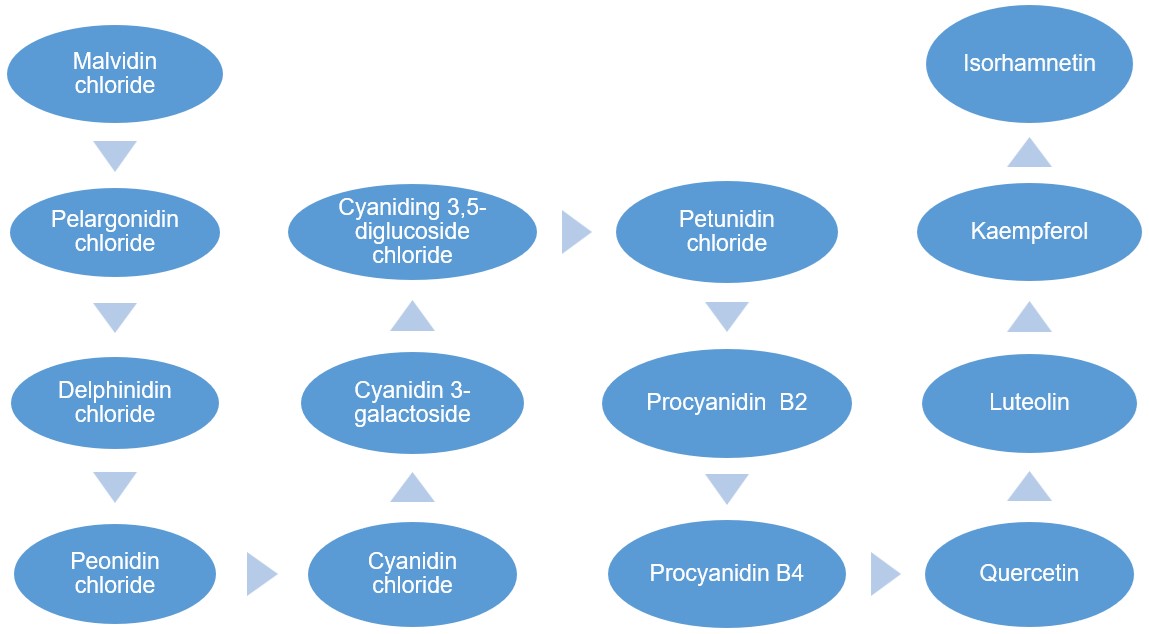
The targeted quantitative analysis package for anthocyanins includes a variety of important anthocyanins and their derivatives, such as malvidin chloride, pelargonidin chloride, and peonidin. These compounds are ubiquitous in plants and give flowers and fruits their bright colors. Liquid chromatography-mass spectrometry (LC-MS/MS) technology can achieve highly sensitive and specific quantitative analysis of these target compounds. These targeted analyses can not only help understand the anthocyanin content in the sample but also reveal their role in plant metabolism and their potential benefits to human health.
-
Non-targeted qualitative analysis of anthocyanins
In addition to targeted quantitative analysis, the non-targeted qualitative analysis package for anthocyanins covers more anthocyanin structural types, including a variety of unidentified derivatives, such as cyanidin-3-O-(6''-acetyl) glucoside. The complexity of these compounds makes non-targeted analysis particularly important because it can discover unknown components that may be present in the sample. This method is usually combined with high-resolution MS technology to comprehensively capture the various anthocyanins in the sample, thereby helping researchers gain a deeper understanding of their biological activity and their relationship with the plant's ecological environment.
Cyanidin
-
Cyanidin-3,5-O-diglucoside
-
Cyanidin-3-(6-malonyl)glucoside
-
Cyanidin-3-O-(6''-acetyl) glucoside
-
Cyanidin-3-O-(6''-feruloylsophoroside)-5-O-glucoside
-
Cyanidin-3-O-arabinoside
-
Cyanidin-3-O-galactoside
-
Cyanidin-3-O-glucoside
-
Cyanidin-3-O-sambubioside
-
Cyanidin-3-O-sophoroside-5-O-glucoside
Pelargonidin
-
Pelargonidin-3,5-O-diglucoside
-
Pelargonidin-3-O-galactoside
-
Pelargonidin-3-O-glucoside
-
Pelargonidin-3-O-rutinoside
-
Pelargonidin-3-O-sophoroside-5-O-glucoside
Delphinidin
-
Delphinidin-3,5-O-diglucoside
-
Delphinidin-3-O-(6-O-acetyl)-glucoside
-
Delphinidin-3-O-[6''-O-(p-coumaroyl)glucoside]-7-O-glucoside
-
Delphinidin-3-O-arabinoside
-
Delphinidin-3-O-galactoside
-
Delphinidin-3-O-glucoside
-
Delphinidin-3-O-rhamnoside
-
Delphinidin-3-O-rutinoside
-
Delphinidin-3-O-sambubioside
-
Delphinidin-3-O-sambubioside-5-O-glucoside
Peonidin
-
Peonidin-3,5-O-diglucoside
-
Peonidin-3-O-(6''-acetyl)galactoside
-
Peonidin-3-O-(6''-acetyl)glucoside
-
Peonidin-3-O-(6''-feruloylsophoroside)-5-O-glucoside
-
Peonidin-3-O-arabinoside
-
Peonidin-3-O-galactoside
-
Peonidin-3-O-glucoside
-
Peonidin-3-O-sophoroside-5-O-glucoside
Petunidin
-
Petunidin-3,5-O-diglucoside
-
Petunidin-3-O-(6''-acetyl) galactoside
-
Petunidin-3-O-(6''-malonyl)glucoside
-
Petunidin-3-O-arabinoside
-
Petunidin-3-O-glucoside
-
Petunidin-3-O-rutinoside-5-O-glucoside
-
Petunidin-3-O-rutinoside(feruloyl)-5-O-glucoside
Malvidin
-
Malvidin-3,5-O-diglucoside
-
Malvidin-3-O-(6''-acetyl)galactoside
-
Malvidin-3-O-(6''-acetyl)glucoside
-
Malvidin-3-O-(6''-malonyl)glucoside
-
Malvidin-3-O-(6-O-p-coumaryl)-O-glucoside
-
Malvidin-3-O-arabinoside
-
Malvidin-3-O-galactoside
-
Malvidin-3-O-glucoside
-
Malvidin-3-O-rutinoside(feruloyl)-5-O-glucoside
-
Malvidin-3-O-rutinoside-5-O-glucoside
Creative Biolabs is your trusted partner for precise and reliable anthocyanin quantitative analysis. Our advanced analytical capabilities, combined with our deep scientific expertise, empower you to confidently characterize your natural products, accelerate your research, and ensure the quality of your market-ready solutions. In addition, we also provide quantitative analysis services for various Nutritional Research related Compounds such as Carotenoids, Catechin, Alkaloids, Flavonoids, etc. Please contact us to learn more about our content if you are looking for the best compound analysis solution.
Published Data
This article provides a comprehensive overview of the analysis techniques employed for detecting and quantifying anthocyanins, vital health-promoting pigments, within various food products. It meticulously compares two primary categories of methods: quantitative and qualitative. Quantitative approaches, exemplified by high-performance liquid chromatography (HPLC) and MS, offer precise identification and measurement of individual anthocyanin compounds. While these methods deliver highly detailed compositional insights, they necessitate the destruction of the sample, which can be a drawback for continuous quality control processes. In contrast, topical techniques, such as hyperspectral imaging and near-infrared spectroscopy (NIR), enable rapid, non-invasive analysis directly on the food sample without altering its integrity.
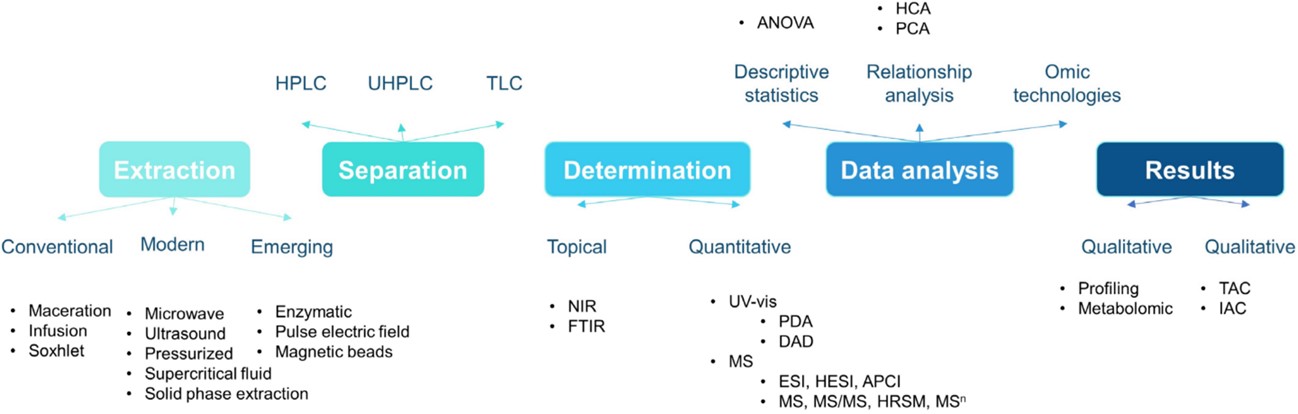 Fig.1 Anthocyanin analysis process in food.1
FAQs
Q1: What types of samples can Creative Biolabs analyze for anthocyanin content?
A1: We are equipped to analyze a wide range of sample matrices, including various plant extracts (e.g., fruit, berry, vegetable, flower), food and beverage products (e.g., juices, jams, wines, functional foods, supplements), and purified anthocyanin compounds. If you have a unique sample type, please contact us to discuss its suitability.
Q2: How does Creative Biolabs ensure the quality and integrity of the analytical data?
A2: Data quality is paramount at Creative Biolabs. We adhere to stringent standard operating procedures, utilize advanced data processing software, and conduct thorough data reviews by experienced scientists. Our instruments are regularly calibrated and maintained, and we provide comprehensive reports including chromatograms and method parameters for full transparency.
Customer Review
Exceptional Turnaround
"Creative Biolabs's service facilitated rapid quality control for our new functional food line. Their efficient analysis allowed us to quickly verify anthocyanin content, ensuring consistent product quality across batches." - Dr. M. Wil***s
Expert Insights
"The detailed reports and expert interpretation provided by Creative Biolabs were invaluable. They helped us understand the complex anthocyanin profile of our novel plant material, guiding our downstream formulation efforts with confidence." - Ms. N. Moo***e
Reference
-
Custodio-Mendoza, Jorge A., et al. "A Review of Quantitative and Topical Analysis of Anthocyanins in Food." Molecules 29.8 (2024): 1735. DOI: 10.3390/molecules29081735. Distributed under an Open Access license CC BY 4.0, without modification.
Related Services
For Research Use Only.