One-Stop Glycan Crystal & Glycoprotein Crystal Analysis Services
Professional Crystal Analysis Services: Transforming Complex Targets into Actionable Blueprints!
Are you currently facing complex carbohydrate heterogeneity, low-resolution crystal structures, and stalled lead optimization efforts? Our glycan and glycoprotein crystal analysis services help you de-risk drug development and accurately characterize molecular binding through integrated structural biology, advanced glycoengineering, and AI-driven computational modeling. Creative Biolabs' comprehensive service provides the definitive atomic-level structural coordinates and mechanistic insights necessary for rational drug and vaccine design. By overcoming glycan heterogeneity-the primary barrier to high-resolution structural data-we deliver a validated molecular blueprint for your target. Clients receive direct solutions for polymorph screening of raw materials, optimizing purification yields by identifying stable crystal forms, mitigating structural instability by resolving functional glycan-protein clashes, and designing potent, selective glycan mimetics or biologics based on confirmed binding interfaces.
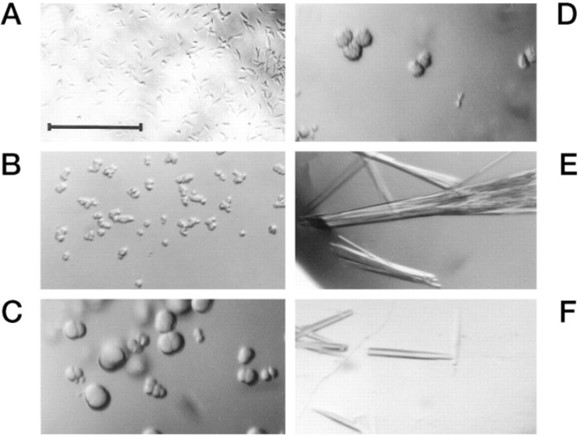 Fig.1 Different crystals of GP120 glycoprotein.1,3
Our workflow is a systematic and meticulous process designed for optimal results, ensuring clarity and traceability at every stage of structural analysis. Our process is a cohesive progression through five critical, integrated stages:
Glycan homogeneity engineering
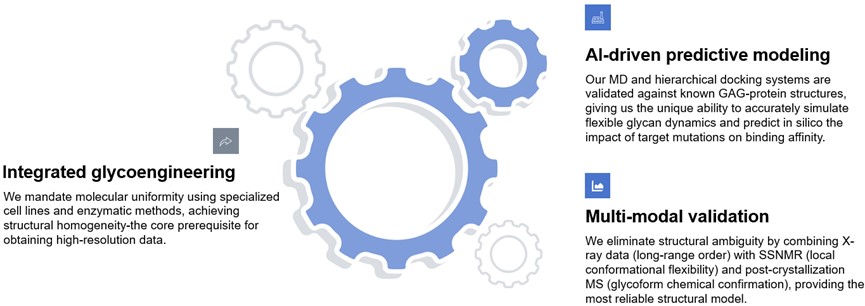
This step involves PTM site evaluation and strategic use of specialized expression systems or targeted enzymatic trimming. The expected outcome is a high-quality, monodisperse target molecule with a defined, uniform glycan structure suitable for crystallization.
Biophysical pre-validation & screening
We perform quantitative analysis of binding affinity and thermodynamics to confirm target activity and screen for optimal stabilizing ligands for co-crystallization. This delivers verified binding parameters and optimized co-crystallization conditions.
Crystallization & high-resolution data collection
We use high-throughput screening followed by advanced optimization techniques. This stage results in diffraction-quality crystals and high-fidelity raw X-ray data sets.
Multi-modal structural determination
Our expert team performs phasing, atomic model building, and meticulous placement of the protein and glycan cores. This model is rigorously validated using complementary solid-state techniques (SSNMR) and chemical confirmation (MS) of the crystallized material, producing a structurally and chemically validated 3D model.
Predictive analysis
This final stage leverages AI-driven molecular dynamics (MD) modeling and advanced hierarchical docking protocols to simulate dynamic motion and calculate binding energy contributions. We test mutations in silico to predict their functional impact, delivering a clear roadmap for lead optimization.
Specialized Analysis Services
Creative Biolabs' service is provided through 10 integrated sub-services, detailed across three main analytical pillars:
|
Service
|
Core Objective
|
Key Technical Platforms
|
|
Glycan Crystal Analysis (Materials Science)
|
Optical Analysis
|
Rapidly assess crystal morphology, size uniformity, and internal defects, which are critical for physical performance.
|
PLM (Polarized Light Microscopy)
SEM (Scanning Electron Microscopy)
TEM (Transmission Electron Microscopy)
|
|
Thermodynamic Analysis
|
Measure thermal stability and the precise energetic drivers of binding events, which are crucial for selecting the most stable therapeutic form.
|
DSC (Differential Scanning Calorimetry)
ITC (Isothermal Titration Calorimetry)
|
|
Kinetic Analysis
|
Measure real-time binding rates and predict dissolution/phase transformation dynamics for predictable drug performance.
|
MD Simulation
SPR (Surface Plasmon Resonance)
|
|
Physical & Chemical Property Analysis
|
Provide data on hygroscopicity, moisture content, and Tg to predict long-term stability and prevent caking.
|
DVS (Dynamic Vapor Sorption)
KF (Karl Fischer Titration)
XRPD (X-ray Powder Diffraction)
|
|
Structure Analysis
|
Determine atomic coordinates, screen polymorphs, and quantify the amorphous fraction, forming the crystal core data.
|
XRPD
SSNMR
MicroED (Micro-crystal Electron Diffraction)
|
|
Glycoprotein Crystal Analysis (Structural Biology)
|
Structural & Functional Analysis
|
Determine the full atomic structure, including complex 3D fold, foundational for SAR studies.
|
XRPD
ITC
|
|
Glycosylation Site Analysis
|
Precisely map N-linked site location and conformation, identifying steric regulators and exposed immune epitopes.
|
XRPD
MS
|
|
Glycosylation Type Analysis
|
Correlate specific glycan types with functional parameters, guiding manufacturing optimization.
|
XRPD
Glycoengineered Systems
|
|
Carbohydrate Binding Analysis
|
Use co-crystallization to visualize atomic contacts and subsites, defining binding specificity.
|
Co-Crystallization X-ray
MD Simulation
|
|
Glycan Crystal Prediction Service (Computational Modeling)
|
Crystal Prediction Service
|
Use AI-driven MD and docking to predict flexible glycan dynamic conformation and test mutations in silico, guiding experimental design.
|
AI-driven MD Modeling
|
Why Choose Us?
Creative Biolabs is recognized for integrating structural biology expertise with deep knowledge of glycochemistry and computational power, specializing in targets that fail at general crystallography labs.
Challenges, Necessity, and Applications
The current status of one-stop glycan crystal & glycoprotein crystal analysis services is characterized by an urgent industry need for high-resolution structural data on PTM-dependent targets, driven by the shift towards glyco-engineering in biologic development. The structural complexity of the glycome is exponentially greater than the genome, necessitating a sophisticated multi-platform approach. The major challenges include glycan heterogeneity, the inherent flexibility of sugar chains, and the difficulty in resolving low-occupancy or O-glycan sites. It is imperative to provide this crystal analysis service because X-ray crystallography moves PTM analysis beyond compositional data (MS only) to provide atomic-level structural context. This structural clarity is essential for rational drug design, vaccine development, and quality control.
Published Data
The main obstacle in determining high-resolution crystal structures of therapeutic and physiological glycoproteins is the bulky, structurally diverse nature of their N-linked sugar chains, which compromises the molecular homogeneity and ordered packing required for X-ray diffraction. This paper introduces the GlycoDelete (GD) HEK293 cell line as a reliable expression system that addresses this issue by producing target proteins with consistently homogeneous, truncated N-glycan stubs. These engineered glycans are drastically reduced in size, typically consisting of just a trisaccharide unit (N-acetylglucosamine, galactose, and sialic acid), thereby improving crystallization properties. The paper showcases this improvement using the DSCAMIg7-Ig9 protein fragment. Unlike the protein from wild-type cells, which formed poor-quality crystals, the GD-derived DSCAM yielded a high-resolution crystal structure, diffracting to 1.85 Angstroms. The analysis presented in the Figure confirms the underlying mechanism. The biochemical data reveal that the GD protein runs at a lower molecular weight and displays a longer retention time in size-exclusion chromatography, directly illustrating the effective glycan truncation in the GD cells. Furthermore, the resulting crystal structure shows that the compact GD glycan stub at the Asn795 residue is instrumental in lattice assembly. Rather than disrupting packing, the uniform stub forms specific, crucial crystallographic contacts with a symmetry-related molecule, stabilizing the resulting tetramer. This demonstrates that the simplified, rigid sugar structure actively facilitates the formation of a stable crystal lattice without interfering with the protein's biologically relevant interactions, establishing the GD line as an important tool for difficult structural biology targets.
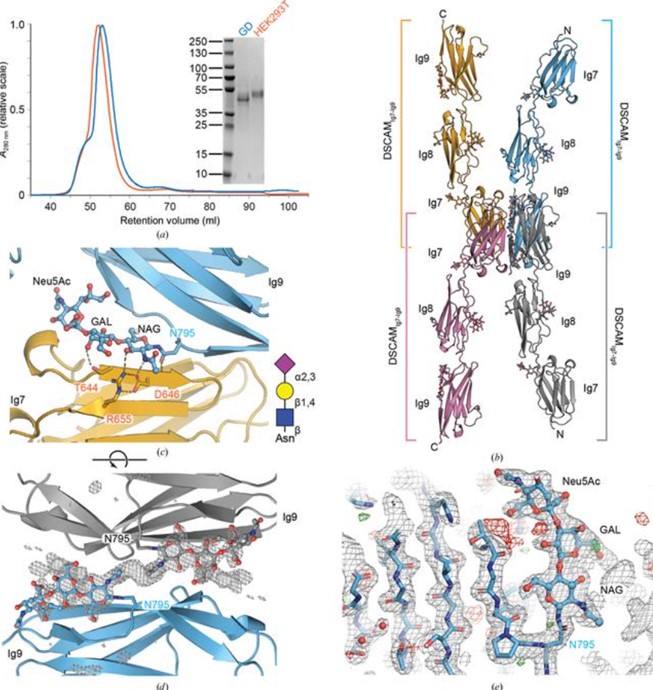 Fig.2 GlycoDelete analysis results from the HEK293 cell line.2,3
FAQs
What is the main advantage of an AI-driven MD Prediction service over traditional experimental X-ray analysis alone?
X-ray crystallography provides a static snapshot of an ordered state. Our MD service provides the dynamic movie, modeling how flexible glycans move, how they shield epitopes, and how they bind flexible ligands. This predictive power allows you to test mutations in silico before committing to costly lab synthesis, accelerating lead optimization.
Is the combination of crystallography and MS always necessary, and how do you ensure the MS data is relevant?
We strongly recommend it. Crystallography provides 3D context, while MS confirms chemical composition. We perform MS on the crystallized material itself to confirm the specific glycoform that was successfully ordered in the crystal lattice, minimizing the risk of basing critical drug design decisions on an unvalidated structural model.
What starting materials are required for a standard analysis?
To initiate a project, we primarily require purified protein or glycan and the target gene sequence. All client-provided materials and data are handled under strict confidentiality protocols, protecting your intellectual property throughout the entire analytical and structural process.
Customer Review
Validation of Flexible Domains
"Using Creative Biolabs' predictive structural modeling, we greatly improved our ability to resolve the highly charged, flexible binding of a GAG to our target. The detailed MD trajectory analysis, consistent with our preliminary NMR data, facilitated the final refinement of our structural model."- Dr. S. S****as, Scientist.
Manufacturing Optimization
"The Endo H treated construct achieved high-resolution data on a challenging adhesion molecule. In cases where traditional methods failed, this success proved the utility of their glycoengineering approach, paving the way for a dramatically more stable and manufacturable therapeutic candidate."- Dr. F. R****bz, Project leader.
How to Contact Us
Creative Biolabs' glycan crystal and glycoprotein crystal analysis services replace structural uncertainty with atomic-level clarity. We are your definitive partner in structural glycobiology, providing the integrated, multi-modal validation and predictive intelligence needed to accelerate your research. Our commitment to achieving molecular uniformity and combining X-ray precision with AI-driven prediction ensures you receive the most actionable structural blueprint available. Please contact us for more information and to discuss your project.
References
-
Kwong, Peter D., et al. "Probability analysis of variational crystallization and its application to gp120, the exterior envelope glycoprotein of type 1 human immunodeficiency virus (HIV-1)." Journal of Biological Chemistry 274.7 (1999): 4115-4123. https://doi.org/10.1074/jbc.274.7.4115
-
Kozak, Sandra, et al. "Homogeneously N-glycosylated proteins derived from the GlycoDelete HEK293 cell line enable diffraction-quality crystallogenesis." Biological Crystallography 76.12 (2020): 1244-1255. https://doi.org/10.1107/S2059798320013753
-
Distributed under an Open Access license CC BY 4.0, without modification.
For Research Use Only.
Related Services