Soluble Sugar Content Analysis Service
Accurate and Reliable Soluble Sugar Content Analysis Service at Creative Biolabs
Soluble sugars represent a common natural carbohydrate category that functions as a fundamental component across biological metabolism processes, as well as food processing and environmental monitoring systems. Their classification into different categories depends on their molecular complexity.
Monosaccharides represent the simplest sugar molecules which cannot undergo hydrolysis to form smaller sugars. Glucose functions as a critical molecule for cellular energy metabolism and exists abundantly throughout both plant and animal life. Fructose stands out as a well-known monosaccharide due to its high sweetness and water solubility which makes it a frequent component of many fruits.
Two monosaccharide units combine to form disaccharides. Common examples include sucrose, maltose, and lactose. Food manufacturers frequently utilize sucrose which serves as table sugar for most consumers. Sprouted grains and fermented foods contain maltose while lactose serves as a crucial energy source for infants and young children.
Oligosaccharides consist of monosaccharide units that range from three to ten in number. They have unique physiological effects. For example, beans contain raffinose and stachyose. Digestive enzymes fail to break down these sugars but they operate like dietary fiber to enhance our health.
Sugar alcohols (such as mannitol and sorbitol) and certain aldose and ketose derivatives are also classified as soluble sugars and are often used in food processing.
Superior Carbohydrate Analysis Technology
Creative Biolabs has built a comprehensive Carbohydrate Analysis technology platform. Relying on advanced detection technology and standardized processes, we provide professional soluble sugar content analysis for various matrices, including soluble monosaccharides, disaccharides, oligosaccharides, and other substances, to global clients, meeting their core needs in quality control, scientific research, product development, and other fields.
Soluble sugar content analysis requires the selection of appropriate methods according to sample characteristics and detection targets, mainly including:
-
High-performance liquid chromatography (HPLC): We use amino columns or sugar analysis columns to separate sugar components, combined with differential refractive index detectors (RID) or evaporative light scattering detectors (ELSD) to achieve accurate quantification of soluble sugars.
-
Spectrophotometry: We determine total soluble sugars using phenol-sulfuric acid or anthrone colorimetry.
-
Gas chromatography-mass spectrometry (GC-MS): We derivatize soluble sugars, separate them by GC, and then use MS for qualitative and quantitative analysis. It is suitable for the identification of trace sugars and sugar isomers in complex matrices, such as the detection of adulterated sugars in honey.
-
Ion chromatography (IC): We separate soluble sugars by anion exchange columns and then analyze the soluble sugar content in the sample by pulsed amperometric detection (PAD).
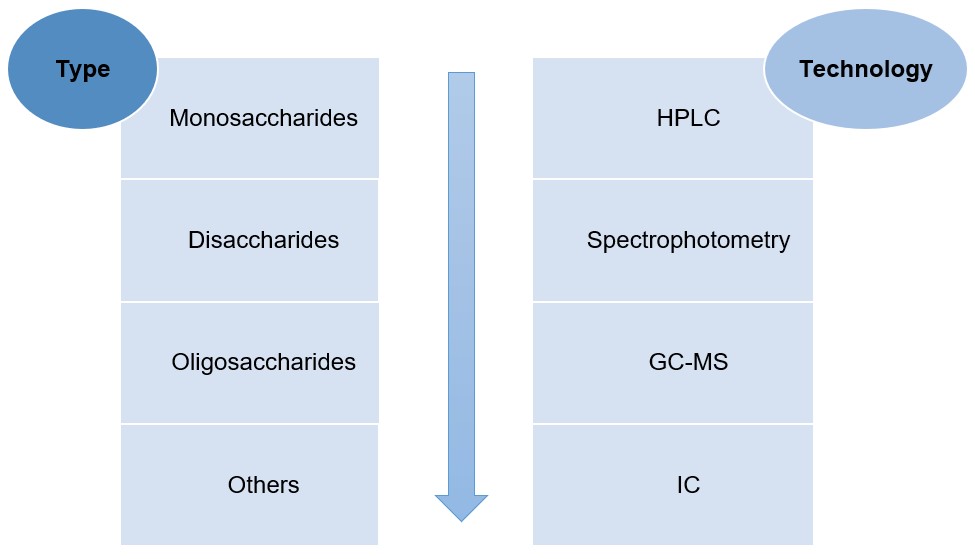 Fig.1 Reliable soluble sugar content analysis service.
Soluble sugar content analysis is a key technology to unlock the biological metabolic code. Creative Biolabs is committed to becoming a global leading glycomics solution provider. We provide clients with accurate and reliable soluble sugar content analysis services with a rigorous attitude, advanced technology, and a complete service system. We look forward to working with you to accelerate your research. Please contact us to obtain more information if you would like to acquire more analysis services.
Published Data
This study explored the use of portable near-infrared (NIR) spectroscopy combined with multivariate analysis to determine the water, protein, and soluble sugar content in mulberry leaves. A key aspect of this study was the optimization of the prediction model by selecting the most relevant wavelengths from the NIR spectrum. The figure below shows the results of these wavelength selection processes. For soluble sugars, the authors selected 60 spectral wavelength variables for model prediction. This study demonstrated the potential of NIR spectroscopy as a rapid and reliable technique to assess the water, protein, and soluble sugar content of mulberry leaves.
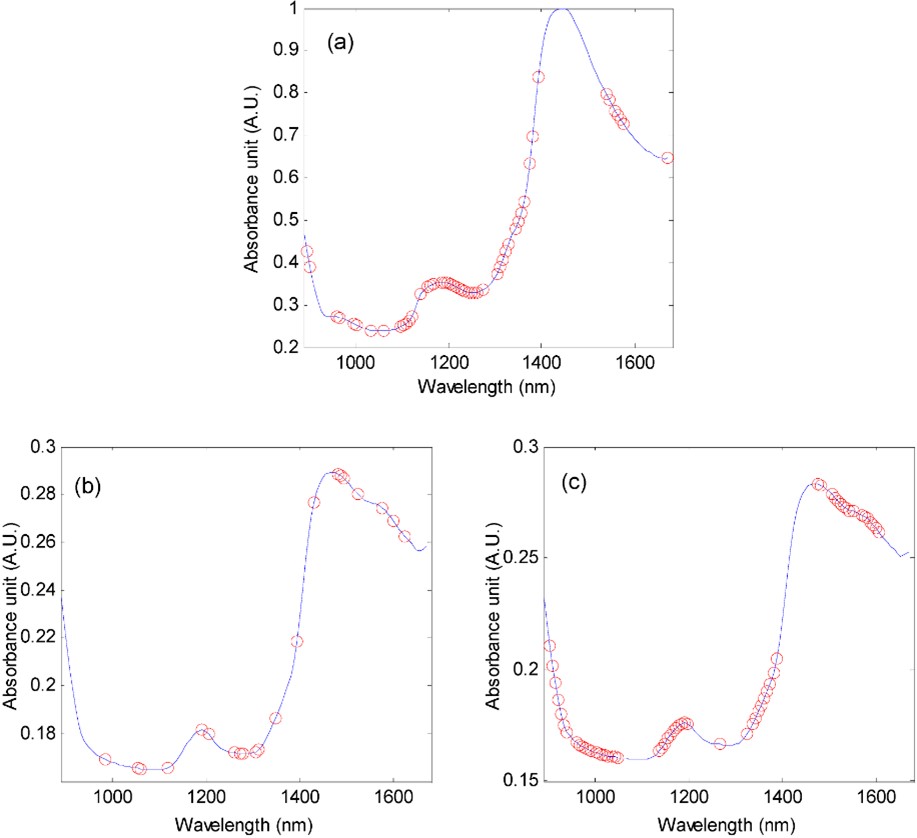 Fig.2 Results of the selection of wavelength variables for each component in mulberry leaves.1
Applications
-
Food: The content of soluble sugars directly affects the sweetness, flavor, shelf life, and processing characteristics of food. We provide soluble sugar content analysis services, which help optimize formulation design and ensure product consistency.
-
Drug development: As a component of biological macromolecules (such as glycoproteins and glycolipids), the content analysis of carbohydrates is of great significance in disease mechanism research and targeted drug development.
-
Environmental monitoring: An abnormal increase of soluble sugar in water may indicate organic pollution or an algae explosion, which is an auxiliary indicator for water quality evaluation. In addition, soil-soluble sugar content is closely related to microbial activity. Soluble sugar content analysis is used to evaluate soil fertility and ecological restoration effects.
FAQs
Q1: Which soluble sugar content analytical services are available from your lab?
A1: We provide various soluble sugar analysis services. We offer soluble sugar content analysis for monosaccharides including glucose and fructose, disaccharides such as sucrose and lactose, as well as oligosaccharides like raffinose. We offer expanded detection capabilities for other specific soluble sugars based on client requirements.
Q2: How to deal with interfering substances in the sample during the detection process?
A2: We use solid phase extraction, filtration, etc., to remove interfering substances and use chromatographic column separation technology to ensure accurate detection of sugars.
Customer Review
High Professionalism
"Creative Biolabs's soluble sugar analysis service was very professional, with detailed reports and accurate data, which fully meets our needs."
Experienced Team
"Creative Biolabs provided a customized soluble sugar analysis solution according to our special needs, which helped us complete product development promptly. They are very trustworthy."
Reference
-
Ma, Yue, Guo-Zheng Zhang, and Sedjoah Aye-Ayire Rita-Cindy. "Quantification of water, protein and soluble sugar in mulberry leaves using a handheld near-infrared spectrometer and multivariate analysis." Molecules 24.24 (2019): 4439. Distributed under Open Access license CC BY 4.0, without modification.
Related Services
For Research Use Only.