Data Independent Acquisition (DIA) based Proteomic Quantitative Analysis Service
Revolutionizing Proteomics: Unlocking Deeper Biological Insights
Are you currently facing challenges in achieving comprehensive and reproducible protein quantification, especially from limited or complex biological samples? Creative Biolabs' data-independent acquisition (DIA) based proteomic quantitative analysis service helps you overcome these hurdles and unlock deeper biological insights through advanced mass spectrometry and cutting-edge bioinformatics. Proteomics, the large-scale study of proteins, is pivotal for understanding biological systems. DIA mass spectrometry has emerged as a revolutionary approach, offering comprehensive and reproducible quantification of proteins. Unlike traditional data-dependent acquisition (DDA), DIA systematically fragments all ions within predefined windows, ensuring deep proteome coverage and accurate quantification. This advancement is critical for unraveling cellular complexity, identifying biomarkers, and accelerating drug discovery, providing unparalleled insights into protein functions and dynamics in health and disease.
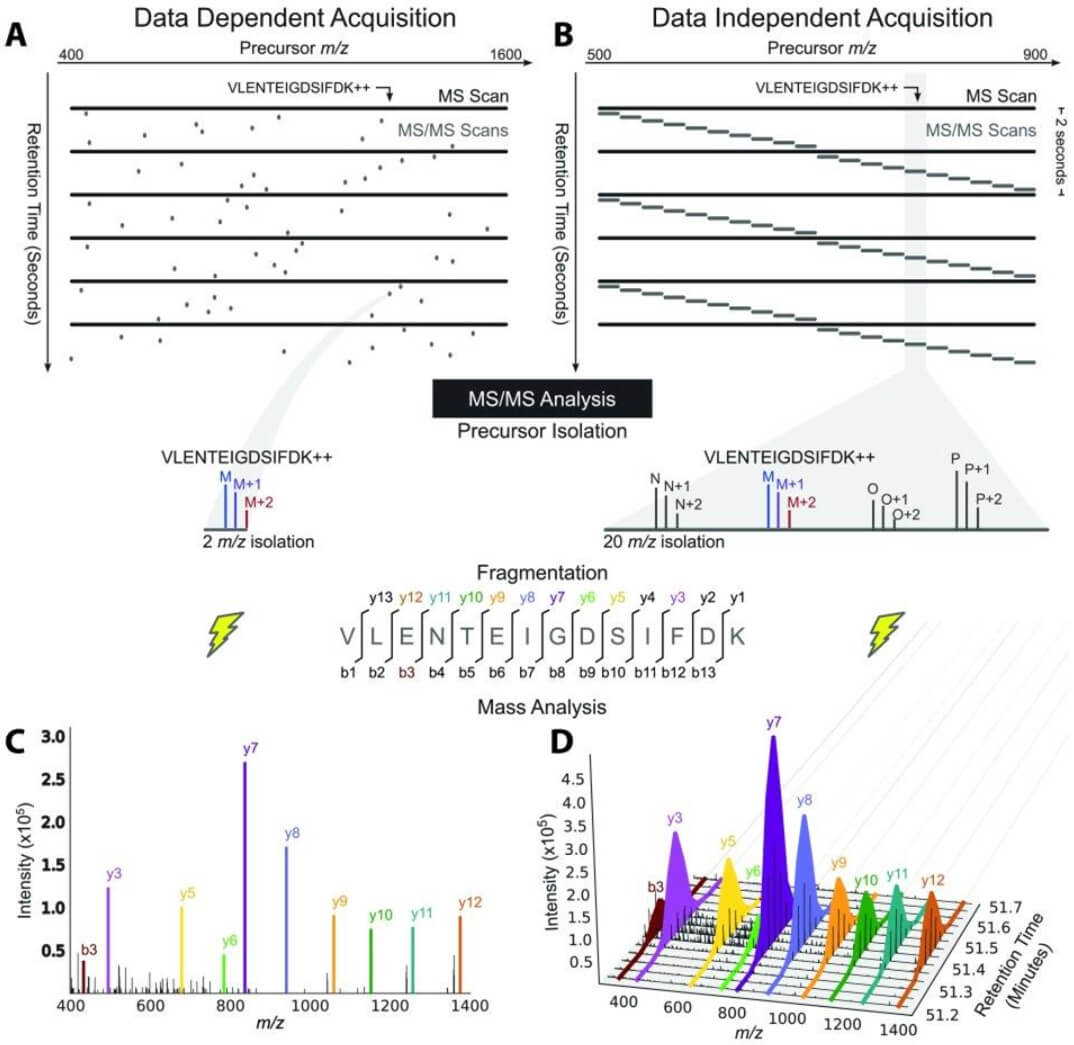 Fig.1 Tandem mass spectrometry (MS/MS) analysis for DDA and DIA.1,3
How Our DIA Analysis Service Can Accelerate Your Discoveries?
Creative Biolabs's proteomic quantitative analysis service, including DIA, Parallel Reaction Monitoring (PRM), delivers unparalleled depth and precision in protein quantification, empowering your research with actionable biological insights. We provide comprehensive proteome coverage, highly reproducible quantitative data, and the ability to detect subtle protein changes crucial for understanding complex biological systems. Our streamlined workflow ensures high-quality, reproducible results from sample preparation to final data delivery.
-
Sample Preparation & Digestion
Our experts perform meticulous protein extraction, reduction, alkylation, and enzymatic digestion (typically trypsin) to convert proteins into peptides. This step is critical for ensuring optimal peptide recovery and compatibility with mass spectrometry. For ultra-low input samples, specialized micro-preparation techniques are employed to minimize sample loss.
-
Liquid Chromatography (LC) Separation
Peptides are separated based on their physicochemical properties using LC. We optimize LC gradients to maximize peptide resolution and ensure sufficient points across chromatographic peaks for accurate quantification.
Samples are analyzed using state-of-the-art Orbitrap mass spectrometers configured for DIA. This involves systematically fragmenting all peptides within predefined, wide isolation windows, ensuring comprehensive data acquisition regardless of precursor intensity.
-
Data Processing & Statistical Analysis
We leverage cutting-edge software and deep learning algorithms to deconvolve complex spectra, generate in silico spectral libraries, and perform robust False Discovery Rate (FDR) control. Quantitative data is subjected to advanced statistical analysis to identify differentially expressed proteins, perform pathway enrichment analysis, and generate heatmaps or other visualizations. Our team assists in interpreting the biological significance of the findings, linking proteomic changes to your specific research questions.
Why Is It Necessary to Provide DIA-based Proteomic Quantitative Analysis?
Providing a specialized DIA-based proteomic quantitative analysis service is crucial because it directly addresses the limitations of traditional proteomic methods and meets the growing demand for high-quality, comprehensive, and reproducible protein quantification.
-
Overcoming DDA limitations: Traditional DDA suffers from stochastic sampling and missing values, which hinder comprehensive quantification, especially for low-abundance proteins or in large-scale comparative studies. DIA overcomes these, providing a more complete and consistent view of the proteome.
-
Unlocking cellular heterogeneity: Bulk proteomic analysis provides only an average, masking critical differences between individual cells. The ability of DIA to perform cell proteomics is indispensable for understanding cellular heterogeneity in development, disease progression, and drug response.
-
Accelerating discovery: By providing deeper proteome coverage and precise quantification, DIA accelerates biomarker discovery, drug target identification, and the elucidation of complex biological mechanisms, leading to faster translation of research findings.
-
Handling challenging samples: Many critical biological questions involve limited or precious samples. A specialized DIA service can handle these ultra-low input samples, enabling research previously deemed impossible.
Applicable Sample Types
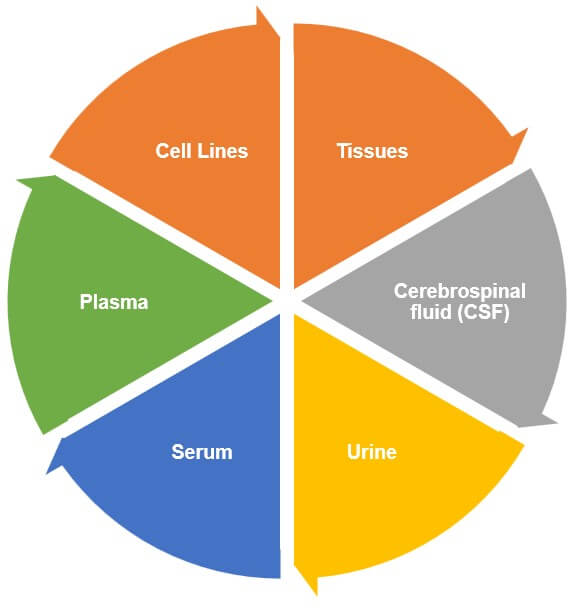
Creative Biolabs's DIA-based proteomic quantitative analysis service is highly versatile and suitable for a wide range of biological sample types, including:
Creative Biolabs stands at the forefront of proteomic analysis, offering a DIA-based service that combines scientific rigor with unparalleled efficiency. We consistently push the boundaries of what's possible in quantitative proteomics, enabling our clients to achieve their research goals faster and with greater confidence. Contact our team today for more information and to discuss your project. Our experts are eager to understand your specific needs and provide a tailored solution.
Published Data
This research focused on optimizing DIA mass spectrometry to establish a highly sensitive and robust proteomic analysis platform suitable for routine laboratory use. A key aspect of their work involved a direct comparison of various MS/MS data acquisition techniques. This evaluation, visually represented, contrasted the performance of the standard DDA method with three distinct DIA strategies: variable window DIA (vDIA), normal window DIA (nDIA), and overlapping window DIA (oDIA). The results indicated that the DIA approaches generally surpassed DDA in the sheer volume of detected peptides and protein groups from a human cell sample. Specifically, the oDIA method consistently identified the most biomolecules, with nDIA also showing strong performance. This outcome highlighted that capturing extensive fragmentation data across the entire mass-to-charge range, particularly with techniques that computationally simplify complex spectra, is critical for achieving comprehensive proteome coverage.
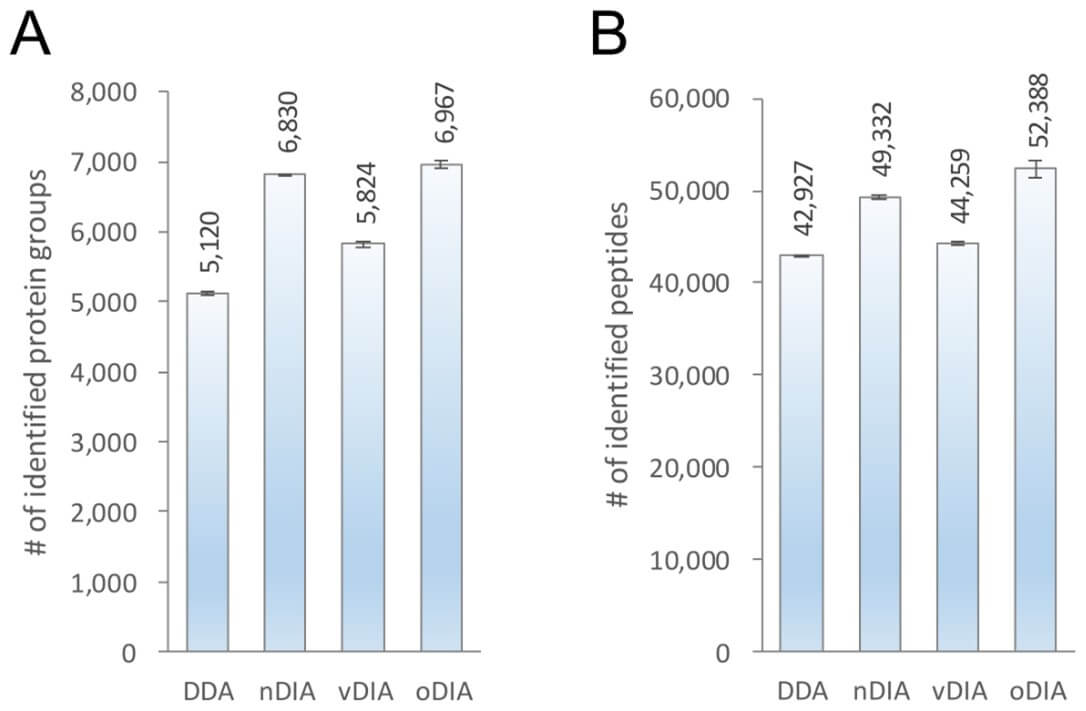 Fig.2 Comparison of DDA-MS and three DIA-MS analyses in proteomics.2,3
FAQs
Q1: How does Creative Biolabs' DIA service compare to traditional DDA proteomics for quantification?
A1: Our DIA service offers superior quantitative reproducibility and deeper proteome coverage compared to traditional DDA. DDA often suffers from stochastic sampling, leading to missing values for less abundant proteins. DIA, by systematically fragmenting all precursors, provides a more complete and consistent dataset, especially crucial for accurate quantification across large sample cohorts. This means you get a more reliable and comprehensive view of your proteome.
Q2: Is your DIA service suitable for my precious, low-abundance samples?
A2: Absolutely! Creative Biolabs specializes in handling ultra-low input samples. We have optimized our DIA workflow with short LC gradients and highly sensitive Orbitrap instruments, enabling us to identify up to 1500 protein groups from as little as 0.2 ng of peptides. This capability is vital for uncovering cellular heterogeneity that is otherwise masked in bulk analyses.
Q3: What kind of data and support will I receive after the analysis?
A3: You will receive a comprehensive data report including identified peptides and proteins, their quantitative values, and detailed statistical analysis. Crucially, our expert team offers support in interpreting the biological significance of your findings, helping you translate complex proteomic data into actionable insights for your research. We encourage you to reach out for a detailed discussion on your specific project needs.
Customer Review
Reliable Quantification and Reproducibility
"Creative Biolabs' DIA service has greatly facilitated our quantitative proteomics studies on drug resistance mechanisms in cancer. The reproducibility of their data is exceptional, enabling us to confidently identify and validate protein targets involved in drug response. Their detailed reports and support in data interpretation have been instrumental in advancing our understanding of complex cellular processes." - Mr. H. Cla***k.
Unprecedented Depth for Cell Analysis
"Using Creative Biolabs's DIA service in our cell neuroscience research has significantly improved our ability to resolve protein expression differences in heterogeneous neuronal populations. The data quality and depth, even from sub-nanogram samples, are far superior to what we achieved with traditional DDA methods, allowing us to uncover subtle but crucial changes related to neuronal plasticity. The team's expertise in handling these challenging samples was invaluable." - Prof. W. Rod***z.
References
-
Hu, Alex, William S. Noble, and Alejandro Wolf-Yadlin. "Technical advances in proteomics: new developments in data-independent acquisition." F1000Research 5 (2016): F1000-Faculty. DOI: 10.12688/f1000research.7042.1.
-
Kawashima, Yusuke, et al. "Optimization of data-independent acquisition mass spectrometry for deep and highly sensitive proteomic analysis." International Journal of Molecular Sciences 20.23 (2019): 5932. DOI: 10.3390/ijms20235932.
-
Distributed under an Open Access license CC BY 4.0, without modification.
Related Services
For Research Use Only.