N-Acetyl-D-Lactosamine (LacNAc)-type Glycoprotein Conjugation Service
Overview
N-Acetyl-D-lactosamine (LacNAc) is an important biological molecule that is widely present in polysaccharides and glycoproteins, participating in biological processes such as cell signal transduction and immune response. Combining LacNAc with other molecules to form glycoproteins is an important means to study glycobiology and develop new drugs. N-linked glycosylation, a ubiquitous post-translational modification in eukaryotes, introduces significant heterogeneity to proteins, complicating biopharmaceutical development. The LacNAc-type glycoprotein conjugation service addresses this challenge by leveraging engineered, homogeneous N-glycan structures as precise conjugation handles. This innovative approach, rooted in advanced glycoengineering, allows for site-specific and highly efficient attachment of various molecules to proteins. By providing a short, homogeneous, and hydrophilic link, it ensures minimal interference with protein structure and functions, paving the way for superior bioconjugates.
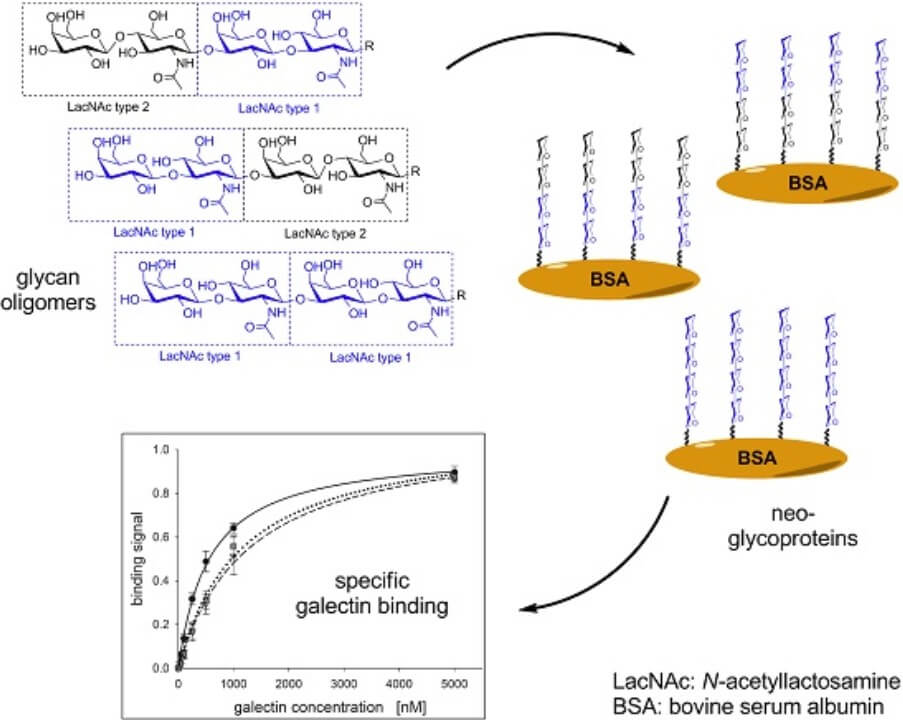 Fig.1 Conjugation and characterization of LacNAc to BSA.1
Why Is LacNAc-type Glycoprotein Conjugation Service Necessary?
Traditional protein conjugation methods often suffer from a lack of site-specificity, leading to heterogeneous products with variable drug-to-antibody ratios (DAR) or inconsistent payload distribution. This heterogeneity can negatively impact a biopharmaceutical's efficacy, pharmacokinetics, and immunogenicity. Furthermore, random conjugation to amino acid residues (like lysine or cysteine) can interfere with the protein's active sites or structural integrity, leading to reduced biological activity or stability. The inherent complexity and variability of native N-glycans also make them challenging targets for controlled conjugation. Our conjugation service addresses these critical pain points by providing a highly controlled and reproducible method for generating homogeneous bioconjugates. At Creative Biolabs, we specialize in LacNAc-type glycoprotein conjugation. This service involves the targeted chemical or chemo-enzymatic attachment of a desired molecule to a protein that has been engineered to present terminal LacNAc glycans at specific N-glycosylation sites. Unlike native glycans, these engineered LacNAc structures are short, uniform, and provide an ideal "handle" for precise bioconjugation.
What Is the Coupling Principle?
Creative Biolabs provides a mature LacNAc-type conjugation service, enabling our clients to develop safer, more effective, and more consistent biological therapeutics and diagnostics. It offers a superior alternative to random conjugation, ensuring the integrity and functionality of the modified protein. The core coupling principle relies on generating a reactive aldehyde group on the terminal galactose residue of the LacNAc glycan, followed by its reaction with a complementary functional group on the payload molecule.
-
Glycan Oxidation (Aldehyde Generation)
For LacNAc-carrying glycoproteins, the key step is the enzymatic oxidation of the terminal galactose (Gal) residue at the C6 position. This is primarily achieved using galactose oxidase (GalOx). GalOx catalyzes the oxidation of the primary alcohol on D-galactose to the corresponding aldehyde, with the simultaneous reduction of molecular oxygen (O2) to hydrogen peroxide (H2O2). While H2O2 can potentially cause unwanted oxidation of the enzyme or target protein, our optimized protocols, including careful control of reaction conditions, minimize such side reactions.
-
Conjugation (Ligation to Aldehyde)
Once the reactive aldehyde is formed, it can be efficiently conjugated using two primary chemistries:
-
Oxime ligation: This reaction involves the condensation of an aldehyde with an aminooxy-functionalized label to form a stable oxime bond.
-
Reductive amination: This method involves the reaction of an aldehyde with a primary amine-carrying label to form an imine intermediate, which is then immediately reduced to a stable secondary amine.
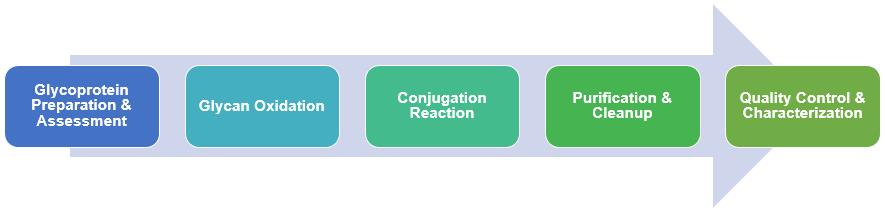
Creative Biolabs' LacNAc glycoprotein conjugation service provides a robust solution for attaching diverse payloads to your proteins with unparalleled precision. It focuses on utilizing the unique properties of engineered LacNAc glycans to achieve precise, stable, and functionally preserved bioconjugates. We provide highly homogeneous bioconjugates, ensuring minimal interference with the protein's native structure and functions. This translates to improved therapeutic efficacy, reduced immunogenicity, and enhanced stability for your biopharmaceuticals, diagnostics, and research tools. Our streamlined workflow is designed for clarity and efficiency, ensuring you receive superior results for your critical projects.
-
Glycoprotein Preparation & Assessment
We expertly glycoengineer your submitted glycoprotein sample and confirm the presence and homogeneity of the target LacNAc sugar structure to ensure optimal starting material for conjugation.
For LacNAc-carrying proteins, we employ optimized enzymatic oxidation using GalOx. This step selectively converts the terminal galactose residue on the LacNAc glycan into a reactive aldehyde, creating a precise handle for subsequent conjugation.
With the aldehyde handles in place, we proceed with the conjugation of your chosen payload. We utilize highly efficient and specific chemistries, primarily oxime ligation or reductive amination, performed under mild, aqueous conditions to preserve protein integrity. This step results in the formation of stable, homogeneous glycoprotein-cargo conjugates.
Post-conjugation, the reaction mixture undergoes rigorous purification steps to remove unreacted reagents, byproducts, and unconjugated protein. This ensures the isolation of a highly pure conjugated product.
-
Quality Control & Characterization
The final conjugated product is subjected to comprehensive analysis technologies characterization as LC-MS, SDS-PAGE, and Western Blotting. This verifies conjugation efficiency, site-specificity, homogeneity, and overall product integrity.
Key Advantages

Unrivaled Site-Specificity
By targeting the unique, engineered LacNAc glycan stumps, we achieve highly precise conjugation at defined sites, minimizing random modifications that can impair protein functions.

Homogeneous Conjugates
Our approach significantly reduces glycan heterogeneity, resulting in a uniform product with consistent properties, which is critical for regulatory approval and therapeutic predictability.

Preserved Protein Function
Conjugation occurs at sites normally occupied by bulky glycans, ensuring minimal interference with the protein's native structure, folding, and biological activity.

Broad Payload Compatibility
Our optimized chemical and chemo-enzymatic methods are compatible with a wide range of payloads, including PEG polymers, chelators, dyes, and small-molecule drugs.

Mild Reaction Conditions
We prioritize aqueous, near-neutral pH conditions to maintain the stability and integrity of sensitive proteins throughout the conjugation process.

Integrated Expertise
As pioneers in glyco-engineering, our service is seamlessly integrated with the advanced technology, providing a complete solution from engineered cell lines to final conjugates.
Creative Biolabs is your trusted partner for advanced glycoprotein engineering and precise bioconjugation. Our LacNAc-type glycoprotein conjugation service provides a powerful platform for innovation across the biopharmaceutical and life science sectors, addressing a critical need for highly controlled and reproducible bioconjugation. In addition, we also provide GlcNAc-type, LacNAc-Sia-type Glycoprotein Conjugation services. We are committed to accelerating your research and development with our expert knowledge and cutting-edge solutions. We encourage you to reach out to us for a detailed discussion on our glycoprotein conjugation services.
FAQs
Q1: How does LacNAc-type conjugation compare to traditional random conjugation methods?
A1: LacNAc-type conjugation offers significant advantages in terms of site-specificity and homogeneity. Traditional methods often result in heterogeneous products with variable payload ratios and potential modification of critical amino acid residues, which can impact protein functions. Our approach targets specific, engineered glycan sites, leading to highly uniform conjugates with preserved biological activity, crucial for therapeutic and diagnostic applications.
Q2: What kind of molecules can be conjugated using this service?
A2: We can conjugate a wide range of molecules, provided they are functionalized with an aminooxy group (for oxime ligation) or a primary amine (for reductive amination). This includes, but is not limited to, PEG polymers, chelators (like DTPA), fluorescent dyes, biotin, and small-molecule drugs. If your payload requires specific functionalization, we can advise on the best approach.
Q3: How do you ensure the quality and homogeneity of the final conjugated product?
A3: Quality and homogeneity are paramount at Creative Biolabs. We employ a rigorous multi-step quality control process. This includes comprehensive analysis techniques such as high-resolution LC-MS to confirm precise mass and conjugation stoichiometry, and SDS-PAGE/Western Blotting for purity and integrity. Our optimized protocols and experienced team ensure consistently high-quality, homogeneous bioconjugates.
Customer Review
Exceptional Homogeneity
"Using Creative Biolabs's LacNAc glycoprotein conjugation service in our research has significantly improved the homogeneity of our therapeutic protein conjugates, a critical factor for our downstream clinical development. Their precise control over conjugation sites is truly remarkable compared to traditional lysine-based methods." - Ms. P. J. Wa***h.
Streamlined Process
"The detailed workflow and clear communication from Creative Biolabs made the entire conjugation process incredibly smooth. We provided our engineered protein, and they delivered a perfectly conjugated product with comprehensive analysis data. This saved us significant time and resources." - Dr. H. T. Fo***d.
References
-
Fischöder, Thomas, et al. "Enzymatic synthesis of N-acetyllactosamine (LacNAc) type 1 oligomers and characterization as multivalent galectin ligands." Molecules 22.8 (2017): 1320. DOI: 10.3390/molecules22081320. Distributed under Open Access license CC BY 4.0, without modification.
Related Services
For Research Use Only.