Energy Metabolite Analysis Service
Decoding Cellular Energy Networks: Specialized Metabolite Analysis at Creative Biolabs
Cellular energy regulation underpins biological functions spanning developmental processes to pathological conditions. The dynamic interactions between key metabolites - pyruvate, lactate, glucose, and their derivatives - establish the biochemical framework driving these activities. Creative Biolabs provides a specialized energy metabolite analysis service, which helps clients understand these complex metabolic pathways.
Comprehensive Assessment Content
Creative Biolabs's service transcends simple quantification, providing a holistic view of cellular energy status. We use advanced technologies to analyze a wide array of energy metabolites.
-
Glycolysis intermediates: Glucose 6-phosphate, fructose-1,6-bisphosphate.
-
TCA cycle components: Citrate, isocitrate, succinate.
-
Pentose pathway metabolites: Ribose 5-P, ribulose-5-P.
-
Nucleotide energy carriers: ATP, ADP, AMP, GTP, GDP.
-
Key cofactors: NAD, NADH, FAD, FMN.
-
Other metabolites: 2-Ketoglutarate, dihydroxyacetone phosphate.
Our methodology extends beyond conventional measurement approaches. By capturing system-wide energy state snapshots through multi-platform integration, we map critical pathways with precision. High-performance liquid chromatography (HPLC) and mass spectrometry (MS) systems form the backbone of our detection capabilities, particularly for polar energy carriers. Complementary gas chromatography-mass spectrometry (GC-MS) platforms extend our reach to volatile analytes, while enzymatic verification protocols validate pathway-specific activity. This tripartite strategy achieves detection thresholds surpassing standard industry benchmarks.
Supported Samples
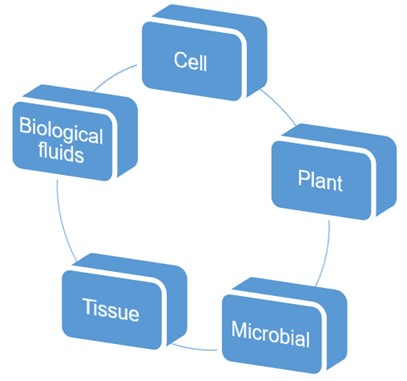
The analysis service accommodates various biological samples, ensuring flexibility for diverse research needs.
-
Cell samples: Cultured cells, tissue homogenates, and isolated organelles provide insights into intracellular metabolic activities.
-
Biological fluids: Blood, plasma, serum, and urine provide systemic metabolic profiles, reflecting overall physiological status.
-
Tissue samples: Biopsies and other tissue specimens allow for localized analysis of metabolic changes in specific organs.
-
Microbial samples: Bacterial or fungal cultures enable the study of microbial metabolism in various environments.
-
Plant samples: Extracts from plant tissues or fluids provide insights into photosynthesis and other metabolic pathways within plants.
Creative Biolabs caters to diverse research objectives across academic and industrial spheres. Whether investigating fundamental metabolic mechanisms, validating therapeutic targets, or optimizing nutritional formulations, our customizable service delivers actionable data. In addition, we also provide various Nutrition and Metabolism Research-based Compound Analysis Services. For detailed service parameters or project consultations, our technical team stands ready to assist. Please contact us to obtain more details.
Published Data
This study investigated the metabolic profile of protein energy wasting (PEW) in hemodialysis patients. Using metabolomics techniques, the authors pinpointed biomarkers associated with PEW and elucidated metabolic abnormalities associated with the disease. The study found significant differences in the concentrations of specific metabolites between patients with and without PEW. The results suggest that metabolomics is an effective approach for discovering PEW-related biomarkers and understanding underlying metabolic disorders. The authors suggest that future studies should adopt targeted strategies to identify potential therapeutic approaches that may modulate metabolites associated with gluconeogenesis.
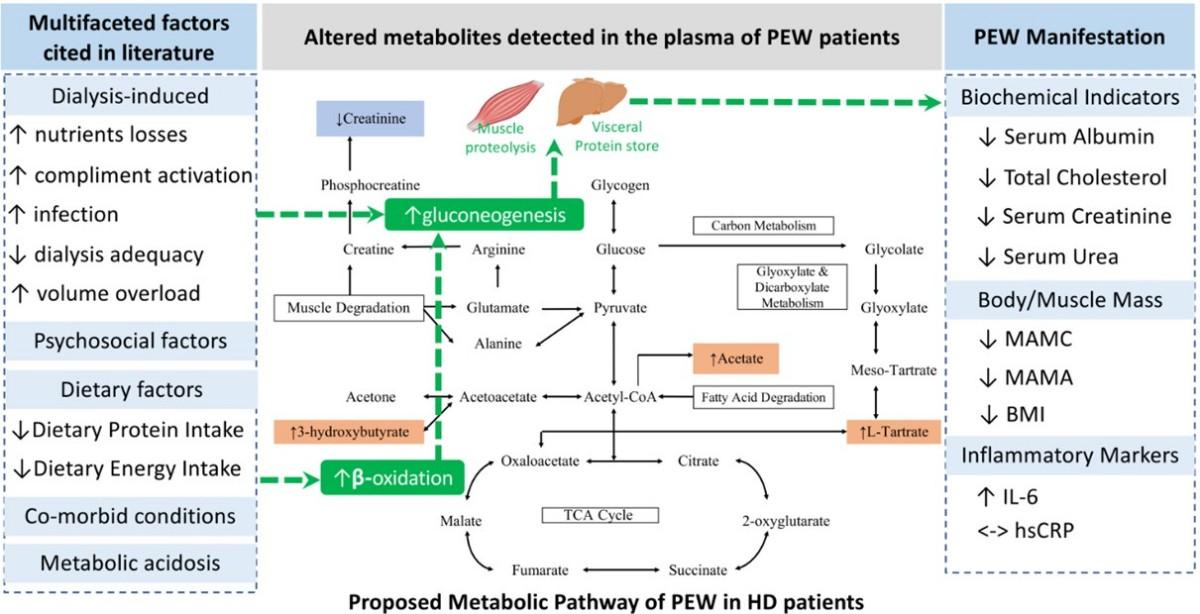 Fig.1 Metabolic pathways of PEW in hemodialysis patients. 1
FAQs
Q1: Why analyze energy metabolites?
A1: This analysis proves vital across scientific fields due to its versatile applications. Biomedical researchers rely on it to decode metabolic foundations of conditions like cancer and Alzheimer's - elevated lactate levels often signal cancerous metabolic shifts, while skewed ATP/ADP ratios hint at neuronal energy failures. Drug development teams use metabolite tracking to monitor pharmaceutical impacts on cellular chemistry. Meanwhile, nutrition experts apply these insights to fine-tune athlete meal plans by mapping energy expenditure patterns through metabolite fluctuations.
Q2: What's included in the analysis results?
A2: You will receive full datasets containing instrument readouts, processed numerical tables, and interpretive reports. These documents detail concentration values, statistical evaluations, and visual data representations like heatmaps.
Q3: Can analysis services be tailored?
A3: Absolutely. Our team creates pathway-specific solutions through customized assay designs and protocol adjustments. Need focused analysis on particular metabolites? Share your objectives - we'll engineer sample prep methods and data processing pipelines aligned with your targets.
Customer Review
Flexible Customized Solutions
"Creative Biolabs delivered exceptional adaptability for our niche project. Their scientists modified detection protocols for rare metabolites in specialized cell cultures, demonstrating true partnership. The optimized sample handling process they developed became foundational to our ongoing research."
Comprehensive Data Analysis
"The reporting was extremely detailed. Creative Biolabs provided not only the numerical data but also a full interpretation of the biological relevance of the results. They provided pathway analysis and related it to published research on our specific area of interest. This added tremendous value to the service."
Reference
-
Pauzi, Fatin Athirah, et al. "Exploring metabolic signature of protein energy wasting in hemodialysis patients." Metabolites 10.7 (2020): 291. Distributed under Open Access license CC BY 4.0, without modification.
Related Services
For Research Use Only.