Glycoprotein Conjugation Services
Creative Biolabs' Glycoprotein Conjugation Services: Accelerate Your Biopharmaceutical Innovation!
Are you currently facing long drug development cycles, difficulty in protein expression and purification, challenges in antibody development, or complex clinical trials? At Creative Biolabs, our glycoprotein conjugation services are meticulously designed to address critical challenges in biopharmaceutical research and development through advanced metabolic engineering, click chemistry, and professional protein engineering techniques. We provide precise, site-specific solutions for attaching various functional molecules, such as therapeutic payloads, imaging agents, or specific glycans, to your target glycoproteins. This capability is paramount for developing next-generation bioconjugates with enhanced stability, improved pharmacokinetics, and optimized biological activity. Whether you aim to create more effective antibody-drug conjugates (ADCs), develop novel vaccine candidates, or engineer highly specific diagnostic tools, our services deliver homogeneous products with defined properties, ensuring reproducibility and accelerating your project's progression from discovery to preclinical validation.
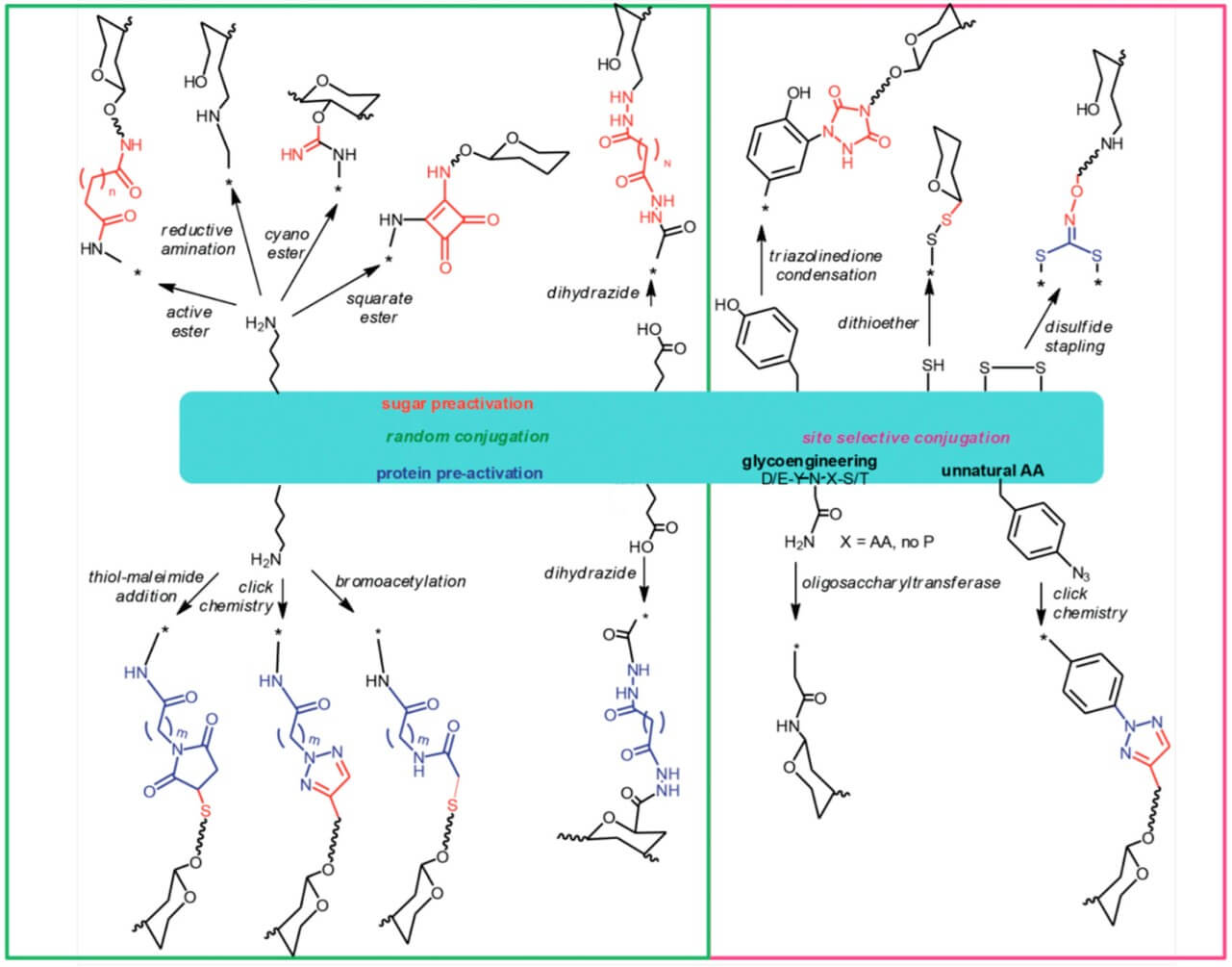 Fig.1 Various methods of linking carbohydrates to proteins.1,3
Why Do We Need to Conjugate Glycoproteins?
Glycoproteins, characterized by their diverse and intricate carbohydrate modifications, are central to virtually all biological processes, including cell recognition, immune responses, and disease pathogenesis. The ability to precisely modify these complex molecules through glycoprotein conjugation has become a cornerstone of modern biopharmaceutical and biomedical research. This powerful technique enables the covalent attachment of various functional moieties to glycoproteins, unlocking new avenues for targeted therapeutics, advanced diagnostics, and more effective vaccine development. Glycoprotein conjugation services involve the chemical or biotechnological introduction of sugar chains or other molecules into the structure of a protein to form glycopeptides or glycoproteins with enhanced properties. This process can significantly increase water solubility, stability, biocompatibility, cellular absorption rate, and overall biological activity. Choosing Creative Biolabs for your glycoprotein conjugation services means partnering with a leader in precision bioconjugation. Our unique blend of scientific expertise, cutting-edge technology, and unwavering commitment to quality sets us apart. We specialize in overcoming the challenges of traditional conjugation methods by providing solutions that deliver unparalleled homogeneity, site-specificity, and preserved biological activity. Our glycoengineering platform, combined with advanced protein engineering and click chemistry, ensures that your bioconjugates are not only precisely defined but also highly functional and stable, accelerating your journey from discovery to therapeutic application.
The core conjugation principles employed in glycoprotein conjugation services revolve around highly selective and efficient reactions that minimize disruption to the sensitive biological molecules. These include:
-
Azide-Alkyne Cycloaddition: This is a common click chemistry, allowing for fast, simple, and highly efficient conjugation. It relies on specific reactions between chemically inert groups in biological systems, achieving unparalleled specificity and efficiency under mild conditions, making it ideal for sensitive biological applications. Key variations include:
-
Copper(I)-Catalyzed Azide-Alkyne Cycloaddition (CuAAC): A highly efficient reaction between an azide and a terminal alkyne in the presence of a copper(I) catalyst, forming a stable triazole bond.
-
Strain-Promoted Azide-Alkyne Cycloaddition (SPAAC): A "copper-free" click reaction utilizing a strained alkyne that reacts with an azide without a metal catalyst, ideal for in vivo applications.
-
Aldehyde Reaction-based Conjugation: Utilizes aldehyde-nucleophile reactions for precise, site-specific attachment to glycoproteins, particularly those engineered with aldehyde tags or oxidized native glycans. It relies on the formation of stable covalent bonds between an aldehyde group on the glycoprotein and a nucleophilic partner on the payload. Common reactions include:
-
Oxime formation: Reaction with an oxyamine to form a stable oxime bond.
-
Hydrazone formation: Reaction with a hydrazide to form a hydrazone bond.
-
Enzymatic Glycoconjugation: Utilizes highly specific glycosyltransferase enzymes to transfer sugar moieties from activated sugar nucleotides to specific acceptor sites on the growth factor, offering high regioselectivity and stereoselectivity.
-
Chemical Glycoconjugation: Employs chemical reactions to form covalent bonds between activated glycans and specific amino acid residues on the protein (e.g., lysine amines, cysteine thiols). This method offers versatility but requires careful control.
-
Chemoenzymatic Glycoconjugation: Combines the specificity of enzymatic methods with the flexibility of chemical approaches, often involving an initial chemical modification followed by an enzymatic step.
Types and Steps of Our Glycoprotein Conjugation Services
Creative Biolabs provides a specialized portfolio of glycoprotein conjugation services tailored to specific protein types and application needs:
-
GFP Binding Protein Glycoconjugation Service: Enhances the biological properties, stability, and intracellular localization of GFP-tagged proteins for visualization and tracking.
-
Antibody Glycoconjugation Service: Precisely engineers antibody conjugates for next-generation antibody-drug conjugates (ADCs), targeted gene delivery vehicles, and fluorescently labeled antibodies.
-
Growth Factor Glycoconjugation Service: Improves the stability, bioactivity, and biocompatibility of growth factors for drug development, regenerative medicine, and tissue engineering.
-
GlcNAc-type Glycoprotein Conjugation Service: Focuses on proteins modified with N-acetylglucosamine residues, crucial for elucidating biological roles, biomarker discovery, and therapeutic/diagnostic tool development.
-
LacNAc-type Glycoprotein Conjugation Service: Focus on introducing lactosamine (LacNAc) structural units into target proteins. This modification improves the biocompatibility and stability of glycoproteins while enhancing their functions in cell recognition and signal transduction.
-
LacNAc-Sialic Acid-type Glycoprotein Conjugation Service: Focus on combining sugar groups containing LacNAc and sialic acid structures with target proteins. This combination not only improves the hydrophilicity and stability of glycoproteins but also significantly affects their immunogenicity and cell adhesion, promoting their application in the biomedical field.
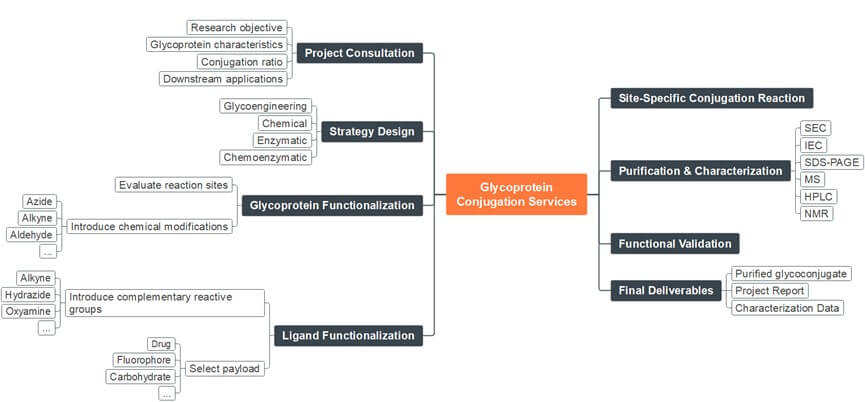
Glycoprotein conjugation services are essential for overcoming the inherent heterogeneity of natural glycosylation, which often complicates the development of consistent and predictable biopharmaceuticals. By providing precise control over the attachment of functional molecules to glycoproteins, these services enable the creation of homogeneous conjugates with enhanced stability, improved pharmacokinetics, and optimized biological activity. Our comprehensive workflow is structured to provide a transparent, efficient, and high-quality service, suitable for visualization as a clear flowchart.
What Is the Importance and Application of Glycoprotein Conjugation Services?
The importance of glycoprotein conjugation services lies in their ability to overcome the limitations of native glycoproteins and traditional modification methods. By enabling precise, site-specific, and homogeneous modifications, these services lead to:
-
Enhanced stability: Increased resistance to degradation, leading to longer in vivo half-life.
-
Improved pharmacokinetics: Optimized absorption, distribution, metabolism, and excretion profiles.
-
Modulated bioactivity: Fine-tuning of receptor binding kinetics, specificity, and potency.
-
Targeted delivery: Enabling precise delivery of payloads to specific cells, tissues, or organs, reducing off-target effects.
-
Reduced immunogenicity: Creating more biocompatible constructs.
-
Homogeneous products: Ensuring consistent quality and predictable biological behavior, crucial for regulatory approval.
Glycoprotein conjugation services have a wide range of applications, including:
Vaccine development
Many pathogens contain sugar structures on their surfaces. Using glycoprotein conjugation technology, these sugar structures are bound to antigens to develop sugar vaccines that can trigger a strong immune response. This vaccine improves the immune system's ability to recognize and attack specific pathogens.
Targeted drug delivery
Glycoprotein conjugation changes the affinity and distribution of drug molecules, making their metabolism and excretion in the body more balanced and achieving better therapeutic effects. For example, binding drugs to certain glycoproteins can make them more easily absorbed by target cells.
Discovery of biomarkers
Glycoproteins play an important role in many diseases, so combining these glycoproteins with probes or markers can be used for early diagnosis or monitoring disease progression.
Basic research
Glycosylation plays an important role in cell signaling, cell-to-cell interactions, and immune responses. Through glycoprotein conjugation technology, scientists study the effects of different sugar chains on protein functions and further understand biological mechanisms.
Tissue engineering
Binding glycoproteins to biomaterials improves the biocompatibility and cell adhesion properties of materials and promotes tissue regeneration.
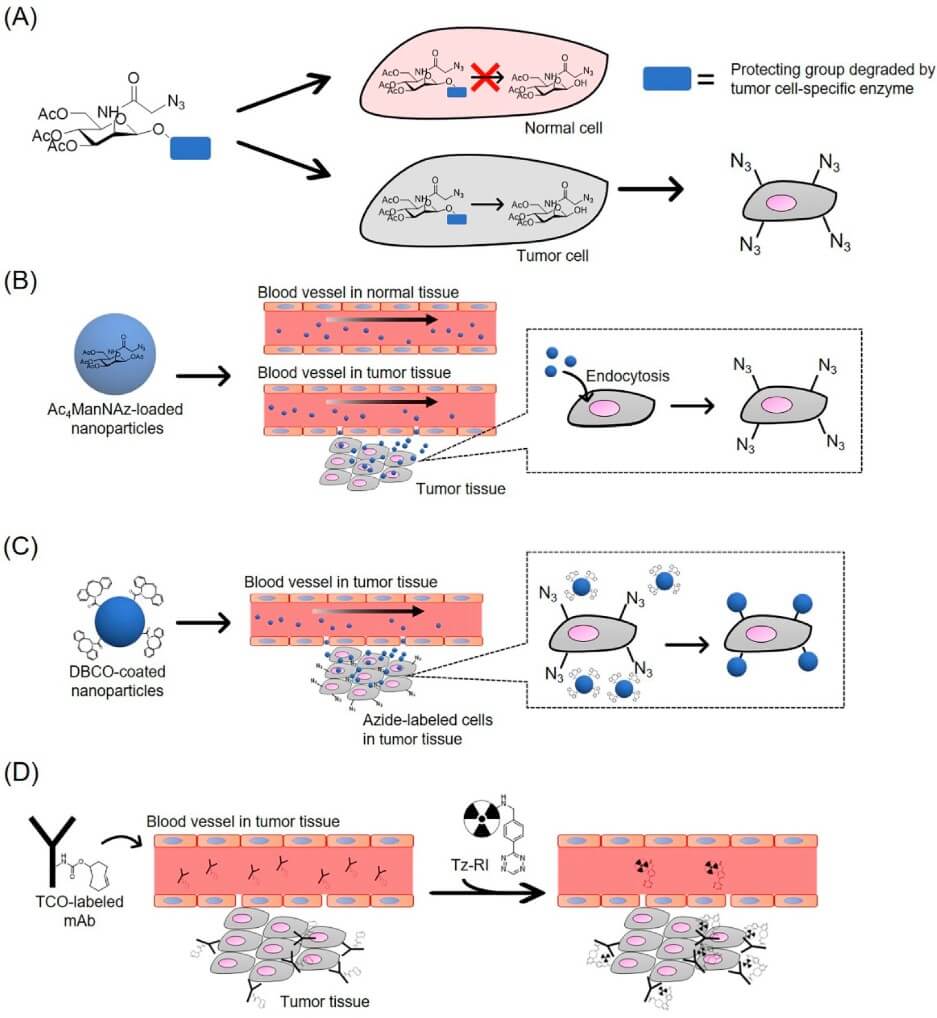 Fig.2 Application of click chemistry in drug delivery systems.2,3
Related Services
To further support your research and development goals, Creative Biolabs provides a suite of complementary services related to glycoprotein conjugation:
-
Custom glycan synthesis: For projects requiring unique or challenging glycan structures.
-
Protein expression & purification: High-quality recombinant protein production to serve as starting material for conjugation.
-
Glycosylation modification: Glycosylation of proteins by chemical or enzymatic methods to enhance their biological activity and stability.
Creative Biolabs is dedicated to empowering your research and accelerating your biopharmaceutical innovation with our cutting-edge glycoprotein conjugation services. Our commitment to precision, quality, and client success ensures that your projects advance efficiently and effectively, delivering homogeneous and functionally optimized bioconjugates. Please contact us to inquire about more details.
FAQs
Q1: Can Creative Biolabs handle complex or custom glycan structures for conjugation?
A1: Absolutely. Our expertise extends to custom glycan synthesis and the conjugation of a wide array of complex carbohydrate structures, from simple monosaccharides to intricate oligosaccharides, including challenging sialyl-type glycans. We work closely with you to design and incorporate the exact glycan structure required for your specific functional needs.
Q2: How does Creative Biolabs ensure the biological activity of the conjugated glycoprotein is preserved?
A2: We prioritize the preservation of biological activity throughout the conjugation process. By employing mild reaction conditions, site-specific conjugation strategies that avoid critical binding domains, and rigorous post-conjugation functional assays (e.g., binding affinity, enzymatic activity, cell-based assays), we ensure that your glycoconjugate retains its desired biological functions.
Q3: Can Creative Biolabs assist with the scale-up of glycoconjugate production for preclinical or clinical studies?
A3: Yes, Creative Biolabs is equipped to assist with the scale-up of glycoconjugate production. Our robust and optimized protocols are designed with scalability in mind, facilitating a smooth transition from research-scale to larger quantities required for preclinical and early-stage clinical studies. Please discuss your scale-up requirements with our team during the project consultation.
Customer Review
Enhanced Specificity
"Using Creative Biolabs' glycoprotein conjugation services in our research has significantly improved the specificity of our protein labeling, allowing for clearer visualization of cellular processes without off-target effects. This precision is invaluable for our live-cell imaging studies." - Mr. J. Wil***ms.
Accelerated Development
"The efficiency and high yield of Creative Biolabs' glycoprotein conjugation services drastically accelerated our development of novel diagnostic reagents. We achieved homogeneous conjugates much faster than anticipated, allowing us to meet tight project deadlines." - Dr. A. Sm***h.
References
-
Micoli, Francesca, Roberto Adamo, and Paolo Costantino. "Protein carriers for glycoconjugate vaccines: history, selection criteria, characterization and new trends." Molecules 23.6 (2018): 1451. DOI: 10.3390/molecules23061451.
-
Takayama, Yukiya, Kosuke Kusamori, and Makiya Nishikawa. "Click chemistry as a tool for cell engineering and drug delivery." Molecules 24.1 (2019): 172. DOI: 10.3390/molecules24010172.
-
Distributed under an Open Access license CC BY 4.0, without modification.
For Research Use Only.