Glycan Crystal Optical Analysis Service
The Unseen World of Glycosylation: A Crystal-Clear View.
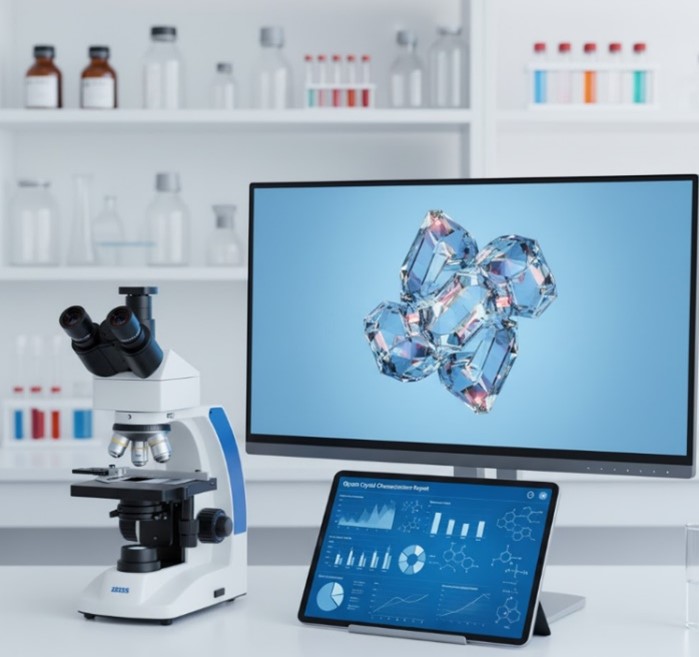
Are you currently facing complex challenges in biopharmaceutical development, such as ensuring product quality, predicting drug efficacy, or meeting rigorous regulatory compliance? Our glycan crystal optical analysis service helps you accelerate drug discovery and streamline clinical trial processes through advanced microscopy and precise Structural Characterization. This service provides a detailed, high-resolution view of glycan structures, which are essential for the safety and function of biotherapeutics. At Creative Biolabs, we provide a holistic solution for the in-depth Characterization of Glycan Crystal, a critical step in modern biopharmaceutical and biological research. Our service is designed to give you unparalleled insight into the crystalline properties and organization of your glycan samples, which can directly impact protein stability, immunogenicity, and efficacy. By leveraging state-of-the-art optical and electron microscopy, we deliver precise, actionable data that helps you make informed decisions throughout your project's lifecycle. We go beyond simple compositional analysis to provide a structural and morphological understanding that is often overlooked but fundamentally important.
Why Choose Us?
Glycans, or sugar chains, are complex macromolecules that play a critical role in the functions of proteins and lipids. Their structural and morphological properties, particularly in crystal form, can significantly influence the efficacy, safety, and stability of biotherapeutics. The One-Stop Crystal Analysis Services provide a powerful tool for this characterization. It is an approach to understanding the three-dimensional structure of glycans, a field of increasing importance in drug development and disease research. At Creative Biolabs, our commitment to scientific excellence and our innovative approach to glycan analysis set us apart. We don't just provide data, we provide solutions. Our advanced platforms and seasoned experts ensure that you receive the highest quality results, helping you overcome critical hurdles in your research and development pipeline. The correlative microscopy approach, for example, which integrates data from different analytical modalities, provides a level of detail that traditional methods cannot match.
Discover How We Can Help - Get a Quote Today
The current status of glycan crystal optical analysis is on the rise, driven by the increasing need for high-resolution structural information in glycomics. While mass spectrometry remains a cornerstone for compositional analysis, it often lacks the spatial and morphological context that optical and electron microscopy provide. This service addresses this gap by offering a detailed characterization of glycan crystals.
Our service is provided through a combination of cutting-edge technology and expert analysis. We guide clients from sample submission through to final data delivery, ensuring clear communication and a streamlined process. Our workflow is a systematic and meticulous process designed for optimal results, suitable for visualization as a flowchart.
-
Sample Preparation & Crystallization: We begin by preparing your glycan or glycoprotein samples to induce crystallization under controlled conditions. This step is critical for obtaining high-quality crystalline structures suitable for subsequent optical analysis.
-
Optical Analysis:
-
Polarized Light Microscopy (PLM): This initial step involves observing the crystals under polarized light. PLM is an excellent tool for identifying anisotropic materials and can provide information about crystal shape, size, and internal stress patterns. This gives us a preliminary assessment of crystal quality and is used to select specific crystals for further analysis.
-
Scanning Electron Microscopy (SEM): We use SEM to perform a high-resolution topographical analysis of the glycan crystals. This provides detailed information on the surface morphology, including any defects or unusual formations.
-
Transmission Electron Microscopy (TEM): For an even closer look, TEM is used to image the internal structure of the crystals. TEM allows us to visualize the crystal lattice, detect stacking faults, and examine the arrangement of the glycan molecules within the crystal. This is crucial for understanding the molecular packing and stability of the crystal.
-
Correlative Analysis: The data from PLM, SEM, and TEM are integrated to create a comprehensive, multi-modal picture of the glycan crystals. This approach enables us to correlate high-level morphological data with ultra-high-resolution structural details.
-
Data Analysis & Interpretation: Our team of expert glycoanalysts interprets the complex imaging data, identifying key structural features and providing a detailed report on the crystalline properties of your samples.

Published Data
The research detailed in this study introduces a novel method for imaging and localizing specific sugar molecules, known as fucosylated glycans, within the salivary glands of ticks. The study's main objective was to determine the precise locations of two distinct types of these glycans, an alpha-1,3-core-fucose and an alpha-1,6-core-fucose, within the tick species Ixodes ricinus. Instead of a traditional approach, the researchers employed a correlative imaging technique that combines fluorescence microscopy with SEM on specially prepared carbon-patterned glass slides. This technique allowed for the high-resolution visualization and accurate mapping of the target molecules. The following figure provides compelling visual evidence of these findings. It illustrates the precise co-localization of the two different glycans within the tick's salivary glands. The images in the figure are composites, overlaying the fluorescent signals of the labeled glycans onto high-resolution SEM images of the cellular tissue. The alpha-1,3-core-fucose is represented by red fluorescence, while the alpha-1,6-core-fucose is shown in green, with cell nuclei marked in blue. The figure's panels, taken at varying magnifications, clearly show the presence of both colored signals on key cellular features, such as the basement membrane and secretory granules. A detailed back-scattered electron (BSE) image also reveals the specific gold and quantum dot nanoparticles used as labels, confirming their attachment to the targeted glycans and providing a detailed view of the structures at a nanoscale level.
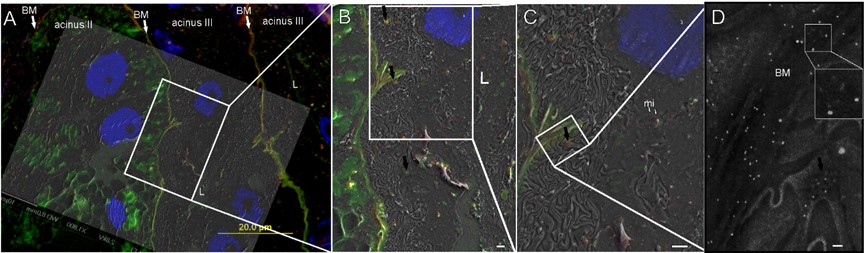 Fig.1 Analysis of fucosylated glycan distribution in tick salivary glands using correlative imaging.1
FAQs
Why is a glycan crystal optical analysis service necessary if I already use mass spectrometry?
While mass spectrometry is excellent for identifying the composition and molecular weight of glycans, it does not provide information on their three-dimensional structure or crystalline properties. Our service fills this crucial gap by giving you a high-resolution, visual understanding of how your glycans are organized, which can directly impact their function and stability. This is especially important for biopharmaceuticals, where a single structural difference can have a major effect.
My sample doesn't form crystals easily. Can you still help?
Yes, absolutely. Our workflow includes an optimized sample preparation and crystallization screening process. Our experts are highly experienced in working with difficult-to-crystallize samples and will work to find the ideal conditions. If a suitable crystal is not formed, we can still perform other optical analyses on the sample. We are dedicated to finding a solution for your specific needs - just reach out for a consultation.
How does this service compare to X-ray crystallography?
X-ray crystallography is the gold standard for atomic-level structural determination, but it is a complex and time-consuming process. Our service provides a more accessible and rapid solution for characterizing crystal morphology, purity, and microstructural defects. It's a powerful and complementary tool that can help you screen samples before moving to more intensive structural methods.
Customer Review
Clear and Actionable Insights
"Using Creative Biolabs' glycan crystal optical analysis service in our research has significantly improved our ability to troubleshoot and optimize our protein production process. The detailed analysis of crystal morphology helped us identify and resolve a key issue with protein aggregation."- S**K, Crystalline researcher.
Unparalleled Resolution
"The correlative microscopy approach provided by Creative Biolabs allowed us to precisely co-localize a specific glycan-label with an observed crystal defect, giving us an unprecedented level of understanding of our protein structure."- M**O, Supervisor.
Extended Services
To further support your research, Creative Biolabs offers a suite of complementary services that can be integrated with our glycan crystal optical analysis service. For compositional analysis, we recommend our Glycan Mass Spectrometry Service. For the synthesis of specific glycan structures for use in functional assays, our Glycan Synthesis Service is the perfect fit. To learn more about our other offerings, please visit our website.
How to Contact Us?
Creative Biolabs is your trusted partner for glycan analysis. Our glycan crystal optical analysis service is designed to provide you with the critical structural data you need to accelerate your drug development and research efforts. From initial sample analysis to final data delivery, our team of experts is with you every step of the way, providing a level of insight and service that is second to none. For a detailed discussion on how we can address your specific project needs and to receive a personalized quote, please do not hesitate to reach out.
Reference
-
Vancová, Marie, and Jana Nebesářová. "Correlative fluorescence and scanning electron microscopy of labelled core fucosylated glycans using cryosections mounted on carbon-patterned glass slides." PLoS One 10.12 (2015): e0145034. Distributed under an Open Access license CC BY 4.0, without modification. https://doi.org/10.1371/journal.pone.0145034
For Research Use Only.
Related Services