
CA125 (MUC16) VLP & Glycopeptide Cancer Vaccine Development
Creative Biolabs provides comprehensive preclinical development services for CA125 (MUC16)-targeted cancer vaccines, covering antigen epitope mapping, anti-idiotype antibody design, virus-like particle (VLP)-based vaccine construction, dendritic cell (DC) vaccine preparation, in vivo efficacy evaluation, and quality control. CA125, encoded by the MUC16 gene, is a heavily glycosylated transmembrane mucin overexpressed in over 80% of epithelial ovarian cancers and a subset of pancreatic, lung, and breast malignancies. Our integrated platform supports researchers developing active immunotherapy strategies against this challenging self-antigen, from epitope selection through potency validation in syngeneic and humanized tumor models.
Targeting MUC16/CA125: From Biomarker to Vaccine Antigen
A Mucin at the Crossroads of Immune Evasion
MUC16 is one of the largest transmembrane mucins in the human genome, comprising an N-terminal domain, a tandem repeat region with more than 60 partially conserved 156-amino-acid repeat units, and a C-terminal domain containing a transmembrane helix and cytoplasmic tail. The tandem repeat region constitutes the CA125 antigen, which is proteolytically shed into the bloodstream and serves as the most widely used serum biomarker for ovarian cancer monitoring. On the cell surface, MUC16 creates a protective glycan barrier that shields tumor cells from cytotoxic immune effectors, facilitates peritoneal dissemination through mesothelin interactions, and suppresses natural killer (NK) cell activity.
Because CA125 is a self-antigen, vaccination must overcome B-cell tolerance without triggering autoimmunity. Conventional anti-idiotype strategies (e.g., ACA125/abagovomab) demonstrated proof of concept but yielded limited clinical benefit. Modern approaches—VLP display, DC-based loading, and glycopeptide engineering—offer new pathways to break tolerance safely and elicit tumor-reactive immunity.
- Core Preclinical Challenges We Address:
- Selecting immunogenic epitopes within the conserved tandem repeat or juxta-membrane region.
- Breaking B-cell tolerance to a heavily glycosylated self-mucin.
- Overcoming soluble CA125-mediated immune interference in the tumor microenvironment.
- Generating antibodies that bind tumor cells even after CA125 shedding.
Anti-Idiotype Antibody vs. Modern Multi-Platform CA125 Vaccine Strategies
| Key Comparison | Traditional Anti-Idiotype (ACA125/Abagovomab) | Modern Multi-Platform CA125 Vaccines |
|---|---|---|
| Antigen Presentation | Indirect mimicry via anti-idiotype antibody; no direct antigen display. | Direct antigen display on VLPs, DCs, or glycopeptide carriers. |
| Tolerance Breaking | Relies on idiotype network; variable Ab3 response rates. | VLP display, xenogeneic immunization, and adjuvant optimization. |
| Antibody Specificity | Anti-anti-idiotype (Ab3) may not reliably bind native tumor CA125. | Antibodies validated against CA125+ tumor cell lines (e.g., OVCAR3). |
| Combination Potential | Tested as monotherapy; limited synergy data with checkpoint inhibitors. | Designed for combination with ICI, CAR-T, and chemotherapy regimens. |
CA125 Vaccine Development Service Modules
Our preclinical services are organized into flexible, modular packages designed to address the unique challenges of vaccinating against a self-mucin antigen. All modules can be fully customized—from epitope selection to adjuvant formulation—to align with your tumor indication, vaccine platform, and translational objectives.
Epitope Mapping & Immunogenicity Prediction
Systematic identification of immunogenic regions within the MUC16 ectodomain for vaccine targeting.
- Tandem Repeat Profiling: Mapping conserved B-cell epitopes within the 156-amino-acid repeat units.
- Juxta-Membrane Epitope Design: Selecting epitopes near the cleavage site that remain on tumor cells after CA125 shedding.
- Glycopeptide Engineering: Incorporating tumor-specific O-glycan structures for enhanced specificity.
- Immunogenicity Scoring: In silico prediction of MHC binding affinity and T-cell epitope content.
Anti-Idiotype Antibody Vaccine Design
Development of anti-idiotype antibody constructs that mimic CA125 epitopes for active immunization.
- Ab2 Generation: Producing anti-idiotype antibodies from OC125 or novel anti-CA125 antibodies.
- Cytokine Fusion: Engineering IL-6 or GM-CSF fusion proteins to boost Ab3 humoral responses.
- Single-Chain Fv Optimization: Constructing scFv-CH2/CH3 fusions for enhanced immunogenicity.
- Cross-Reactivity Validation: Confirming Ab3 sera binding to native CA125 on tumor cell surfaces.
VLP-Based Vaccine Construction
Display of MUC16 epitopes on virus-like particles to break B-cell tolerance and elicit tumor-reactive antibodies.
- Genetic Fusion: Inserting MUC16 epitope sequences into immunodominant loops of L1 capsid proteins.
- Chemical Coupling: Conjugating synthetic MUC16 peptides to VLP surfaces via maleimide-thiol chemistry.
- Adjuvant Formulation: Screening alum and TLR agonist combinations for optimal IgG titers.
- Particle Characterization: Size, morphology, and epitope density analysis by DLS and electron microscopy.
DC-Based CA125 Vaccine Preparation
Loading dendritic cells with MUC16 antigen to elicit coordinated CD4+ and CD8+ T-cell responses.
- Antigen Loading: MUC16 protein, peptide pools, or mRNA electroporation into monocyte-derived DCs.
- Maturation Optimization: TLR agonist and cytokine cocktails for high CD80/CD86 expression.
- Cross-Presentation Enhancement: Protocols ensuring MHC-I and MHC-II pathway engagement.
- Functional Validation: DC-T co-culture and CTL killing assays against CA125+ tumor cells.
In Vivo Efficacy & Immune Monitoring
Comprehensive preclinical evaluation of CA125 vaccine-induced antitumor immunity in relevant animal models.
- Syngeneic Models: Murine MUC16-expressing tumor challenge and vaccination studies.
- Humanized Models: Human MUC16+ xenografts in immune-reconstituted mice for translational POC.
- Immune Profiling: Serum IgG titers, T-cell repertoire analysis, and tumor-infiltrating lymphocyte quantification.
- Combination Studies: Evaluating vaccine synergy with anti-PD-1/PD-L1 checkpoint inhibitors.
Quality Control & Characterization
Rigorous analytical and functional characterization to support translational progression of CA125 vaccine candidates.
- Potency Assays: ELISpot (IFN-γ), intracellular cytokine staining, and in vitro cytotoxicity assays.
- Serological Testing: Anti-CA125 IgG titers, cross-reactivity panels, and autoimmunity safety screening.
- Antigen Integrity: Glycosylation profiling and conformational stability of MUC16 constructs.
- Documentation: Comprehensive data packages for preclinical study reports.
Preclinical CA125 Vaccine Development Workflow
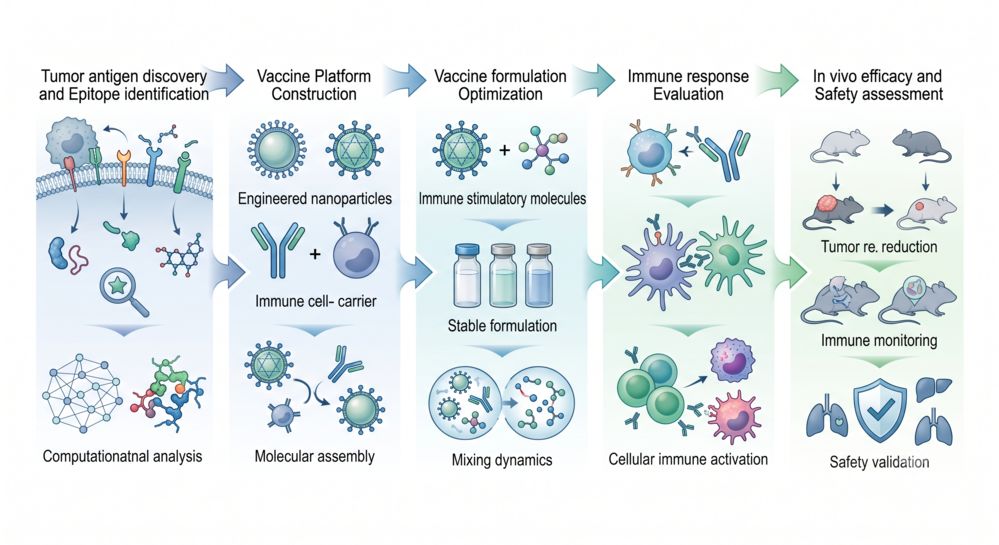
Phase 1 — MUC16 Epitope Mapping & Selection
We analyze the MUC16 ectodomain to identify immunogenic epitopes within the tandem repeat region and the juxta-membrane cleavage site. In silico tools predict MHC binding and B-cell epitope accessibility, while glycopeptide synthesis enables testing of tumor-specific glycoform variants.
Enabling Technologies for CA125 Vaccine Development
Why Choose Creative Biolabs?
Our scientists possess extensive experience with mucin-type antigens, understanding the unique challenges of glycosylation, shedding, and immune evasion that MUC16 presents.
From anti-idiotype antibodies to VLP display and DC-based vaccines, we offer multiple platforms to match your specific research question and translational strategy.
We design epitopes targeting both the shed CA125 domain and the residual juxta-membrane region, ensuring antibodies bind tumor cells regardless of shedding status.
Our in vivo studies combine tumor efficacy with autoimmunity safety panels, providing the balanced data needed for confident preclinical advancement.
Research Insight: VLP-Based MUC16 Vaccine Breaks B-Cell Tolerance
Key Findings from Preclinical VLP-MUC16 Vaccine Studies
Virus-like particle display of a 20-amino-acid juxta-membrane MUC16 ectodomain epitope has demonstrated that B-cell tolerance to this self-antigen can be safely overcome, generating antibodies that recognize ovarian cancer cells.
-
Tolerance Broken Safely: Both DNA-electroporation and alum-formulated VLP regimens were well tolerated in mice, with no evidence of autoimmune pathology in normal MUC16-expressing tissues.
-
Tumor Cell Reactivity: Vaccination-induced IgG antibodies bound the surface of CA125+ OVCAR3 ovarian cancer cells but not CA125-negative SKOV3 cells, confirming specificity.
-
Cross-Species Reactivity: Antibodies raised against murine MUC16 cross-reacted with human MUC16 peptide and vice versa, validating translational relevance of mouse models.
-
Coupling Not Required: Mixing MUC16 peptide with VLP and alum (without covalent coupling) still elicited specific IgG, suggesting VLPs provide robust T-cell help for this epitope.
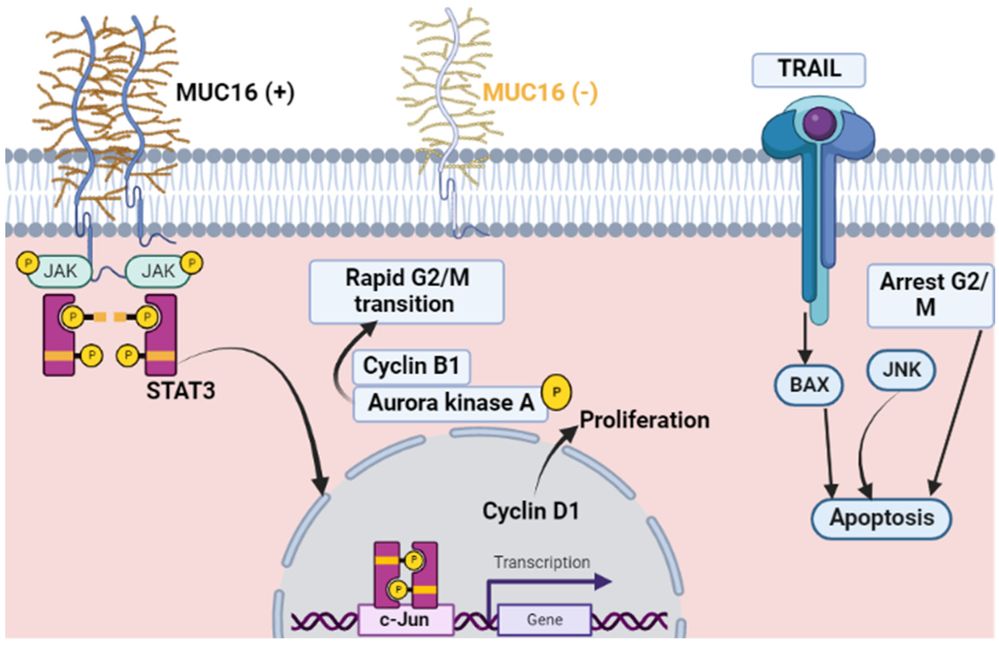
Fig.1 MUC16 promotes tumor cell proliferation through JAK2/STAT3 signaling and c-Jun–mediated Cyclin D1 expression.1,3