PSMA Prostate Cancer Vaccine Development & Broad-HLA Epitope Design
Creative Biolabs provides integrated preclinical development services for PSMA-based cancer vaccines, covering target validation, epitope mapping, multi-platform vaccine construct design (peptide, DNA, mRNA, viral vector, and dendritic cell-based), antigen production, formulation optimization, in vitro potency testing, and in vivo efficacy evaluation. Prostate-specific membrane antigen (PSMA) is a 100 kDa type II transmembrane glycoprotein with folate hydrolase activity that is expressed 100–1000-fold higher in prostate adenocarcinoma than in normal prostate epithelium, with expression levels increasing as disease progresses to metastatic castration-resistant stages. Our team supports researchers developing PSMA-targeted active immunotherapies for prostate cancer and other PSMA-expressing solid tumors, offering customized workflows from computational epitope prediction to syngeneic tumor model efficacy studies, with full quality control and data interpretation at every stage.
PSMA as an Immunotherapeutic Target: Biology and Rationale
A Well-Defined Prostate Cancer Antigen
PSMA is a type II integral membrane protein with a large extracellular domain that displays folate hydrolase (N-acetylated alpha-linked acidic dipeptidase, NAALADase) enzymatic activity. It forms a functional homodimer on the cell surface, and this dimerization is required for both enzymatic function and the presentation of conformational epitopes relevant for immune recognition. In normal tissues, PSMA expression is largely confined to the proximal renal tubules and duodenal mucosa at low levels. In contrast, prostate adenocarcinoma cells overexpress PSMA at levels 100- to 1000-fold higher than benign prostate epithelium, and this overexpression intensifies with advancing Gleason grade, metastatic potential, and androgen-independent progression. PSMA is also expressed on the neovascular endothelium of multiple non-prostatic solid tumors, including renal, bladder, and pancreatic carcinomas, broadening its potential as a pan-solid tumor vaccine target.
Unlike antibody- or cell-based therapies that require exogenous manufacturing for each dosing cycle, active immunization against PSMA can elicit sustained endogenous T-cell and antibody responses. Multiple vaccine modalities—peptide-pulsed dendritic cells, DNA plasmids, mRNA, viral vector replicons, and spherical nucleic acid conjugates—have demonstrated PSMA-specific immunogenicity in preclinical and early clinical settings, confirming PSMA as a tractable antigen for active immunotherapy.
- Core Preclinical Challenges We Address:
- Overcoming HLA-A2 restriction by identifying promiscuous epitopes for broader population coverage.
- Breaking immune tolerance to a self-antigen through xenogeneic and adjuvant-optimized strategies.
- Selecting the optimal antigen format (peptide vs. nucleic acid vs. cellular) for the intended indication.
- Quantifying PSMA-specific CD8+ and CD4+ T-cell responses in vitro and in vivo.
Multi-Platform PSMA Vaccine Strategy vs. Conventional Peptide-DC Approach
| Key Comparison | Conventional Peptide-Pulsed DC Vaccines | Multi-Platform PSMA Vaccine Strategy |
|---|---|---|
| HLA Coverage | Restricted to HLA-A2+ patients via defined peptide epitopes. | Multi-epitope constructs covering diverse HLA haplotypes. |
| Antigen Format Flexibility | Ex vivo DC manipulation with synthetic peptides only. | Peptide, DNA, mRNA, viral vector, and DC platforms in parallel. |
| Immune Response Breadth | Primarily CD8+ T-cell induction; limited humoral response. | Coordinated CD4+/CD8+ T-cell plus anti-PSMA antibody responses. |
| Scalability & Reproducibility | Labor-intensive ex vivo cell processing per patient batch. | In vivo deliverable formats amenable to standardized production. |
End-to-End PSMA Vaccine Service Packages
Our preclinical PSMA vaccine services are organized into modular packages that can be combined or customized to fit specific project goals. All modules are fully adaptable—from epitope selection and adjuvant pairing to antigen delivery system and animal model choice—ensuring alignment with the intended tumor indication and translational strategy.
Epitope Mapping & Target Validation
Systematic identification of PSMA-derived T-cell epitopes with broad HLA coverage and confirmed immunogenicity.
- Computational Screening: In silico prediction of MHC-I and MHC-II binding affinities across PSMA extracellular domain.
- Overlapping Peptide Libraries: Construction and screening of 15-mer overlapping peptide sets spanning full-length PSMA.
- HLA Restriction Analysis: Identification of promiscuous epitopes beyond classical HLA-A2 restriction.
- Immunogenicity Validation: In vitro T-cell activation assays using healthy donor PBMCs.
Peptide-Based PSMA Vaccine Design
Construction of synthetic long peptide (SLP) and multi-epitope vaccine candidates with optimized adjuvant pairing.
- SLP Design: Synthesis of 20–35-mer long peptides encompassing identified CD8+ and CD4+ epitopes.
- Multi-Epitope Assemblies: Linkage of multiple PSMA epitopes with universal T-helper epitopes.
- Adjuvant Screening: Evaluation of TLR agonists, saponin-based adjuvants, and cytokine combinations.
- Formulation Optimization: Liposomal and particulate delivery systems for enhanced peptide stability.
Nucleic Acid Vaccine Construction
Design and production of DNA plasmid and mRNA vaccine constructs encoding PSMA with optimized expression cassettes.
- DNA Plasmid Design: Codon-optimized PSMA sequences with T-helper fusion domains (e.g., tetanus toxin fragment C).
- mRNA Constructs: In vitro transcribed mRNA with modified nucleosides for enhanced stability and translation.
- Delivery Optimization: Electroporation and lipid nanoparticle formulation for nucleic acid delivery.
- Xenogeneic Approach: Cross-species PSMA constructs to break self-tolerance in murine models.
DC-Based PSMA Vaccine Preparation
Preparation and optimization of dendritic cell vaccines pulsed with PSMA peptides, proteins, or mRNA.
- Monocyte Enrichment: High-purity CD14+ monocyte isolation from PBMCs or bone marrow.
- DC Maturation: Optimized cytokine and TLR agonist cocktails for mature DC generation.
- Antigen Loading: Peptide pulsing, mRNA electroporation, or recombinant PSMA protein uptake.
- Phenotype Verification: Flow cytometry confirmation of CD11c, CD80, CD83, CD86, and MHC-II expression.
In Vivo Efficacy Evaluation
Comprehensive preclinical efficacy studies in syngeneic, xenograft, and humanized mouse models of prostate cancer.
- Tumor Models: Syngeneic prostate cancer models (TRAMP-C1, RM1) and PSMA-expressing xenografts.
- Vaccination Schedules: Prime-boost regimens with electroporation or adjuvant co-administration.
- Immune Profiling: TIL analysis, splenocyte IFN-γ ELISpot, and anti-PSMA antibody titers.
- Combination Studies: Evaluation of PSMA vaccines with immune checkpoint inhibitors or androgen deprivation.
Quality Control & Characterization
Rigorous characterization and quality assurance for all PSMA vaccine constructs and cell products.
- Construct Verification: Sequence confirmation, endotoxin testing, and identity assays for nucleic acid vaccines.
- Peptide Quality: HPLC purity analysis, mass spectrometry confirmation, and stability monitoring.
- DC Product Release: Viability, sterility, and potency assays for DC-based vaccine batches.
- Potency Assays: Standardized T-cell activation and cytotoxicity readouts for batch-to-batch consistency.
Preclinical PSMA Vaccine Development Workflow
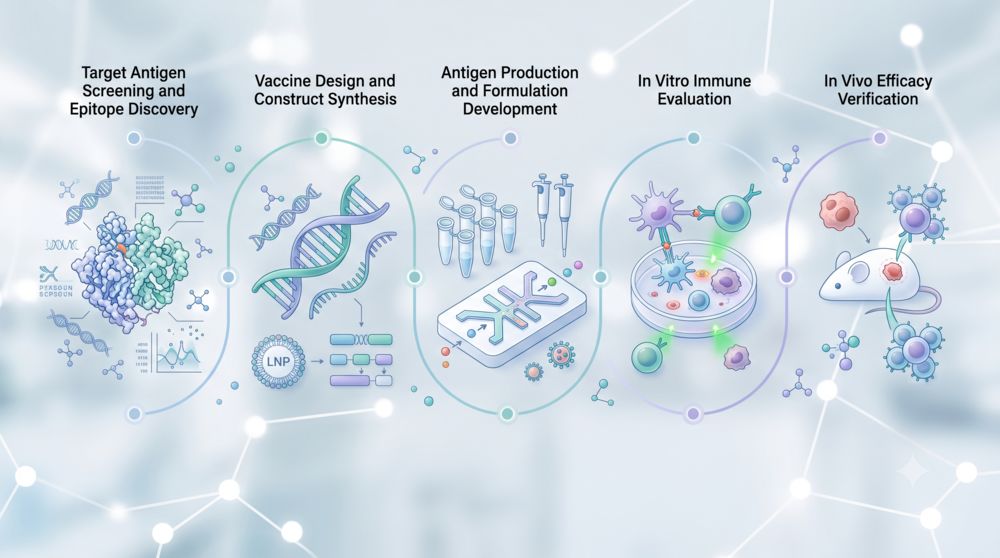
Phase 1 — PSMA Target Analysis & Epitope Selection
We begin with comprehensive in silico analysis of the PSMA extracellular domain to identify candidate T-cell epitopes. Binding affinity prediction across multiple HLA alleles (MHC-I and MHC-II) is integrated with published immunopeptidomics data to prioritize epitopes with the highest likelihood of natural presentation. Special attention is given to identifying promiscuous epitopes that extend coverage beyond the classical HLA-A2 restriction.
Enabling Technologies for PSMA Vaccine Development
Why Choose Creative Biolabs?
Our scientists bring years of experience in prostate cancer antigen biology and have supported multiple PSMA-targeted vaccine programs across diverse platforms and animal models.
Rather than forcing a single vaccine format, we evaluate peptide, DNA, mRNA, viral vector, and DC platforms in parallel to identify the optimal strategy for each project.
From syngeneic TRAMP models to humanized mouse systems, we select and validate the most relevant in vivo models for PSMA vaccine efficacy testing and combination studies.
Every project concludes with a comprehensive data package including construct sequences, QC reports, immunogenicity profiles, and in vivo efficacy summaries suitable for internal decision-making.
Research Insight: PSMA DNA Vaccine Immunogenicity in Prostate Cancer
Key Findings from Preclinical & Early Clinical Studies
PSMA-targeted vaccines have demonstrated measurable immunogenicity across multiple platforms, providing a strong rationale for continued preclinical optimization of antigen design, delivery, and combination strategies.
-
DNA Vaccine Efficacy: A DNA vaccine encoding PSMA fused to a T-helper cell stimulator domain was evaluated in a dose-escalation study. Vaccinated subjects showed a significant increase in PSMA-specific CD8+ and CD4+ T cells, and PSA doubling time improved from 11.97 months to 16.82 months (p = 0.04) compared to non-vaccinated controls.1
-
DC-Based PSMA Vaccines: Dendritic cells pulsed with PSMA peptides (PSM-P1 and PSM-P2) have induced measurable T-cell responses in HLA-A2+ subjects, with some partial clinical responses lasting beyond one year. Multi-peptide DC cocktails targeting PSMA alongside PSA, PAP, and PSCA have achieved broader T-cell activation.2
-
Alphavirus Replicon Particles: A single injection of PSMA-VRP elicited robust Th-1-biased cellular and humoral immunity in murine models, including potent CTL activity and IgG2a/IgG2b antibody responses, demonstrating that in vivo deliverable viral vector platforms can rival ex vivo DC approaches.2
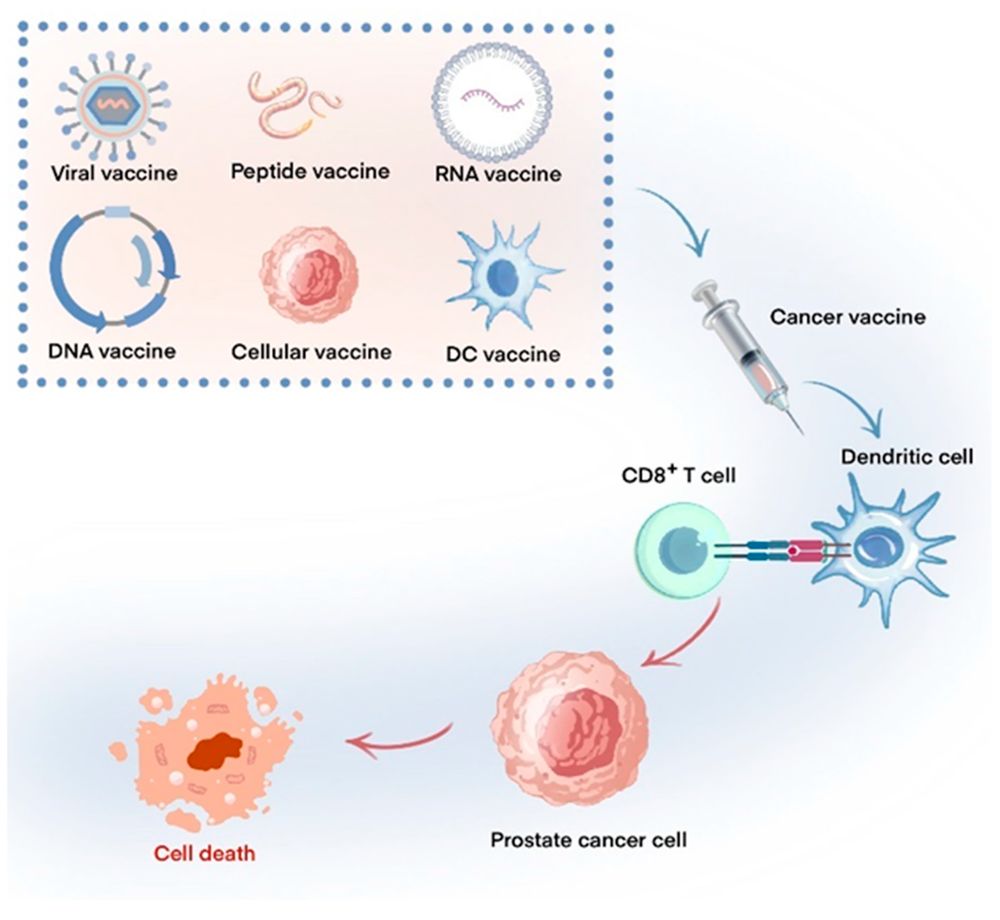
Fig.1 Types of prostate cancer vaccines and their mechanisms of action.1, 4