TDO2-Targeting Cancer Vaccine & Kynurenine-AhR Axis Development
Creative Biolabs provides integrated preclinical development services for TDO-based cancer therapy, encompassing TDO epitope mapping, vaccine construct design, in vitro T cell functional assays, in vivo efficacy evaluation, and combination strategy assessment. Tryptophan 2,3-dioxygenase (TDO) is a tetrameric heme-containing enzyme that catalyzes the rate-limiting step of tryptophan degradation along the kynurenine pathway. Unlike the structurally related IDO, TDO is constitutively expressed in the liver but becomes aberrantly upregulated in multiple human tumors—including melanoma, breast cancer, glioma, hepatocellular carcinoma, and ovarian carcinoma—where it depletes local tryptophan and accumulates immunosuppressive kynurenine metabolites. Our scientists support researchers investigating TDO as a therapeutic vaccination target, aiming to reactivate T cell immunity against TDO-expressing immunosuppressive cells within the tumor microenvironment.
Targeting TDO to Reverse Tumor Immune Paralysis
The TDO–Kynurenine Immunosuppressive Axis
TDO (encoded by the TDO2 gene) is a tetrameric oxidoreductase that initiates the first committed step of tryptophan catabolism along the kynurenine pathway. Under normal physiology, hepatic TDO regulates systemic tryptophan homeostasis. In cancer, however, TDO becomes pathologically upregulated by sex steroid hormones and glucocorticoids, leading to two simultaneous immunosuppressive events: depletion of local tryptophan—which activates the amino acid starvation kinase GCN2 and arrests effector T cell proliferation—and accumulation of kynurenine and downstream metabolites that engage the aryl hydrocarbon receptor (AhR), driving regulatory T cell differentiation and tolerogenic dendritic cell programming. This dual mechanism makes TDO a mechanistically distinct target from IDO and a compelling candidate for therapeutic vaccination.
TDO-specific CD8+ and CD4+ T cells can directly kill TDO-expressing immunosuppressive cells and release pro-inflammatory cytokines that dismantle the tolerogenic tumor microenvironment. Unlike small-molecule TDO inhibitors that only block enzymatic activity, a TDO-targeted vaccine may achieve durable immune reactivation by eliminating the cellular source of tryptophan catabolism.
- Core Preclinical Challenges We Address:
- Identifying immunogenic TDO-derived epitopes restricted by multiple HLA alleles.
- Distinguishing TDO-specific T cell phenotypes between healthy donors and cancer patients.
- Selecting vaccine platforms (peptide, DC-pulsed, nucleic acid, viral vector) for optimal TDO presentation.
- Evaluating TDO vaccine efficacy in vivo using syngeneic or humanized tumor models.
TDO Vaccine vs. Small-Molecule TDO Inhibitors: Complementary or Alternative?
| Key Comparison | Small-Molecule TDO Inhibitors | TDO-Based Therapeutic Vaccine |
|---|---|---|
| Mechanism of Action | Reversibly blocks TDO enzymatic activity; tryptophan levels normalize only during dosing. | Induces cytotoxic T cells that actively kill TDO-expressing suppressor cells. |
| Durability of Immune Effect | Short half-life; continuous dosing required to maintain tryptophan restoration. | Long-lived immunological memory sustains anti-TDO response beyond dosing. |
| Target Cell Elimination | Does not remove TDO-expressing stromal or immune-suppressive cells. | CD8+ T cells directly lyse TDO+ suppressive cells, reducing the cellular source. |
| Combination Potential | Often combined with checkpoint inhibitors; rapid metabolic rebound if stopped. | Synergizes with checkpoint blockade, chemo, and adoptive T cell therapy. |
TDO Vaccine Development Service Packages
Our preclinical services span the full TDO vaccine development pipeline, from epitope discovery through in vivo proof-of-concept. Each module can be tailored to your tumor indication, HLA restriction requirements, and combination strategy goals.
TDO Epitope Mapping & Validation
Systematic identification of TDO-derived T cell epitopes across diverse HLA backgrounds.
- Peptide Library: Overlapping peptide scanning of full-length TDO protein for CD8+ and CD4+ epitopes.
- HLA Binding Prediction: In silico ranking of candidate peptides by MHC-I and MHC-II binding affinity.
- T Cell Activation Assay: In vitro restimulation of donor PBMCs with candidate epitopes.
- Epitope Confirmation: Intracellular cytokine staining and ELISpot for IFN-gamma-positive T cell clones.
Vaccine Construct Design
Rational engineering of TDO-targeting vaccine constructs across multiple platform technologies.
- Peptide Vaccine: Synthetic long peptide (SLP) pools with adjuvant screening for optimal immunogenicity.
- Nucleic Acid Vaccine: DNA and mRNA constructs encoding TDO epitopes with T-helper fusion domains.
- Viral Vector: Recombinant viral vector constructs for enhanced in vivo antigen delivery.
- DC-Pulsed Vaccine: Monocyte-derived DCs loaded with TDO peptides for ex vivo antigen presentation.
In Vitro T Cell Response Evaluation
Comprehensive assessment of TDO-specific T cell activation, cytotoxicity, and cytokine profile.
- T Cell Priming: Co-culture of TDO-pulsed DCs with autologous CD8+ and CD4+ T cells.
- Cytotoxicity Assay: Killing of TDO-expressing target cells measured by flow cytometry.
- Cytokine Profiling: Multiplex analysis of Th1/Th2/Th17 cytokine secretion patterns.
- Phenotype Characterization: Comparison of TDO-reactive T cell phenotypes between healthy donors and cancer patient PBMCs.
In Vivo Efficacy & TME Analysis
Preclinical proof-of-concept in syngeneic and humanized mouse tumor models.
- Syngeneic Models: Murine TDO-expressing tumor cell lines in immunocompetent mice.
- Humanized Models: Human immune system reconstitution for HLA-restricted TDO epitope testing.
- TME Profiling: Tryptophan/kynurenine quantification, TIL analysis, and Treg frequency measurement.
- Tumor Growth Monitoring: Longitudinal measurement of tumor volume and survival benefit.
Combination Strategy Assessment
Evaluation of TDO vaccines in combination with immunotherapeutic and conventional modalities.
- Checkpoint Blockade: TDO vaccine combined with anti-PD-1 or anti-CTLA-4 in in vivo models.
- Chemotherapy: Assessment of TDO vaccine plus immunogenic chemotherapy regimens.
- Adoptive T Cell Therapy: Co-administration with TCR-engineered or CAR-T cell products.
- Dose Scheduling: Optimization of vaccination intervals and combination sequencing.
QC & Analytical Services
Quality assurance and characterization for translational-ready TDO vaccine candidates.
- Peptide QC: Purity, identity, and stability testing of synthetic TDO peptides.
- Construct Verification: Sequence confirmation and expression validation for nucleic acid and viral vector constructs.
- Potency Assay: Functional T cell activation readout as a release criterion for vaccine lots.
- Documentation: Comprehensive data packages for preclinical study reports.
Preclinical TDO Vaccine Development Workflow
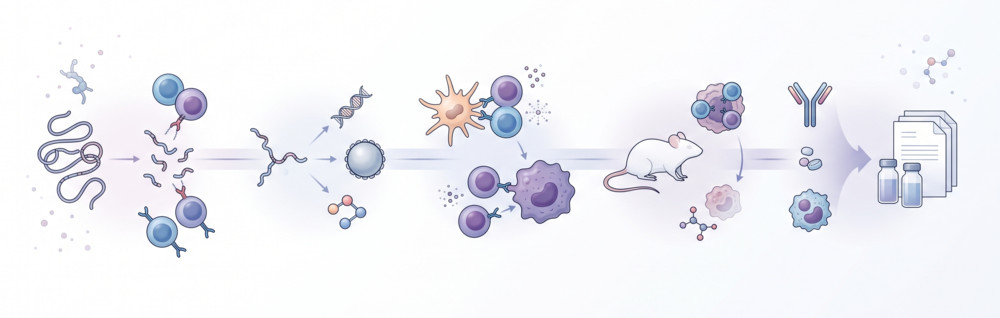
Phase 1 — TDO Epitope Identification & Immunogenicity Screening
Overlapping peptide libraries spanning the full TDO protein sequence are screened for HLA class I and class II binding. Candidate epitopes are validated using in vitro T cell activation assays with donor PBMCs, prioritizing peptides that elicit IFN-gamma-producing CD8+ and CD4+ T cell responses.
Enabling Technologies for TDO Vaccine Development
Why Choose Creative Biolabs?
Our scientists possess extensive knowledge of the tryptophan-kynurenine metabolic axis and its role in tumor immune evasion, ensuring scientifically grounded vaccine design.
From peptide and DC-pulsed formulations to nucleic acid and viral vector platforms, we offer flexible construct options matched to your research question.
Our workflow couples functional T cell assays with metabolic biomarker quantification, providing a dual-evidence approach for TDO vaccine efficacy.
We have established protocols for evaluating TDO vaccines alongside checkpoint inhibitors, chemotherapy, and adoptive cell therapy in preclinical tumor models.
Research Insight: TDO as an Emerging Immune Checkpoint and Vaccine Target
Key Findings from Preclinical TDO Research
TDO has emerged as a mechanistically distinct immune checkpoint that operates alongside IDO1 to suppress anti-tumor immunity through the kynurenine-AhR signaling axis.
-
Pan-Cancer Prognostic Significance: A meta-analysis of 667 patients across nine studies demonstrated that TDO2 overexpression is significantly correlated with poor overall survival (HR = 2.58, 95% CI = 1.52–4.40, p = 0.0005) and advanced TNM stage, establishing TDO as a pan-cancer prognostic biomarker and immunotherapy target.1
-
Dual Enzymatic Targeting: Unlike IDO1, which is induced by inflammatory cytokines, TDO is constitutively expressed in glioblastoma via C/EBPbeta transcription factor and drives kynurenine-mediated AhR activation independently of inflammatory signaling, suggesting that TDO-specific vaccines may address a non-redundant immunosuppressive pathway.
-
Kynurenine Pathway Vulnerabilities: Comprehensive analysis of the kynurenine pathway in cancer reveals that TDO2, alongside IDO1, represents a multi-faceted metabolic vulnerability that can be targeted therapeutically. TDO2 expression correlates with immune checkpoint-related gene markers including CD80, CD86, and LAIR1, and positively associates with dendritic cell infiltration across multiple cancer types.3
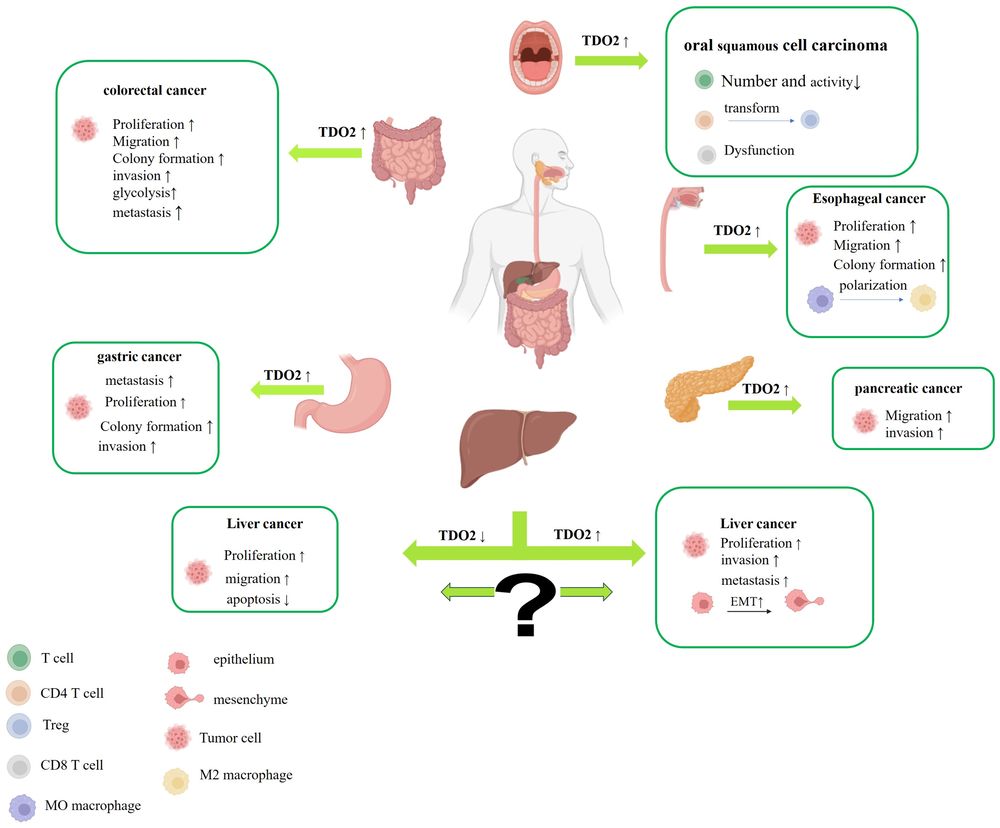
Fig.1 Association of TDO2 with malignant digestive system diseases.3,4