Chitosan Oligosaccharides
What is Chitosan Oligosaccharide?
Chitosan oligosaccharides (COS) are low molecular weight water-soluble molecules derived from chitosan. Chitosan, as a polysaccharide discovered in chitin, stands second after cellulose as the most abundant biopolymer occurring in nature. Oligomers, composed of D-glucosamine and N-acetyl-D-glucosamine residues connected by β-1,4 glycosidic bonds, contain 2-20 monomer units, with molecular weights below 3,500 Da. COS derivatives demonstrate superior solubility and bioavailability because they possess shorter polymer chains and possess protonated amino groups when in a physiological setting compared to the parent compound chitosan.
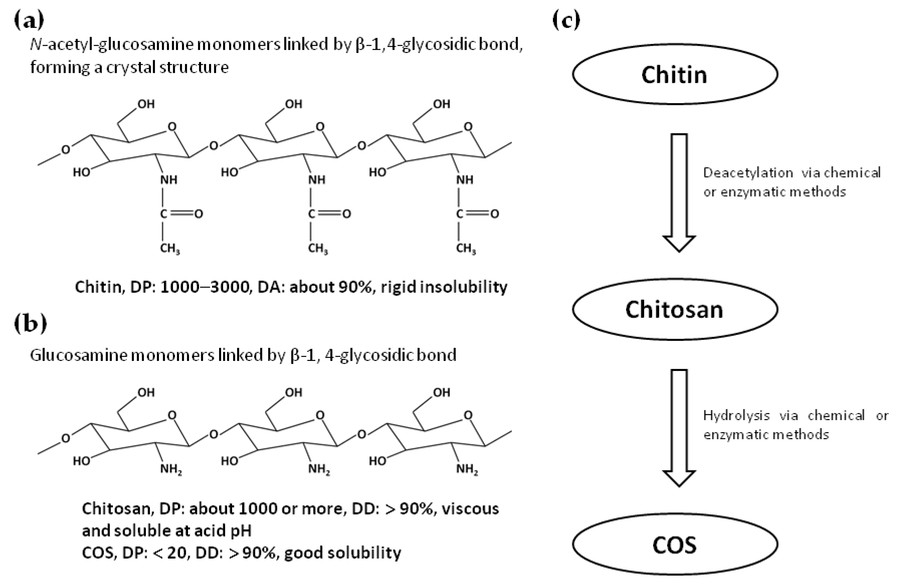 Fig.1 The structures of chitin, chitosan, and COS.1,3
COS demonstrate superior water solubility and bioavailability compared to chitosan because their shorter chains and free amino groups (-NH₂) at the C-2 position of sugar units contribute to these properties. When exposed to acidic conditions, amino groups become protonated which makes COS positively charged, thus, COS are well-known as the only cationic oligosaccharide occurring naturally. The distinctive positive charge of COS leads to a broad spectrum of bioactive effects including antimicrobial, antioxidant, anti-inflammatory, and anticancer properties. Creative Biolabs recognizes the fast-growing demand for structurally diverse biofunctional oligosaccharides. We proudly provide custom oligosaccharide synthesis services that are customized to support your research goals in chitosan oligosaccharide development and therapeutic applications as well as other areas.
Chitosan Oligosaccharide vs Chitosan
Though both COS and chitosan stem from the same biological origin, their physicochemical properties differ profoundly.
|
|
Chitosan
|
Chitosan Oligosaccharides (COS)
|
|
Molecular Weight
|
>10,000 Da
|
<3,500 Da
|
|
Degree of Polymerization
|
>50
|
2–20
|
|
Solubility
|
Limited (acidic)
|
High (neutral and acidic)
|
|
Bioavailability
|
Low
|
High
|
|
Application Scope
|
Narrow
|
Broad (biomedical, agriculture)
|
COS can be generated through enzymatic hydrolysis using chitosanases or by controlled chemical degradation, producing bioactive fragments that retain functional integrity. Their enhanced solubility and low immunogenicity make them attractive in diverse sectors. As your reliable glycoscience partner, Creative Biolabs delivers precision-engineered chitosan oligosaccharides with strict quality control and tunable structural features to accelerate your innovations.
COS Service Integration at Creative Biolabs
To fully unlock the potential of COS in research and development, accurate structural control and functional validation are key. We make this seamless for you:
|
COS-Related Application
|
Creative Biolabs Services
|
Service Highlights
|
|
Drug delivery & nanocarriers
|
Custom Oligosaccharide Synthesis
|
Custom chain length, high purity, scalable synthesis
|
|
Mechanistic/biological studies
|
Oligosaccharides Analysis Services
|
LC-MS, CE, FT-IR-based structure validation and bioactivity assays
|
|
Therapeutic formulation & testing
|
One-stop service integration
|
From synthesis to in vitro/in vivo validation under expert guidance
|
Whether you're formulating COS for anti-inflammatory agents or investigating COS as immunomodulators, we make complex workflows easy—from synthesis to downstream analysis—all under one roof.
Biomedical Applications of Chitosan Oligosaccharides
Immunomodulatory Functions
COS enhance immune responses by activating NK cells, macrophages, and T-cells, boosting cytokines such as IL-2 and IFN-γ. They also help shape the gut microbiota for stronger mucosal immunity.
Antitumor Properties
COS induce apoptosis, suppress angiogenesis, and assist chemotherapeutics by reducing toxicity and enhancing drug uptake—offering synergistic strategies in cancer treatment.
Management of Metabolic Disorders
By regulating cholesterol synthesis and improving insulin sensitivity, COS are effective in combating hyperlipidemia, diabetes, and metabolic syndrome.
Wound Healing and Inflammation Control
Through enhanced fibroblast activity and cytokine suppression (e.g., IL-6, TNF-α), COS accelerate tissue repair and reduce chronic inflammation.
Neuroprotection
COS reduce oxidative stress and neuroinflammation, showing promise in Alzheimer's models and other neurodegenerative diseases.
Other Biological Applications of COS
|
Application Area
|
Use Cases
|
|
Agriculture
|
- Enhances plant resistance to pathogens
- Regulates soil microbiota
|
|
Food Industry
|
- Antimicrobial preservative for fruits and vegetables
- Prebiotic for mineral absorption
|
|
Biomaterials & Drug Delivery
|
- Vehicle for insulin and antiviral drugs (e.g., rifampicin)
- Scaffold for hydrogels and wound dressings
|
Chitosan oligosaccharides represent an up-and-coming group of functional molecules that find applications across health care, agriculture, and industrial fields. Next-generation biopolymers are defined by their superior bioavailability along with structural versatility and robust bioactivities. These molecules provide immunomodulatory and anticancer properties alongside neuroprotective and prebiotic functions which establish their essential role in current biomedicine and biotechnology practices. Creative Biolabs demonstrates all commitment to assisting you with the implementation of COS-based innovations. Our comprehensive service platform supports all your needs from formulation optimization to oligosaccharide engineering without sacrificing quality or speed. Start the conversation with us today so we can collaborate to transform complex challenges into clear solutions while maximizing potential outcomes.
Published Data
A recent study isolated COS fractions from shrimp shells and compared high and low molecular weight variants. Using GPC, LC-MS, TLC, and FT-IR, researchers identified that low-weight COS46 had superior antioxidant capacity and liver-protective functions in CCl₄-induced injury models. These findings affirm that molecular weight plays a crucial role in COS bioactivity—a parameter Creative Biolabs can finely tune in custom synthesis for optimized therapeutic efficacy. If you need to verify the structure or function of your COS sample, our advanced oligosaccharides analysis services guarantee accuracy and reproducibility across analytical platforms.
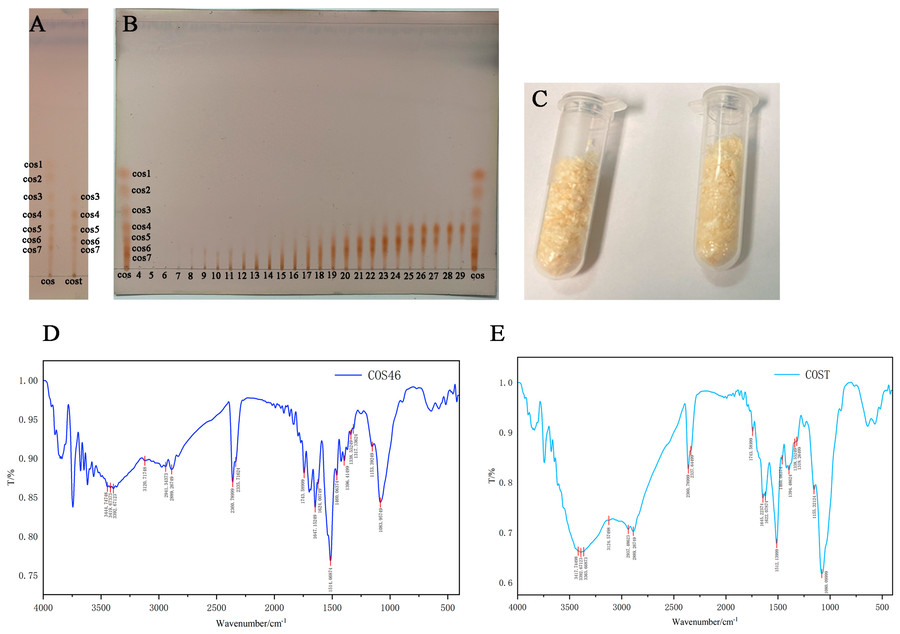 Fig.2 TLC and infrared spectrum test of chitosan oligosaccharides with different molecular weight.2,3
FAQs
Q: What are the benefits of chitosan oligosaccharides?
A: Chitosan oligosaccharides offer excellent water solubility, biocompatibility, and broad bioactivity—ranging from antimicrobial and anti-inflammatory effects to enhanced drug delivery and immune modulation. They're ideal for biomedical, agricultural, and nutraceutical applications.
Q: How do you help in chitosan oligosaccharides analysis?
A: Creative Biolabs provides comprehensive COS analysis using LC-MS, CE, and FT-IR to verify purity, molecular weight, and structure. Our data-driven approach ensures accurate characterization for research, formulation, or therapeutic development.
References
-
Guan, Zhiwei, and Qiang Feng. "Chitosan and chitooligosaccharide: The promising non-plant-derived prebiotics with multiple biological activities." International Journal of Molecular Sciences 23.12 (2022): 6761. https://doi.org/10.3390/ijms23126761
-
Wang, Kai, et al. "Isolation and purification of chitosan oligosaccharides (mw≤ 1000) and their protective effect on acute liver injury caused by CCl4." Marine Drugs 22.3 (2024): 128. https://doi.org/10.3390/md22030128
-
Distributed under Open Access license CC BY 4.0, without modification.
Related Services
Resources
For Research Use Only.