End-to-End Preclinical Services for CTLA-4 Blockade-Based Cancer Therapy
Creative Biolabs provides end-to-end preclinical development services for CTLA-4 blockade-based cancer immunotherapy, covering target assessment, anti-CTLA-4 antibody design and screening, isotype/Fc-engineering, antibody production and characterization, in vitro functional validation (receptor occupancy, T-cell activation, Treg depletion), in vivo efficacy studies in syngeneic or humanized tumor models, and combination-strategy support. This solution is suitable for researchers developing anti-CTLA-4 monoclonal antibodies, engineering Fc for enhanced effector function, dissecting Treg depletion mechanisms, modeling checkpoint combinations, or evaluating immunotherapy responses across tumor indications. Our scientists can provide antibody engineering, customized workflows, assay development, quality control, data interpretation, and integrated preclinical study packages tailored to your target isotype, mechanism of action, and translational goals.
Targeting CTLA-4: A Foundational Immune Checkpoint for Cancer Immunotherapy
A Negative Regulator of T Cell Priming
Cytotoxic T lymphocyte-associated protein 4 (CTLA-4; CD152) was the first clinically targeted immune checkpoint receptor. It is upregulated on the plasma membrane of conventional T cells shortly after activation, where it competes with CD28 for shared B7 ligands (CD80/CD86) on antigen-presenting cells. Because CTLA-4 has a markedly higher affinity for these ligands than CD28, it functions as a dominant-negative brake that limits the co-stimulatory signal required for full T cell priming and clonal expansion.
Antibody-mediated blockade of CTLA-4 has been shown to enhance tumor rejection in multiple murine models and to establish long-lasting immune memory. Fc-driven engagement with Fcγ-receptor-bearing cells also enables selective depletion of intra-tumoral regulatory T cells (Tregs), a mechanism that distinguishes CTLA-4 blockade from PD-1/PD-L1 inhibition and shapes both efficacy and toxicity profiles.
- Core Preclinical Challenges We Address:
- Selecting the optimal IgG isotype and Fc format for maximal Treg depletion.
- Engineering the Fc for enhanced FcγRIIIA binding while preserving safety.
- Choosing syngeneic versus humanized mouse models for translatable readouts.
- Quantifying tumor-specific T cell expansion and Treg depletion in vivo.
How Anti-CTLA-4 Antibodies Differ from Other Checkpoint Blockades
| Key Comparison | PD-1/PD-L1 Blockade | Anti-CTLA-4 Antibodies |
|---|---|---|
| Stage of Immune Response | Acts on the effector phase within the tumor microenvironment. | Acts at the priming phase in secondary lymphoid tissues. |
| Mechanism of Action | Reverses exhausted T cell phenotype by releasing an inhibitory brake. | Outcompetes CD28 for B7 ligands AND depletes intra-tumoral Tregs via Fc effector function. |
| T Cell Repertoire Effect | Mostly reactivates pre-existing exhausted TIL clones. | Broadens the tumor-reactive T cell repertoire, including novel clonotypes. |
| Fc Engineering Relevance | Fc is often silenced to avoid unwanted effector engagement. | Fc isotype selection is a critical driver of Treg depletion and overall efficacy. |
End-to-End Anti-CTLA-4 Antibody Preclinical Service Packages
Our preclinical services are structured into flexible, modular packages. We understand that every anti-CTLA-4 program is unique; therefore, all modules can be fully customized—from isotype selection to Fc engineering strategy and choice of syngeneic versus humanized models—to align with your therapeutic hypothesis and tumor indication.
Target Assessment & Antibody Design
Strategic planning and antibody blueprinting aligned to your tumor indication and mechanism of action.
- CTLA-4 Epitope Mapping: In silico and structural analysis of human/mouse CTLA-4 to identify binding regions.
- Isotype Strategy: Decision framework for human IgG1, IgG2, IgG4, or engineered Fc variants.
- Cross-Reactivity Plan: Selection of species for preclinical development (mouse, cynomolgus).
- Customized Path: Tailored preclinical timelines and risk mitigation strategies.
Fc Engineering & Isotype Optimization
Engineer antibody Fc to maximize FcγR-mediated Treg depletion while balancing safety.
- Affinity Tuning: Enhancing or silencing FcγRIIIA / FcγRIIA binding as required.
- Subclass Switching: Switching between IgG1, IgG2, IgG4 scaffolds or hybrid formats.
- Effector Function QC: ADCC, ADCP, and FcγR binding assays to validate variants.
- Stability Assays: Accelerated and long-term stability of engineered clones.
Antibody Production & Characterization
Recombinant expression and analytical characterization of anti-CTLA-4 candidates.
- Recombinant Production: Mammalian (CHO/HEK) or alternative expression systems.
- Purification: Protein A/G affinity plus polishing chromatography.
- Binding Kinetics: Surface plasmon resonance (SPR) and BLI measurements.
- Epitope Binning: High-resolution mapping against reference clones.
Functional Validation & Treg Depletion Assays
Mechanistic readouts that link Fc engineering choices to functional outcomes.
- Receptor Blockade: CD80/CD86 competition and receptor occupancy assays.
- T Cell Activation: Mixed lymphocyte reaction and dendritic cell co-culture systems.
- Treg Depletion: ADCC/ADCP assays against FoxP3+ T cells from healthy donors.
- Cytokine Profiling: Multiplex measurement of IFN-γ, IL-2, TNF-α and other effectors.
Efficacy & PK/PD in Tumor Models
Translational efficacy studies in mouse and humanized tumor models.
- Syngeneic Models: CT26, B16, and RENCA tumor models for proof-of-concept.
- Humanized Models: NSG-HIS or PBMC-engrafted systems for human anti-CTLA-4 testing.
- Dose-Response: Tumor growth inhibition, complete response, and survival curves.
- Immune Profiling: TIL composition, TCR sequencing, and Treg percentages in tumor.
Combination Therapy & Translational Support
Comprehensive combination study design and translational research support.
- ICI Combinations: Anti-CTLA-4 + anti-PD-1/PD-L1 dosing and scheduling studies.
- Chemo/Radiation: Combination with chemotherapeutics or radiotherapy in vivo.
- Safety Profiling: Body-weight, clinical chemistry, and histopathology readouts.
- Biomarker Analysis: Pharmacodynamic markers and predictive signature discovery.
Optimized Preclinical Workflow for Anti-CTLA-4 Antibody Development
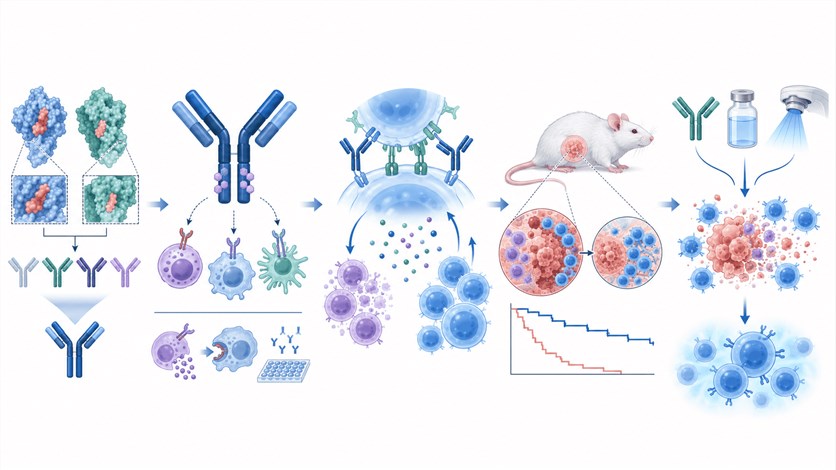
Phase 1 — Antibody Design, Epitope Binning & Isotype Selection
We initiate each program with structural and sequence analysis of human and mouse CTLA-4 to nominate binding epitopes. In parallel, we build a decision matrix for IgG subclass and Fc format selection, balancing FcγR engagement with developability, expression yield, and predicted safety profiles.
Enabling Technologies for Anti-CTLA-4 Antibody Preclinical Studies
Why Choose Creative Biolabs?
Years of focused antibody engineering and immune checkpoint research inform every program design choice, from isotype selection to in vivo study design.
Capability to engineer, express, and characterize engineered Fc variants and to map their functional consequences across species and effector-cell types.
Established syngeneic and humanized mouse tumor models with associated baseline immunology reference data, supporting faster decision-making.
Traceability from construct to final report, with rigorous QC at every step and a streamlined path from antibody design to immune efficacy data.
Research Insight: Fc Effector Function Shapes Anti-CTLA-4 Preclinical Activity
Three Mechanistic Levers Driving Anti-CTLA-4 Activity
Preclinical research has progressively clarified why simply blocking CTLA-4 is not enough: Fc-driven depletion of intra-tumoral regulatory T cells is often the dominant mechanism that translates receptor blockade into durable tumor control.
-
Fc Isotype as a Master Variable: In head-to-head murine studies, identical antigen-binding domains delivered as different IgG subclasses produced strikingly different tumor control, mirroring the divergence observed between clinically deployed anti-CTLA-4 candidates and underscoring how much preclinical efficacy depends on Fc engineering choices.
-
Selective Intra-Tumoral Treg Depletion: Antibodies bearing Fc regions that engage activating Fcγ receptors can selectively eliminate FoxP3+ Treg cells from the tumor microenvironment while sparing peripheral Tregs. This selective depletion is closely tied to anti-tumor efficacy and to the broadening of the tumor-reactive T cell repertoire.
-
Stronger Combination with PD-1/PD-L1 Blockade: Anti-CTLA-4 antibodies that preserve Fc effector function combine synergistically with PD-1/PD-L1 pathway inhibition in murine tumor models, where the two agents act at non-redundant stages of the immune response and accelerate deep regressions and immune memory formation.
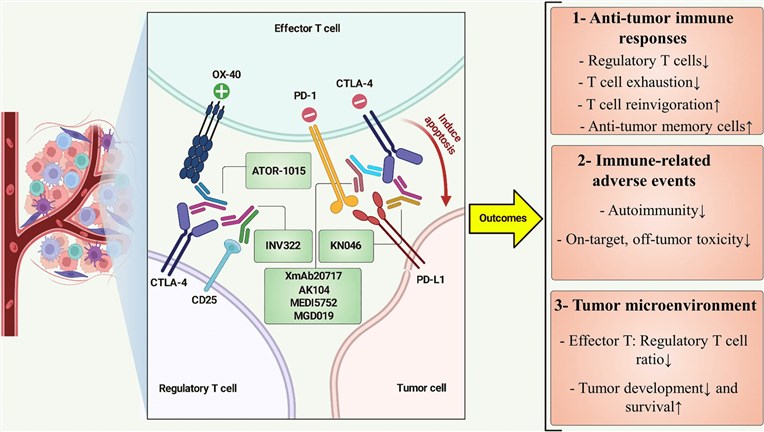
Fig.1 BsAbs targeting CTLA-4 in the cross-talk between immune and cancer cells.1,2