
Preclinical Cancer Sequencing on the HARCS Platform
Creative Biolabs delivers end-to-end preclinical sequencing through the highly accurate and rich content sequencing (HARCS) platform, supporting in vitro and in vivo cancer biology programs with deep coverage of coding exons, transcriptomes, variant hotspots, structural variants, and pharmacogenomic regions. The service covers sample QC, library construction, sequencing execution, alignment, variant calling, annotation, and downstream interpretation, returning publication-ready data packages tailored to tumor indication, sample type, and analytical depth. Researchers building preclinical evidence for neoantigen discovery, biomarker validation, target prioritization, or translational study design can use HARCS to bridge whole-exome, whole-transcriptome, and targeted-panel sequencing under a single workflow standard.
A Single Sequencing Backend for Exome, Transcriptome, and Targeted Capture
From Reads to Reproducible Insights
Modern cancer sequencing programs must resolve rare variants in low-input material, capture full-length isoforms, and still meet reproducibility budgets. HARCS was built as a unified sequencing backend for cancer research: the same wet-lab pipeline, alignment logic, and annotation stack power both exome and transcriptome assays, so variant calls, expression values, and fusion transcripts can be cross-referenced without re-engineering the analysis each time a project pivots.
Rigorous sample QC, optimized library preparation, deep and uniform coverage of difficult genomic regions (high-GC, low-complexity, homologous gene families), and an annotation database that links each variant to disease, drug-response, and regulatory evidence.
- Core Preclinical Challenges We Address:
- Capturing variants in pseudogenes, repeats, and homologous gene families with high-confidence read depth.
- Resolving low-frequency alleles while keeping false-positive variant calls low.
- Linking coding mutations to RNA-level impact for downstream biomarker interpretation.
- Delivering annotation depth that spans exons, splicing introns, regulatory regions, and pharmacogenomic loci.
How HARCS Compares with Generic Sequencing Pipelines?
| Dimension | Generic Sequencing Pipeline | HARCS Platform |
|---|---|---|
| Coverage Uniformity | Common dropouts in GC-rich and repeat regions. | Optimized capture and balanced priming for difficult loci. |
| Variant Calling Accuracy | Generic aligners; limited structural-variant sensitivity. | Multi-algorithm consensus for SNVs, indels, and structural variants. |
| Annotation Depth | Public-only databases; limited curation of regulatory sites. | Disease, pharmacogenomic, splicing, and regulatory-region layers included. |
| Cross-Omics Integration | WES and RNA-seq run as separate deliverables. | One workflow standard across exome, transcriptome, and targeted panels. |
End-to-End HARCS Sequencing Service Packages
Our preclinical sequencing services are organized into modular packages. Every step - from input QC and library prep to alignment, annotation, and downstream interpretation - can be selected a la carte or bundled into a complete project, so you only pay for the analytical depth your study actually needs.
Project Design & Sample Strategy
Strategic planning of study design and optimized sample handling to protect data quality from the start.
- Indication Scoping: Tumor-type, model, and sample-volume feasibility review.
- Input QC Strategy: DNA/RNA integrity assessment before library construction.
- Sequencing Depth Planning: Coverage targets matched to variant discovery goals.
- Comparator Design: Paired tumor/normal, trio, or longitudinal layouts.
Exome Sequencing & Variant Calling
High-resolution whole-exome capture, alignment, and reproducible variant identification.
- Optimized Capture: Deep, uniform coverage of exons and selected regulatory regions.
- HLA-Aware Alignment: Specialized handling of MHC loci and homologous families.
- Somatic & Germline Calling: Matched-normal pipelines plus low-frequency variant detection.
- Structural Variants: Copy-number, fusion, and large rearrangement detection.
RNA Sequencing & Expression Profiling
Total-RNA and mRNA workflows for expression, splicing, fusion, and allele-specific analysis.
- Strand-Specific Libraries: Capture transcript orientation for accurate quantification.
- Isoform Resolution: Full-length transcript and alternative splicing detection.
- Fusion Transcript Calling: Identify chimeric transcripts across gene families.
- Expression Quantification: Gene-, transcript-, and exon-level read counts.
Annotation & Curation
Layered interpretation that ties each variant or transcript to functional, regulatory, and clinical context.
- Variant Annotation: Functional impact, conservation, and population frequency.
- Disease Mapping: Cancer gene, pathway, and tumor-type association flags.
- Pharmacogenomics: Drug-response and adverse-reaction annotation overlays.
- Regulatory Layers: Promoter, enhancer, and splicing-region interpretation.
Cross-Omics Integration
Joint WES + RNA-seq interpretation for biomarker, target, and translational study design.
- Neoantigen Prioritization: Mutation-to-expression-to-HLA-binding pipelines.
- Pathway-Level Reports: Pathway enrichment across SNVs, indels, and expression changes.
- Biomarker Panels: Custom scoring and ranking for preclinical target selection.
- Visualization: IGV-ready BAMs, expression heatmaps, and variant summary plots.
Bioinformatics & QC Deliverables
Reproducible deliverables supported by QC metrics and standardized reporting formats.
- QC Package: Coverage plots, duplication rates, and on-target metrics.
- Standardized Tables: VCF, TSV, and Excel-ready annotation summaries.
- Method Documentation: Reproducible pipelines with version-pinned software.
- Custom Reports: Tailored deliverables for IND-enabling or publication use.
Standardized Preclinical HARCS Sequencing Workflow
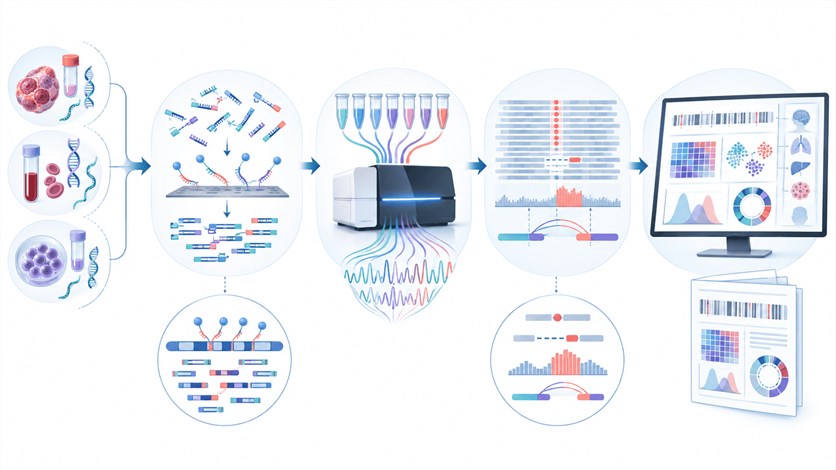
Phase 1 - Sample QC & Input Preparation
Each submission is profiled for nucleic-acid integrity, quantity, and contamination before entering the pipeline. Inputs that fall below thresholds are flagged for re-collection or enrichment so that downstream coverage and variant calls remain reliable across tumor, normal, and model-derived samples.
Enabling Technologies Behind the HARCS Platform
Why Choose Creative Biolabs for HARCS Sequencing?
Exome, transcriptome, and targeted panels share one wet-lab and bioinformatics standard - so data stay comparable as projects expand.
Variant interpretation reaches into intronic splicing regions, regulatory elements, and pharmacogenomic loci rather than stopping at coding variants.
Version-pinned software, structured QC, and standardized file formats make every deliverable ready for downstream reanalysis or audit.
From single-sample exome to large longitudinal tumor-normal cohorts and integrated WES + RNA-seq programs, the platform scales without re-engineering the workflow.
Research Insight: Sequencing Resolution Shapes Downstream Cancer Decisions
Why Coverage Uniformity and Annotation Layers Matter
Sequencing quality in cancer research is determined less by raw read counts than by what those reads actually resolve: rare variants in homologous gene families, full-length isoforms in tumor transcriptomes, and variants with regulatory or pharmacogenomic consequences. Studies that rely on shallow or uneven coverage consistently miss subtle but biologically meaningful events, while studies that over-call without strong annotation drown results in noise.
-
Coverage-Quality Link: Whole-exome and transcriptome studies show that balanced coverage of difficult loci (GC-rich, repetitive, homologous) is the main determinant of whether low-frequency somatic variants are recovered reliably.
-
Annotation as Decision Support: Layered annotation - linking coding variants to regulatory regions, splicing events, and pharmacogenomic loci - turns raw variant lists into ranked candidates that can guide target selection in preclinical programs.
-
WES + RNA-seq Synergy: Integrated exome and transcriptome workflows improve neoantigen and biomarker prioritization by confirming that a genomic variant is expressed and translated, rather than treating DNA and RNA layers as separate deliverables.
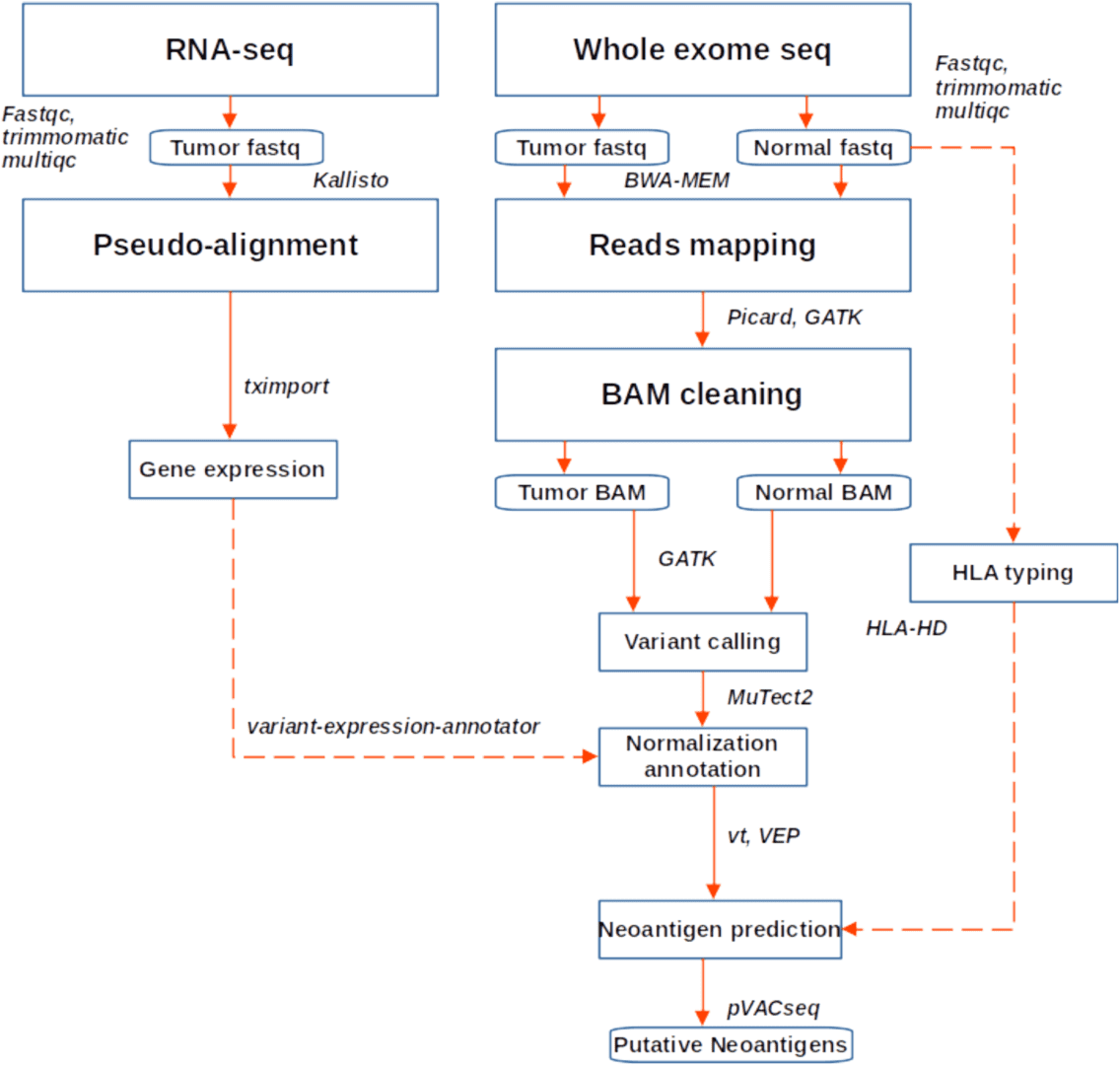
Fig.1 Workflow for neoantigen prediction from WES and RNA sequencing data.1.2