
End-to-End Preclinical Services for PD-1/PD-L1 Immune Checkpoint Blockade
Creative Biolabs provides end-to-end preclinical development services for PD-1/PD-L1 blockade candidates, covering antibody design and engineering, binding-affinity and specificity profiling, functional blocking assay development, in vitro immune-cell assays, in vivo efficacy studies in syngeneic and humanized tumor models, combination-therapy evaluation, and preclinical-to-IND data-package assembly. This solution is well suited to researchers developing monoclonal antibodies, Fc-engineered variants, bispecific checkpoint engagers, or small-molecule/peptide modulators aimed at the PD-1/PD-L1 axis, and to teams that need quantitative receptor-occupancy measurements, predictive biomarker panels, or rigorous preclinical efficacy readouts in immune-competent model systems. Our scientists provide project design, customized workflows, assay development, quality control, data interpretation, and integrated preclinical study packages tailored to your target format, tumor indication, and translational goals.
Targeting the PD-1/PD-L1 Axis for Next-Generation Immunotherapy
The Brake Release Mechanism
Programmed cell death protein 1 (PD-1) and its principal ligand PD-L1 form one of the most validated immune-checkpoint pathways in cancer biology. Engagement of PD-1 on activated T cells delivers inhibitory signals that dampen effector function and promote an immunosuppressive tumor microenvironment. Antibodies that block PD-1 or PD-L1 re-license cytotoxic T-cell killing and have produced durable responses across a growing spectrum of solid tumors, making this axis a cornerstone of modern preclinical immunotherapy development.
The same pathway biology that has driven the field's biggest translational breakthroughs also creates clear, quantifiable preclinical readouts — receptor occupancy, IFN-γ release, tumor-infiltrating lymphocyte (TIL) reactivation, and tumor-growth delay in immune-competent models — that allow iterative candidate optimization before any translational commitment.
- Core Preclinical Challenges We Address:
- Generating high-affinity, species-cross-reactive antibodies that block the PD-1/PD-L1 interaction without unwanted Fc-mediated effects.
- Selecting syngeneic or humanized tumor models whose immune context faithfully reproduces checkpoint responsiveness.
- Differentiating active blockade from compensatory Treg or myeloid-derived suppressor cell (MDSC) expansion.
- Translating preclinical response signals into quantitative biomarker and PK/PD packages for IND submission.
Why Engineered PD-1/PD-L1 Blockade Outperforms Generic Checkpoint Tools?
| Key Comparison | Generic or Off-the-Shelf Reagents | Our Custom PD-1/PD-L1 Blockade Programs |
|---|---|---|
| Epitope Coverage & Specificity | Single clone; limited species cross-reactivity; unknown off-target binding. | Rationally selected epitopes with verified mouse/human/cross-reactive binding profiles. |
| Fc Effector Engineering | Native IgG; unpredictable ADCC, ADCP, or FcγR-mediated clearance. | Optional Fc silencing or enhancement based on desired mechanism of action. |
| Functional Readouts | Often limited to binding ELISA or surface staining. | Multi-modal assays — receptor occupancy, MLR, IFN-γ ELISpot, TIL flow cytometry, tumor-growth delay. |
| Translational Data Package | Scattered results across incompatible protocols. | Integrated preclinical-to-IND datasets aligned with regulatory expectations. |
End-to-End PD-1/PD-L1 Blockade Service Packages
Our preclinical programs are organized into flexible, modular packages. We recognize that every candidate has a unique mechanism, scaffold, and translational goal; therefore, all modules can be fully customized—from Fc format to combination partner selection—so that the resulting data package answers the specific scientific and regulatory questions your team faces.
Antibody Design & Engineering
Generation and engineering of anti-PD-1 or anti-PD-L1 candidates with defined epitope, isotype, and Fc format.
- Display & Hybridoma Screens: Antibody discovery against human/mouse PD-1 or PD-L1 using phage/yeast display and hybridoma workflows.
- Humanization & Affinity Maturation: CDR grafting and iterative maturation to balance affinity, developability, and species cross-reactivity.
- Fc Format Selection: Native, aglycosylated, or engineered Fc to set ADCC/ADCP/FcRn engagement as desired.
- Bispecific Variants: PD-1×co-receptor or PD-L1×TAA dual-target constructs on request.
Binding & Specificity Profiling
Quantitative binding, cross-reactivity, and selectivity measurements across species and PD-1 homologs.
- SPR / BLI Kinetics: High-resolution on-rate, off-rate, and affinity ranking against recombinant targets.
- Cell-Based Binding: Flow cytometry on PD-1-transfected reporters and PD-L1-expressing tumor lines.
- Epitope Binning: Pairwise competition and cross-blockade mapping to differentiate candidate epitopes.
- Selectivity Panels: Counter-screening against PD-L2, CD28, and related B7-family ligands.
Functional Blocking Assays
Quantitative in vitro assays that confirm biological activity of candidate blockade.
- PD-1/PD-L1 Blockade Reporter: Luciferase- or NFAT-based reporter systems quantifying ligand interruption.
- Mixed Lymphocyte Reactions: Primary T-cell proliferation and IFN-γ release across donor pairs.
- Cytokine Multiplexing: IFN-γ, TNF-α, IL-2, IL-10, and granzyme B profiling from co-culture supernatants.
- Receptor Occupancy: Saturation binding and competitive displacement on resting and activated T cells.
In Vivo Efficacy Models
Immune-competent and humanized tumor studies that measure true pharmacodynamic effect.
- Syngeneic Models: CT26, B16, 4T1, and other checkpoint-responsive tumor lines in matched mice.
- Humanized Systems: Human CD34+ hematopoietic-reconstituted mice bearing PD-L1+ xenografts.
- Dosing Studies: Single-dose, multiple-dose, and dose-ranging regimens with PK sampling.
- Tumor & Immune Readouts: Tumor volume, survival, TIL flow cytometry, and NanoString immune profiling.
Combination Therapy Evaluation
Rigorous assessment of synergy between PD-1/PD-L1 blockade and other modalities.
- Chemotherapy Partners: Sequencing, scheduling, and tolerability of anti-PD-1 with standard-of-care cytotoxics.
- Radiotherapy & Targeted: Abscopal effect evaluation with focal irradiation or kinase-inhibitor combinations.
- Vaccine & Cell Therapy: Synergy studies with neoantigen vaccines, adoptive T-cell transfer, or bispecific engagers.
- Statistical Rigor: Two-way ANOVA, Bliss-independence, and combination-index scoring for every cohort.
Biomarker & Preclinical Data Package
Decision-ready readouts aligned with downstream translational and regulatory milestones.
- Pharmacokinetics: Single- and repeat-dose serum PK with ELISA-based detection in mouse, cyno, and human matrices.
- Anti-Drug Antibody (ADA): Tiered screening and confirmatory assays to flag immunogenicity risk early.
- Biomarker Panels: Soluble PD-L1, multiplexed cytokines, and tumor gene-expression signatures as predictive candidates.
- IND-Enabling Reports: Integrated preclinical study reports formatted to streamline IND-enabling submission pathways.
Optimized Preclinical PD-1/PD-L1 Blockade Development Workflow
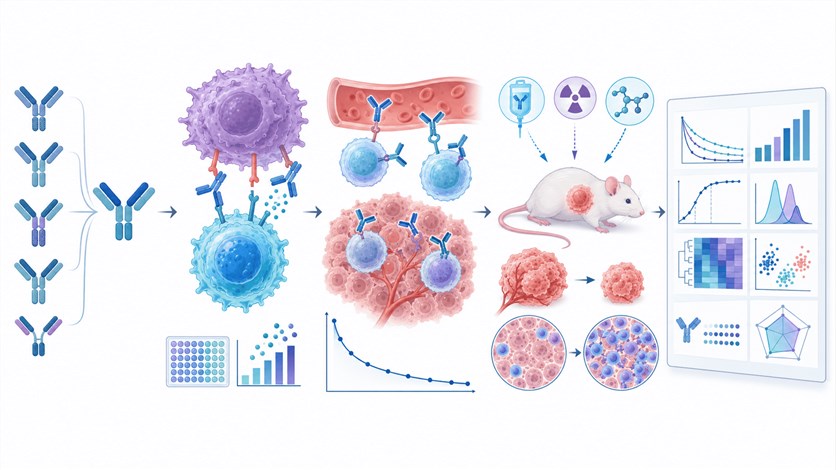
Phase 1 — Target Selection & Candidate Prioritization
We work with your team to define the desired mechanism — PD-1 antagonism, PD-L1 neutralization, or PD-L1-mediated depletion — and shortlist candidates by desired Fc format, species cross-reactivity, and developability criteria before any in vivo commitment.
Enabling Technologies for High-Quality PD-1/PD-L1 Programs
Why Choose Creative Biolabs?
A decade of antibody and immune-checkpoint experience means we navigate Fc-format, epitope, and assay-design trade-offs with the speed your program needs.
From phage-panned hits to in vivo tumor-growth delay, every step is sequenced inside one program — eliminating handoff gaps between discovery, cell-line, and animal-study teams.
Choose antibody engineering alone, or stack on bioassay development, syngeneic efficacy, biomarker panels, and ADA screening — modules flex to match your candidate's current maturity.
PK, ADA, biomarker, and combination-study outputs are formatted to compress directly into IND-enabling dossiers, saving weeks of report rewriting downstream.
Research Insight: Preclinical PD-1/PD-L1 Blockade at Translational Inflection Points
Key Findings from Preclinical PD-1/PD-L1 Studies
The same receptor–ligand axis that drives the field's biggest translational breakthroughs also sets the bar for preclinical rigor — because subtle differences in model, Fc format, or biomarker baseline can flip a candidate's apparent efficacy.
-
Murine Strain and Microbiota Shape Checkpoint Response: The choice of mouse strain, vendor, and even housing microbiota can shift anti-PD-1 efficacy readouts by more than 40% — making syngeneic model selection and reporting discipline as important as the antibody itself.
-
Tumoral PD-L1 Is Only Part of the Predictive Picture: Beyond immunohistochemistry scoring, baseline tumor mutational burden, interferon-γ gene signatures, and immune-cell infiltrate density consistently outperform single-analyte PD-L1 staining as predictors of preclinical response.
-
Combination Schedules Drive the Next Performance Tier: Preclinical programs increasingly rely on rational anti-PD-1 combination arms — chemo, radiotherapy, or vaccine adjuvants — with sequential dosing schedules offering more durable tumor control than simultaneous administration in most checkpoint-responsive models.
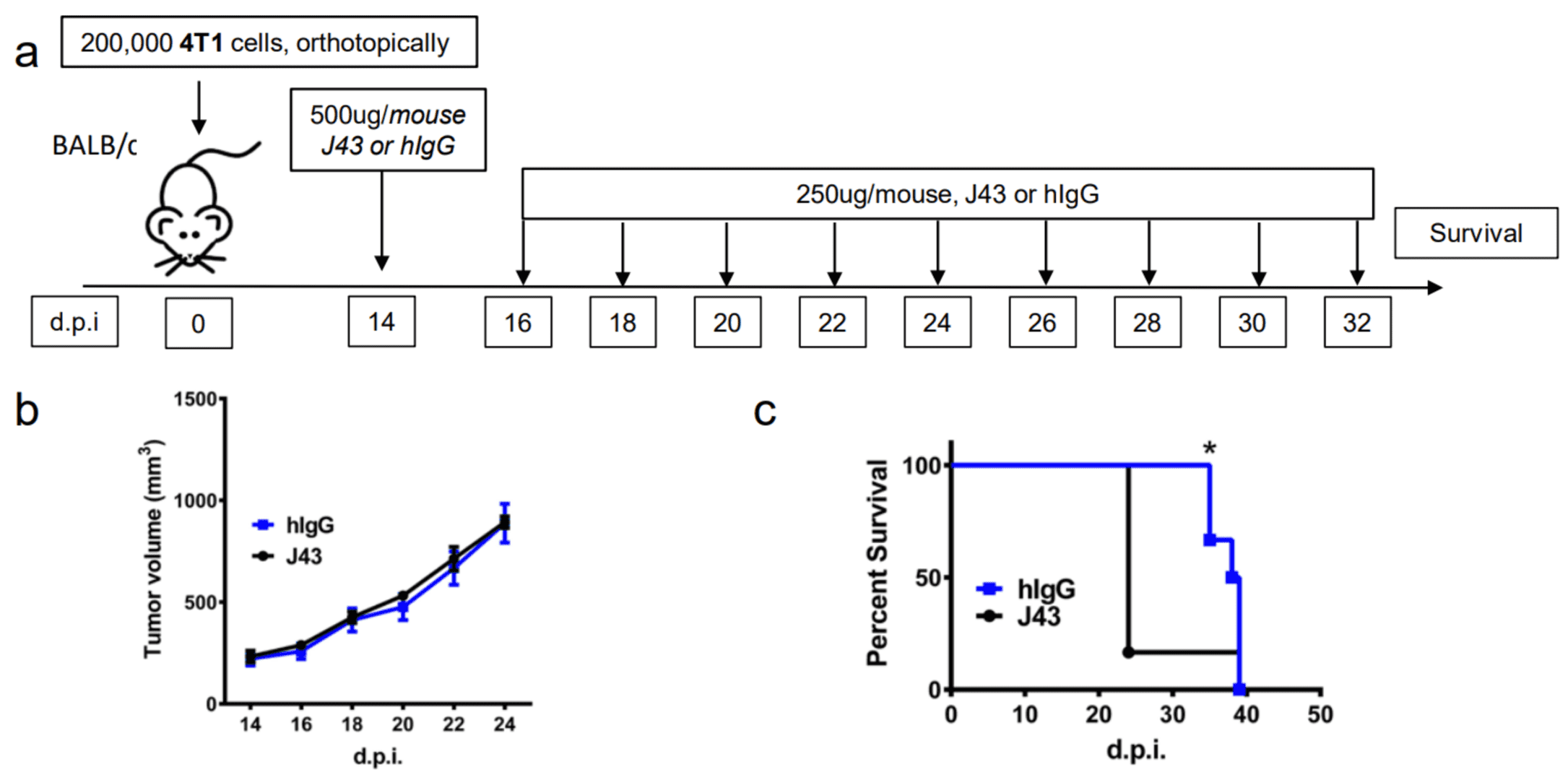
Fig.1 Fatal hypersensitivity induced by repeated xenogeneic α-PD-1 administration in the 4T1 model.1.2