Glycan Extension
Background
Glycoprotein has been a hot spot in recent years, and the extension of glycan has gradually attracted the attention of researchers. As an expert in the field of glycoprotein research, Creative Biolabs has mastered a variety of technologies for glycan extension. We can provide high-quality glycan extension services to customers around the world.
Glycans are ubiquitous in organisms and play an irreplaceable role in many biological processes, such as protein folding and degradation, cell adhesion and transportation, cell signal transduction, and pathogen recognition and immune response. Abnormal cell surface glycan profiles are usually associated with a variety of diseases. Therefore, elucidating the structure and function of glycans is essential for understanding carbohydrate-related biology.
Most known glycans have genetic diversity. This is mainly due to the variable and multiple connections of glycan building blocks and their assembly process in biological systems. Unlike the precise template-directed transcription/translation of nucleic acid/protein, glycan structure is determined by the activity of various glycan biosynthetic enzymes and the availability of donor substrates. The expression, activity, substrate specificity, and localization of each enzyme may affect the assembly of glycans.
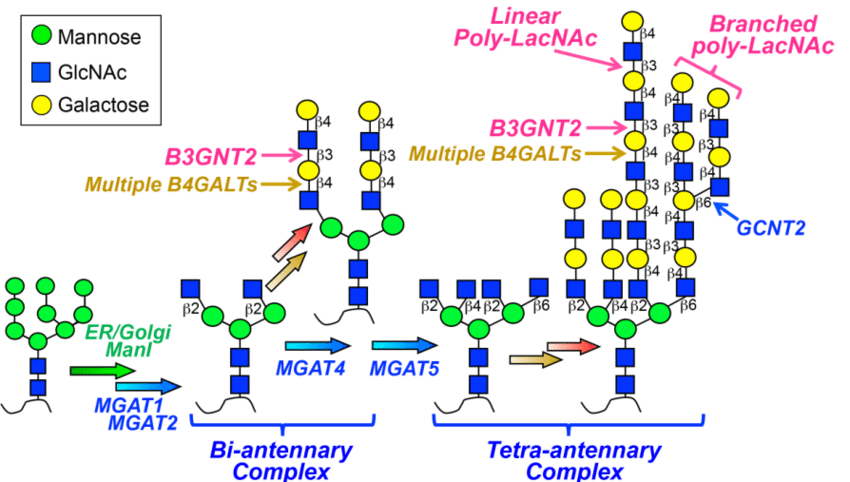 Fig.1 The synthesis and extension of polylactosamine.1, 2
Methods of Glycan Extension
-
Enzymatic extension of glycans
Understanding the regulation mechanism of glycan structure regulation is significantly important to organisms. Glycan biosynthesis is a post-translational modification, which is related to many factors. Therefore, there are some difficulties in trying to examine the regulation of glycan structure in complex biological systems. Despite these complexities in glycan biosynthesis, some evidence suggests that one of the main modes of regulating cellular glycosylation is the transcriptional regulation of enzymes involved in glycan synthesis and catabolism. Moreover, some studies have established that peptidoglycan glycosyltransferases extend the nascent peptidoglycan chain by adding disaccharide subunits to the reducing end of the growing polymer. Various glycan enzymatic extension strategies have been developed, and a variety of different enzymes are used for glycan extension, both of which are important for designing continuous enzymatic glycan synthesis schemes.
-
Convergent core synthesis
Extensive efforts have been devoted to the various methods of chemical synthesis of glycans. Studies have shown that core pentasaccharides can be constructed by glycosylation of trisaccharides and monosaccharide donors. In addition, another strategy was developed. In this method, the protecting groups are sequentially removed, and then a set of different trifluoroacetimide donors are used for chemical glycosylation. Convergent core synthesis is an effective and frequently used method of glycan extension.
-
Other ways to regulate glycan extension
In addition to enzymatic and chemical methods to extend sugar chains, there are other methods to regulate the elongation of glycans. Recent studies have shown that the elongation of glycans can be regulated by the deoxyacetylation of peptidoglycans.
In recent years, there has been an increased interest in glycobiology. The main goal of glycobiology is to understand how the structure of glycans is largely regulated and the impact of these changes on the organism. Creative Biolabs has completed many designs on glycans extension and has accumulated rich experience in this field. If you have any questions about the custom glycoprotein synthesis, please contact us in time.
References
-
Kadirvelraj, Renuka, et al. "Comparison of human poly-N-acetyl-lactosamine synthase structure with GT-A fold glycosyltransferases supports a modular assembly of catalytic subsites." Journal of Biological Chemistry 296 (2021).
-
Under Open Access license CC BY 4.0, without modification.
For Research Use Only.
Resources