Glycoprotein Remodeling
Glycoprotein remodeling is a hot spot in the field of glycoproteins. The successful completion of protein remodeling requires professional knowledge and an advanced platform. Creative Biolabs has successfully established a professional team and advanced platform dedicated to protein remodeling. We are ready to provide protein remodeling services to customers all over the world.
Protein glycosylation is a widespread post-translational process in organisms, which includes a series of steps to add and trim glycans with glycosyltransferase and glycosidase, respectively. Glycosylation has a profound impact on the intrinsic properties and biological functions of proteins. The important thing is that unlike protein and nucleic acid biosynthesis, protein glycosylation is not controlled by direct transcription, nor is it templated. Glycosylation modification occurs in the absence of a template and results in a heterogeneous population of glycoproteins. In addition, the composition of glycans is genetically and environmentally sensitive. For the above reasons, it is difficult to prepare homogeneous glycoproteins with a clear glycan structure to study the effect of glycosylation on the structure and function of glycoproteins. To solve this problem, various chemical and biological strategies for the manufacture of homogeneous glycoproteins have been explored, including full chemical synthesis using natural chemical linkages in host expression systems, chemical enzyme synthesis, and glycosylation pathway engineering.
Introduction of Glycoprotein Remodeling
Chemical and enzymatic methods for synthesizing glycoproteins are constantly evolving. Of the two, chemical synthesis provides greater flexibility in structural modification but is severely limited in terms of peptide size and scale. At present, the in vitro enzymatic method is the only practical method to achieve large, homogeneous glycoprotein synthesis. Recently, a chemical enzymatic glycosylation remodeling method has been widely used to obtain homogeneous glycoproteins that involve enzymatic deglycosylation and subsequent reglycosylation procedures. This method provides a homogeneous glycoform in two steps: a single-step enzymatic deglycosylation using endoglycosidase, followed by a sugar synthase-catalyzed integral glycan transfer to link the determined glycans using the glycan oxazoline as an activated donor substrate.
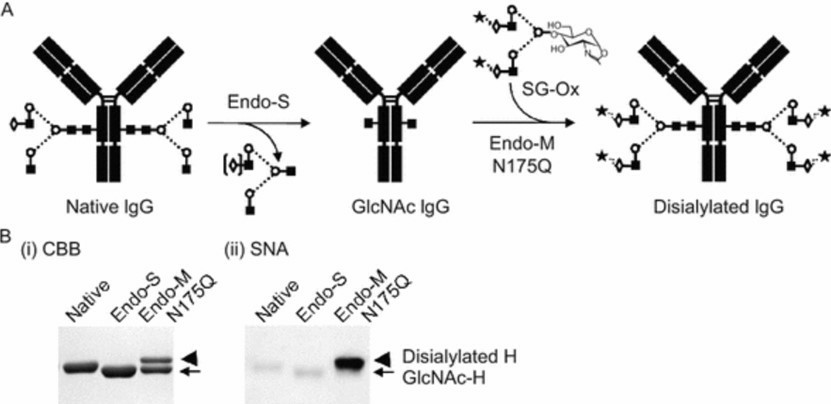 Fig.1 Glycosylation remodeling of IgG using Endo-S and Endo-M-N175Q.1
Applications of Glycoprotein Remodeling
In the preparation of homogenous glycoforms of some therapeutic proteins, the main steps include the use of specific glucosidase to deglycosylate the target protein to remove heterogeneous glycans to produce specific protein intermediates. Then by using the activated sugar oxazoline as a donor substrate and a specific sugar synthase as a catalyst, the required homogeneous glycans are linked to the acceptor to reconstruct the homogeneous glycoform. Using this method, a therapeutic protein with enhanced antibody-dependent cytotoxicity was successfully prepared. In recent years, much attention has been focused on carbohydrate-based vaccines that are emerging as valuable tools for targeting a number of diseases. The immunogenicity of carbohydrates of carbohydrate antigens is poor. In addition, carbohydrate-specific antibodies usually have a low affinity, which limits their development. Therefore, current strategies for the production of carbohydrate-based vaccines require that low immunogenic carbohydrate antigens be combined with protein carriers to obtain optimal antibody response.
Services in Creative Biolabs
It is worth noting that in the process of protein recombination, the choice of endoglycosidase is very important. Based on years of research, Creative Biolabs has successfully developed a toolbox for endoglycosidase and related glycoside synthase for glycoprotein synthesis and glycosylation remodeling. We have also established an advanced platform for protein recombination, which is particularly effective in the synthesis of various glycopeptides and the reconstruction of simple glycoproteins. Please contact us for more details.
Reference
-
Mimura, Yusuke, et al. "Glycosylation engineering of therapeutic IgG antibodies: challenges for the safety, functionality and efficacy." Protein & cell 9.1 (2018): 47-62. Distributed under Open Access license CC BY, without modification.
For Research Use Only.
Resources