Glycosylated Protein Biomarkers Services
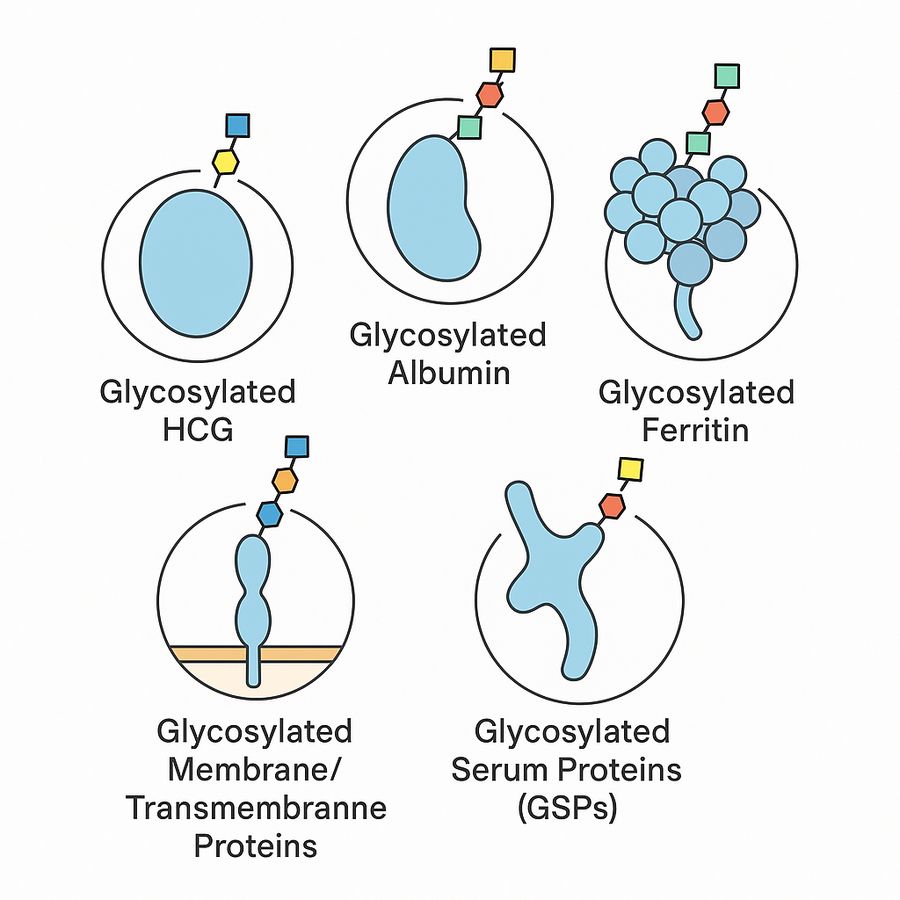 Fig.1 Various types of glycosylated proteins.
Glycosylation is a prevalent and biologically significant post-translational modification. Aberrant glycosylation patterns have been widely documented in a variety of diseases, including cancer, diabetes, liver dysfunction, autoimmune disorders, and infectious diseases. Consequently, glycosylated protein biomarkers, especially glycosylated albumin, ferritin, HCG, and membrane proteins, have garnered heightened interest in the fields of diagnostic and therapeutic development. At Creative Biolabs, we provide integrated solutions for glycoprotein biomarker development, covering discovery, characterization, and functional validation. Our platform combines advanced glycoproteomics technologies with bioinformatics to support the identification and verification of disease-specific glycoprotein biomarkers.
Biological Relevance of Glycosylated Protein Biomarkers
Glycosylated proteins reflect both physiological and pathological changes. Their altered glycan structures can modulate immune recognition, affect serum half-life, or promote oncogenic transformation. For example:
-
In cancer, fucosylation and sialylation changes in glycoproteins support immune evasion and metastasis.
-
In diabetes, glycated albumin provides short-term glucose monitoring superior to HbA1c in certain populations.
-
In pregnancy and trophoblastic diseases, abnormal glycosylation of HCG alters hormone activity and receptor interaction.
Glycosylated biomarkers serve as sensitive readouts of disease states in different conditions. Leveraging extensive expertise in glycoprotein biomarker discovery, Creative Biolabs conducts comprehensive research encompassing oncological disorders, autoimmune conditions, and neurodegenerative diseases:
Types of Glycosylated Protein Biomarkers
Our Glycosylated Protein Biomarker Workflow
Creative Biolabs offers a full-spectrum, research-oriented workflow to support the development, validation, and characterization of glycosylated protein biomarkers. From target identification to functional evaluation, each phase is driven by analytical depth, experimental customization, and expert consultation.
-
Target Consultation & Feasibility Assessment
We begin by reviewing your target protein(s), research objectives, and biological context. Our glycoscience team helps define feasible strategies based on available data, predicted glycosylation sites, and relevant disease or pathway associations.
-
Sample Preparation & Glycoprotein Isolation
We process a wide range of biological materials—such as serum, plasma, cell culture supernatants, or tissue lysates—to isolate and enrich glycosylated proteins or peptides.
-
Glycosylation Site Mapping
This step involves identifying specific N-linked or O-linked glycosylation sites on the protein of interest. It provides residue-level resolution of where glycans are attached.
-
Glycan Structure Characterization
We determine the exact glycan structures attached to your protein—linkage types, branching patterns, and terminal modifications such as sialylation or fucosylation.
-
Quantitative Glycoproteomics
To evaluate differential glycosylation under various experimental conditions, we offer relative and absolute quantification of glycoforms using label-based or label-free techniques.
-
Functional Evaluation of Glycoforms
Glycosylation often alters protein activity, binding affinity, or immunogenicity. We offer a range of biological assays to test the impact of glycoform variation on function.
-
Assay Validation & Reproducibility Testing
To ensure the reliability of your biomarker findings, we assess intra- and inter-batch consistency, cross-sample reproducibility, and biological variation.
-
Data Interpretation & Reporting
We provide complete, annotated datasets, including glycan structures, glycosylation site positions, and comparative abundance statistics. Our reports are designed to be publication-ready and integrable into bioinformatics pipelines.
Technological Platforms
|
Workflow Step
|
Applicable Technologies for Glycoprotein Analysis
|
|
1. target consultation & feasibility assessment
|
Lectin Microarray, glycoprotein prediction tools (GlycoSHIELD)
|
|
2. sample preparation & glycoprotein isolation
|
HPLC, RP-HPLC, TLC, SDS-PAGE
|
|
3. glycosylation site mapping
|
LC-ESI-MS, MALDI-TOF MS, UHPLC/FLD/Q-TOF, NMR
|
|
4. glycan structure characterization
|
MS, HPAEC-PAD, GC-MS, FTIR
|
|
5. quantitative glycoproteomics
|
MS, Isotope-labeled glycoomics
|
|
6. functional evaluation of glycoforms
|
SPRi, Flow Cytometry
|
|
7. assay validation & reproducibility testing
|
RP-HPLC, UHPLC/FLD/Q-TOF
|
|
8. data interpretation & reporting
|
data visualization support
|
Sample Submission Guidelines
To ensure high-quality and reproducible results for glycosylated protein biomarker analysis, Creative Biolabs recommends the following sample submission standards. Our team is available to provide consultation prior to shipment to optimize sample compatibility with downstream workflows. We support a wide range of biological materials for glycosylation profiling:
|
Sample Type
|
Minimum Volume/Amount
|
|
Serum/Plasma
|
≥ 200 µL
|
|
Cell Supernatant
|
≥ 1 mL
|
|
Tissue Lysate
|
≥ 500 µg total protein
|
|
Purified Protein or Glycoproteins
|
≥ 50 µg (≥ 90% purity recommended)
|
|
Membrane Fraction
|
≥ 200 µg total membrane protein
|
Tips: For best results, please avoid samples with excessive hemolysis, microbial contamination, or freeze-thaw cycles.
Why Choose Creative Biolabs?
Creative Biolabs brings unmatched expertise and flexibility to glycosylated protein biomarker research. Our services are designed exclusively for scientific and preclinical studies, providing researchers with high-resolution tools to decode the functional relevance of glycoproteins. Our advantages include:
-
Specialized in Glycobiology: We focus on complex glycoprotein research with advanced knowledge in glycan chemistry, glyco-immunology, and structural glycoproteomics.
-
Integrated Platforms: From bioinformatics to glycan-specific MS pipelines, we cover every phase of biomarker development under one roof.
-
Custom Design Flexibility: Whether you need a one-time glycoprotein profile or a multi-sample validation study, we tailor every step to your experimental needs.
-
Cross-Species and Multi-Format Support: Our assays are compatible with diverse biological matrices and species, ideal for translational or comparative research models.
Creative Biolabs provides end-to-end support for glycosylated protein biomarker development. Contact us to initiate a custom consultation or request a quote.
Reference
-
Paton, Beatrix, et al. "Glycosylation biomarkers associated with age-related diseases and current methods for glycan analysis." International Journal of Molecular Sciences 22.11 (2021): 5788. https://doi.org/10.3390/ijms22115788
Resources
For Research Use Only.