Preclinical Cancer Exome Sequencing on the HARCS Platform
Creative Biolabs offers HARCS Cancer Exome Assay as a turnkey preclinical service for tumor and matched-normal exome sequencing. Building on the High-Accuracy and Rich-Content Sequencing (HARCS) backbone, the assay delivers deep, uniform coverage of >20,000 coding genes and >1,400 cancer-relevant genes while enriching for regulatory and 3′ UTR segments, well-annotated non-coding RNAs, and the high-GC / hairpin regions that often compromise generic exome workflows. The service is suited to researchers who need to catalogue somatic and germline variants, identify candidate neoantigens, quantify tumor mutational burden, or resolve structural events from limited or degraded material — including FFPE, PBMC, FNA, and fresh-frozen specimens. Each project is delivered with traceable sample handling, configurable coverage depth, and an annotation stack tuned to your tumor indication.
Why a Cancer-Specific Exome Assay Matters
Designed for Tumor Genomics, Not Just Generic Exomes
Generic whole-exome workflows were optimized for constitutional genetics. Cancer samples behave differently: they carry low allele-frequency somatic variants, exhibit copy-number shifts, harbor structural rearrangements, and frequently arrive as partially degraded material from FFPE blocks. A cancer-tuned exome assay needs capture chemistry, alignment settings, and variant-calling thresholds that all reflect that reality — and that is the gap the HARCS Cancer Exome Assay is built to close.
Capture panels include regulatory and 3′ UTR regions, well-defined functional non-coding RNA loci, and high-GC / hairpin-prone segments. This breadth keeps clinically actionable and biologically interesting variants inside the read set instead of dropping them during enrichment, and feeds in vivo translational planning with a complete variant catalogue.
- Core Preclinical Challenges We Address:
- Recovering uniform coverage over high-GC and hairpin-prone exons that fail on generic capture.
- Calling low-VAF somatic SNVs and indels against matched-normal controls.
- Resolving copy-number variants and structural rearrangements from exome reads alone.
- Working with degraded input — FFPE scrolls, FNAs, low-cell-number suspensions, etc. Validated sample handling is what makes the assay usable in vitro on the kinds of specimens preclinical labs actually receive.
How HARCS Cancer Exome Compares with Generic Exome Pipelines
| Key Comparison | Generic Exome Workflows | HARCS Cancer Exome Assay |
|---|---|---|
| Capture Scope | Coding exons only; regulatory and UTR regions often missed. | Coding exons + regulatory + 3′ UTR + functional non-coding RNAs. |
| Coverage Uniformity | Drops in high-GC, low-complexity, and hairpin regions. | Engineered for high-GC and hairpin structures to keep depth even. |
| Variant Detection Breadth | Optimized for SNVs and short indels. | SNVs, indels, CNVs, fusion candidates, and pharmacogenomic loci. |
| Sample Compatibility | Best with high-input fresh-frozen DNA. | Validated for FFPE, PBMC, FNA, fresh-frozen, and low-input tumor DNA. |
End-to-End HARCS Cancer Exome Service Packages
Every cancer exome project is different, so all modules can be fully customized — from coverage depth and matched-normal pairing to the variant types reported. The packages below describe our standard preclinical flow; we adapt them to your tumor indication, sample type, and downstream application.
Project & Sample Strategy
Define the study design, coverage targets, and matched-normal pairing before any wet-lab work begins.
- Indication Review: Selection of tumor/normal pairing scheme, depth targets, and replicate strategy.
- Sample QC Plan: DNA integrity, quantity, and contamination thresholds agreed up front.
- Coverage Definition: Configurable mean depth (typical 100×–500× tumor / 50× normal) per project.
- Customized Path: Tailored preclinical timelines and risk-mitigation checkpoints.
Library Prep & Capture
Robust library construction and cancer-tuned hybrid capture that holds up on degraded input.
- Input Tolerant Prep: Validated for low-input and FFPE-derived tumor DNA.
- Cancer Capture Panel: >20,000 coding genes + >1,400 cancer-relevant genes.
- High-GC Coverage: Engineered probes for high-GC and hairpin-prone exons.
- Quality Gates: Pre- and post-capture QC checkpoints with documented pass criteria.
HARCS Sequencing Run
High-fidelity short-read sequencing executed under the HARCS quality framework.
- Sequencing Platform: High-fidelity short-read sequencer configured for exome-scale output.
- Read Configuration: Configurable read length and pairing to match coverage targets.
- Run-Level QC: Cluster density, Q-score distribution, and insert-size metrics logged per run.
- Reproducibility: Run conditions captured in metadata for cross-project comparability.
Variant Calling & Annotation
Pipeline tuned for tumor / matched-normal pairs across the variant spectrum relevant to cancer research.
- Alignment: Optimized short-read aligner settings for tumor and low-input libraries.
- Somatic Calling: SNVs, short indels, CNVs, and fusion candidates from exome data.
- Germline Calling: Pathogenic and pharmacogenomic germline variants on demand.
- Annotation Layers: Cancer gene catalogs, drug-response databases, and HLA typing.
Downstream Interpretation
Translate raw variant lists into decisions you can act on for preclinical or translational planning.
- TMB Estimation: Tumor mutational burden calculated against a defined coding footprint.
- HLA Typing: Class I HLA alleles from exome data to support downstream neoantigen work.
- Neoantigen Feed: Variant list delivered in a format compatible with our neoantigen pipelines.
- Visualization: Onco-print, mutation spectrum, and coverage dashboards per project.
Deliverables & IND-Enabling Support
Documentation and reproducibility features that fit a regulated preclinical workflow.
- Raw & Aligned Data: FASTQ, BAM, and VCF deliverables with full run metadata.
- QC Reports: Coverage, duplication, and contamination metrics summarized per sample.
- Method Documentation: Capture design, pipeline versions, and parameter logs.
- Reanalysis Service: Re-run with updated databases or new comparators on request.
Standardized Preclinical HARCS Cancer Exome Workflow
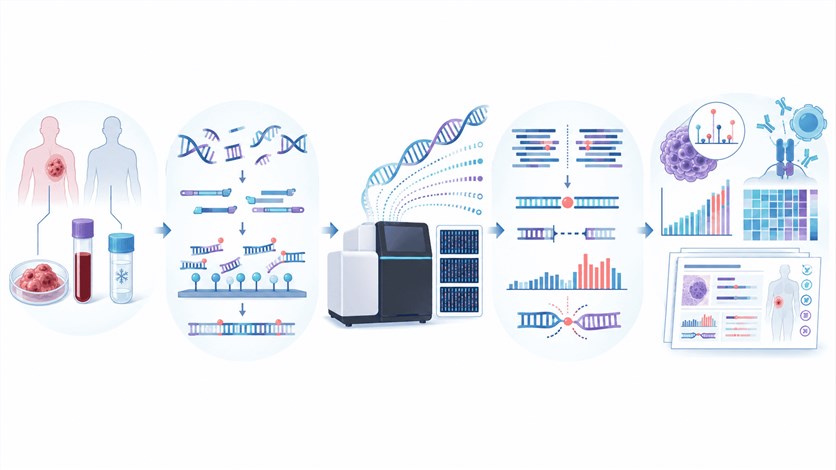
Phase 1 — Sample Intake & QC
Tumor and matched-normal specimens (FFPE, PBMC, FNA, fresh-frozen) are logged, quantified, and assessed for integrity. Pre-library QC gates are documented per sample so any downstream coverage gaps can be traced back to input quality.
Enabling Technologies Behind the HARCS Cancer Exome Assay
Why Choose Creative Biolabs for HARCS Cancer Exome Sequencing?
Capture chemistry, alignment settings, and variant thresholds were chosen for tumor samples — not retrofitted from a constitutional exome workflow.
A single assay produces SNVs, indels, CNVs, and fusion candidates, removing the need to split your project across multiple pipelines.
Validated for FFPE scrolls, PBMCs, FNAs, fresh-frozen tumors, and low-input suspensions — the formats preclinical labs work with every day.
Variant lists, HLA typing, and TMB estimates are delivered in formats that feed directly into downstream neoantigen, biomarker, or combination-therapy planning.
Research Insight: Resolution Determines What Exomes Reveal
Why Coverage and Capture Choices Drive Every Downstream Decision
A cancer exome is more than a list of genes on a capture kit. The depth you choose, the regions you decide to enrich, and how you handle the matched normal together determine whether your final dataset can support somatic variant calls, fusion detection, TMB estimates, or HLA typing — or whether the gaps appear only after bioinformatics, when re-sequencing is no longer practical.
-
Depth Resolves Low-VAF Variants: Reliable somatic SNV and indel calling from heterogeneous tumor samples typically requires substantially higher depth than constitutional exomes. Coverage decisions made at project intake propagate through every downstream interpretation.
-
Capture Breadth Determines What's Visible: Panels limited to coding exons miss regulatory and UTR segments where clinically relevant and pharmacogenomic variants reside. The capture chemistry choice defines the biological ceiling of the dataset before any sequencing begins.
-
Matched-Normal Pairing Anchors the Callset: Subtracting the constitutional background is what turns raw variant lists into somatic event catalogs. Without paired normal samples, distinguishing driver mutations from inherited polymorphisms becomes an exercise in statistical guesswork.
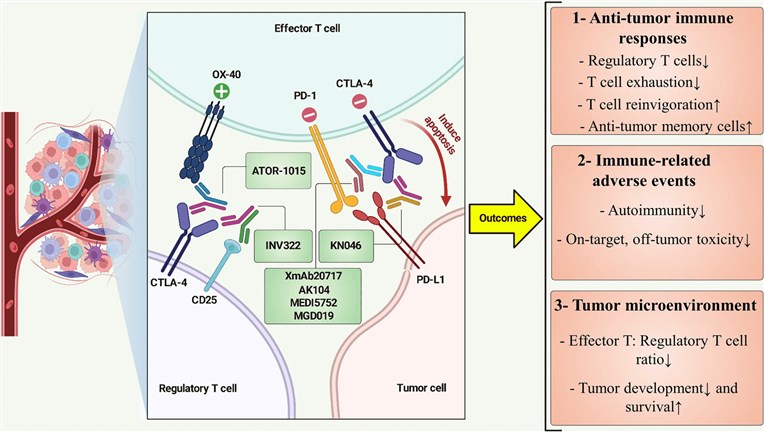
Fig.1 Workflow of Fuseq-WES for detecting fusion genes from whole-exome sequencing data.1.2