Inulin
What is Inulin?
The naturally occurring soluble dietary fiber known as inulin which falls under fructan polysaccharides consists of a D-fructose chain joined β(2→1) with a terminal glucose residue. The compound with a molecular formula of (C₆H₁₀O₅)ₙ exhibits a degree of polymerization between 10 and 50 based on its plant source and appears frequently in plants such as chicory roots which serve as its main industrial source alongside garlic, onions, dandelion greens, asparagus and bananas. Inulin functions as a dietary component while acting as a vital prebiotic that maintains the balance of the gut microbiome and regulates multiple physiological pathways. Creative Biolabs' glycobiology experts provides end-to-end support, from sequence design to functional validation, ensuring your projects benefit from cutting-edge technology and decades of expertise. Whether you're developing inulin-based supplements, exploring its anti-inflammatory mechanisms, or optimizing oligosaccharide structures, we deliver solutions tailored to your goals.
Function of Inulin
Inulin functions as soluble fiber and prebiotic which critically affects gut microbiota regulation. Inulin supports beneficial bacteria such as Bifidobacterium and Lactobacillus and blocks harmful strains like Clostridium from multiplying. This microbial equilibrium translates to enhanced intestinal health: When inulin ferments in the colon it produces short-chain fatty acids (SCFAs) such as acetate alongside propionate and butyrate. The metabolites produced from fermentation processes work to reduce gut pH while strengthening the intestinal barrier and coordinating immune system responses alongside boosting mineral uptake in the body.
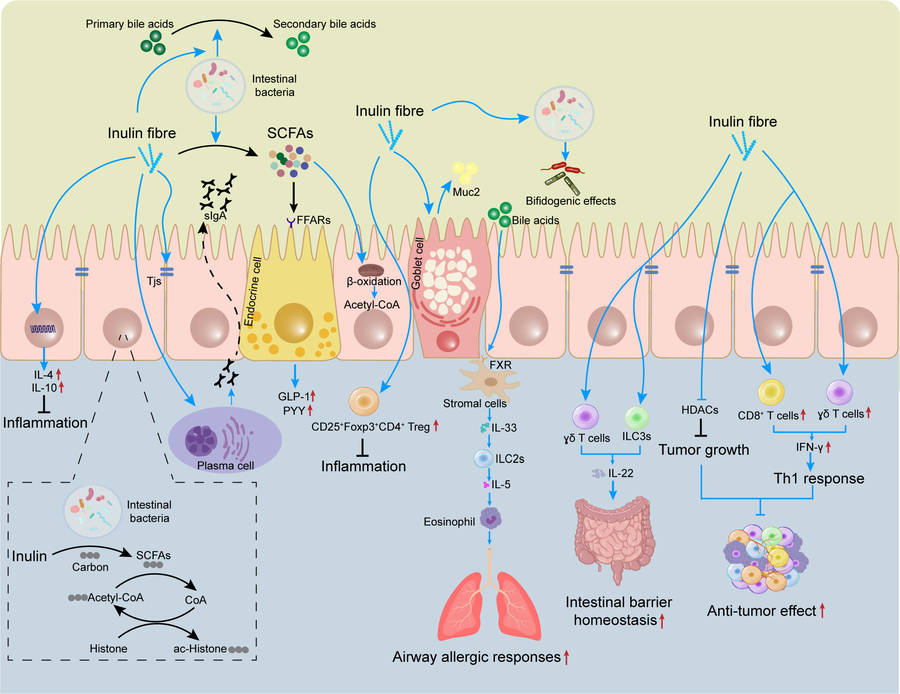 Fig.1 The function of inulin on the mucosal immune system.1,3
Research involving animals shows that inulin can increase the variety of microbes present in the gut. Inulin supplementation changed the gut microbiome composition in a high-fat diet mouse model of NAFLD which resulted in reduced liver fat buildup and suppressed inflammatory responses. The clinical application of this treatment helps relieve constipation by boosting bowel movement frequency and enhancing mucosal integrity which establishes its importance for digestive health.
Partner with Creative Biolabs
At Creative Biolabs, we specialize in translating the scientific promise of inulin and oligosaccharides into practical solutions. Our services are designed to address the unique challenges of glycobiology research and development:
|
Service
|
Focus
|
Value for Inulin/Oligosaccharide Studies
|
|
Custom Oligosaccharide Synthesis
|
Design and production of tailored oligosaccharide structures, including inulin derivatives.
|
Create analogs with modified DP or functional groups for targeted prebiotic or therapeutic applications.
|
|
Oligosaccharides Analysis
|
Comprehensive structural and functional analysis using HPAE-PAD, CE, HPLC, and FACE.
|
Characterize inulin's molecular composition, DP distribution, and fermentation byproducts for research or product development.
|
|
High-Throughput Glycan Screening
|
Identify glycan-protein interactions and microbial binding profiles.
|
Assess how inulin and its fragments interact with gut bacteria, immune cells, or drug targets.
|
Inulin in Disease
While inulin's benefits for gut health are well-documented, ongoing research highlights its potential in addressing a range of diseases, driven by its microbiome-modulating, anti-inflammatory, and immune-regulatory properties.
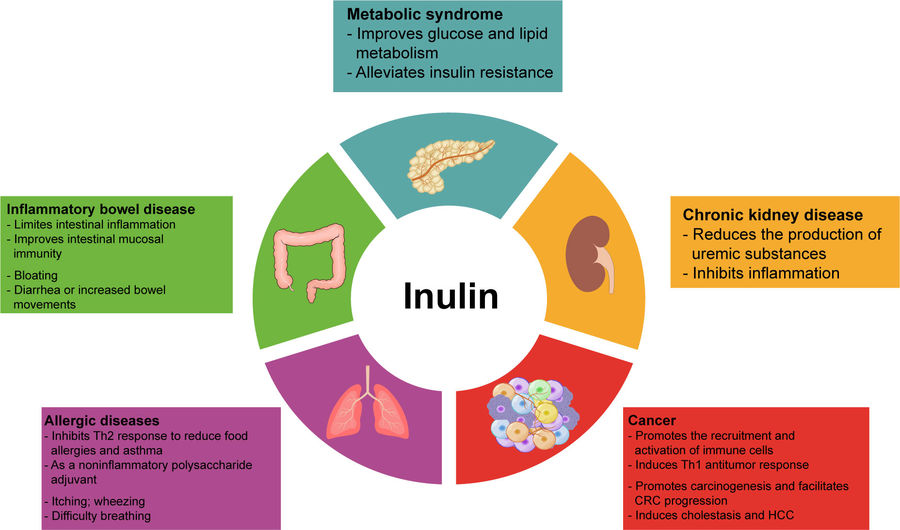 Fig.2 Overview of inulin in disease.1,3
|
Disease/Condition
|
Intervention Mechanisms
|
Research Support
|
Potential Applications
|
|
Metabolic Syndrome
|
- Stimulates GLP-1 for insulin secretion and glucose reduction.
- SCFAs improve insulin sensitivity and lipid metabolism via gut microbes.
|
Clinical trials show improved glucose/lipid profiles.
Animal studies reduce NAFLD hepatic fat.
|
Adjunct for diabetes/cardiovascular health; functional food development.
|
|
Inflammatory Bowel Disease (IBD)
|
- Strengthens gut barrier (tight junctions), reduces permeability.
- Suppresses pro-inflammatory cytokines; boosts anti-inflammatory SCFAs (e.g., butyrate).
|
Clinical relief in ulcerative colitis.
Preclinical models show reduced inflammation.
|
Symptom management; prebiotic therapies for dysbiosis.
|
|
Irritable Bowel Syndrome (IBS)
|
- Regulates bowel motility and reduces bloating/constipation via microbiome balance.
- Promotes SCFAs that improve gut motility and reduce inflammation.
|
Research links inulin to symptom relief in IBS, though individualized dosing is critical to minimize gas/bloating.
|
Dietary supplement for IBS symptom management; personalized prebiotic formulations.
|
|
Chronic Kidney Disease (CKD)
|
- Lowers uremic toxins (indoxyl/p-cresol sulfate) via beneficial bacteria.
Improves GFR and reduces inflammatory markers (CRP).
|
Clinical trials show decreased toxins, better renal function.
Animal studies link to microbiota-driven renal protection.
|
Adjunct therapy for uremic toxicity and CKD progression.
|
|
Cancer
|
- Enhances immune cell (CD8+ T, γδ T) tumor infiltration and IFN-γ production.
Modulates colorectal cancer signaling (JAK1, β-catenin); SCFAs inhibit cell proliferation.
|
Preclinical models show tumor growth inhibition.
In vitro studies link to anti-cancer microenvironments.
|
Complementary immunotherapy; prebiotic-chemotherapy combinations.
|
Inulin and Pregnancy
Inulin serves as a beneficial dietary supplement for pregnant women to control constipation issues. This substance functions as a mild laxative that supports steady bowel movements while avoiding the severe reactions typical of synthetic laxatives. Scientific research indicates that pregnant women who consume inulin experience enhanced intestinal health and decreased constipation symptoms. The consumption of inulin during pregnancy helps the body better absorb essential nutrients. The prebiotic characteristics of inulin serve to prevent imbalances in intestinal microbial populations. During pregnancy, dysbiosis has the potential to weaken the immune system thereby raising infection risks. A diet rich in fiber occasionally leads to digestive issues like bloating and gas. This might affect some pregnant women. Careful monitoring of inulin intake is recommended. The later pregnancy stages require attention when digestive processes tend to slow down.
Research Progress
-
Diabetes: Inulin improves insulin sensitivity by modulating SCFAs, and has been shown to reduce fasting blood glucose levels in animal models.
-
Cardiovascular Disease: SCFAs inhibit hepatic cholesterol synthesis, thereby lowering serum LDL levels.
-
Inflammation Regulation: Inulin alleviates colitis by increasing the abundance of anti-inflammatory bacteria such as Faecalibacterium prausnitzii.
Applications
-
Targeted Delivery Systems: For instance, encapsulating Inulin in liposomes enhances its targeting in the colon.
-
Functional Food Development: Combining Inulin with resistant starch or bagasse from sugarcane to optimize fermentation patterns.
The transition of inulin from a dietary component to a medical treatment highlights its astonishing range of applications. Inulin expands its utility to include gut health and immune modulation while also showing promise in metabolic regulation and oncology. Scientific progress enhances our dedication to supplying necessary tools and knowledge to fully utilize its capabilities. Creative Biolabs is fully committed to pushing forward research in both prebiotics and glycobiology. Reach out to us now to learn how our services can help you explore the extensive potential of inulin and oligosaccharides to advance human health.
Published Data
Research indicates that combining inulin and psyllium significantly reduces colonic gas production and hydrogen exhalation. An MRI study demonstrated that inulin alone increases postprandial gas volume, while adding psyllium to the regimen reduces gas volume by over 50%. This combination works in two ways: inulin modulates the gut microbiota, promoting the growth of beneficial bacteria, and psyllium's water-absorbing properties improve stool consistency. This dual action effectively alleviates symptoms in patients with IBS, a common gastrointestinal disorder associated with abdominal bloating, constipation, or diarrhea. Inulin alone may cause discomfort, such as excessive gas and bloating, in some individuals. Psyllium, through water absorption, increases fecal bulk and promotes intestinal peristalsis, thereby improving constipation. The combination of inulin and psyllium not only promotes health by modulating the gut microbiota but also enhances digestive function by modifying the physical properties of the intestinal contents. This makes it particularly beneficial for IBS patients in managing their symptoms. The advantage of this combination lies in the complementary action of psyllium and inulin, which together optimize intestinal health, leading to more balanced bowel function and reducing bloating and discomfort caused by gut microbiota dysbiosis. This offers a novel approach to IBS management and provides valuable insights for clinical applications.
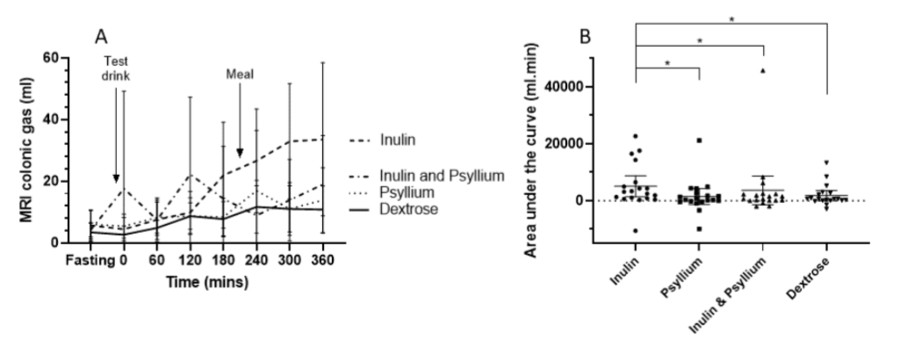 Fig.3 Inulin & Psyllium induced alteration of colonic gas detected by MRI.2,3
References
-
Sheng, Wei, Guang Ji, and Li Zhang. "Immunomodulatory effects of inulin and its intestinal metabolites." Frontiers in immunology 14 (2023): 1224092. https://doi.org/10.3389/fimmu.2023.1224092
-
Gunn, David, et al. "Psyllium reduces inulin-induced colonic gas production in IBS: MRI and in vitro fermentation studies." Gut 71.5 (2022): 919-927. https://doi.org/10.1136/gutjnl-2021-324784
-
Distributed under Open Access license CC BY 4.0, without modification.
Related Services
Resources
For Research Use Only.