Oligosaccharide Analysis
Oligosaccharides can be categorized to N-glycan and O-glycan according to their different glycosidic link bonds. For N-linked oligosaccharides, they're typically pentasaccharides attached to asparagine. This happens through a beta linkage to the amine nitrogen of the side chain. On the flip side, O-linked oligosaccharides usually attach to threonine or serine on the alcohol group of the side chain. At Creative Biolabs, we've got you covered. As a leading global company with a ton of experience in advancing glycobiology research, we've set up a state-of-the-art platform. This platform is equipped with advanced technologies to carry out in-depth oligosaccharides analysis. Plus, we offer a range of awesome services to meet your needs, whether you're in for sequence design, synthesis, purification, structural characterization, or quantitative analysis.
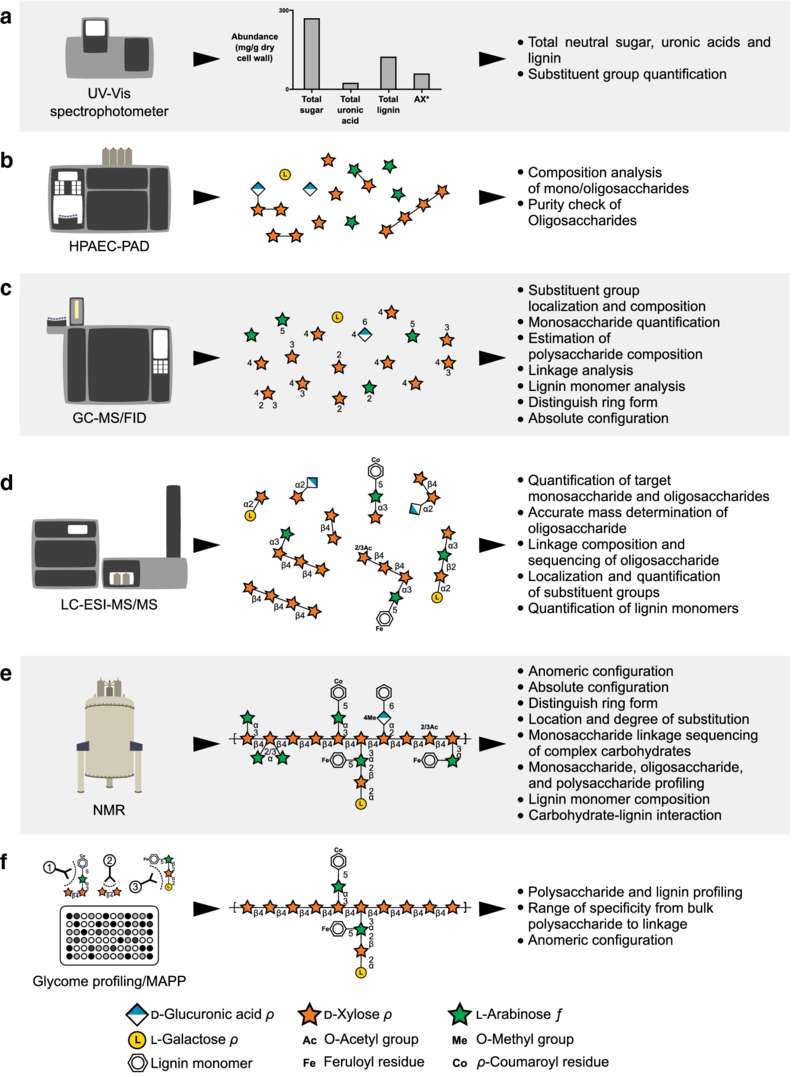 Fig.1 Analytical methods for total cell wall analysis.1
Oligosaccharide Analysis Methods at Creative Biolabs
Creative Biolabs, with its advanced platforms, offers a wide range of oligosaccharides analysis services tailored to meet the specific needs of our global clients. Our glycan analytical methods include but not limited to:
Oligosaccharide HPAE-PAD
HPAE-PAD is a robust technique used to monitor the progress of glycosidase and glycosyltransferase reactions. What's great about it is that it doesn't rely on fluorescent or absorbent labels. Instead, it directly tracks the fate of substrates and products, allowing us to accurately assess whether a reaction has been successful. When it comes to oligosaccharide HPAE-PAD, we first release the oligosaccharides from proteins. For N-linked oligosaccharides attached to asparagine, we use PNGase-F. For those attached to serine or threonine (O-linked), we use reductive β-elimination. Then, we inject them into the HPAE-PAD system. We have extensive experience in using HPAE-PAD for carbohydrate analysis and are committed to providing high-quality service to support our customers' research and project development.
Oligosaccharide HPLC
Oligosaccharide HPLC is a super powerful technique for separating and analyzing oligosaccharides. Here's how it works: Neutral oligosaccharides form hydrogen bonds with amine-bonded HPLC columns through their hydroxyl groups. This bonding is promoted by acetonitrile and disrupted by water. We load the sample in a high-concentration acetonitrile solution and then develop the column with a gradient of increasing water concentration. The oligosaccharides are initially held onto the column and then elute in the order of increasing size (based on the number of hydroxyl groups). We can detect them based on their radioactivity (if they're radiolabeled) or by physical/chemical methods (if unlabeled). This method gives us valuable info about the number and size of oligosaccharide species in a mixture. With years of hands-on experience in oligosaccharide HPLC, we at Creative Biolabs are known for delivering reliable and accurate results. You can count on us!
Capillary Electrophoresis (CE)
CE is a high-resolution technique used for analyzing carbohydrates from glycoconjugates. The separation happens in fused-silica capillaries filled with an electrolyte. Under a high electric field, analytes migrate based on their charge-to-mass ratios and are detected by an on-column detector. When combined with laser-induced fluorescence (LIF) detection, CE is incredibly sensitive. It can detect even the tiniest amounts of carbohydrates, from femtomole (10-15 mol) to attomole (10-18 mol) quantities. Our team of technical experts at Creative Biolabs is well-equipped to handle any challenges that come up during CE analysis. No problem is too big for us!
Fluorophore-Assisted Carbohydrate Electrophoresis (FACE)
FACE is a straightforward and sensitive method for determining the presence and relative abundance of individual oligosaccharides in a mixture. Here's the process: We release oligoglucoside residues by acid-hydrolyzing β-1,3-D-glucan from yeast, tag them with the charged fluorophore 8-aminonaphthalene-1,3,6-trisulfonate (ANTS), and then separate them by size using polyacrylamide gel electrophoresis. The great thing about ANTS fluorescence labeling is that it's not affected by the length of the oligoglucoside. So, the band fluorescence intensity directly reflects the relative abundance of individual oligoglucoside moieties in the sample. FACE is a valuable analytical tool for oligosaccharides from various sources, and we leverage our extensive experience in FACE technology to provide clients with high-quality services at competitive prices.
Oligosaccharides Test in Different Samples
Testing oligosaccharides in different samples is crucial for various research and diagnostic applications. Our platform is well-equipped to handle a diverse range of sample types. Check out the table below to see how we can help with different samples:
|
Sample Type
|
Key Techniques
|
Why It Matters
|
Our Service Advantage
|
|
Serum & Plasma
|
LC-MS, HPAEC-PAD
|
Disease biomarkers, therapeutic monitoring
|
We offer high-throughput analysis to detect those subtle glycan changes linked to conditions like diabetes or cancer. Our methods are sensitive and reliable, giving you the data you need to make informed decisions.
|
|
Urine
|
TLC, LC-MS, NMR
|
Non-invasive diagnostics for metabolic disorders
|
Our sensitive detection of oligosaccharide patterns can help identify indicators of lysosomal storage diseases or kidney dysfunction. We make the process easy and non-invasive for your samples.
|
|
Tumor Tissue & Tumor Cells
|
Lectin assays, MALDI-MS, glycan microarrays
|
Cancer biomarker discovery, drug target identification
|
We can uncover aberrant glycosylation in tumors, which is super important for informing personalized treatment strategies. Our advanced techniques give you detailed insights into tumor biology.
|
|
Antibodies
|
MS, HPLC, capillary electrophoresis
|
Therapeutic antibody optimization
|
By analyzing Fc and Fab glycosylation, we can help enhance the half-life, binding affinity, and immune effector functions of your therapeutic antibodies. We're here to help you optimize your antibody-based therapies.
|
Advantages of Our Oligosaccharide Analysis Service
-
Multiple technologies for choice: We offer a variety of analytical techniques to meet diverse research needs.
-
Targeted customized service plan: Our services are tailored to the specific requirements of each project.
-
Accurate, efficient, and cost-effective: We deliver precise results with fast turnaround times at competitive prices.
-
Perfect after-sale service: Our commitment to customer satisfaction extends beyond project completion.
If you're interested in learning more about our oligosaccharide analysis and synthesis services, please don't hesitate to contact us. We're here to assist you with your research and development needs. Let's work together to unlock the secrets of oligosaccharides and take your projects to the next level!
Reference
-
Tingley, Jeffrey P., et al. "Combined whole cell wall analysis and streamlined in silico carbohydrate-active enzyme discovery to improve biocatalytic conversion of agricultural crop residues." Biotechnology for Biofuels 14 (2021): 1-19. Distributed under Open Access license CC BY 4.0, without modification. https://doi.org/10.1186/s13068-020-01869-8
Related Services
Resources
For Research Use Only.