Oligosaccharide Modification Technologies
Oligosaccharides are the unsung heroes of molecular biology, orchestrating protein stability, cellular communication, and therapeutic efficacy. Yet, nature's glycosylation patterns are often elegant but erratic, creating hurdles in drug development. At Creative Biolabs, we've transformed this complexity into opportunity. Our glycan modification and labeling services blend cutting-edge chemistry, enzymatic precision, and analytical methods to engineer glycans that redefine therapeutic performance. Whether you're battling inconsistent glycosylation in monoclonal antibodies or seeking glyco-optimized vaccines, we're your partner in turning sugar-coated challenges into clinical triumphs.
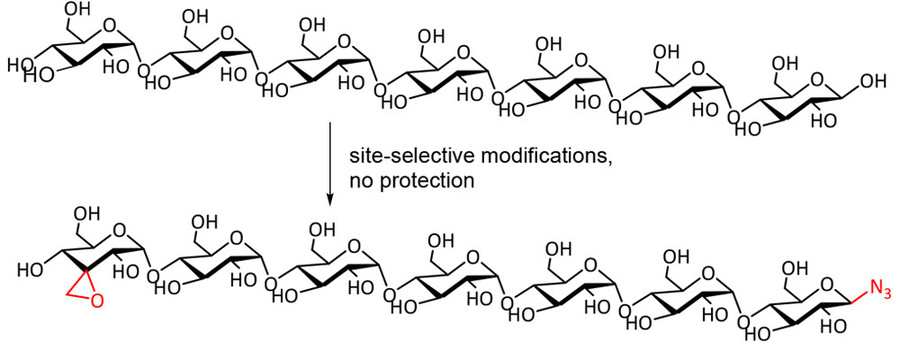 Fig.1 Site-selective modification in glycans.1
Oligosaccharide Modification Technologies: Mastery at Every Step
Glycans are more than just molecular decorations—they're functional linchpins. Here's how we tailor them for your goals:
Chemical Modification
Our chemical toolbox empowers you to reshape glycans for stability, targeting, and beyond:
-
: Introduce sulfate groups to mimic heparin-like activity. Engineered sulfated glycans for antiviral therapies targeting viral entry receptors.
-
: Add phosphate groups to modulate kinase signaling. Phosphorylated glycans in osteoporosis therapies to enhance bone resorption inhibition.
-
: Mask vulnerable hydroxyl groups to block enzymatic cleavage. Glycoproteins with 2x longer serum half-life in preclinical models.
-
Glycosylation Mimetics
: Replace natural glycans with synthetic analogs. Improved batch consistency and reduced immunogenicity for CAR-T cell therapies.
Our sulfate modification service phosphorylation modification service and acetylation modification solutions use comprehensive protocols to ensure >90% modification efficiency. For bespoke designs, our custom oligosaccharide synthesis services deliver everything from rare trisaccharides to hyperbranched structures—all with certified quality.
Enzymatic approaches provide a more targeted and biocompatible method for glycan modification.
-
Glycosyltransferases
: These enzymes facilitate the transfer of specific sugar units onto oligosaccharides, allowing us to engineer glycoproteins with highly tailored glycosylation profiles. This modification is essential for optimizing recombinant protein therapeutics, improving their pharmacokinetic properties, and reducing immunogenicity.
-
Glycosidases
: Glycosidases remove specific sugar residues, offering precise control over glycan structures. This enzymatic trimming can be used to remove unwanted sugar residues, expose specific glycan epitopes, or create uniform glycoforms with specific biological activities.
-
Transglycosylation
: This process transfers glycosyl units between oligosaccharides, facilitating the creation of complex glycan structures. It's particularly useful for synthesizing novel glycans with specialized functionalities.
By using enzymes such as glycosyltransferases and glycosidases, we can precisely add or remove monosaccharide units, tailoring oligosaccharide structures to meet specific therapeutic needs. We leverage them to:
-
Build: Glycosyltransferases add sialic acid, galactose, or fucose residues to fine-tune antibody effector functions. Case study: A client boosted ADCC activity by 40% in a HER2-targeting mAb via optimized sialylation.
-
Trim: Glycosidases remove immunogenic α-Gal epitopes from recombinant proteins.
-
Rebuild: Transglycosylation creates hybrid glycans (e.g., humanized plant-derived glycoproteins) for safer biologics.
Analytical Mastery: No Detail Overlooked
Precision engineering demands rigorous validation. Our platform integrates 15+ techniques to dissect glycan structure and function:
|
Technique
|
Strengths
|
Your Gain
|
|
MALDI-TOF-MS
|
High-throughput glycan profiling.
|
Identify even low-abundance glycoforms.
|
|
HILIC-HPLC
|
Separate neutral/polar glycans in minutes.
|
Quantify mannose-5 vs. mannose-9 glycans.
|
|
CE-LIF
|
Detect attomole-level sialic acid variants.
|
Unmask charge heterogeneity in biosimilars.
|
|
Lectin Microarrays
|
Map 50+ glycan-binding interactions in parallel.
|
Validate glycan-lectin specificity for vaccine antigens.
|
|
2D-NMR
|
Resolve anomeric configurations and linkages.
|
Confirm synthetic oligosaccharide fidelity.
|
Pair modifications with our oligosaccharides analysis service for end-to-end QC—from raw material screening to final product release.
Applications
Revolutionizing Monoclonal Antibodies
-
ADCC Optimization: Reduce core fucosylation to enhance FcγRIIIa binding. A glyco-engineered anti-CD20 mAb achieved 3x higher tumor cell lysis vs. its wild-type counterpart.
-
Half-Life Extension: Add sialic acid caps to block asialoglycoprotein receptor-mediated clearance.
Next-Gen Vaccines
-
Glycan-Antigen Conjugates: Link bacterial polysaccharides (e.g., pneumococcal serotypes) to CRM197 carrier protein via our acetylation modification service for enhanced immunogenicity.
-
Cancer Vaccines: Engineer tumor-associated glycans (e.g., Tn antigen) as neo-epitopes for dendritic cell activation.
ADCs with Laser Focus
-
Site-Specific Conjugation: Attach payloads to engineered glycans (e.g., azido-sugars) via click chemistry. ADCs with DAR 4.0 ±0.2 and minimal aggregation.
Glyco-Enhanced Cell Therapies
-
NK Cell Engineering: Modify surface glycans (e.g., Siglec-7 ligands) to evade immunosuppressive checkpoints. Inspired by our NK cell glycoengineering expertise.
-
T Cell Optimization: Mask non-human glycans (e.g., Neu5Gc) to prevent host immune rejection.
Industrial & Research Solutions
Enzyme Engineering
-
Thermostable Glycozymes: Glyco-shielded proteases for harsh industrial conditions (e.g., detergent formulations).
-
Glyco-Modified Biocatalysts: Lipases with enhanced substrate affinity via mannosylation.
Diagnostic Breakthroughs
-
Cancer Biomarkers: Detect aberrant sialyl-Lewis X levels in liquid biopsies for early-stage pancreatic cancer screening.
-
Autoimmune Disease Panels: Profile anti-glycan antibodies (e.g., anti-GM1 in Guillain-Barré syndrome) using our lectin-based assays.
Why Creative Biolabs?
-
End-to-End Expertise: From glycan design to in vivo validation—we're a one-stop shop.
-
Speed: Accelerate timelines with our 4-week turnaround for custom oligosaccharide synthesis.
-
Scalability: Seamlessly transition from mg-scale research batches to kg-level production.
-
Data Transparency: Access raw MS spectra, NMR charts, and lectin array heatmaps via our client portal.
At Creative Biolabs, we understand the unique challenges posed by oligosaccharide modification. With our advanced technologies, expert team, and commitment to precision, we offer solutions that can accelerate your drug development process and improve the therapeutic potential of your products. Whether you're looking to modify oligosaccharides for a specific therapeutic application or develop novel glycan-based diagnostics, we're here to help. Contact our team today to schedule a free project consultation.
Reference
-
Witte, Martin D., and Adriaan J. Minnaard. "Site-selective modification of (oligo) saccharides." ACS catalysis 12.19 (2022): 12195-12205. Distributed under Open Access license CC BY 4.0, without modification. https://doi.org/10.1021/acscatal.2c03876
Related Services
Resources
For Research Use Only.