Oligosaccharide Classification Systems
At Creative Biolabs, we've spent years diving into the world of oligosaccharides, and we're here to help you navigate their complexities. Whether you're a researcher unraveling glycobiology mysteries or a developer seeking to integrate oligosaccharides into next-gen solutions, our tailored services in analysis, synthesis, and glycoengineering ensure you get precise, reliable results—every time. Let's explore how these sugar chains are classified and why their structure matters.
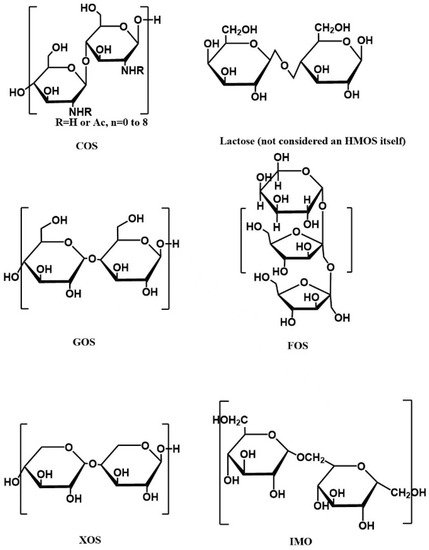 Fig.1 The structure of common oligosaccharides.1
Basic Classification by Monosaccharide Count
The simplest way to categorize oligosaccharides is by the number of sugar units they contain. This basic count dictates their physical properties, biological roles, and even how they're used in industries like food and pharmaceuticals:
|
Number of Monosaccharides
|
Classification
|
Well-Known Examples
|
Key Traits
|
|
2
|
Disaccharides
|
Sucrose (glucose + fructose), Lactose (glucose + galactose)
|
Easily digestible; primary energy sources in foods
|
|
3
|
Trisaccharides
|
Raffinose (glucose + galactose + fructose), Galactooligosaccharides (GOS)
|
Often used as prebiotics; resistant to human digestion
|
|
4–10
|
Tetra- to Decasaccharides
|
Maltotetraose, Isomaltooligosaccharides (IMOs)
|
Play roles in cell signaling and gut microbiota modulation
|
|
>10 (though technically beyond "oligo," often grouped here)
|
Complex Oligosaccharides
|
Inulin, Fructooligosaccharides (FOS)
|
Prebiotic effects; promote beneficial gut bacteria growth
|
This classification is more than just a scientific detail—it's a starting point for designing experiments, formulating supplements, or developing therapies. For instance, GOS in infant formulas mimics human milk's benefits, while FOS boosts fiber content in functional foods. At Creative Biolabs, our oligosaccharides analysis service can accurately quantify these units, helping you validate formulations or characterize novel samples.
Simple vs. Complex Oligosaccharides: Decoding Structural Complexity
Simple Oligosaccharides
Comprising 2–4 monosaccharides in linear chains, these are the "easy-to-use" sugars:
-
Sucrose: The table sugar we all recognize, formed by glucose and fructose. It's a quick energy hit but offers no prebiotic benefits.
-
Lactose: Found in milk, this glucose-galactose pair is crucial for infant nutrition. However, lactose intolerance highlights the importance of studying its digestion and alternatives.
-
Galactooligosaccharides (GOS): Derived from lactose, GOS are gentle on the gut and widely used in infant formulas to mimic HMOs' benefits.
-
Human Milk Oligosaccharides (HMOs): Over 200 types exist in breastmilk, like 3'-Sialyllactose. These simple oligosaccharides don't just feed babies—they block pathogen binding, boosting immune protection.
Complex Oligosaccharides
With 5+ monosaccharides in branched or highly linear chains, these resist human enzymes, making them perfect for nourishing gut bacteria:
-
Fructooligosaccharides (FOS): Found in chicory and onions, FOS act as prebiotics, feeding Bifidobacterium and promoting a healthy gut barrier.
-
Inulin: A fructan in Jerusalem artichokes, inulin improves mineral absorption and supports gut regularity. Its branched structure makes it a favorite in nutraceuticals.
Why does structure matter? Simple oligosaccharides are ideal for quick energy or direct nutritional roles, while complex ones shine in modulating gut health or immune responses. Our team at Creative Biolabs helps clients leverage this distinction—whether you need custom synthesis of HMOs for formula development or glycoengineering support to modify oligosaccharides on immune cells for enhanced therapy.
Linear vs. Branched Oligosaccharides
The architecture of oligosaccharides—linear or branched—dictates how they interact with cells and microbes:
-
Linear Oligosaccharides (e.g., maltose, sucrose): Straight chains mean they're easily broken down for energy. Think of maltose in grains, quickly converted to glucose during digestion.
-
Branched Oligosaccharides (e.g., FOS, GOS): Their complex structures are a goldmine for gut bacteria. The branches provide more binding sites for probiotics, enhancing their ability to selectively feed "good" bacteria and reduce inflammation.
Alginate oligosaccharides and other branched oligosaccharides create hydrogels that deliver sustained-release therapies during drug development whereas linear oligosaccharides function as basic excipients. Our oligosaccharide synthesis service allows precise customization of molecular structures to match your research objectives and product requirements.
Why Choose Creative Biolabs for Your Oligosaccharide Needs?
We don't just offer services—we offer partnerships. Whether you're stuck on structural characterization or need a custom oligosaccharide synthesized from scratch, our team has you covered. Here's what sets us apart:
|
Service
|
What We Offer
|
Why It's a Game-Changer
|
|
Custom Oligosaccharides Synthesis
|
Tailored oligosaccharides via click chemistry (including Thio-click), with precise control over sugar sequences, linkages, and protecting groups.
|
Perfect for drug design (e.g., cyclodextrins for solubility) or glycoengineering projects.
|
|
Oligosaccharides Analysis
|
HPAE-PAD, CE, HPLC, FACE, and LC-MS techniques; detect from fmol (10⁻¹⁵ mol) to amol (10⁻¹⁸ mol) levels.
|
Unmatched sensitivity for rare samples like HMOs in breastmilk or cancer biomarkers.
|
|
Glycoengineering Support
|
Modify oligosaccharides on immune cells (NK cells, T cells) to enhance targeting, activity, or therapeutic efficacy.
|
Stay ahead in cell therapy—our expertise bridges glycobiology and immunology for novel cancer treatments.
|
We know every project is unique. That's why we offer targeted custom plans, whether you need a single oligosaccharide structure analyzed or a library of branched FOS synthesized for prebiotic testing. Our after-sales support ensures you get insights, not just data—because your success is our priority.
Applications
Biological Research & Drug Development
-
Glycobiology Studies: Understanding how lectins (carbohydrate-binding proteins) interact with oligosaccharides? The FACE technology provides high-resolution separation of oligosaccharide mixtures, ideal for mapping these interactions.
-
Drug Delivery: Cyclodextrins, cyclic oligosaccharides, wrap around hydrophobic drugs like ibuprofen, improving solubility and bioavailability. We optimize cyclodextrin synthesis for your formulation needs.
Functional Foods & Nutraceuticals
-
Prebiotic Supplements: Brands trust us to synthesize pure FOS, GOS, and inulin for powders, bars, and beverages. Our quality control ensures batch consistency—key for regulatory approval.
-
Infant Formulas: Mimic breastmilk's magic with HMOs like 2'-Fucosyllactose. Our synthesis methods are efficient and scalable, supporting global formula manufacturers.
Biotechnology & Therapeutics
-
Cancer Therapy: Modified NK cells with GPC3-targeting oligosaccharides (as seen in our published data) show improved tumor cell killing. Our NK cell glycoengineering services help you develop similar cell therapies.
-
Biomarker Discovery: Identify sialylated glycans on cancer cells using our LC-MS/MS tools, paving the way for early detection tests.
Modern Tools for Precision Analysis
Cracking the code of oligosaccharides requires cutting-edge technology:
-
HPAEC-PAD: No need for fluorescent labels—track glycosidase reactions in real time, perfect for monitoring synthesis progress.
-
NMR: Uncover sugar ring configurations and bond linkages, essential for confirming complex structures in drug development.
-
CE with LIF Detection: Detect even the tiniest oligosaccharides (fmol levels), critical for rare sample analysis like urine or serum from glycosylation disorder patients.
While oligosaccharides offer immense promise, their structural heterogeneity poses challenges. How do you distinguish between isomers with near-identical structures? Our solution: combining multiple techniques. For example, pairing HPLC for size separation with MS for mass analysis ensures accurate structural elucidation, even for the trickiest samples. In synthesis, traditional methods often require complex protecting group strategies. The Thio-click approach simplifies this, enabling efficient synthesis of α-S-glycosidic bonds without tedious steps—ideal for creating carbohydrate derivatives for drug screening. At Creative Biolabs, we're equipped with state-of-the-art platforms and a team passionate about glycobiology. Whether you need analysis of oligosaccharides in a new plant extract, synthesis of a custom HMO for formula, or glycoengineering to boost your cell therapy's efficacy, we're here to help. Ready to turn your oligosaccharide project into a success story? Contact us today—let's create something sweet together.
Reference
-
Xu, Tong, et al. "Recent research and application prospect of functional oligosaccharides on Intestinal disease treatment." Molecules 27.21 (2022): 7622. Distributed under Open Access license CC BY 4.0, without modification. https://doi.org/10.3390/molecules27217622
Related Services
Resources
For Research Use Only.