Developing effective cancer therapies is a complex endeavor, fraught with challenges like systemic toxicity, drug resistance, and poor targeting in traditional delivery methods for agents like doxorubicin. Addressing these issues requires innovative solutions, and lipid-based drug delivery systems are emerging as a powerful platform to revolutionize cancer research. This article provides a comprehensive overview of a cutting-edge nanoplatform, Carbon dot-enhanced doxorubicin liposomes, and demonstrates how Creative Biolabs' expertise can help bridge the gap between groundbreaking research and practical applications, enabling clients to leverage the immense potential of this technology for next-generation therapeutics.
At the core of this advanced nanoplatform are three key components, each playing a critical role.
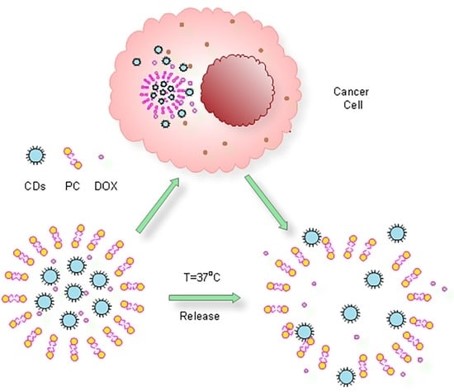 Fig. 1 CDs-enhanced doxorubicin liposomes.1
The true innovation of this system lies in its dual mechanism of action, which goes beyond simply ferrying doxorubicin to a tumor. The liposomes facilitate passive targeting through the Enhanced Permeability and Retention (EPR) effect, where nanoparticles accumulate in the leaky vasculature of tumor tissues. This mechanism, widely discussed in literature, allows for a higher concentration of the therapeutic agents at the cancer site while minimizing exposure to healthy tissues.
The CDs provide the synergistic effect. The referenced literature demonstrates that when the CDs-NHF-loaded liposomes are delivered to cancer cells, the CDs significantly reduce the expression of phosphorylated signaling molecules, including pAkt, pmTOR, and pERK. These molecules are central players in the PI3K/Akt/mTOR and MAPK/ERK pathways, which are often hyperactive in cancer cells and contribute to proliferation, survival, and drug resistance. By inhibiting these pathways, the CDs effectively make the cancer cells more vulnerable to the cytotoxic effects of doxorubicin. This synergistic approach, where one agent sensitizes the cell while the other delivers a fatal blow, results in a dramatically enhanced antitumor effect compared to doxorubicin alone.
The efficacy of this innovative delivery system is supported by compelling experimental data. The following key findings, derived from in vitro and in vivo studies, highlight its synergistic anti-tumor effect and promising therapeutic potential:
The nanoplatform's physical properties are meticulously controlled to ensure stability and effective delivery. Experiments focused on preparing and characterizing different formulations, such as "LPs-CDs-NHF" and "LPs-CDs-NHF-DOX," to achieve optimal size and zeta potential, which are critical for circulation time and cellular uptake.
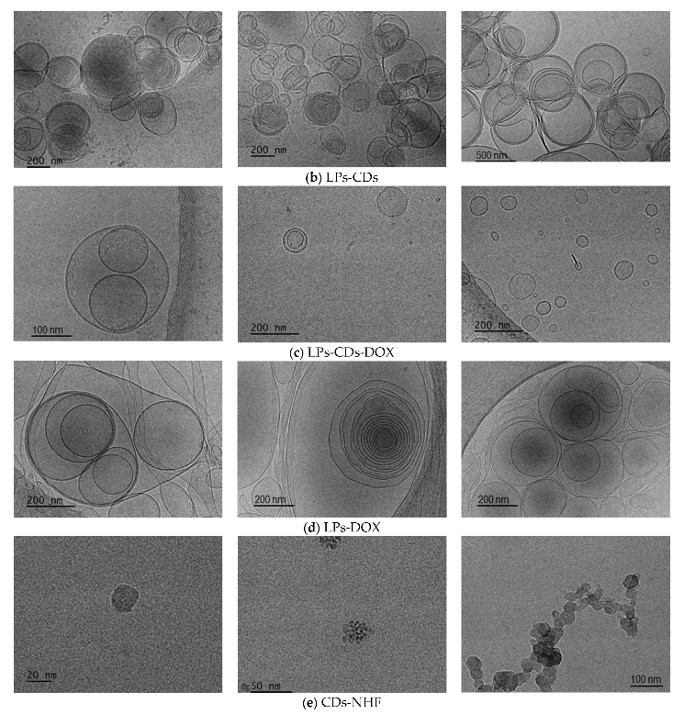 Fig. 2 Cryo-TEM images for all LPs formulations and CDs-NHF.1
The combination of doxorubicin and CDs within the liposomal carrier demonstrated a significant synergistic effect. In vitro cell viability assays showed that liposomal formulations containing both CDs-NHF and DOX were able to reduce cancer cell viability at concentrations where the individual components alone were much less effective.
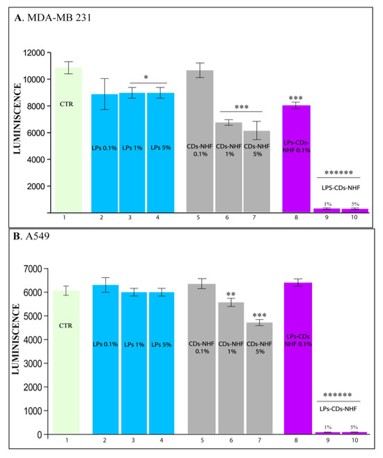 Fig. 3 The effect of LPs-loaded CDs-NHF in cancer cell viability.1
The research provides mechanistic insights, showing that the nanoplatform acts by downregulating key signaling molecules such as pAKT, pmTOR, and pERK. This was confirmed through molecular analysis, which demonstrated that the CDs disrupt crucial pathways responsible for cancer cell proliferation and survival, making the cells more susceptible to doxorubicin's cytotoxic effects.
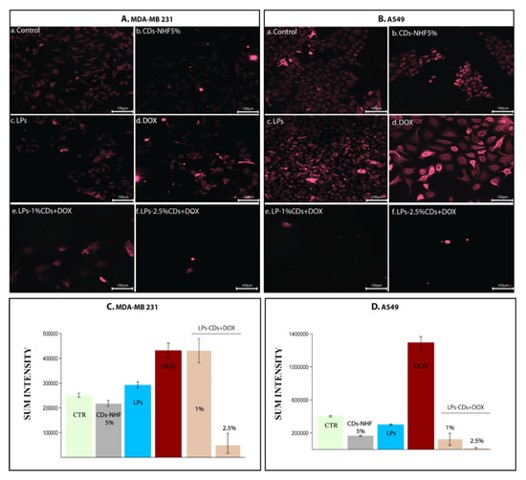 Fig. 4 5% CDs-NHF significantly downregulated pAkt in both MDA-MB-231 and A549 cells.1
By partnering with Creative Biolabs, you can leverage our deep knowledge and technical capabilities to transform innovative research into a powerful therapeutic reality. We provide the specialized services that translate scientific literature into actionable, high-impact solutions for the biopharmaceutical industry. Contact our expert team today to discuss how we can support your specific project needs in CDs-enhanced liposomes and lipid-based drug delivery.
While this technology holds immense promise, its journey from a research highlight to a clinical reality is complex. Key challenges include ensuring the stability and reproducibility of the nanoplatform, and scaling up manufacturing processes for novel drug delivery systems. The precise characterization of the liposomes and CDs—including their size, zeta potential, drug loading efficiency, and release kinetics—is a non-negotiable step to ensure safety and efficacy. This is where Creative Biolabs' specialized expertise becomes invaluable.
| Services/Products | Description | Inquiry |
|---|---|---|
| Custom Formulation & Development | Our experts can assist in the design and optimization of advanced lipid formulations, ensuring the stability and controlled release of both the drug and the CDs. | Inquiry |
| Advanced Characterization | We provide state-of-the-art analytical services to meticulously characterize your nanoplatform, from particle size analysis to zeta potential measurement, ensuring the data required for regulatory submissions is robust and reliable. | Inquiry |
| In Vitro & In Vivo Validation | Our comprehensive validation services allow you to test the efficacy, toxicity, and biodistribution of your nanoplatform in controlled laboratory settings, accelerating preclinical research and providing critical data for your project. | Inquiry |
| Pre-formulated Liposome Kits | Ready-to-use kits for quick and efficient liposome preparation. | Inquiry |
| Lipid Components | High-purity lipid components for custom formulation and research. | Inquiry |
Reference
 For Research Use Only. Not For Clinical Use
Supports
Online Inquiry

Creative Biolabs is a world-leading liposome provider with extensive experience in liposome preparation, custom formulation development, and characterization.

© 2026 Creative Biolabs. All rights reserved.