In the dynamic field of nanomedicine, precision is paramount. Ligand-targeted nanomedicines, which utilize specialized molecules to guide drug carriers to specific cells or tissues, have long been heralded as the future of therapeutic delivery. By concentrating a drug at its site of action, these systems promise to enhance efficacy while minimizing systemic side effects. However, their journey from lab to clinic has been fraught with a significant and persistent obstacle: the protein corona. At Creative Biolabs, we are at the forefront of tackling these intricate challenges.
Imagine a sophisticated nanoparticle, designed to deliver medicine directly to a tumor, being launched into the bloodstream. Its mission is critical, but within seconds, it's ambushed. The body's natural defenses immediately swarm the intruder, coating it in a sticky layer of proteins called the "protein corona." This biological camouflage, while a testament to the body's efficiency, becomes a major obstacle. It hides the nanoparticle's specialized "homing devices"—the targeting ligands—making it invisible to the diseased cells it was meant to find. As a result, the nanoparticle loses its way, leading to off-target effects and potential toxicity, completely undermining the promise of precision medicine.
The challenges don't end there. Even before these nanoparticles face the biological environment, their creation is fraught with difficulty. Attaching the crucial targeting ligands has traditionally relied on complex, multi-step chemical processes. These methods are often inefficient, hard to scale for production, and can even damage the ligands, rendering them useless before they ever enter the body.
A new and elegant approach addresses these critical challenges head-on: the development of galloylated liposomes (GA-lipo). This innovative technology leverages the unique properties of gallic acid, a phenolic compound found in many plants, to create a more robust and efficient drug delivery system. By incorporating gallic acid-modified lipids directly into the liposome's bilayer, a stable platform is created for the non-covalent, physical adsorption of targeting ligands.
This non-covalent strategy offers several key advantages over traditional covalent conjugation:
The core of this breakthrough lies in the power of non-covalent physical adsorption. Unlike chemical conjugation, which creates a permanent bond, this method allows for stable yet reversible interactions. Research has demonstrated that this approach maintains the integrity of the targeting ligand, ensuring it can effectively bind to its intended target. As a proof of concept, one study successfully loaded a therapeutic agent into GA-lipo and then adsorbed the targeting antibody, trastuzumab. The resulting immunoliposomes exhibited improved tumor inhibition in a preclinical model, demonstrating the superior performance of this approach. This finding validates the potential of GA-lipo as a universal platform for targeted drug delivery.
The researchers began by synthesizing gallic acid-modified lipids and confirming their successful incorporation into liposomes. This crucial step demonstrated the feasibility of creating stable, functional liposomal nanoparticles using this novel method. Characterization verified that these liposomes maintained an optimal size and surface properties for systemic administration.
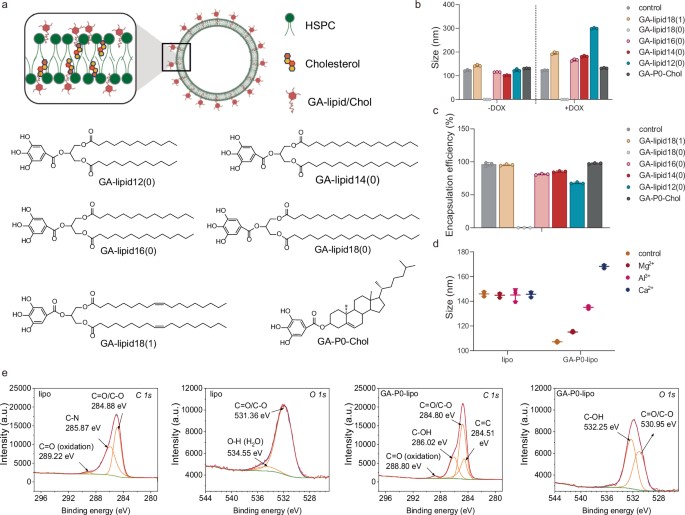 Fig. 1 Schematic diagram of protein-coated GA-lipo.1
A key experiment confirmed that gallic acid-modified liposomes could resist the detrimental effects of the protein corona. By physically adsorbing the trastuzumab antibody, the study showed that the antibody's binding sites remained exposed and active, a direct solution to the protein corona shielding challenge that plagues many nanomedicines.
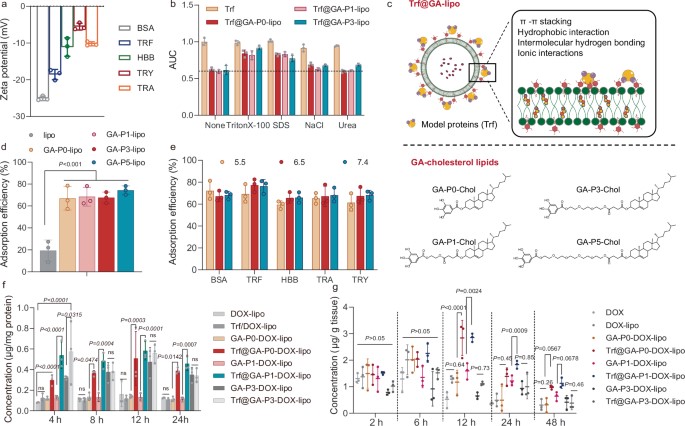 Fig. 2 The protein adsorbed on GA-lipo retains the targeting function..1
The ultimate test was in a preclinical animal model. The trastuzumab-functionalized immunoliposomes demonstrated superior tumor inhibition in mice with SKOV3 tumors, a human ovarian cancer model. This finding directly confirmed that the technology is effective in a living system and has the potential for real-world clinical application.
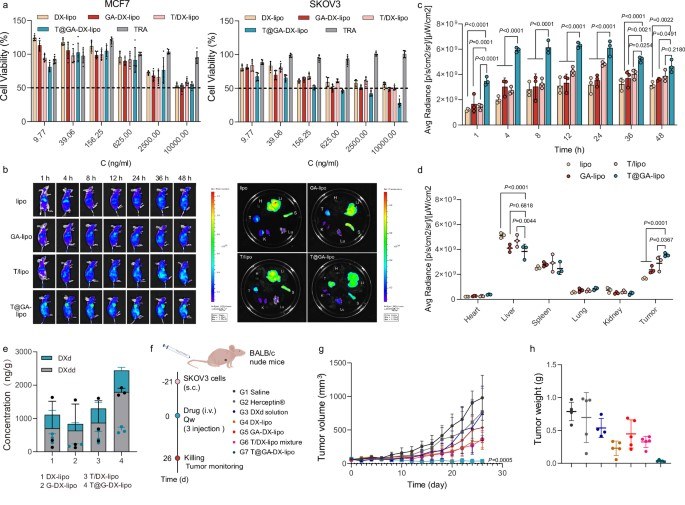 Fig. 3 The therapeutic effect of TRA adsorption of GA-lipo on SKOV3-bearing nude mice.1
The research presented here offers a scalable and effective solution to major challenges in targeted drug delivery. By overcoming issues related to protein corona formation and complex manufacturing, the galloylated liposome platform provides a robust foundation for future nanomedicines. Contact Creative Biolabs today to learn how we can help you apply these groundbreaking insights to your research and development pipeline.
By partnering with Creative Biolabs, our clients can leverage our expertise to streamline development, overcome manufacturing challenges, and accelerate the commercialization of next-generation, targeted nanomedicines.
| Services/Products | Description | Inquiry |
|---|---|---|
| Ready-to-use Products | We offer a wide selection of high-quality, off-the-shelf lipids including HSPC and cholesterol to support your formulation needs. | Inquiry |
| Chemical Synthesis | Our expert chemical synthesis services can provide custom lipids and drugs with a purity of up to 98%, with production capabilities ranging from mg to kg levels. | Inquiry |
| Surface-modified Liposomes | We specialize in the expert formulation and production of surface-modified liposomes for enhanced stability, longevity, and targeted delivery. | Inquiry |
| Perfect Characterization | We provide a full suite of advanced analytical services to ensure the quality and consistency of your lipid nanoparticles, including size, zeta potential, and drug encapsulation efficiency. | Inquiry |
| In vitro & in vivo studies | Our team can design and execute comprehensive preclinical studies to validate the efficacy and safety of your drug delivery systems. | Inquiry |
Reference
 For Research Use Only. Not For Clinical Use
Supports
Online Inquiry

Creative Biolabs is a world-leading liposome provider with extensive experience in liposome preparation, custom formulation development, and characterization.

© 2026 Creative Biolabs. All rights reserved.