The field of oncology is undergoing a transformative shift, moving beyond traditional treatments toward innovative immunotherapies that harness the body's own defence mechanisms. While these approaches show immense promise, a significant challenge remains: delivering therapeutic agents directly and effectively to the tumour site. At Creative Biolabs, we're dedicated to helping our partners overcome these hurdles by leveraging cutting-edge science. A recent and highly promising development in this area is the use of tumour-penetrating lipid nanodiscs, a technology supported by robust scientific literature.
Targeting the Stimulator of Interferon Genes (STING) pathway represents a promising strategy in immuno-oncology. STING, a key innate immune sensor, detects danger-associated molecular patterns from tumors. Its activation by agonists initiates a robust inflammatory response, recruiting cytotoxic T-cells to eliminate cancer cells.
A major translational challenge is the targeted delivery of these STING agonists. As small molecules, they suffer from rapid systemic clearance and dose-limiting toxicities due to non-specific inflammation. Therefore, developing an advanced delivery system is essential to selectively localize agonists to the tumor site, thereby enhancing therapeutic efficacy and improving safety.
Unlike spherical nanoparticles, LNDs are self-assembling, discoidal (disc-shaped) nanoparticles. This distinct geometry offers a crucial advantage in navigating the intricate tumour microenvironment. Scientific studies have demonstrated that the non-spherical shape of LNDs allows them to penetrate solid tumours more efficiently than their spherical counterparts. This enhanced penetration capability means that a greater number of therapeutic molecules can reach and interact with tumour cells, leading to a more robust therapeutic effect. The structural flexibility and self-assembly properties of LNDs also make them highly adaptable for encapsulating a variety of payloads, from small molecules to complex proteins.
Drawing from a recent landmark study published in Nature Communications, we highlight the key experimental strategies that are driving innovation in DNA LNP development. The research provides a blueprint for a systematic approach to overcoming the inherent challenges of plasmid DNA delivery.
Researchers successfully synthesized LNDs loaded with CDN-PEG-lipids. The study meticulously characterized the physicochemical properties of these nanodiscs, confirming their discoidal shape and uniform size distribution. These foundational experiments established a stable and reproducible formulation, a prerequisite for all subsequent in vitro and in vivo studies.
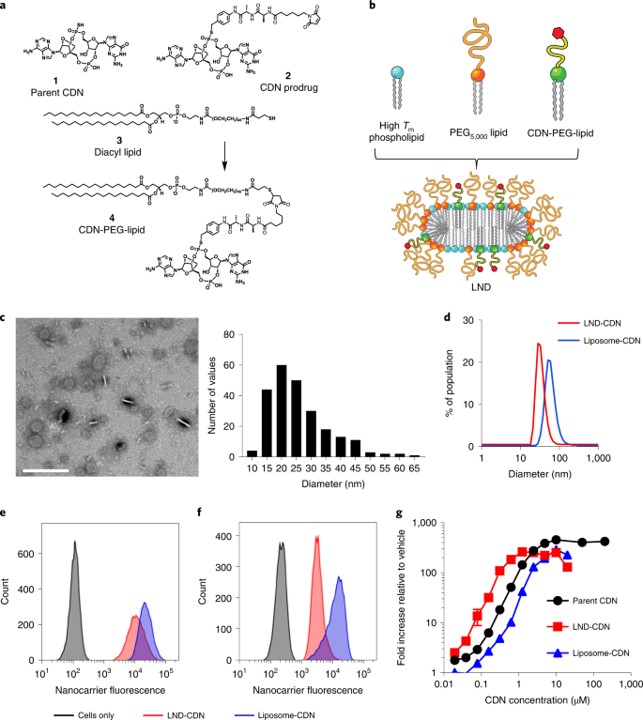 Fig. 1 Design and characterization of nanoparticles for STING agonist delivery. 1
A pivotal finding demonstrated that LNDs exhibited a unique ability to penetrate solid tumours more effectively than conventional spherical liposomes. This superior penetration was visualized and quantified, showing that LNDs could reach the majority of tumour cells. This experimental insight underscores the critical role of nanoparticle shape in overcoming the physical barriers of the tumour microenvironment.
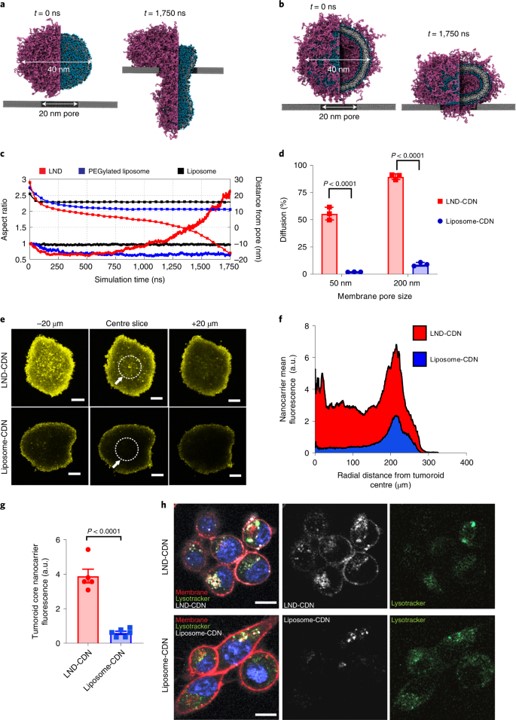 Fig. 2 LND-CDN has better passive diffusion and tumor penetration capabilities than liposome-CDN. 1
Most importantly, a single dose of the LND−CDNs induced the complete rejection of established tumours in a preclinical model. This remarkable outcome was accompanied by the development of long-term immune memory, preventing the recurrence of cancer upon tumour rechallenge. These compelling in vivo results highlight the significant therapeutic potential of this approach.
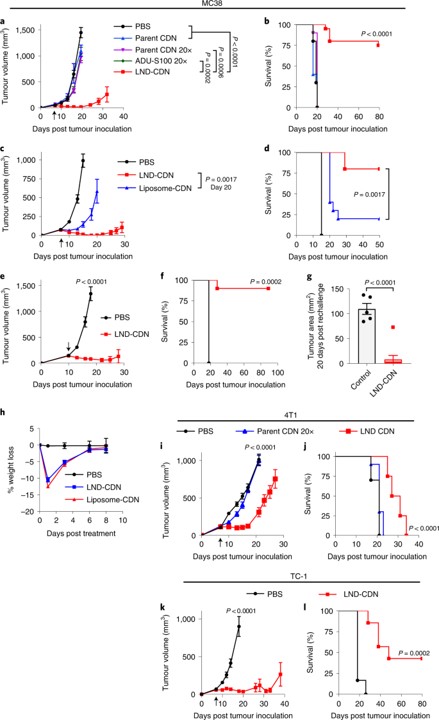 Fig. 3 The anti-tumor effect of LND-CDN in multiple homologous tumor models. 1
Further mechanistic insights revealed how LND-CDN uptake by cancer cells correlated with a powerful systemic immune response. The delivery system promoted the co-localization of the STING agonist and tumour antigens in dendritic cells, which are critical for presenting antigens to and activating T-cells. This evidence provides a deeper understanding of how local tumour treatment can trigger a widespread, systemic immune reaction.
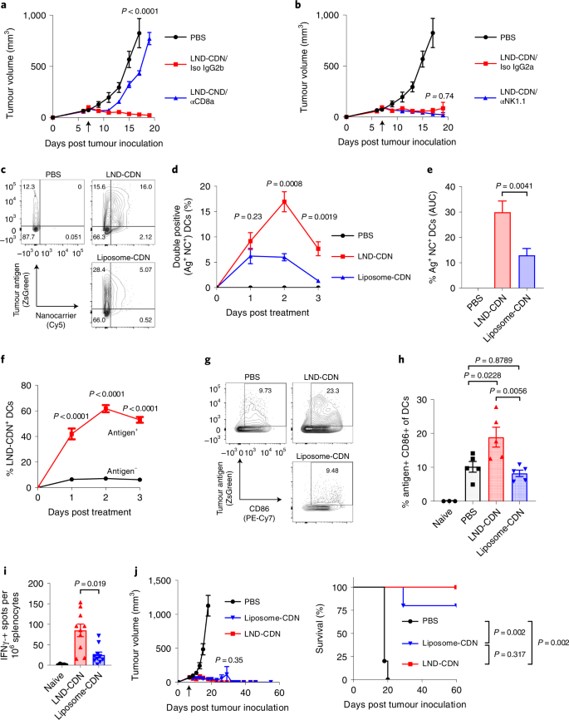 Fig. 4 The co-localization of LND-CDN and antigens in lymph node dendritic cells leads to effective anti-tumor T-cell response. 1
The research highlighted above demonstrates a significant advancement in targeted drug delivery. By overcoming the physical barriers of the tumour microenvironment, LNDs offer a promising platform for developing effective immunotherapies. This breakthrough showcases the power of innovative lipid-based systems in clinical applications. For a deeper understanding or to explore how this research can inform your next project, please contact our team of experts.
At Creative Biolabs, we provide a comprehensive suite of products and services to help you accelerate your research and development in lipid-based drug delivery. Our offerings are designed to address the challenges and opportunities presented by advanced delivery systems like LNDs.
| Services/Products | Description | Inquiry |
|---|---|---|
| Rich Lipids | We offer a wide selection of high-quality lipids, including DSPE-PEG-PDP and DSPE-PEG-SH, with various PEG molecular weights (500,1000,2000,5000,10000, etc.) essential for building stable and functional nanostructures. | Inquiry |
| Synthesis of Functionalized Lipids | Our custom synthesis services allow for the creation of unique, functionalized lipid molecules tailored to your specific application, ensuring optimal performance for your drug delivery system. | Inquiry |
| Customized Lipid-Based Drug Delivery Systems | We develop and optimize various advanced lipid-based systems, including LNDs, liposomes, lipid nanoparticles (LNPs), nanostructured lipid carriers, and nanoemulsions, to meet your unique therapeutic goals. | Inquiry |
| Pharmacodynamic Research | Our team conducts detailed pharmacodynamic studies to evaluate the efficacy, potency, and mechanism of action of your drug delivery system, providing crucial data for preclinical development. | Inquiry |
Reference
 For Research Use Only. Not For Clinical Use
Supports
Online Inquiry

Creative Biolabs is a world-leading liposome provider with extensive experience in liposome preparation, custom formulation development, and characterization.

© 2026 Creative Biolabs. All rights reserved.