Glycosylation Engineering Platform
Background
Glycosylation is the enzymatic process of adding carbohydrate structures to biomolecules, and has emerged as a critical determinant of molecular function in both health and disease. In recent decades, as the biotech and pharmaceutical industries have increasingly turned toward complex biologics, precise glycosylation control has become a cornerstone of drug development, vaccine design, diagnostics, and biomaterial innovation. At Creative Biolabs, we have spent several years in this field, continually developing our custom glycosylation services to meet the evolving needs of research and industrial partners worldwide. Whether your project involves protein glycosylation, glycosylation profiling, or novel glycan engineering for non-protein targets, our platform provides a comprehensive, modular, and highly customizable solution.
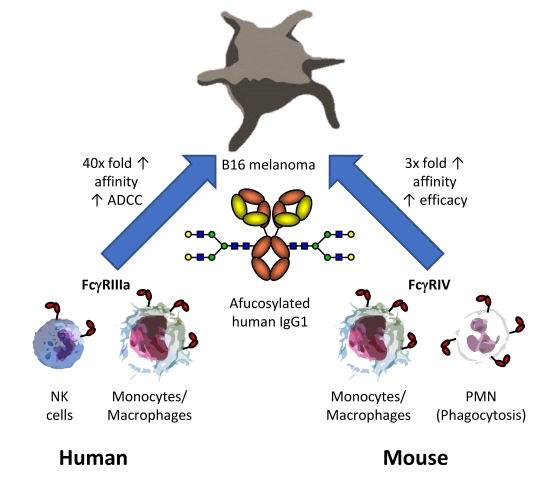 Fig.1 Afucosylation enhances antibody-mediated anti-tumor immunity.1
Our Glycosylation Engineering Platform: An Overview
Creative Biolabs' Glycoengineering Platform integrates a wide range of technologies for custom glycosylation services across multiple molecular classes:
|
Services We Offer
|
Description
|
|
Custom Glycosylation of Expressed Proteins/Peptides
|
Modify glycosylation on recombinant proteins to enhance their structural or functional properties.
|
|
Glycosylated Antibody Engineering
|
Design glycoforms to optimize antibody efficacy, stability, and effector functions.
|
|
Glycolipid Engineering
|
Functionalize glycolipids for membrane studies, cancer research, and immunology.
|
|
Glycosylated Oligonucleotides
|
Attach custom glycans to ssDNA, RNA, or siRNA for delivery or targeting studies.
|
|
Glycosylation of Small Molecule Drugs
|
Improve pharmacokinetics, targeting, and bioavailability through glycan conjugation.
|
|
Glycosylated Polymer Engineering
|
Develop functional glycopolymers for drug delivery, sensors, and regenerative medicine applications.
|
The Glycoengineering Challenge: Precision in a World of Complexity
If glycosylation is so essential, why aren't all biologics perfectly glycosylated? The answer lies in its complexity. Achieving a specific, homogeneous glycan profile is notoriously tricky.
-
Heterogeneity: A single batch of a therapeutic protein can contain dozens or even hundreds of different glycoforms. This heterogeneity poses a significant regulatory concern, potentially leading to inconsistent product performance.
-
Expression System Dependence: The glycosylation machinery differs significantly between expression systems (e.g., bacteria, yeast, insect, and mammalian cells like CHO). CHO cells are the industry standard, but even different CHO cell lines produce different glycan profiles.
-
Process Sensitivity: Glycosylation patterns are susceptible to cell culture conditions, such as pH, temperature, nutrient levels, and dissolved oxygen. Minor deviations in the manufacturing process can lead to substantial changes in the final product.
-
Analytical Complexity: Characterizing these intricate glycan structures requires a sophisticated suite of analytical techniques.
Creative Biolabs' Glycoengineering Platform: Your Partner in Glycan Optimization
Overcoming these hurdles requires a deep understanding of glycobiology and a robust set of glycoengineering tools. This is the foundation upon which our glycosylation engineering platform is built. At Creative Biolabs, we have developed a world-class, fully integrated glycoengineering platform that provides precise control over your molecule's glycosylation profile. We don't just produce molecules; we rationally design and engineer them to have the optimal glycan structures for your desired therapeutic outcome. Our platform combines cutting-edge genetic engineering, advanced cell line development, optimized bioprocess control, and high-resolution glycosylation profiling. We offer a truly end-to-end solution, from initial design and feasibility studies to the stable production of your glyco-optimized molecule for pre-clinical evaluation.
Why Glycosylation Engineering Matters
The Biological Importance of Glycosylation
Glycosylation is one of the most common and functionally diverse post-translational modifications. Over 50% of all proteins are glycosylated, and glycans directly affect:
-
Protein folding and stability
-
Intercellular recognition and signaling
-
Immune system activation and evasion
-
Tumor progression and metastasis
-
Cell trafficking and receptor binding
-
Drug half-life, solubility, and targeting
Different glycosylation sites (N-linked,O-linked, C-linked) and glycan structures (high-mannose, hybrid, complex, sialylated, fucosylated, branched) modulate these properties in highly specific ways.
Industrial Demand for Glycoengineering
In modern biomanufacturing and drug design, glycosylation is no longer viewed as a passive modification—it is deliberately engineered to fine-tune biological activity and therapeutic outcomes. Applications include:
-
Afucosylation of antibodies to enhance ADCC
-
Sialylation for increased plasma half-life
-
Glycan masking to reduce immunogenicity
-
Targeted glycosylation to increase BBB penetration
-
Glycosylation modification of oligonucleotides or polymers for improved drug delivery
Technical Highlights of Our Platform
Core Capabilities
-
Glycosylation site prediction and mutagenesis
-
Chemical & enzymatic glycan conjugation
-
In vitro glycan remodeling (sialylation, afucosylation,etc.)
-
Glycoprotein production using CHO, HEK293, yeast, and insect systems
-
Purification with glycan-retaining workflows
-
In-depth glycosylation analysis & glycan profiling
Glycoengineering Tools We Use
|
Tool/Method
|
Function
|
|
Glycosyltransferases
|
Build specific glycan motifs.
|
|
Glycosidases
|
Trim unwanted residues
|
|
Lectin Affinity
|
Validate glycan structure
|
|
Mass Spectrometry
|
High-resolution site-specific glycan profiling
|
|
HILIC-UPLC
|
Quantify glycoform distribution
|
|
Mutagenesis
|
Introduce/remove glycosylation consensus sequences.
|
Our Standard Workflow
 Fig.2 Glycosylation engineering workflow.
Each step is supported by:
-
Ph.D.-level project managers
-
Transparent milestone tracking
-
Access to full raw data and reports
-
Optional scale-up services
Our Comprehensive Suite of Glycosylation Engineering Services
We understand that different molecules have different needs. That’s why our platform supports the glycosylation protein engineering of a wide variety of biotherapeutics and other molecules.
Proteins with engineered glycosylation exhibit modified folding kinetics, stability, immunogenicity, and receptor-binding affinity. Our service supports:
-
Introduction/removal of glycosylation motifs
-
Enzymatic remodeling of native glycoproteins
-
Glycoform stabilization via site-directed mutagenesis
-
Production of homogeneous or heterogeneous glycoforms
Antibody glycosylation is central to its pharmacology. Our glycosylation protein engineering enables:
-
Afucosylation for ADCC enhancement
-
Bisecting GlcNAc insertion for FcγRIIIa modulation
-
Terminal galactose addition for CDC potentiation
-
Sialylation for anti-inflammatory effects
-
Engineering of Fab-domain glycosylation for novel binding properties
-
Supported formats include IgG1, IgG2, IgG4, ADCs, bispecifics
Glycolipids play a crucial role in cell membrane dynamics, host-pathogen interactions, and immune signaling. We offer:
-
Synthesis of gangliosides (e.g., GM1, GM3, GD2)
-
Custom glycolipid-protein conjugation
-
Modification of ceramide tail or glycan headgroup
-
In vitro assays for glycolipid–antibody or glycolipid–lectin interactions
Glycan-modified oligonucleotides enhance nuclease resistance and targeted delivery. We provide:
-
Covalent glycan conjugation on 5'/3' ends or internal bases
-
Custom linker chemistry (PEG, click chemistry)
-
Formulation into glycan-decorated nanoparticles or liposomes
-
Glyco-modified siRNA/miRNA for therapeutic validation
Glycosylation modification of small molecules can optimize drug-like properties:
-
Add hydrophilic glycan chains to poorly soluble drugs
-
Enhance uptake via lectin or receptor-mediated transport
-
Reduce non-specific toxicity
-
Improve metabolic stability in vivo
Synthetic polymers functionalized with glycans have a wide range of applications in biointerfaces and therapeutic delivery. We offer:
-
Synthesis of glycopolymers with defined spacing and multivalency
-
Polymer backbone selection (PEG, PLGA, polyacrylates)
-
Post-polymerization glycan decoration
-
Formulation into hydrogels, films, or nanoparticles
Key Glycoengineering Strategies
Our platform incorporates a wide array of advanced glycan engineering techniques. Two of the most requested and impactful strategies are afucosylation and sialylation.
Afucosylation for Enhanced ADCC
Antibody-dependent cell-mediated cytotoxicity (ADCC) is a powerful immune mechanism in which NK (Natural Killer) cells recognize and destroy antibody-coated target cells, such as tumor cells. The interaction that triggers this process is between the antibody's Fc region and the FcγRIIIa receptor on the NK cell. The presence of a fucose sugar on the core N-glycan of the Fc region creates steric hindrance, weakening this interaction. By removing this fucose—a process called afucosylation—we can significantly increase the binding affinity to FcγRIIIa. This "supercharges" the antibody, leading to a 10- to 100-fold increase in ADCC activity. At Creative Biolabs, we achieve afucosylation through several proprietary methods, including:
-
Engineered CHO Cell Lines: We have developed host cell lines that are deficient in the fucosyltransferase 8 (FUT8) enzyme, which is responsible for adding core fucose.
-
Enzymatic Remodeling: We can use fucosidases to remove fucose from already-produced antibodies.
Sialylation for Extended Half-Life and Anti-Inflammatory Effects
Sialic acid is a negatively charged sugar that typically sits at the outermost end of a glycan chain. Its presence has profound biological consequences.
-
Pharmacokinetic Enhancement: Sialic acids act as a "stealth cloak," masking underlying galactose residues that would otherwise be recognized by receptors in the liver that trigger rapid clearance from circulation. By maximizing sialylation, we can significantly extend the half-life of a therapeutic protein, reducing the required dosing frequency.
-
Anti-Inflammatory Activity: For IgG antibodies, a high degree of sialylation on the Fc glycan is critical for mediating anti-inflammatory effects, a mechanism central to the efficacy of intravenous immunoglobulin (IVIG) therapy.
We employ a range of strategies to control sialylation, including engineering cell lines to overexpress key enzymes, such as sialyltransferases, and optimizing bioreactor conditions to ensure an ample supply of the necessary sugar-nucleotide donors.
Why Creative Biolabs?
-
Several years of hands-on glycosylation research and development
-
Full in-house capacity from synthesis to glycan analysis
-
Global clients from top-10 pharmas and academic labs
-
Personalized service with fast turnaround and transparent pricing
Underpinning Success with Advanced Glycan Analysis
You can't control what you can't measure. That's why a comprehensive suite of glycan analysis and glycan profiling tools fully supports our glycoengineering services. Accurate, high-resolution analytics are integrated at every stage of a project to guide the engineering process and fully characterize the final product. Our analytical services include:
Glycosylation is a layer of biological complexity that holds immense therapeutic promise. Let us help you navigate it. Partner with Creative Biolabs and leverage our expertise to engineer the next generation of superior biologics. Contact us today to discuss your project with one of our glycosylation specialists and discover how our platform can accelerate your path to success.
Reference
-
Braster, Rens, et al. "Afucosylated IgG targets FcγRIV for enhanced tumor therapy in mice." Cancers 13.10 (2021): 2372. Distributed under Open Access license CC BY 4.0 , without modification. https://doi.org/10.3390/cancers13102372
Resources
For Research Use Only.