Liver Disease Research related Glycosylation Analysis Service
Background Glycosylation Liver
Protein glycosylation involves the enzymatic attachment of complex sugar chains to proteins. This fundamental process is vital for cellular functions, recognition, and communication. In the context of liver health and disease, glycosylation plays a profound and often dysregulated role. Aberrant N-glycosylation patterns are increasingly recognized as powerful and sensitive indicators for various liver conditions, from early fatty liver disease to advanced hepatocellular carcinoma. These glycan alterations offer immense potential for non-invasive diagnostic strategies and novel therapeutic interventions, moving beyond traditional markers. Creative Biolabs' liver disease related glycosylation analysis service helps you accelerate research, identify novel biomarkers, and enhance therapeutic strategies through advanced glycomic profiling, high-throughput analysis, and cutting-edge mass spectrometry and capillary electrophoresis. We are dedicated to elucidating the crucial role of glycans in liver health and disease. We provide precise and actionable insights, directly addressing key challenges in liver disease research. We empower your project with:
-
Discovery of novel glyco-biomarkers: Uncover new, highly sensitive, and specific non-invasive markers for early detection and accurate prognosis of various liver conditions, including hepatocellular carcinoma (HCC), non-alcoholic fatty liver disease (NAFLD), non-alcoholic steatohepatitis (NASH), and liver fibrosis. Our analysis focuses on specific glycan patterns, such as distinct N-glycan panels for HCC detection.
-
Mechanistic insights into pathogenesis: Gain a deeper understanding of the molecular mechanisms driving liver injury and hepatocarcinogenesis. We analyze how aberrant glycosylation influences critical biological processes.
-
Identification of targets: Pinpoint specific glycosylation enzymes or glycan-modified proteins that can serve as novel therapeutic targets for liver diseases, including strategies to enhance immunotherapies by addressing glycan-mediated immune evasion.
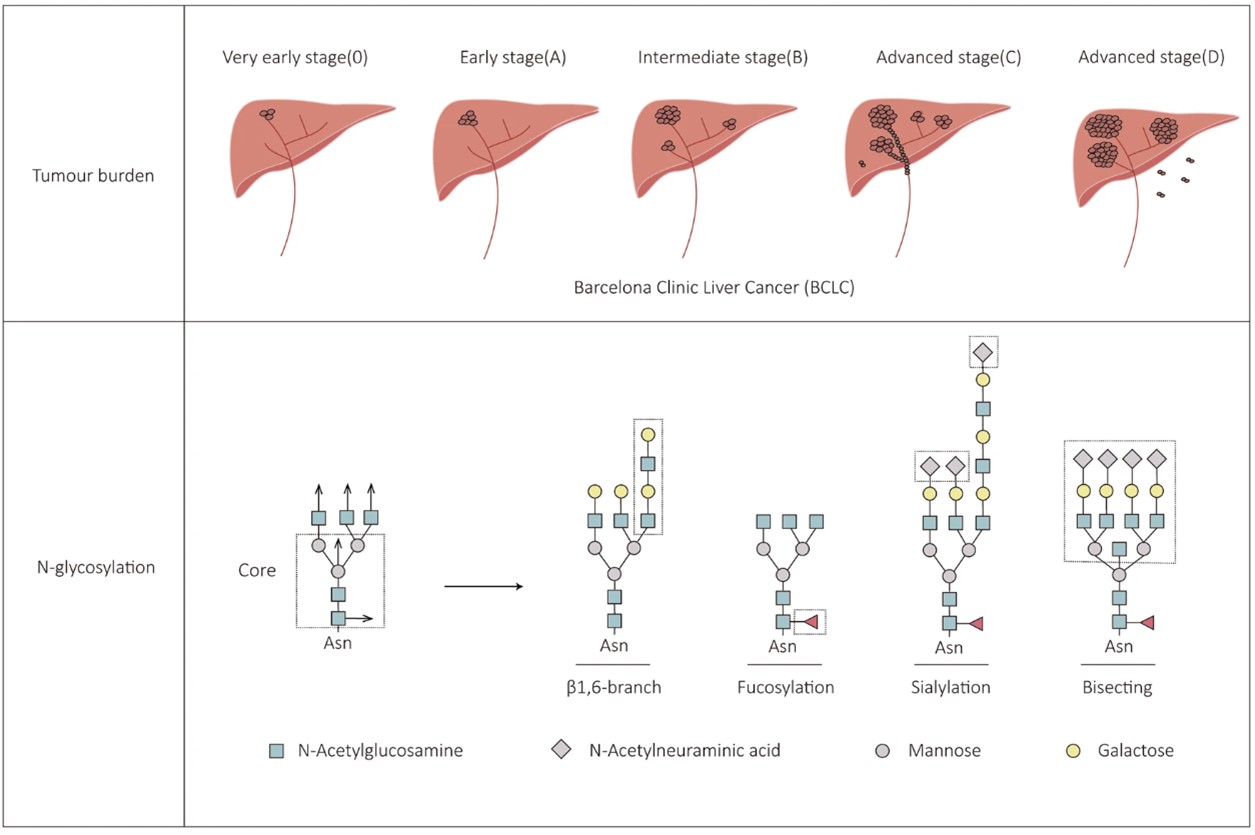 Fig.1 HCC progression and related N-glycan types.1,3
Explore How Our Specialized Services Can Transform Your Liver Disease Research!
Glycosylation Analysis in Disease research is critical because the liver is a central organ for glycoprotein synthesis, meaning changes in its physiological or pathological state are often reflected in the glycan patterns of circulating serum proteins. These glycan alterations offer unique, non-invasive insights, overcoming the limitations of invasive procedures like liver biopsies. Creative Biolabs provides a comprehensive suite of analytical tools to explore these crucial changes. Our service workflow is meticulously designed for clarity, precision, and efficiency, ensuring high-quality, actionable results for your projects.
-
Project Design: Our expert team collaborates with you to define specific research objectives, recommend optimal sample preparation strategies, and select the most suitable glycomic analysis methods tailored to your liver disease research.
-
Sample Processing & Glycan Release: Client samples undergo rigorous quality control. N-glycans are then enzymatically released from glycoproteins using optimized protocols (e.g., PNGase F), followed by purification to isolate the glycan chains.
-
Advanced Glycomic Profiling: Utilizing state-of-the-art platforms, including matrix-assisted laser desorption/Ionization time-of-flight mass spectrometry (MALDI-TOF MS) for quantitative and structural profiling, DNA sequencer-assisted fluorophore-assisted capillary electrophoresis (DSA-FACE) for high-throughput quantification, and liquid chromatography-mass spectrometry (LC-MS/MS) for detailed site-specific analysis, we generate comprehensive glycan profiles.
-
Data Analysis & Biomarker Identification: Raw data are subjected to sophisticated bioinformatics and statistical analysis, including multivariate regression and receiver operating characteristic (ROC) curve analysis. This identifies significantly altered glycan structures or patterns that correlate with disease states or progression.
-
Biological Interpretation & Reporting: The identified glycomic changes are rigorously interpreted in the context of known liver disease pathogenesis, integrating with your provided clinical data. You receive a detailed report outlining findings, their biological significance, and actionable insights.
Why Choose Us?
Choosing Creative Biolabs for your liver disease-related glycosylation analysis service means partnering with a leader in the field, renowned for unparalleled scientific expertise, cutting-edge technology, and a proven track record of success. Our key advantages and unique features include:

Deep Expertise
With over 20 years of experience in biology and glycobiology, our team possesses exceptional scientific knowledge in liver disease research. We understand the nuances of glycan biology and its profound impact on complex pathologies.

Cutting-Edge Technology
We utilize the most advanced platforms, including high-resolution MALDI-TOF MS, high-throughput capillary electrophoresis, and precise LC-MS/MS, ensuring comprehensive, sensitive, and accurate glycomic analysis.

Comprehensive Analysis Capabilities
Beyond mere quantification, we offer global glycan profiling, detailed site-specific glycosylation analysis, and targeted immunoglobulin (IgG) glycan profiling, providing a multifaceted view of glycomic changes in liver disease.

Robust Data Analysis & Interpretation
Our strong bioinformatics capabilities allow for rigorous statistical validation of potential biomarkers, building predictive models with high sensitivity and specificity. We translate complex glycomic data into clear, biologically meaningful insights.

Unwavering Quality & Reliability
Adherence to standardized, validated protocols ensures highly reproducible and reliable results, critical for scientific publications and clinical translation.
Main Glycosylation Changes in Liver Disease Research
-
Fucosylation: Often increased, particularly core fucosylation, observed in conditions like NASH, cirrhosis, and HCC. A notable example is the α1-6 core fucosylation of α-fetoprotein, which is a highly specific marker for HCC.
-
Galactosylation: Decreased levels of galactose are frequently seen, especially in IgG glycans, which is a hallmark of chronic inflammatory conditions like NASH and liver fibrosis.
-
Sialylation: The pattern of sialylation changes is mixed, with some sialylated glycans increasing and others decreasing depending on the specific glycan and disease state.
-
Branching: Increased branching of N-glycans (e.g., tetra-antennary glycans) is often associated with HCC. Alterations in bisecting GlcNAc structures are also significant in cirrhosis and HCC.
Creative Biolabs is your trusted partner for cutting-edge liver disease research-related glycosylation analysis services. Our extensive expertise, advanced technologies, and commitment to delivering actionable insights empower your research, accelerate biomarker discovery, and pave the way for therapeutic strategies against complex liver diseases. Ready to revolutionize your liver disease research? Contact our team today for more information and to discuss your specific project needs. We look forward to partnering with you!
Published Data
This research introduces GlycoFibroTyper, an innovative technique designed for analyzing N-glycans attached to Immunoglobulin G (IgG) and its subtypes, aiming to establish a distinct biomarker pattern for liver fibrosis. The method is notable for its efficiency, requiring only a small volume of serum and eliminating the need for extensive purification or chemical modifications before analysis. It functions by capturing specific glycoproteins using an antibody array on a slide. Once captured, the N-glycans are enzymatically detached using PNGase F and subsequently identified and quantified through MALDI imaging mass spectrometry. Figure 2 visually outlines this streamlined process.
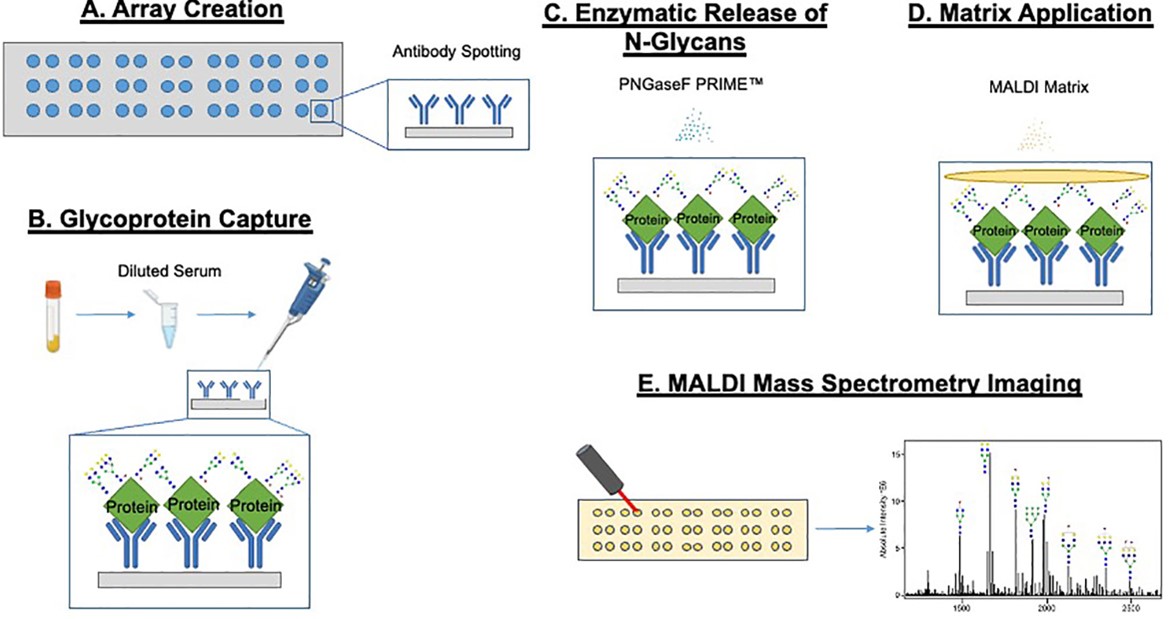 Fig.2 Workflow of glycan analysis.2,3
FAQs
Q1: What types of samples can I submit for glycosylation analysis related to liver disease?
A1: We primarily work with common clinical samples such as serum and plasma. For more in-depth research, we also accept tissue biopsies and cell culture lysates. Our advanced methods are highly sensitive and often require minimal sample volumes, making them ideal even for precious or limited clinical samples. Contact us to discuss your specific sample type and project needs.
Q2: Can glycosylation analysis help me understand the progression of liver disease or monitor treatment effectiveness over time?
A2: Absolutely. Glycan profiles are dynamic and highly responsive to changes in physiological and pathological states. This allows for the non-invasive monitoring of disease severity and inflammation levels. By tracking these changes, you can gain crucial insights into disease progression or regression over time, facilitating more efficient longitudinal studies. Reach out to learn more about setting up such studies.
Q3: How long does a typical liver disease glycosylation analysis project take?
A3: Project timelines vary based on the scope and volume of your samples, typically ranging from 8 to 12 weeks for comprehensive analysis. Upon completion, you'll receive a detailed report including quantitative raw and processed glycan profiles, identified biomarker candidates or panels, comprehensive statistical validation, and in-depth biological interpretations to directly support your research objectives.
Customer Review
Uncovering Mechanisms
"Creative Biolabs' site occupancy analysis provided unprecedented insights into the specific N-glycosylation changes of haptoglobin in our early NAFLD samples. We were particularly interested in the unexpected hyperglycosylation reported in published literature, and their rigorous methodology not only confirmed this but also helped us understand the potential underlying molecular mechanisms of disease progression. This was a crucial step for our therapeutic development program, and their data quality gave us high confidence." - Dr. P. Sco***t.
Accelerated Biomarker Discovery
"We struggled with achieving sufficient sensitivity and specificity for early HCC detection using traditional markers. Creative Biolabs's comprehensive serum N-glycan profiling service provided a transformative solution. Their identified panel of three glycans significantly outperformed our existing methods in our high-risk patient population. Their expertise in MALDI-TOF MS and subsequent data interpretation accelerated our biomarker discovery pipeline considerably, moving us closer to a clinically viable diagnostic." - Prof. R. Ada***s.
References
-
Hu, Mengyu, et al. "The role of N-glycosylation modification in the pathogenesis of liver cancer." Cell Death & Disease 14.3 (2023): 222. DOI: 10.1038/s41419-023-05733-z.
-
Scott, Danielle A., et al. "GlycoFibroTyper: A novel method for the glycan analysis of IgG and the development of a biomarker signature of liver fibrosis." Frontiers in Immunology 13 (2022): 797460. DOI: 10.3389/fimmu.2022.797460.
-
Distributed under Open Access license CC BY 4.0, without modification.
Related Services
For Research Use Only.