Pancreatic Cancer Research related Glycosylation Analysis Service
Precision Glycosylation Analysis for Pancreatic Cancer Breakthroughs at Creative Biolabs
Pancreatic cancer, predominantly pancreatic ductal adenocarcinoma (PDAC), remains a major global health challenge due to its aggressive nature and late diagnosis. Current biomarkers, like CA19-9, often lack the sensitivity and specificity for early detection. Research has illuminated that altered glycosylation - complex enzymatic modifications of proteins and lipids - is a fundamental hallmark of pancreatic cancer, profoundly impacting its progression, metastasis, immune evasion, and therapeutic resistance. Creative Biolabs's service leverages advanced glycomics and glycoproteomics to decode these critical changes, offering unparalleled opportunities for novel biomarker discovery and the identification of targeted therapeutic vulnerabilities. Our unique advantages stem from our unparalleled expertise, state-of-the-art technology, and a proven track record of delivering impactful results that go beyond mere data. We provide solutions that address the inherent complexity and heterogeneity of glycan analysis, offering insights that are often missed by conventional approaches.
Types of our Pancreatic Cancer related Glycosylation Analysis Service
Pancreatic cancer research necessitates a deep understanding of the intricate glycome. Creative Biolabs offers a suite of specialized glycosylation analysis services tailored to dissect these complex molecular changes, providing crucial insights for early detection and therapeutic targeting. We analyze these glycosylation patterns because they are not merely passive indicators but active drivers of pancreatic cancer's aggressive behavior. Research highlights several consistent aberrant glycosylation patterns in PDAC:
-
Increased N-glycan branching
-
Altered fucosylation
-
Sialylation dysregulation
-
Truncated O-glycans and O-GlcNAcylation
-
Glycan changes on specific carriers
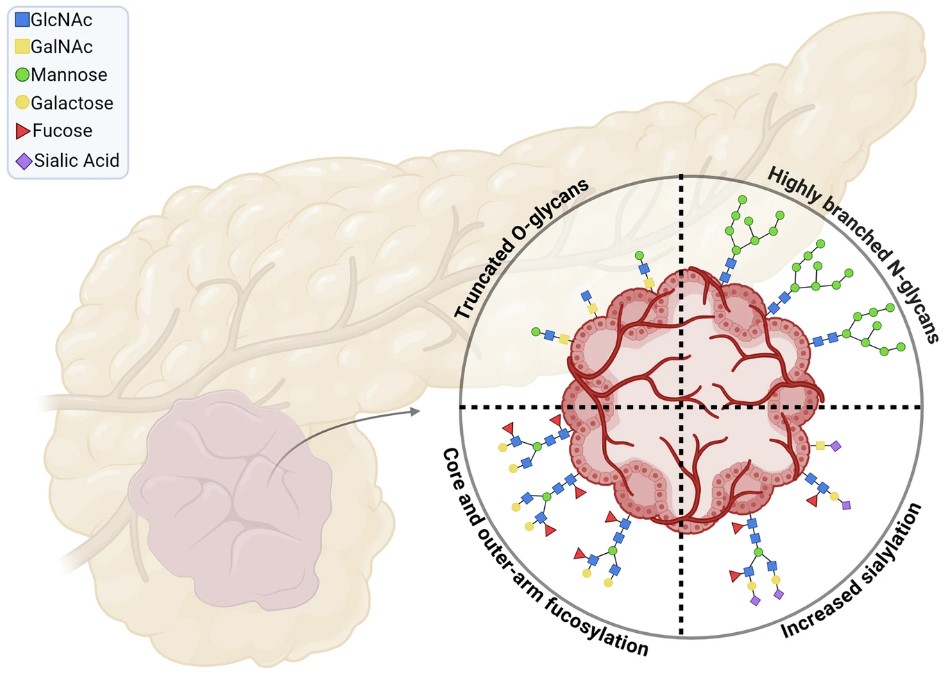 Fig.1 Characteristic glycosylation changes in PDAC.1,3
Creative Biolabs provides a comprehensive suite of services, utilizing advanced analysis techniques to provide detailed insights into glycosylation patterns relevant to pancreatic cancer.
Comprehensive N-Glycome Profiling
-
Service: Global analysis of N-linked glycans from various biological samples to identify and quantify changes in overall branching, fucosylation, and sialylation (including linkage-specific differentiation).
-
Method: High-resolution MALDI-TOF MS and LC-MS/MS of released N-glycans, often with chemical derivatization for isomer resolution.
Quantitative Site-Specific Glycoproteomics
-
Service: In-depth analysis focusing on glycosylation at specific sites on individual proteins, such as IgG N-glycopeptides, to identify precise changes linked to PDAC.
-
Method: Our proprietary approach integrates optimized IgG purification, analysis, and advanced bioinformatics for robust quantification of intact N-glycopeptides.
O-Glycome Profiling & Mucin Characterization
-
Service: Analysis of O-linked glycosylation patterns, with a specific focus on aberrant mucin glycosylation (e.g., truncated O-glycans, sialylation on mucins) due to their critical role in pancreatic cancer.
-
Method: Specialized enzymatic or chemical release methods combined with high-resolution MS.
Glycan Imaging Mass Spectrometry (IMS)
-
Service: Spatially resolved analysis of glycan distribution directly within pancreatic tissue sections, enabling correlation with specific histological features (e.g., tumor vs. normal regions) and biomarker expression.
-
Method: MALDI-QTOF MS on FFPE tissue microarrays and whole tissue sections, often combined with immunohistochemistry (IHC) and immunofluorescence (IF).
Glycan-Targeted Biomarker Discovery
-
Service: An integrated approach combining multi-omics data (glycomics, glycoproteomics, clinical data) and advanced statistical modeling to discover novel glyco-biomarkers.
-
Method: Logistic regression, cross-validation for building and testing analysis models.
Our expert team engages with you to thoroughly understand your specific needs, research questions, and the nature of your samples. We then craft a tailored analytical strategy, selecting the optimal combination of glycan analysis techniques, MS platforms, and bioinformatics approaches to directly address your objectives.

At Creative Biolabs, we are committed to empowering your research with unparalleled insights into the role of glycosylation in pancreatic cancer. Our advanced analytical platforms, deep scientific expertise, and dedication to precision empower you to uncover novel biomarkers for early detection and identify critical therapeutic targets. Partner with us to accelerate your breakthroughs in combating this challenging disease. Please contact our team of experts today to discuss your project and discover how Creative Biolabs's comprehensive glycosylation analysis services can drive your next breakthrough.
Published Data
This study delved into the intricate world of N-linked glycans within human pancreatic tissue, aiming to uncover new avenues for the early and precise detection of PDAC. Researchers utilized sophisticated IMS to spatially map these complex sugar molecules and complemented this with immunofluorescence, applying antibodies for known carbohydrate tumor markers (CA19-9, sTRA) and various lectins that bind to specific sugar structures. The investigation revealed distinct glycan fingerprints across different tissue types: normal pancreas, various regions within tumors (such as necrotic zones and adenocarcinoma), and even between PDAC subtypes categorized by their expression of CA19-9 and sTRA. The study also highlighted how different types of sialylation (specifically α2,3 versus α2,6 linkages) exhibited varying spatial localizations within the same tumor. These discoveries hold considerable promise for advancing the development of improved diagnostic and surveillance tools for PDAC.
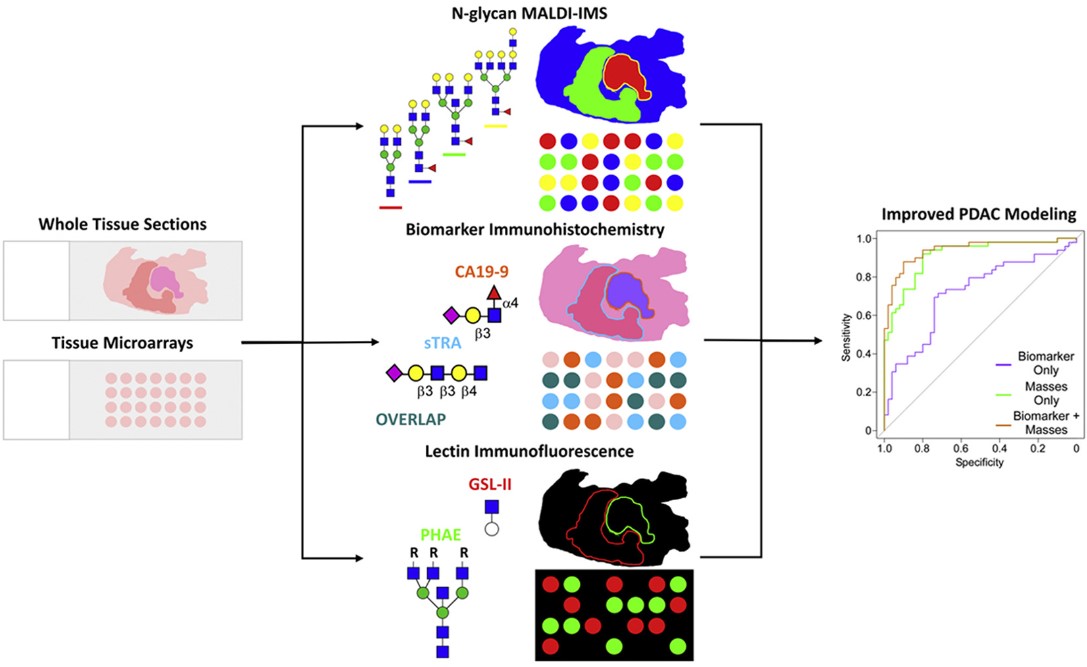 Fig.2 IMS and lectin analysis of N-glycans in pancreatic cancer tissue.2,3
FAQs
Q1: How does Creative Biolabs' service compare to traditional protein biomarker analysis for pancreatic cancer?
A1: Our service offers a critical advantage by focusing on glycosylation, a post-translational modification often altered early in cancer progression. Unlike traditional protein markers, glycan patterns provide highly specific, multidimensional insights into disease state, often enhancing sensitivity and specificity for early detection. For example, combining specific IgG N-glycopeptides with CA19-9 can achieve significantly higher diagnostic accuracy than CA19-9 alone.
Q2: Is the glycosylation analysis quantitative?
A2: Absolutely. We utilize advanced mass spectrometry platforms and robust bioinformatics pipelines to ensure precise and reliable relative quantification of glycan structures and intact glycopeptides. This quantitative data is crucial for identifying statistically significant disease signatures and building predictive models.
Q3: Can your service help identify novel therapeutic targets in pancreatic cancer?
A3: Yes. By understanding the functional consequences of aberrant glycosylation (e.g., its role in proliferation, metastasis, immune evasion, and drug resistance), our analysis can pinpoint specific glycosylation pathways, enzymes, or glyco-modified proteins that represent promising therapeutic vulnerabilities. This can guide the development of new targeted therapies or combination treatments.
Customer Review
Early Detection Breakthrough
"Using Creative Biolabs' pancreatic cancer glycosylation analysis service in our research has significantly improved our ability to identify early, specific biomarkers for pancreatic cancer. The high sensitivity and specificity of the glyco-signatures provided by their advanced MS platforms are unparalleled, allowing us to build a robust diagnostic panel that truly outperforms traditional methods. Their detailed reports are invaluable." - Ms. Y. Mor***n.
Unlocking Complex Data
"The complexity of glycomics data can be overwhelming, but Creative Biolabs's sophisticated bioinformatics support and expert interpretation made all the difference. Their team helped us navigate intricate N-glycan profiles and correlate them with our clinical outcomes, providing a clear and actionable understanding of pancreatic cancer progression. Their service truly streamlines the research process, allowing us to focus on downstream applications rather than data processing." - Mr. A. Bel***r.
References
-
Pienkowski, Tomasz, et al. "Leveraging glycosylation for early detection and therapeutic target discovery in pancreatic cancer." Cell Death & Disease 16.1 (2025): 227. DOI: 10.1038/s41419-025-07517-z.
-
McDowell, Colin T., et al. "Imaging mass spectrometry and lectin analysis of N-linked Glycans in carbohydrate antigen–defined pancreatic Cancer tissues." Molecular & Cellular Proteomics 20 (2021). DOI: 10.1074/mcp.RA120.002256.
-
Distributed under Open Access license CC BY 4.0, without modification.
Related Services
For Research Use Only.