
Retroviral Vector Overview
Introduction
Retroviral vectors are engineered gene delivery systems derived from retroviruses, a virus family that converts RNA into DNA and integrates that DNA into the host genome. In gene therapy research, this biology is useful when stable transgene inheritance is required, but it also makes vector design, insertion-site analysis, and safety testing central to study planning. This overview explains the biological basis of retroviral vectors, how they differ from lentiviral and non-integrating viral platforms, where they remain useful, and which evaluation readouts help researchers interpret performance. For projects comparing stable delivery strategies, recombinant retrovirus tools should be considered together with payload size, target-cell cycling status, and downstream safety requirements.
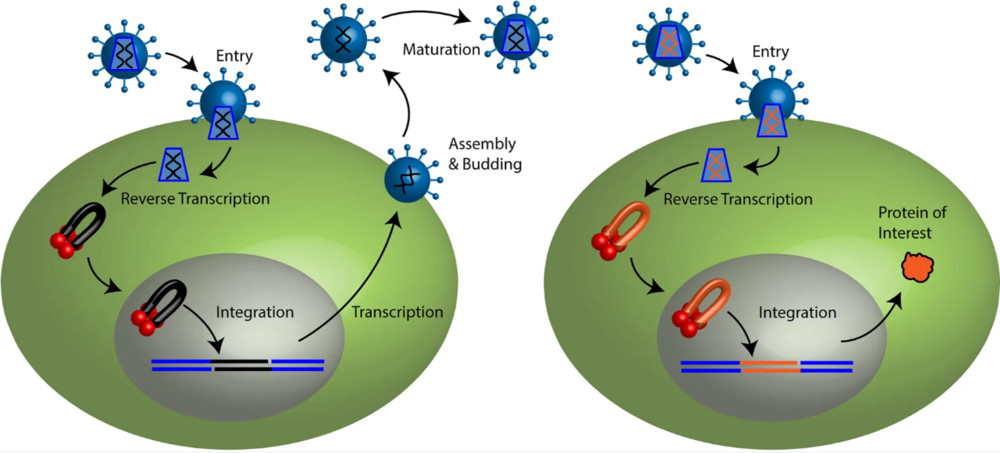 Figure 1. Retroviral life cycle and retroviral vector particle transduction.1
Biological Basis of Retroviral Vectors
Retroviral vectors retain the delivery logic of retroviruses while removing viral genes required for uncontrolled replication. Most research vectors separate the transfer cassette from packaging functions so that target cells receive the transgene but do not produce replication-competent virus. The resulting system is powerful because integration can support durable expression through cell division, but every design decision must respect the constraints of reverse transcription, nuclear entry, promoter activity, and insertional biology.
Core events in the retroviral vector life cycle
- Envelope-mediated binding and fusion determine which cells can be entered, either through native tropism or pseudotyping.
- Reverse transcription converts the vector RNA genome into double-stranded DNA before stable provirus formation.
- The pre-integration complex reaches chromosomal DNA; classic gamma-retroviral systems are most efficient in dividing cells because nuclear envelope breakdown facilitates access.
- Integrase mediates insertion into host DNA, creating a permanent genetic mark that can be transmitted to daughter cells.
- The internal promoter, enhancer elements, untranslated regions, and transgene sequence then determine expression strength and stability.
| Vector Element | Primary Function | Design Consideration |
|---|---|---|
| Transfer cassette | Carries the expression unit or regulatory payload | Should avoid unnecessary enhancer activity near cellular genes when stable integration is intended |
| Packaging genes | Provide viral structural and enzymatic proteins in producer cells | Kept separate from the transfer cassette to reduce recombination risk |
| Envelope glycoprotein | Controls entry and particle stability | Selected according to target cell type, biosafety, and production needs |
| LTR and internal promoter | Influence transcription and vector read-through | Self-inactivating or weaker internal designs may be preferred for safety-sensitive studies |
| Selectable or reporter marker | Supports tracking of transduced cells | Should be justified because extra sequences affect vector size and expression behavior |
How Retroviral Vectors Differ from Other Viral Platforms
Retroviral vectors are best understood as one member of a larger viral vector landscape. Their defining property is chromosomal integration, which distinguishes them from adenoviral vectors that generally drive transient episomal expression and from many recombinant AAV settings where persistent episomes often dominate in non-dividing tissues. Lentiviral vectors are also retroviral vectors, but they are usually discussed separately because lentiviruses can transduce non-dividing cells more efficiently and have become dominant in many hematopoietic and immune-cell applications.
| Platform | Typical Expression Pattern | Common Research Fit | Main Limitation |
|---|---|---|---|
| Gamma-retroviral vector | Stable integration, strong in dividing cells | Ex vivo modification of proliferating cells and legacy stable expression systems | Limited efficiency in non-dividing cells and insertional activation concerns |
| Lentiviral vector | Stable integration in dividing and many non-dividing cells | Hematopoietic stem cells, immune cells, neural models, pooled screens | Production, pseudotyping, and integration-site safety require careful control |
| Adenoviral vector | High-level transient expression without routine integration | Vaccines, cancer models, transient gene expression, oncolytic and immunology studies | Innate and adaptive immune responses can be prominent |
| AAV vector | Longer-term expression in many non-dividing tissues, usually with small payload capacity | in vivo gene addition, tissue-targeting studies, durable expression models | Small packaging capacity and capsid immunity are central constraints |
For readers comparing delivery systems, an integrated strategy may involve adenoviral vector development for high-level transient expression, AAV vector design for compact long-term delivery, or retroviral/lentiviral systems when stable inheritance is essential.
Research Applications and Model Selection
Retroviral vectors are not universally appropriate, but they remain useful when the research question rewards stable integration and when the target-cell context can be controlled. Their most appropriate applications are usually ex vivo or cell-line based, where multiplicity of infection, selection pressure, clonal expansion, and integration-site analysis can be defined before biological interpretation.
When retroviral vectors are a good fit
- Stable transgene expression in proliferating cell models, including immortalized cell lines and selected primary-cell settings.
- Functional genetics studies that require long-term selection, reporter expression, or lineage tracking.
- Ex vivo research systems where transduced cells can be expanded, characterized, and screened before use.
- Legacy protocols using murine leukemia virus (MLV)-based vectors, especially when previous datasets need methodological continuity.
- Comparative vector studies that examine integration profile, promoter choice, or expression stability across retroviral and lentiviral backbones.
When another vector may be more appropriate
- Non-dividing target cells often favor lentiviral, AAV, or adenoviral approaches rather than classic gamma-retroviral vectors.
- Transient expression studies may not justify integration and may be better served by adenoviral or non-viral systems.
- Large or complex payloads can exceed practical retroviral packaging and production limits.
- Safety-sensitive in vivo designs require careful justification because insertional mutagenesis risk must be assessed.
Key Readouts for Retroviral Vector Evaluation
A retroviral vector study should not rely on expression alone. Apparent reporter positivity may hide low particle quality, unstable expression, unintended selection, or clonal skewing. A stronger evaluation plan combines physical, functional, molecular, and safety-oriented assays so that the observed phenotype can be linked to the vector rather than to an uncontrolled culture artifact.
| Research Question | Recommended Readout | Why It Matters |
|---|---|---|
| How much usable vector is present? | Functional titer or transducing unit assay | Measures biological delivery rather than only particle-associated nucleic acid |
| Is the vector genome intact? | Vector copy number and sequence confirmation | Confirms that the delivered cassette matches the intended design |
| Is expression stable? | Time-course expression analysis after passaging | Distinguishes transient carryover from integrated expression |
| Where did integration occur? | Integration-site profiling or clonal tracking | Identifies insertion patterns and clonal dominance risks |
| Is replication-competent virus present? | Replication-competent retrovirus testing | Addresses recombination or packaging-system failure concerns |
| Is the target-cell phenotype altered? | Viability, proliferation, differentiation, and functional assays | Separates vector effects from biological effects of the payload |
In practice, these readouts often overlap with broader viral vector analysis and safety testing of viral vectors because vector identity, potency, impurity, and replication-competent virus assessment are connected.
Safety and Translational Constraints
The central safety issue for retroviral vectors is integration. Integration can be beneficial when durable expression is required, but it can also disrupt genes, alter regulatory regions, or create clonal selection if insertion activates growth-related pathways. Historical clinical observations have made this risk a defining consideration in the design of modern integrating vectors.
- Use self-inactivating designs when appropriate to reduce enhancer activity from long terminal repeats.
- Prefer promoters that fit the biological question without unnecessary strength or broad enhancer effects.
- Limit vector copy number per cell so that expression is adequate but integration burden is not excessive.
- Include clonal tracking or integration-site analysis in studies where expansion or long-term culture is central.
- Interpret results in the context of target-cell biology because stem cells, immune cells, and transformed lines differ in their tolerance of insertional events.
These precautions do not eliminate risk, but they make the design more interpretable. For early research, the main goal is often not to claim clinical readiness; it is to understand whether the vector can answer the biological question without introducing a confounding genomic change.
Study Design Checklist for Retroviral Vector Projects
A well-planned retroviral vector project begins with a concise design brief. The brief should state whether the endpoint requires stable integration, how long the cells will be followed, whether clonal expansion is expected, and which assays will distinguish vector performance from target-cell selection. Without that information, researchers may overinterpret early expression or underrecognize culture-driven changes that emerge after selection and passaging.
Input information to define before vector construction
- Target-cell type, proliferation status, expected culture duration, and whether cells will be expanded clonally or as a bulk population.
- Payload sequence, promoter preference, reporter or selectable marker requirements, and any elements that may affect enhancer activity or vector size.
- Acceptable vector copy number range, expression threshold, and assay window for determining whether expression is stable enough for the study.
- Control conditions, including mock-transduced cells, empty vector, non-integrating vector controls, or lentiviral comparators where appropriate.
The final interpretation should connect every observed phenotype to a vector-quality attribute. For example, low expression may reflect poor transduction, promoter silencing, cassette instability, or negative selection against high-expressing cells. A stable signal may reflect true integration, but it can still be shaped by vector copy number and clonal dominance. Treating these variables as part of the study design makes the resulting Resource content more useful to readers who are choosing between retroviral, lentiviral, adenoviral, AAV, and non-viral platforms.
Published Data
Case 1: Optimization of Scalable Retroviral Vector Production
To address scalability bottlenecks in the clinical-grade manufacturing of retroviral vectors, this study developed an innovative continuous high cell density culture process. By implementing this advanced system, the research team significantly enhanced both the yield and stability of the vectors. Experimental results demonstrated that, compared to traditional batch cultivation, the continuous culture model achieved a more than 5-fold increase in yield while strictly maintaining viral titer and purity at GMP standards. This breakthrough provides a crucial technical framework for the industrial-scale production and cost reduction of retroviral vectors, offering profound practical significance for improving the global accessibility of advanced cell therapies such as CAR-T.
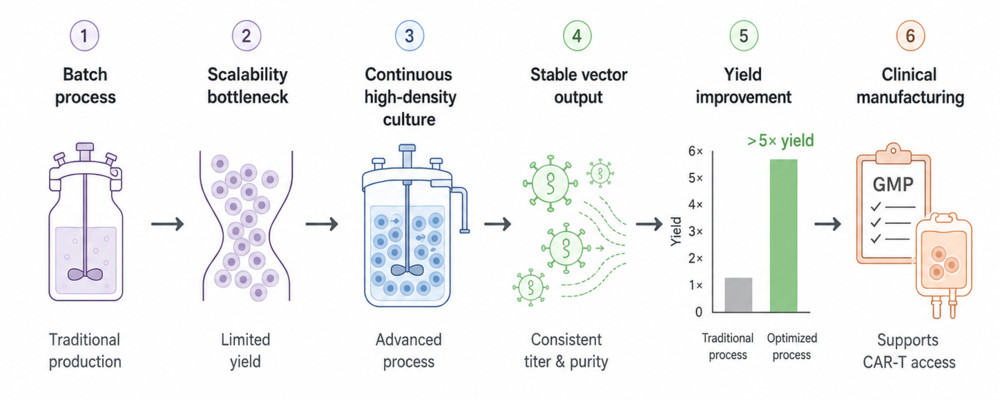 Figure 2. Scalable retroviral vector production.
Frequently Asked Questions
Q: Are retroviral vectors the same as lentiviral vectors?
A: Lentiviral vectors are a type of retroviral vector, but they are usually treated as a separate platform because lentivirus-derived systems can transduce many non-dividing cells more efficiently than classic gamma-retroviral vectors.
Q: Why are retroviral vectors mainly associated with stable expression?
A: Retroviral vectors integrate a DNA copy of the vector genome into host chromosomal DNA. This allows the expression cassette to be maintained through cell division, which is useful for stable cell models and ex vivo cell engineering.
Q: What is the main safety concern for retroviral vectors?
A: The main concern is insertional mutagenesis. Integration near genes or regulatory regions can disrupt gene function or activate growth-related pathways, especially when strong enhancer elements or high vector copy numbers are used.
Q: Can retroviral vectors be used for non-dividing cells?
A: Classic gamma-retroviral vectors are generally inefficient in non-dividing cells. Lentiviral vectors, AAV vectors, adenoviral vectors, or non-viral systems may be more suitable depending on the experimental goal.
Q: Which assays are important for retroviral vector studies?
A: Useful assays include functional titer, vector copy number, expression stability, integration-site analysis, replication-competent retrovirus testing, and target-cell function or viability assays.
Overview of What Creative Biolabs Can Provide
For retroviral vector-related projects, a well-planned strategy should align the integrating vector system with payload design, promoter selection, target-cell compatibility, and downstream analytical and safety readouts. Based on the Gene Therapy service structure, Creative Biolabs offers support in areas directly relevant to retroviral, lentiviral, and broader viral vector evaluation needs, helping researchers connect vector design with practical experimental and quality assessment requirements.
| Research Need | Related Creative Biolabs Support | How It Connects to the Current Resource Topic |
|---|---|---|
| Stable expression in proliferating cells | Recombinant Retrovirus | Supports projects that require retrovirus-based stable transduction or comparative evaluation of retroviral systems. |
| MLV-based vector studies | Gammaretrovirus MLV | Connects directly to classic gamma-retroviral vector biology and dividing-cell transduction. |
| Lentivirus as a modern integrating option | Lentiviral Vector Development Service | Useful when stable delivery is needed but target-cell biology favors lentiviral transduction. |
| Regulated integration and expression | Lentiviral Vector Design for Regulated Integration and Expression | Helps researchers consider integration behavior, expression control, and safety-sensitive design. |
| Vector identity and potency analysis | Viral Vector Analysis | Provides analytical support for titer, genome, potency, and product characterization questions. |
| Safety-focused vector assessment | Safety of Viral Vector | Connects retroviral integration biology with RCV/RCR concerns and safety-oriented readouts. |
Researchers planning a vector project can contact us today to discuss experimental goals, target cells, payload constraints, and appropriate analytical readouts.
References
- Yoder K E, Rabe A J, Fishel R, et al. Strategies for targeting retroviral integration for safer gene therapy: advances and challenges. Frontiers in molecular biosciences, 2021, 8: 662331. https://doi.org/10.3389/fmolb.2021.662331 Distributed under Open Access license CC BY 4.0, with modification.
- Hein M D, Kazenmaier D, van Heuvel Y, et al. Production of retroviral vectors in continuous high cell density culture. Applied Microbiology and Biotechnology, 2023, 107(19): 5947-5961. 10.1007/s00253-023-12689-9.
