
Adenoviral Vector Tropism Modification
Introduction
Adenoviral vector tropism modification refers to engineering viral entry, binding, or biodistribution so that an adenoviral vector transduces the intended cells more efficiently or avoids unwanted tissues. This resource explains natural adenoviral tropism, why CAR-dependent entry can limit some applications, how fiber, knob, hexon, and penton changes are used, and how a targeted adenoviral design can be connected to capsid retargeting and vector characterization while preserving a science-first structure.
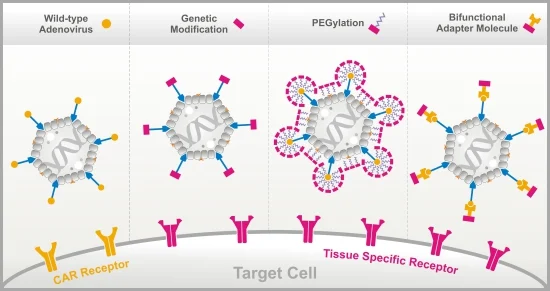 Figure 1. Adenoviral vector tropism modification.1
What Tropism Means for Adenoviral Vectors?
What Is Tropism?
Tropism describes the pattern of cells and tissues that a virus can bind, enter, and express genes within. For adenoviral vectors, tropism is shaped by receptor binding, internalization, blood factor interactions, tissue barriers, innate immune clearance, and route of administration. A vector may bind a receptor well in vitro but still fail to reach the tissue in vivo. Conversely, a vector may transduce liver strongly after systemic administration because of blood factor and hepatic uptake mechanisms, even if the intended target is elsewhere. Therefore, tropism should be treated as a multi-step biological phenotype rather than a single receptor label.
CAR-Dependent Transduction and Its Limitations
-
Common context: Many adenovirus type 5 vectors rely on:
- CAR (coxsackievirus and adenovirus receptor) engagement through the fiber knob
- Integrin-mediated internalization through the penton base
-
Limitation: CAR expression can be low or heterogeneous in:
- Tumors
- Primary cells
- Differentiated tissues
-
Retargeting approaches to overcome this mismatch:
- Alter the fiber knob
- Add ligands
- Change serotype components
- Shield native interactions
- Combine transcriptional regulation with entry modification
| Tropism | Key determinant | Why it matters |
|---|---|---|
| Attachment | Fiber knob, receptor expression, ligand display | Controls initial binding and can restrict or expand susceptible cells. |
| Internalization | Penton base and integrin interactions | Influences uptake after attachment and can affect transduction efficiency. |
| Systemic distribution | Blood factors, complement, liver uptake, route | Determines whether the vector reaches the intended tissue in vivo. |
| Expression specificity | Promoter, enhancer, miRNA regulation | Adds a second layer of specificity after physical entry. |
Adenoviral Vectors Capsid Components Used for Retargeting
Capsid Engineering Approaches – From Knob to Antibody Strategies
The adenoviral capsid provides several engineering sites. The fiber knob is a major determinant of receptor binding, so it is frequently modified, exchanged, or replaced by chimeric fiber structures. Knobless designs remove or reduce native knob-mediated binding and allow alternative targeting ligands to be displayed. Peptide incorporation can place short targeting motifs in exposed capsid regions. Antibody or adaptor strategies can redirect particles toward antigens on target cells. These approaches differ in stability, production yield, retargeting strength, and immunological consequences.
Validate Beyond Theory – Production, Titer, and Transduction Testing
Because capsid engineering can disrupt assembly, infectivity, or manufacturing performance, a tropism project should not be judged only by receptor-binding theory. The best designs combine sequence-level engineering with production testing, titer measurement, and cell-panel transduction assays. For example, fiber and knob modification may be powerful when native receptor dependence is a problem, but it must be tested for capsid incorporation and particle function.
| Engineering site or method | Potential purpose | Typical risk |
|---|---|---|
| Fiber knob exchange | Switch receptor usage by borrowing another adenoviral serotype component | May alter assembly, neutralization, or infectivity. |
| Knobless fiber | Reduce native CAR dependence and display alternative ligands | Requires confirmation that modified fibers form functional trimers. |
| Peptide insertion | Add short targeting motifs to exposed capsid loops | Insertion size and location may disrupt capsid stability. |
| Antibody or adaptor retargeting | Use antigen recognition for cell-specific binding | Adaptor stoichiometry and in vivo stability can complicate translation. |
| Hexon or shield modification | Reduce unwanted interactions or alter immune recognition | Can affect particle stability and broad immunogenicity. |
Main Strategies for Adenoviral Tropism Modification
Pseudotyping and chimeric design are common strategies when native adenoviral tropism is not suitable. Pseudotyping can replace or modify capsid components to borrow receptor usage from another adenoviral serotype. Chimeric vectors can combine features that support altered cell entry, broader tropism, or reduced dependence on a single receptor. These strategies are especially relevant when researchers need to transduce CAR-low tumors, primary cells, or specialized tissues.
Ligand-based retargeting is more modular. A peptide, antibody fragment, or adaptor can be positioned to bind a target-cell marker. This is attractive for cell-type-specific studies, but the target marker must be accessible on living cells, sufficiently enriched in the target population, and compatible with the physical constraints of the capsid. peptide-incorporated adenoviral retargeting is most useful when the ligand is short, stable, and unlikely to interfere with particle assembly.
- For tumor models, cancer-targeted adenoviral vectors may combine capsid retargeting with tumor-specific promoters or oncolytic logic.
- For tissue models, liver-directed adenoviral delivery should be evaluated with biodistribution and off-target organ exposure rather than with transduction alone.
- For receptor-independent targeting, antibody-guided adenoviral entry can be considered when a well-validated surface antigen is available.
- For immune-sensitive studies, capsid modification should be assessed for both desired entry and changed innate immune recognition.
How to Evaluate Whether Tropism Was Really Changed?
- In vitro Tropism Evaluation
A successful tropism modification should change the biology of vector entry or distribution in a measurable and useful way. In vitro, this usually begins with a panel of target-positive, target-negative, and receptor-rescue cells.
| Evaluation Dimension | Specific Method | Purpose |
|---|---|---|
| Cell panel | Target-positive + target-negative + receptor-rescue cells | Confirm targeting specificity |
| Competition binding | Receptor competition assay | Test whether binding depends on intended receptor |
| Step discrimination | Flow cytometry, reporter expression, qPCR, infectious unit assay | Distinguish binding, uptake, and productive transduction |
| Specificity validation | Normal-cell counter-screen | Ensure improved specificity, not broad enhancement |
- In Vivo Validation
In vivo, evaluation must include biodistribution and tissue expression. A vector may show strong target-cell transduction in vitro but still be diverted to liver, spleen, or vascular compartments after systemic delivery. For systemic studies, adenovirus vector titration and particle-to-infectivity measurements should be paired with tissue vector genome analysis, expression localization, and toxicity readouts.
| Evaluation question | Recommended approach | Interpretation note |
|---|---|---|
| Does the vector bind the intended cells? | Target-positive and target-negative binding assays | Binding is necessary but not sufficient for productive transduction. |
| Does entry depend on the intended receptor? | Competition assay, receptor knockdown or rescue | Confirms mechanism rather than correlation. |
| Does modification improve functional expression? | Reporter expression, mRNA/protein readout, infectious titer normalization | Expression should be normalized to dose and particle quality. |
| Does in vivo distribution change? | Biodistribution, tissue histology, local expression mapping | Route and dose can dominate capsid effects. |
Limitations and Future Directions
Tropism modification can improve targeting but rarely solves every delivery problem alone. The modified vector may still face neutralizing antibodies, complement activation, hepatic uptake, endothelial barriers, tumor penetration limits, or promoter leakiness. A design that improves specificity may reduce yield, stability, or infectivity. A design that increases entry may also increase off-target exposure if the receptor is not truly target restricted. These trade-offs explain why adenoviral retargeting increasingly uses layered specificity: altered entry plus promoter control, miRNA regulation, local administration, payload logic, or immune-modulating design.
Future directions include better use of adenovirus serotype diversity, computational mapping of capsid-exposed loops, high-throughput cell-panel screening, antibody or nanobody adaptor systems, and paired capsid-expression control strategies. Regardless of the method, a strong tropism package should connect engineering rationale, production feasibility, transduction specificity, and safety-related viral vector analysis rather than presenting improved infection of one cell line as a complete targeting claim.
Overview of What Creative Biolabs Can Provide
Creative Biolabs can support adenoviral tropism modification by integrating capsid engineering, tissue-targeting concepts, vector production, and characterization assays. The services below were selected from the Services branch of the uploaded Excel link table.
| Research Need | Related Creative Biolabs Support | How It Connects to the Current Resource Topic |
|---|---|---|
| Broad capsid retargeting | Capsid-modified Adenovirus Vector Construction | Directly supports fiber, knob, hexon, penton, or ligand-based retargeting strategies. |
| Serotype or component switching | Chimeric Adenovirus Vector Construction Service | Useful for testing altered host range, receptor use, or capsid component combinations. |
| Antigen-directed targeting | Antibody-modified Adenovirus Vector Construction Service | Applies when retargeting is based on antibody-antigen recognition on target cells. |
| Alternative tropism systems | Pseudotyping Adenoviral Vectors Construction | Connects adenoviral design with altered tissue or cell tropism through pseudotyping concepts. |
| Targeted cancer model delivery | Lung Cancer-targeting Adenovirus Vector Construction Service | Provides a concrete tumor-targeting application when lung cancer models are the focus. |
For projects that require vector format selection, tropism planning, or assay design, contact us today to discuss a fit-for-purpose research workflow.
Frequently Asked Questions
Q: What is adenoviral vector tropism modification?
A: It is the engineering of adenoviral binding, entry, or biodistribution so the vector preferentially transduces desired cells or avoids unwanted tissues.
Q: Why is CAR dependence a limitation for adenovirus vectors?
A: Many Ad5-based vectors use CAR for attachment, but CAR expression can be low or heterogeneous in some tumor cells, primary cells, or differentiated tissues. This can reduce transduction efficiency or make targeting unreliable.
Q: Which capsid regions are commonly modified?
A: The fiber knob, fiber shaft, penton base, and sometimes hexon or exposed capsid loops are used for tropism engineering. The best region depends on whether the goal is receptor switching, ligand display, immune shielding, or altered biodistribution.
Q: How do researchers confirm that retargeting works?
A: They compare target-positive and target-negative cells, use receptor competition or receptor rescue experiments, normalize by infectious titer, and assess biodistribution and expression in relevant in vivo models when needed.
Q: Can tropism modification replace promoter control?
A: Usually no. Capsid retargeting changes entry or distribution, while promoter and regulatory controls affect expression after entry. Combining both layers often provides stronger specificity than either alone.
Reference
- Reetz J, Herchenröder O, Pützer B M. Peptide-based technologies to alter adenoviral vector tropism: ways and means for systemic treatment of cancer. Viruses, 2014, 6(4): 1540-1563. https://doi.org/10.3390/v6041540 Distributed under Open Access license CC BY 4.0, without modification.
