
Lentiviral Vector Titer Optimization
Introduction
Lentiviral vector titer optimization is the process of improving how many usable, infectious vector particles are generated, recovered, and measured for a defined experimental purpose. A high physical particle count is not always a high functional titer, because only a fraction of particles may enter target cells, reverse transcribe, integrate or persist, and express the payload. This resource explains how production design, envelope choice, harvest timing, concentration, and analytical method influence titer interpretation. Readers comparing vector design options can also review lentiviral vector development in the broader gene therapy workflow.
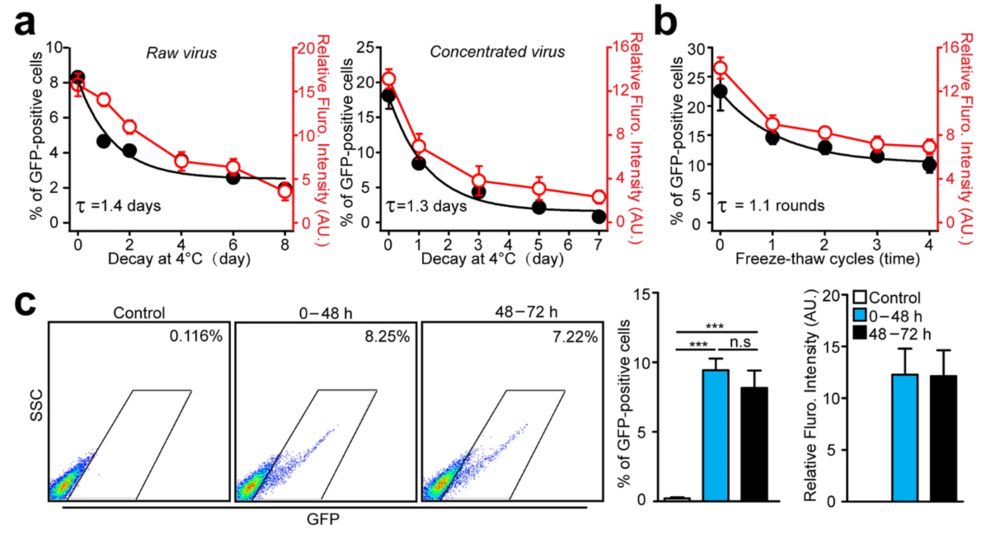 Figure 1. Optimization of lentivirus concentration/storage conditions.1
What Lentiviral Vector Titer Really Measures?
A lentiviral preparation contains a mixture of infectious particles, noninfectious particles, free capsid protein, residual plasmid DNA, extracellular vesicles, serum components, and process-related impurities. Titer therefore depends on what is measured and why it is measured. A production scientist may track total particles to monitor upstream yield, whereas a cell engineering team usually needs functional transducing units in the relevant target cell type.
- Physical titer estimates vector-associated materials such as p24 antigen or vector RNA and is useful for batch comparison, but it does not directly prove biological activity.
- Functional titer estimates infectious units by measuring reporter expression, transgene copies, or integrated provirus after transduction.
- Process titer should be interpreted with viability, sterility, residual host-cell DNA, endotoxin, and replication-competent lentivirus risk when a project moves toward translational use.
| Titer concept | What it answers | Common readout | Main limitation |
|---|---|---|---|
| p24 or particle-associated antigen | How much capsid-associated material is present? | ELISA or immunoassay | Can overestimate useful vector when many particles are noninfectious. |
| Vector RNA/genome copies | How many vector genomes are packaged? | RT-qPCR, qPCR, or ddPCR | Sensitive to sample preparation and may not predict target-cell transduction. |
| Functional titer | How many particles produce a measurable biological event? | Flow cytometry, qPCR for provirus, or selectable marker assay | Depends strongly on cell type, MOI range, promoter, and assay timing. |
| Potency-associated titer | Does the vector achieve the intended functional effect? | Expression, knockdown, editing, cytokine, or phenotype assay | Requires a project-specific biological model and acceptance logic. |
Production Variables That Shape Lentiviral Titer
Optimization begins before transfection. Plasmid ratios, transfer cassette length, packaging system, envelope glycoprotein, host cell condition, transfection reagent, medium, culture scale, and harvest schedule interact with each other. The objective is not simply to maximize a number, but to create a reproducible preparation that retains infectivity after clarification, filtration, concentration, and storage.
Upstream design factors
- Transfer cassette size and structure influence packaging efficiency; very large or repetitive sequences can reduce yield and increase heterogeneity.
- Promoter choice can affect functional titer because weak expression may make a transduced cell look negative even when vector entry occurred.
- Envelope glycoprotein selection changes stability, tropism, concentration tolerance, and target-cell entry; VSV-G is common, but targeted or sensitive-cell projects may need alternatives.
- Producer-cell health matters. Overconfluent, stressed, or unevenly transfected cells often produce inconsistent lots even when DNA amounts are unchanged.
Downstream and handling factors
- Harvest timing should balance particle accumulation against degradation, producer-cell death, protease release, and increasing impurities.
- Clarification and filtration can remove debris but may also reduce recovery if membranes bind particles or clog.
- Concentration by ultracentrifugation, tangential-flow filtration, or chromatography can improve apparent titer, yet shear, aggregation, and buffer conditions affect infectivity.
- Freeze-thaw cycles, storage temperature, serum content, and formulation buffer should be standardized before comparing lots.
| Optimization variable | Why it matters | Practical interpretation |
|---|---|---|
| Envelope glycoprotein | Controls entry and particle stability | Use glycoprotein optimization when the target cell is difficult or tissue tropism is important. |
| Transfer cassette | Affects packaging and expression | Shorter, stable cassettes usually support higher and more reproducible functional titer. |
| Producer-cell condition | Determines transfection efficiency and particle quality | Standardize passage range, confluence, medium, and harvest windows. |
| Concentration method | Increases usable dose but can damage particles | Compare recovery, infectivity, impurity carryover, and scalability. |
| Assay cell model | Defines functional titer | Report the cell type, cell number, infection time, and readout threshold. |
Key Parameters for Lentiviral Vector Titer Optimization
Lentiviral vector titer optimization is usually not achieved by adjusting a single condition. It requires coordinated control of producer-cell status, plasmid quality, transfection conditions, culture environment, harvest strategy, and post-production handling. A small change in one step may affect both total particle yield and functional infectivity.
For early-stage research, optimization can begin with a limited parameter screen. For more demanding applications, a structured design-of-experiment strategy may be useful to identify interactions among DNA amount, plasmid ratio, transfection reagent, culture density, medium formulation, and harvest timing.
| Optimization Parameter | What to Evaluate | Practical Goal |
|---|---|---|
| Producer-cell confluence | Cell density, viability, morphology, passage number | Maintain consistent transfection efficiency and particle quality |
| Plasmid quality | Purity, endotoxin level, sequence integrity, concentration | Reduce batch-to-batch variation and cytotoxicity |
| Plasmid ratio | Transfer, packaging, Rev, and envelope plasmid balance | Improve particle assembly and genome packaging |
| Transfection condition | Reagent type, DNA amount, reagent-to-DNA ratio, incubation time | Maximize production without excessive producer-cell stress |
| Harvest timing | Single harvest or multiple harvests, 24–72 h window | Balance particle accumulation with degradation and impurities |
| Processing method | Clarification, filtration, concentration, buffer exchange | Improve recovery while preserving infectivity |
| Storage condition | Temperature, formulation, freeze-thaw cycle control | Maintain usable titer after production |
The best optimization endpoint should be defined before the experiment begins. For example, a process designed to improve p24 output may not be the same as a process designed to improve transducing units in primary T cells, neurons, or stem-cell models.
Titer Assays and Interpretation
No single lentiviral titer assay answers every question. A robust strategy often pairs a rapid physical assay with a slower functional assay. For early screening, relative comparisons may be enough; for translational research, orthogonal release testing and defined acceptance criteria are usually needed.
| Research question | Recommended assay emphasis | Notes |
|---|---|---|
| Is the production step improving? | p24 or vector RNA plus recovery yield | Useful for rapid process iteration, but confirm with functional readout. |
| Will the vector transduce the intended cells? | Functional TU/mL in the target or surrogate cell | Most biologically relevant, but assay conditions must be controlled. |
| Is the lot comparable to a prior lot? | Orthogonal physical and functional assays | Report both physical-to-functional ratio and biological effect. |
| Is the vector suitable for a potency model? | Potency assay linked to payload mechanism | Important for CAR, shRNA, gene editing, or cytokine payloads. |
Troubleshooting Low or Unstable Titer
Low titer is rarely solved by changing only one parameter. It is better to separate upstream yield, particle recovery, particle integrity, and target-cell permissiveness. A batch with high p24 but low TU/mL suggests poor infectivity, whereas low p24 and low RNA suggest a production problem. A vector that works in HEK293T cells but not in the final target cells may need entry, promoter, or transduction-condition optimization rather than more virus.
- Compare unconcentrated and concentrated material to identify whether losses occur during downstream processing.
- Measure cell viability and expression at multiple MOIs to avoid confusing toxicity with poor titer.
- Use a positive-control vector and a target-cell control to distinguish vector-specific problems from assay failure.
- Avoid relying on a single high-MOI endpoint; a linear dilution range gives a more reliable functional titer.
Published Data
Case 1: Host Genetic Factors Influencing Hepatic Lentiviral Vector Transduction
This study investigates liver-targeted lentiviral vector transduction efficiency and its critical implications for preclinical modeling and clinical gene therapy protocols. Researchers systematically evaluated how hepatocytes from different mouse strains respond to lentiviral vectors, revealing that the host's genetic background acts as a decisive factor governing therapeutic efficacy and safety. This variation often leads to significant discrepancies between animal models and human clinical trials, creating a bottleneck that can reduce the translation efficiency of foundational lentiviral research.
To bridge this gap, the team identified several novel host factors that actively influence viral vector gene delivery inside the liver. The study proposes that these specific genetic components could serve as predictive biomarkers to guide future personalized gene therapy regimens. Ultimately, these findings highlight the necessity of accounting for inter-individual genetic diversity when designing clinical trials, providing a vital framework for optimizing next-generation gene therapies targeting hepatic disorders.
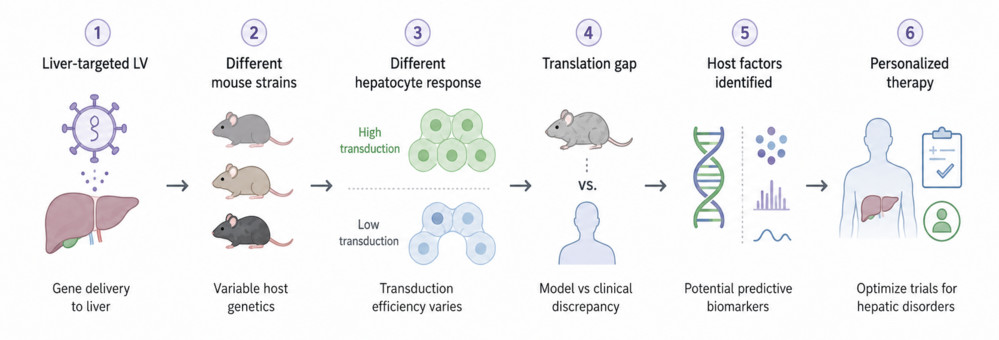 Figure 2. Host genetics in liver-targeted lentiviral gene therapy
Frequently Asked Questions
Q: Why can p24 titer be high when functional titer is low?
A: p24 measures capsid-associated antigen and can include noninfectious particles. Functional titer depends on particle entry, reverse transcription, integration or persistence, and expression in the assay cells.
Q: Should lentiviral titer be measured in HEK293T cells or the final target cells?
A: A permissive cell line is useful for batch comparison, but final interpretation should include the target cell or a justified surrogate when target-cell biology controls entry or expression.
Q: Does concentrating lentivirus always improve usable titer?
A: Concentration increases particle amount per volume, but recovery losses, aggregation, shear stress, and buffer effects can reduce infectious activity. Recovery should be checked by physical and functional assays.
Q: Which variables should be optimized first for low titer?
A: Start with producer-cell health, plasmid quality, transfer cassette design, plasmid ratios, harvest timing, and envelope choice before making complex downstream changes.
Q: What is the difference between titer and potency?
A: Titer quantifies particles or infectious units, while potency measures whether the vector produces the intended biological effect under a defined assay condition.
Overview of What Creative Biolabs Can Provide
Creative Biolabs can support lentiviral vector research by helping researchers connect vector design, production, titration, target-cell transduction, expression control, and safety-related quality assessment. The most appropriate support depends on the research question, cell model, payload type, required titer, and downstream biological readout.
| Research Need | Related Creative Biolabs Support | How It Connects to the Current Resource Topic |
|---|---|---|
| High-titer LV production | Custom Lentiviral Vector Production Service | Supports vector preparation when the main challenge is producing sufficient usable material. |
| Assay selection and titer interpretation | Lentiviral Vectors Titration Service | Connects directly to physical and functional titer measurement. |
| Vector redesign for yield | Lentiviral Vector Optimization Service | Relevant when cassette, envelope, promoter, or process parameters limit titer. |
| Entry and tropism problems | Glycoprotein Optimization of Lentiviral Vector | Useful when the preparation is adequate but target-cell transduction remains weak. |
| Safety-related release context | Safety Determination of Lentiviral Vector Service | Helps interpret titer together with RCL and safety-associated quality attributes. |
For projects requiring custom vector planning, production, titration, or application-specific readouts, researchers may contact us today to discuss your project with Creative Biolabs.
Reference
- Jiang W, Hua R, Wei M, et al. An optimized method for high-titer lentivirus preparations without ultracentrifugation. Sci Rep 5: 13875[EB/OL].(2015). https://doi.org/10.1038/srep13875 Distributed under Open Access license CC BY 4.0, with modification.
