
Adenoviral Vector Immunogenicity
Adenoviral Vector Immunogenicity Introduction
Adenoviral vector immunogenicity describes the immune recognition triggered by adenoviral particles, vector genomes, residual viral gene expression, and expressed transgenes. Because adenoviruses efficiently enter many dividing and non-dividing cells, they are valuable research tools, vaccine platforms, and cancer gene delivery systems; however, the same biological visibility can limit repeat dosing, shorten transgene expression, or complicate interpretation of inflammatory readouts. This Resource explains how innate and adaptive responses arise, how vector generation and capsid design influence immune outcomes, and how adenoviral vector design can be evaluated with mechanism-based assays rather than a single generic "immunogenicity" test.
Why Adenoviral Vectors Are Immunologically Visible?
Adenoviral vector immunogenicity begins with the structure of the viral particle itself. Adenoviruses are non-enveloped double-stranded DNA viruses, and their capsid is mainly composed of hexon, penton base, and fiber proteins. These components support receptor binding, endosomal escape, and nuclear delivery of the viral genome, but they also make the vector highly visible to host immune surveillance.
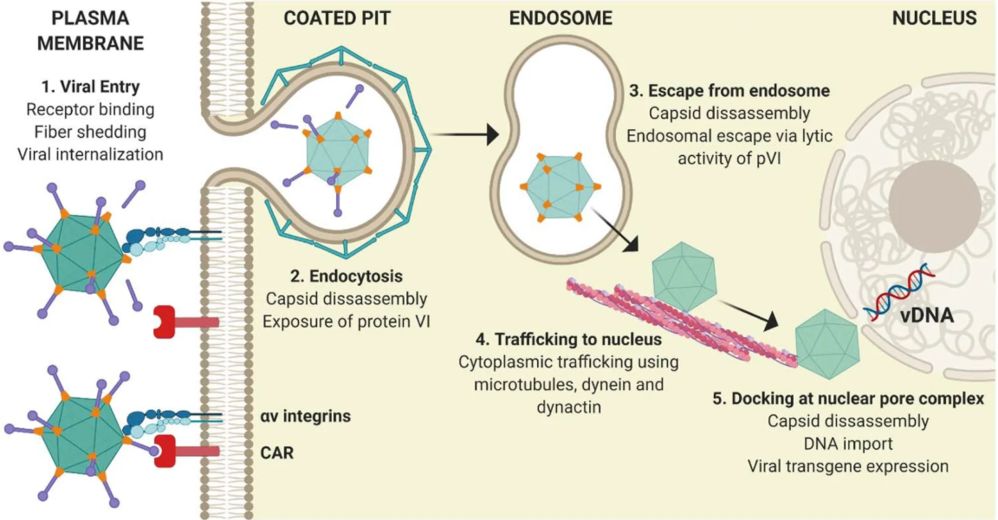 Figure 1. Classical adenoviral entry pathway.1
Key immune-recognition factors include:
- Capsid-associated recognition: Hexon, penton base, and fiber proteins can be detected by host immune systems and may contribute to innate and adaptive responses.
- Blood and complement interactions: After systemic administration, adenoviral particles may interact with complement proteins, coagulation factors, antibodies, and circulating immune cells.
- Antigen-presenting cell activation: Macrophages and dendritic cells can capture vector particles and promote cytokine release or antigen presentation.
- Tissue-specific immune exposure: Endothelial cells, liver-resident macrophages, and other local immune compartments may influence biodistribution, inflammation, and clearance.
- Context-dependent value: In cell culture, strong transient expression may be useful. In vivo, the same immune visibility can affect safety, expression duration, tissue distribution, and repeat dosing potential.
Innate Immunity: The First Layer of Vector Recognition
- Early Innate Immune Activation After Adenoviral Vector Exposure
Innate immunity begins within minutes to hours after vector exposure. Capsid proteins can be recognized extracellularly by antibodies, complement, and scavenger pathways; after cell entry, capsid processing and viral DNA sensing can activate pattern-recognition pathways. Macrophages, dendritic cells, Kupffer cells, and endothelial cells are especially important after systemic administration because they can clear particles and release inflammatory mediators. Cytokines and chemokines such as type I interferon-associated signals, IL-6, TNF-associated responses, CXCL10, and other inflammatory markers are often measured as early indicators, but they must be interpreted together with dose, sampling time, and tissue distribution.
- How Innate Signaling Shapes Adaptive Immune Responses
The innate response is not only a safety concern. It also shapes adaptive immunity. Dendritic-cell activation can enhance antigen presentation, recruit effector cells, and strengthen transgene-specific T-cell responses. This is desirable in vaccine development and some oncolytic applications, but it may be undesirable when the goal is prolonged expression of a therapeutic protein. Study design therefore needs to separate early cytokine induction, cellular infiltration, vector genome distribution, and transgene expression kinetics rather than merging all findings into a single immune activation score.
| Innate component | Typical trigger | Why it matters for research design |
|---|---|---|
| Complement/coagulation interactions | Capsid-antibody complexes, particle surfaces, blood factors | Can influence infusion reactions, particle clearance, and liver exposure after systemic dosing |
| Macrophage and dendritic-cell uptake | Particle phagocytosis, receptor-mediated entry, dying infected cells | Connects early inflammation with antigen presentation and adaptive priming |
| Cytosolic and endosomal DNA sensing | Adenoviral genome exposure after entry and trafficking | May induce interferon-associated pathways and reduce transgene persistence |
| Tissue-resident responses | Kupffer cells, splenic macrophages, endothelial cells | Creates organ-specific inflammatory profiles that may not be predicted by bulk serum cytokines |
Adaptive Immunity and the Problem of Repeat Exposure
Pre-existing Anti-Adenovirus Immunity
Many experimental or clinical contexts may involve baseline immunity against common human adenovirus serotypes, especially Ad5. Neutralizing antibodies can reduce vector entry or shift biodistribution before meaningful transgene expression occurs. For studies that are sensitive to baseline neutralization, researchers may consider pseudotyped adenoviral vectors, alternative serotype backbones, or less common adenoviral platforms.
Humoral and Cellular Immune Readouts
Humoral immunity is usually assessed by neutralizing antibodies, binding antibodies, complement activation, and serotype cross-reactivity. Cellular immunity requires separate evaluation of capsid-specific and transgene-specific T-cell responses, because they may affect transduced-cell survival and expression duration differently. In tumor-bearing or immunodeficient models, disease biology can further influence these readouts, so model selection should be clearly recorded.
Repeat Dosing Considerations
Repeat dosing remains challenging for adenoviral systems because established neutralizing antibodies can rapidly block the same serotype during subsequent administration. Strategies such as alternate serotypes, capsid modification, local delivery, immune modulation, or non-human adenoviral vectors may help in selected settings, but none is universally effective. The practical question is not whether immune recognition can be fully eliminated, but whether it can be managed well enough for the intended application.
Vector Engineering Variables That Shape Immunogenicity
Adenoviral vectors can be engineered at the genome, capsid, promoter, and payload levels. First-generation vectors retain more adenoviral coding capacity than helper-dependent designs and may express residual viral genes that contribute to adaptive clearance. helper-dependent adenoviral vectors remove nearly all viral coding sequences and are frequently discussed when lower vector-derived gene expression and larger payload capacity are important. Capsid modification may redirect entry or reduce interaction with receptors that drive off-target uptake, although any capsid change can also create new antigenic surfaces.
- Promoter selection also matters.
- Manufacturing quality contributes to apparent immunogenicity.
Immunogenicity Evaluation Measures
| Research question | Recommended readouts | Interpretation caution |
|---|---|---|
| Is innate activation dose related? | Cytokine time course, complement markers, hematology, tissue inflammation | High cytokine signals may reflect dose, impurities, tissue uptake, or capsid biology |
| Does adaptive immunity clear transduced cells? | ELISpot/ICS, tissue immunostaining, expression kinetics, T-cell phenotyping | Loss of expression may also reflect promoter silencing or cell turnover |
| Will pre-existing immunity affect delivery? | Neutralizing antibody assay, binding antibody profile, serotype cross-reactivity | In vitro neutralization may not fully predict tissue-specific in vivo delivery |
| Is the payload immunogenic? | Transgene-specific antibody and T-cell assays, antigen presentation studies | Inflammation from the vector can amplify responses to otherwise weak antigens |
Balancing Immune Avoidance and Immune Stimulation
The ideal immunogenicity profile depends on the project goal. For gene delivery that requires persistent expression, immune avoidance, reduced viral gene expression, and careful biodistribution are priorities. For vaccine research or tumor immunotherapy, controlled immune activation may be part of the intended mechanism. Adenoviral vectors are therefore best evaluated as immunological tools with tunable properties rather than as inherently "good" or "bad" immune stimulators. development of adenoviral vector as immune stimulant may be relevant when innate activation and antigen presentation are intentionally leveraged.
Adenoviral vector immunogenicity is best interpreted through multiple orthogonal readouts. Vector genome copies, infectious titer, transgene expression, serum markers, tissue pathology, cellular immune assays, and neutralization data each represent one layer of the system. The strongest research package explains how these layers connect mechanistically. When immune activation is high, the next step should not be simply to lower dose; it should be to identify whether the trigger is capsid exposure, payload expression, tissue tropism, vector backbone, or manufacturing heterogeneity.
| Project intent | Desired immune profile | Useful design emphasis |
|---|---|---|
| Short-term expression study | Acceptable transient innate response with minimal toxicity | Replication-defective vector, dose optimization, purity controls |
| Longer expression research | Lower adaptive clearance and reduced viral gene expression | Helper-dependent backbone, tissue-specific expression, safety testing |
| Vaccine antigen delivery | Strong APC activation, antigen presentation, T-cell and antibody priming | Serotype choice, antigen design, boost strategy, functional immunogenicity assays |
| Tumor-directed immunotherapy | Local inflammation and tumor immune remodeling without uncontrolled spread | Tumor-selective replication or targeting, payload selection, intratumoral readouts |
Overview of What Creative Biolabs Can Provide
Creative Biolabs can support adenoviral vector immunogenicity-related research by aligning vector backbone design, capsid or serotype selection, expression control, vector production, and analytical testing with the specific immune question being investigated.
| Research Need | Related Creative Biolabs Support | How It Connects to the Current Resource Topic |
|---|---|---|
| Reduce vector-derived immune activation | Recombinant Adenovirus Vector Design for Invading Immune System | Supports projects focused on innate and adaptive immune barriers that affect adenoviral gene transfer. |
| Compare backbone options | Helper-Dependent Adenoviral Vectors Service | Relevant when the study requires reduced viral coding sequences, larger payload capacity, or longer expression windows. |
| Modify tissue entry and antigenic exposure | Capsid-modified Adenovirus Vector Construction | Helps evaluate how fiber, hexon, pIX, or other capsid changes may influence tropism and immune recognition. |
| Use immunity as a mechanism | Development of Adenoviral Vector as Immune Stimulant | Connects to projects where immune activation is part of the desired vaccine or tumor immunology readout. |
| Confirm safety-related vector quality | Replication-Competent Adenovirus Assay | Supports safety interpretation by detecting replication-competent adenovirus that could confound immunogenicity findings. |
| Measure vector performance | Adenovirus Vector Titration | Provides quantitative vector information needed to interpret dose-response and immune response relationships. |
Researchers who need to translate an adenoviral vector concept into a practical research plan can contact us today to discuss vector design, safety readouts, functional assays, and project-specific feasibility.
Frequently Asked Questions
Q: Why are adenoviral vectors considered immunogenic?
A: Adenoviral vectors contain capsid proteins and DNA that can be recognized by innate immune sensors, antibodies, complement pathways, macrophages, and dendritic cells. Residual viral gene expression or immunogenic transgenes can further drive adaptive responses.
Q: Is adenoviral vector immunogenicity always undesirable?
A: No. In vaccine and cancer immunotherapy research, immune stimulation may be intentionally used to improve antigen presentation or remodel the tumor microenvironment. In long-term gene delivery studies, the same response may reduce expression or complicate safety interpretation.
Q: How does pre-existing anti-adenovirus immunity affect a study?
A: Pre-existing antibodies can neutralize particles, reduce transduction, redirect biodistribution, and limit repeat administration. Its impact depends on serotype, route, dose, tissue target, and the sensitivity of the experimental endpoint.
Q: Can helper-dependent adenoviral vectors eliminate immune responses?
A: Helper-dependent vectors can reduce vector-derived viral gene expression and may improve expression persistence, but they do not remove capsid recognition, innate DNA sensing, or immune responses against the encoded payload.
Q: Which assays are most useful for immunogenicity evaluation?
A: A balanced package may include neutralizing antibody assays, cytokine profiling, complement markers, T-cell assays, tissue histopathology, biodistribution, transgene expression kinetics, and vector quality tests such as titer, purity, and replication-competent adenovirus assessment.
Reference
- Coughlan L. Factors which contribute to the immunogenicity of non-replicating adenoviral vectored vaccines. Frontiers in immunology, 2020, 11: 909. https://doi.org/10.3389/fimmu.2020.00909 Distributed under Open Access license CC BY 4.0, without modification.
