
Lentiviral Vector Applications
Introduction
Lentiviral vector applications span basic gene function studies, stable cell-line generation, immune-cell engineering, stem-cell research, disease modeling, gene silencing, cellular reprogramming, and selected gene therapy development programs. Their value comes from efficient delivery to many mammalian cell types, the possibility of long-term expression, and flexible cassette design. This Resource explains how application type changes vector architecture, expression control, testing strategy, and interpretation. For a wider disease and modality context, see applications of gene therapy.
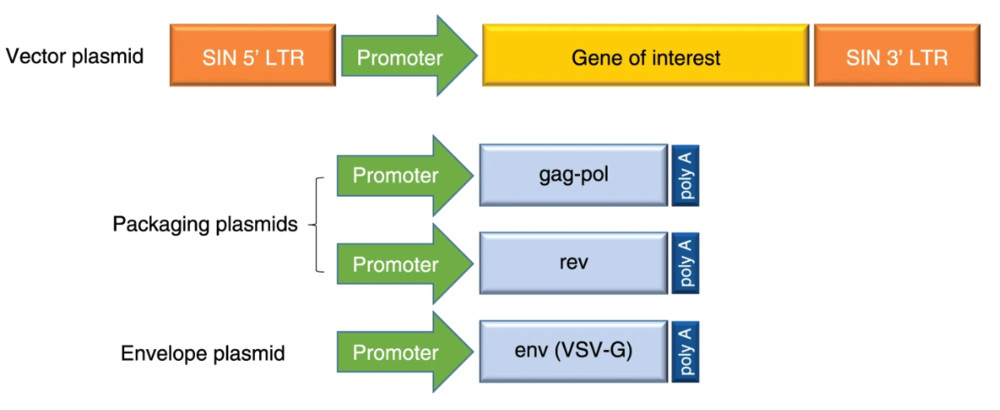 Figure 1. Third-generation lentiviral vector.1
Why Lentiviral Vectors Remain Widely Used
A lentiviral vector is not only a delivery vehicle; it is a design platform. The same backbone can be adapted for constitutive expression, inducible expression, lineage-specific expression, shRNA or miRNA delivery, CRISPR component delivery, immune-cell engineering, or integration-modified research designs. This flexibility explains why lentiviral vectors are common in early discovery as well as translational studies.
- They support stable transgene expression in many dividing and non-dividing cells.
- They can carry promoters, regulatory elements, reporters, selectable markers, shRNA cassettes, and complex payloads.
- Pseudotyping and ligand-retargeting can adjust tropism for specific cell models.
- Vector copy number, promoter strength, and payload biology must be matched to the intended readout.
Major Application Areas
| Application area | Typical goal | Design emphasis |
|---|---|---|
| Gene overexpression | Study gain-of-function biology or produce a stable model | Promoter strength, coding sequence integrity, reporter or selection marker. |
| Gene silencing | Reduce target gene expression using shRNA or miRNA-like strategies | Hairpin design, promoter choice, knockdown validation, off-target review; see gene silencing LV design. |
| Immune-cell engineering | Introduce CAR, TCR, cytokine, receptor, or reporter constructs | Transduction of activated cells, expression level, cell fitness, and potency. |
| Stem-cell research | Modify HSCs, iPSCs, or lineage progenitors | Low toxicity, copy-number control, differentiation preservation; see stem cell LV design. |
| Cellular reprogramming | Deliver transcription factors or regulatory modules | Temporal expression, excisable or regulated systems, pluripotency markers. |
| Disease modeling | Create stable in vitro or in vivo models | Disease-relevant expression, phenotype readout, and model reproducibility. |
Matching Payload Type with Lentiviral Vector Architecture
Payload design is one of the most important factors affecting lentiviral vector performance. Even when the same production platform is used, different payloads may require different promoter systems, regulatory elements, selection strategies, and validation assays.
| Payload Type | Common Use | Design Consideration |
|---|---|---|
| Protein-coding gene | Overexpression, rescue, reporter, therapeutic gene study | ORF size, codon usage, promoter strength, tag position |
| Fluorescent or luminescent reporter | Tracking, sorting, imaging, assay development | Signal intensity, background, stability, cell fitness |
| shRNA cassette | Gene knockdown | Hairpin design, Pol III promoter, off-target evaluation |
| miRNA-adapted cassette | More regulated silencing design | Processing efficiency, cell-type compatibility |
| CAR or TCR construct | Immune-cell engineering | Surface expression, signaling domain, cell phenotype |
| Cas protein and gRNA | Genome editing or CRISPR screening | Payload size, expression duration, editing readout |
| Transcription factor | Reprogramming, differentiation, lineage conversion | Inducibility, toxicity, timing, reversibility |
| Regulatory cassette | Tissue-specific or inducible expression | Promoter activity, leakiness, expression range |
Application-Driven Vector Design Choices
Different applications should not use the same vector design by default. A reporter cell line may tolerate high expression, while a stem-cell therapy research model may require lower copy number and careful promoter selection. A gene-silencing project needs validated knockdown and rescue logic, whereas a CAR T model requires transduction efficiency, expression uniformity, cell phenotype, and effector function readouts. If target-cell entry is limiting, pseudotyping or ligand-retargeted lentiviral vector design may be more important than changing the promoter.
| Design choice | Best suited for | Potential concern |
|---|---|---|
| Constitutive promoter | Stable reporter or overexpression models | Overexpression artifacts and silencing in some lineages. |
| Tissue-specific promoter | Lineage-restricted expression studies | May reduce apparent titer if the titration cell lacks promoter activity. |
| Inducible system | Toxic genes or time-controlled studies | Requires inducer optimization and leakiness testing. |
| miRNA-regulated cassette | Detargeting from undesired cells | Needs expression data for relevant miRNAs. |
| Integration-deficient design | Transient expression or lower integration burden | Expression may be diluted or lost in proliferating cells. |
Evaluation Readouts by Project Type
Application success should be defined before vector production. A high titer is not sufficient if the final biological question is not answered. A useful evaluation plan includes delivery, expression, target engagement, phenotype, durability, and safety-related readouts at the right time points. For gene therapy oriented programs, advanced lentiviral vector development usually requires a more structured package than an exploratory cell-line experiment.
- Expression projects: transgene level, cell viability, copy number, and expression stability across passages.
- Silencing projects: knockdown percentage, protein reduction, rescue control, and phenotype specificity.
- Immune-cell projects: transduction efficiency, memory phenotype, exhaustion markers, cytotoxicity or cytokine release, and vector copy number.
- Stem-cell projects: marker preservation, colony or differentiation potential, copy-number distribution, and long-term expression.
- Reprogramming projects: inducibility, marker conversion, removal or silencing of reprogramming factors, and genomic stability indicators.
Project Planning Checklist for Lentiviral Vector Applications
Before starting a lentiviral vector project, researchers can improve efficiency by clarifying the application goal, target cells, payload structure, expression requirement, and downstream validation strategy.
A useful project checklist includes:
-
Application goal
Is the project designed for overexpression, knockdown, CRISPR delivery, immune-cell engineering, stem-cell modification, disease modeling, or reprogramming? -
Target cell type
Are the cells dividing, non-dividing, primary, immortalized, stem-like, suspension, adherent, or difficult to transduce? -
Payload information
What is the insert size? Does the cassette include a reporter, selection marker, CAR/TCR construct, shRNA, Cas protein, gRNA, or inducible module? -
Expression requirement
Is constitutive, inducible, tissue-specific, transient, or long-term expression required? -
Titer and scale
Is the project for small-scale testing, stable cell-line construction, animal study, immune-cell engineering, or preclinical development? -
Validation readouts
Will success be measured by expression level, knockdown, editing, phenotype, differentiation, cytotoxicity, cytokine release, or disease-model function? -
Safety-related expectations
Does the project require vector copy number analysis, replication-competent lentivirus testing, integration-site assessment, or long-term monitoring?
Published Data
Case 1: Host Genetic Background Driving Hepatic Lentiviral Vector Transduction
This 2024 study systematically evaluated how host genetic backgrounds influence liver-targeted lentiviral vector transduction efficiency and safety using 41 genetically diverse Collaborative Cross (CC) mouse strains. Over a 24-week period, researchers tracked hepatic luciferase expression levels, viral copy numbers (VCN), and vector-specific activity. The data revealed striking strain-dependent variations, demonstrating that individual genetic profiles heavily dictate how well a liver tissue responds to and tolerates lentiviral gene delivery.
Through comprehensive mapping, the team identified two major quantitative trait loci (QTLs) linked to transduction phenotypes: one associated with metastable epialleles and another tied to liver-derived gene expression kinetics. Additionally, a moderate correlation was observed between strain-specific sleep patterns and overall transduction efficiency. These insights provide a critical theoretical foundation for developing personalized gene therapy regimens, highlighting that both preclinical models and human clinical protocols must account for inter-individual genetic diversity to maximize therapeutic success.
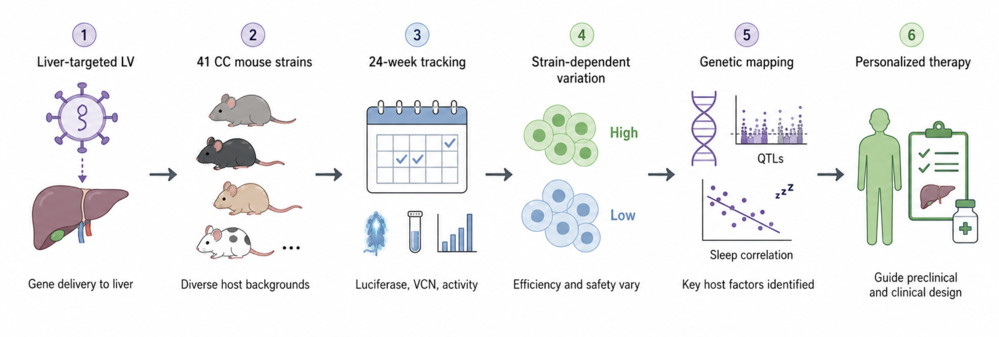 Figure 2. Host genetics in liver-targeted lentiviral transduction.
Frequently Asked Questions
Q: What are the most common lentiviral vector applications?
A: Common applications include stable gene expression, shRNA-mediated gene silencing, immune-cell engineering, stem-cell modification, cellular reprogramming, disease modeling, and selected gene therapy development programs.
Q: Can lentiviral vectors be used for CRISPR delivery?
A: Yes, lentiviral systems can deliver Cas proteins, guide RNAs, or regulatory components, but payload size, expression duration, integration, and safety should be reviewed carefully.
Q: Are lentiviral vectors better for in vitro or in vivo applications?
A: They are widely used ex vivo and in vitro. In vivo use is possible in specific contexts, but tropism, biodistribution, integration risk, immunogenicity, and manufacturing requirements become more complex.
Q: How should I choose a promoter for a lentiviral application?
A: Promoter choice should match cell type, required expression level, duration, silencing risk, payload toxicity, and whether expression should be constitutive, inducible, or tissue restricted.
Q: What readout matters most for lentiviral applications?
A: The most important readout is the one linked to the biological objective: expression stability, knockdown, editing, phenotype, potency, or target-cell function. Titer alone is not enough.
Overview of What Creative Biolabs Can Provide
For lentiviral vector research, effective project support often requires connecting vector design, production strategy, titration, target-cell transduction, expression control, and safety-related quality assessment into a coherent workflow. The most appropriate experimental plan depends on the research question, cell model, payload type, required titer, and downstream biological readout. Creative Biolabs can provide customized support across these key stages to help researchers develop lentiviral vector systems that are better aligned with their specific study objectives.
| Research Need | Related Creative Biolabs Support | How It Connects to the Current Resource Topic |
|---|---|---|
| General LV application planning | Lentiviral Vector Development Service | Connects broad application goals to vector construction and development. |
| Basic research models | Advanced Lentiviral Vector Development Service for Basic Research | Fits exploratory models, reporter systems, and functional studies. |
| Gene silencing applications | Custom shRNA Lentivirus Service | Supports shRNA delivery when the application is target knockdown. |
| Stem-cell applications | Lentiviral Vector Design for Stem Cell Research | Relevant for HSC, iPSC, or progenitor-cell projects. |
| Reprogramming applications | Lentiviral Vector Design for Cellular Reprogramming | Connects to transcription-factor delivery and induced cell-state conversion. |
| Targeted or restricted expression | Tissue-specific Promoter-Regulated Lentiviral Vectors Service | Useful when the application depends on lineage-restricted expression. |
For projects requiring custom vector planning, production, titration, or application-specific readouts, researchers may contact us today to discuss your project with Creative Biolabs.
References
- Milone M C, O'Doherty U. Clinical use of lentiviral vectors. Leukemia, 2018, 32(7): 1529-1541. https://doi.org/10.1038/s41375-018-0106-0 Distributed under Open Access license CC BY 4.0, with modification.
- Hu P, Hao Y, Tang W, et al. Analysis of Hepatic Lentiviral Vector Transduction: Implications for Preclinical Studies and Clinical Gene Therapy Protocols. Viruses, 2025, 17(2): 276. 10.1101/2024.08.20.608805.
