
Adenoviral Vector Overview
Introduction
An adenoviral vector is an engineered delivery system derived from adenovirus and used to introduce genetic material into target cells for research, vaccine development, cancer studies, transient expression, and gene therapy-related investigations. This overview explains what an adenoviral vector is, why it is useful, how vector generations differ, and what design and QC questions should be considered before use. For projects requiring a practical construct strategy, adenoviral vector development should be linked to payload design, target biology, safety controls, and the intended readout.
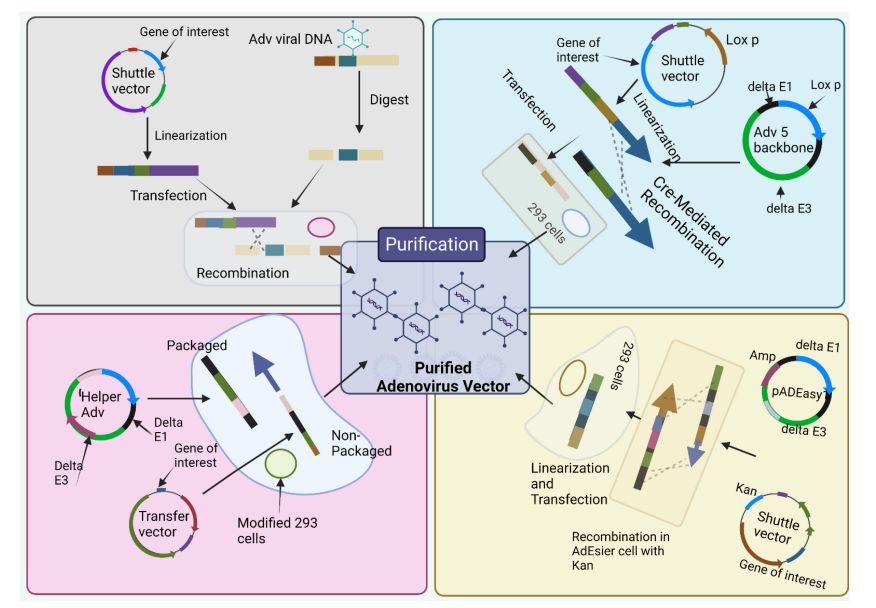 Figure 1. Production methods for adenoviral vectors.1
What Is an Adenoviral Vector?
- Adenoviral Vector Overview
An adenoviral vector is a modified adenovirus particle in which selected viral genes are removed, disabled, or replaced so that the vector can carry a researcher-defined genetic cassette. Wild-type adenoviruses are non-enveloped viruses with an icosahedral protein capsid and a linear double-stranded DNA genome. Adenoviral vectors preserve the delivery advantages of the viral particle while reducing or eliminating viral replication depending on the vector generation and production system.
- Why Use Adenoviral Vectors?
In practical terms, adenoviral vectors are used when researchers need efficient gene transfer into a broad range of dividing and non-dividing cells. The vector enters cells through receptor-mediated attachment and internalization, delivers DNA to the nucleus, and supports expression without typically integrating into the host genome. This makes adenoviral delivery attractive for transient expression, immunological applications, cancer models, vaccine research, and studies requiring larger payloads than AAV can accommodate.
Structural Features That Shape Adenoviral Vector Behavior
Capsid Structure and Properties
- Built from major structural proteins: hexon, penton base, and fiber proteins
- Fiber knob contributes to receptor engagement
- Penton base participates in internalization
-
Capsid components influence:
- Tissue tropism
- Immune recognition
- Stability
- Opportunities for retargeting
- Non-enveloped particle → relatively robust during handling compared with enveloped vectors
- Trade-off: Can stimulate strong host responses
Genome Organization and Vector Generations
- Genome organization determines what can be deleted and payload space available
-
Early-region deletions:
- E1 deletion: Central to many replication-defective vectors
- Additional modifications (E2, E3, E4): Affect immunogenicity, payload space, and production complexity
-
Helper-dependent adenoviral vectors (HD-Ad):
- Remove most viral coding sequences
- Retain packaging signals and terminal elements
- Provide larger capacity and reduced viral gene expression
- Require helper systems for production
Table 1. Major Adenoviral Vector Formats
| Vector Format | Key Features | Typical Research Use | Main Consideration |
|---|---|---|---|
| First-generation adenoviral vector | Commonly E1-deleted, often E3-deleted; efficient transient expression | Basic research, transient expression, cancer studies, assay development | Residual viral gene expression and immune stimulation may affect interpretation. |
| Second-generation adenoviral vector | Additional deletions such as E2 or E4; more space and lower viral gene background | Studies requiring modified expression background or larger payloads | Production and characterization can be more complex. |
| Helper-dependent adenoviral vector | Most viral coding sequences removed; retains packaging signals and ITRs | Large payload delivery, longer expression studies, reduced viral gene expression needs | Requires helper control and careful testing for helper contamination. |
| Capsid-modified adenoviral vector | Fiber, hexon, penton, peptide, chimeric, or antibody-based retargeting | Target-cell entry improvement or modified tropism studies | Entry specificity must be validated with relevant controls. |
Adenoviral Vector Generations and Design Trade-Offs
First-Generation Vectors
- Typically contain E1 deletion, often combined with E3 deletion
- Advantages: Easier to produce, strong transient expression
- Limitations: Residual viral gene expression and immune activation may limit some applications
Second-Generation Vectors
- Introduce additional deletions in regions such as E2 or E4
- Advantages: Reduced viral gene expression, increased payload capacity
- Limitations: Production and characterization become more complex
Helper-Dependent (Gutless) Vectors
- Retain only cis-acting elements required for replication and packaging
- Advantages: Larger cassette capacity, reduced vector-derived gene expression
- Limitations: Requires helper virus control, careful purification, and analytical testing for helper virus contamination
Key Trade-Offs to Balance:
- Payload size
- Expression duration
- Immune background
- Production complexity
- QC burden
Entry, Tropism, and Retargeting Strategies
Native adenoviral tropism depends on viral serotype and receptor usage. Adenovirus serotype 5 has been extensively studied, but receptor expression patterns can limit delivery to some target cells. Retargeting strategies attempt to improve delivery specificity or reduce unwanted cell entry. These strategies may include fiber knob replacement, chimeric capsids, peptide insertion, antibody-based targeting, or promoter-based control of transgene expression.
Physical entry and transcriptional control should be considered together. A capsid-modified vector may improve entry into a selected cell type, while a tissue- or disease-responsive promoter can restrict expression after entry. For example, capsid retargeting of adenoviral vectors can be paired with regulated expression systems when the research goal is not only to deliver DNA but to control where and when the payload is active.
Payload Design and Expression Cassette Planning of Adenoviral vectors
- Payload Design Requires Discipline
Adenoviral vectors can accommodate larger inserts than AAV, but payload design still requires discipline. Promoter strength, enhancer elements, polyadenylation signals, reporter tags, selection markers, and regulatory modules all influence expression level and vector size. Overly strong expression can produce cytotoxicity or biological artifacts, especially when the transgene affects cell survival, immune signaling, or proliferation. Conversely, weak expression may make it difficult to interpret negative results.
- Define the Biological Goal First
Research teams should define whether they need transient overexpression, inducible expression, RNAi delivery, immune stimulation, suicide gene systems, or multi-component expression. Each goal leads to a different cassette design. A vector intended to study mitophagy, for example, has different readout needs from a vector intended to stimulate immune responses or deliver a prodrug-activating enzyme in a tumor model.
Table 2. Adenoviral Design Question and Practical Implication
| Design Question | Why It Matters | Practical Implication |
|---|---|---|
| What is the payload size? | Determines vector generation and cassette architecture | Large or multi-component cassettes may require advanced or helper-dependent systems. |
| Is expression meant to be transient or sustained? | Affects vector selection and readout timing | Adenoviral vectors are often strong transient expression tools. |
| Which cells should be transduced? | Receptor availability and promoter activity vary by cell type | Capsid retargeting or promoter selection may be needed. |
| Is immune activation useful or confounding? | Adenovirus can strongly stimulate innate immunity | Vaccine and immune-oncology studies may benefit; subtle pathway studies may not. |
| What safety readouts are needed? | Replication-competent virus and toxicity can confound data | RCA, cytotoxicity, and functional potency tests should be planned early. |
Research Applications of Adenoviral Vectors
- Basic biology: Rapidly introduce genes into cells that are difficult to transfect
- Cancer research: Deliver cytotoxic genes, immune-stimulatory genes, tumor suppressors, or reporter systems
- Vaccine research: Express antigens and stimulate immune responses
- Gene therapy-related studies: Serve as transient delivery platforms, helper tools, or components of hybrid vector strategies.
Adenoviral Vector QC and Safety
Core QC Parameters:
- Identity confirmation
- Infectious titer
- Particle quantification
- Particle-to-infectious unit ratio
- Purity
- Residual host-cell contaminants
- Endotoxin or microbial testing (when appropriate)
- Replication-competent adenovirus (RCA) assessment
Functional/Potency Testing (depends on application):
- Transgene expression
- Reporter activity
- Cell viability
- Cytokine induction
- Mechanism-specific biological readouts
RCA testing is particularly important for replication-defective adenoviral systems because unintended replication can distort cell-based assays and raise safety concerns. Likewise, cytotoxicity should be interpreted separately from intended biological activity. A vector that kills cells because of nonspecific toxicity is different from a vector that triggers a designed suicide gene mechanism. This is why replication-competent adenovirus testing and functional potency planning should be part of adenoviral vector study design rather than an afterthought.
Overview of What Creative Biolabs Can Provide
Creative Biolabs can support adenoviral vector research from construct design and rescue through capsid modification, regulated expression, helper-dependent vector planning, and vector-specific analytical testing. For an overview topic, the most relevant support is the ability to connect basic adenoviral biology with the practical choices that affect payload delivery, targeting, expression, and safety interpretation.
| Research Need | Related Creative Biolabs Support | How It Connects to the Current Resource Topic |
|---|---|---|
| Build a recombinant adenoviral vector | Adenoviral Vector Development Service | Supports the overall design and construction of adenoviral vectors for gene delivery studies. |
| Rescue recombinant adenovirus in cells | Recombinant Adenovirus Rescue in Mammalian Cells | Connects plasmid design and mammalian-cell rescue steps to production of usable recombinant adenovirus. |
| Use bacterial construction workflows | Recombinant Adenovirus Construction in Bacterial Systems | Supports recombinant adenovirus construction strategies in bacterial systems before rescue and amplification. |
| Modify adenoviral tropism | Capsid-modified Adenovirus Vector Construction | Supports capsid-focused retargeting when native adenoviral tropism does not match the target cells. |
| Design chimeric adenoviral capsids | Chimeric Adenovirus Vector Construction Service | Helps explore chimeric capsid structures for modified entry behavior or altered biological performance. |
| Use antibody-mediated targeting | Antibody-modified Adenovirus Vector Construction Service | Connects antibody-based surface retargeting concepts to adenoviral vector construction. |
| Evaluate adenoviral vector quality | Viral Vector Analysis | Connects adenoviral vector identity, titer, purity, potency, and safety testing to experimental interpretation. |
For research teams that need to translate vector selection, QC interpretation, or adenoviral vector design into a practical study plan, contact us today to discuss study objectives, sample context, and fit-for-purpose analytical strategy.
Frequently Asked Questions
Q: What is an adenoviral vector in simple terms?
A: An adenoviral vector is an engineered adenovirus-based delivery particle designed to carry a selected genetic cassette into cells. Viral replication genes are deleted or modified depending on the vector generation so that the vector can be used as a controlled research or development tool.
Q: Does an adenoviral vector integrate into the host genome?
A: Adenoviral vectors generally remain episomal and are not typically used for stable genomic integration. This makes them useful for transient expression, although expression duration depends on vector design, target cell type, immune response, and study conditions.
Q: Why are adenoviral vectors useful for large payloads?
A: Adenoviral vectors can carry larger expression cassettes than AAV, and helper-dependent systems provide especially large capacity. This makes them useful when a payload is too large for compact vector platforms.
Q: What is the difference between first-generation and helper-dependent adenoviral vectors?
A: First-generation vectors usually delete E1 and sometimes E3, while helper-dependent vectors remove most viral coding sequences and retain only essential cis-acting elements. Helper-dependent vectors offer greater capacity and lower viral gene background but require more complex production and QC.
Q: Why is RCA testing important?
A: Replication-competent adenovirus can arise during production or recombination events and may confound experiments or create safety concerns. RCA testing helps confirm that replication-defective vector preparations meet the intended safety profile.
Q: When should capsid-modified adenoviral vectors be considered?
A: They should be considered when native receptor usage does not match the target cell, when improved entry specificity is needed, or when researchers want to alter tropism through fiber, peptide, chimeric, or antibody-based retargeting strategies.
Reference
- Chavda V P, Bezbaruah R, Valu D, et al. Adenoviral vector-based vaccine platform for COVID-19: current status. Vaccines, 2023, 11(2): 432. https://doi.org/10.3390/vaccines11020432. Distributed under Open Access license CC BY 4.0, without modification.
