
Viral Vector Selection by Expression Duration
Introduction
Expression duration is not an intrinsic label attached to a vector; it is the combined outcome of vector genome fate, target-cell turnover, immune pressure, promoter behavior, and the biological purpose of the payload. A rational selection process therefore begins with the required exposure window rather than with a preferred platform. Researchers planning stable transgene expression studies should define whether the desired effect must last hours, weeks, years, or the lifetime of a modified cell population, and whether that effect must remain adjustable or reversible. This page explains how adenoviral, adeno-associated viral, lentiviral, retroviral, and herpesvirus-based systems differ in persistence, what can shorten or extend expression, and how to design experiments that measure the duration that actually matters.
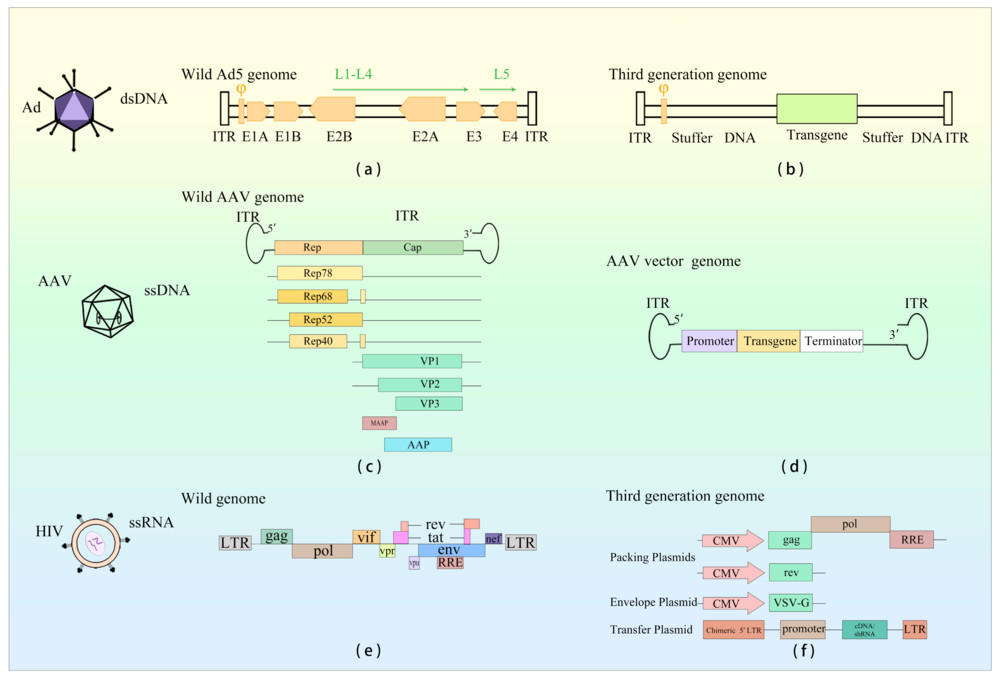 Figure 1. Genome structure description of Ad, AAV, and LV viruses and their viral vectors.1
Why Expression Duration Should Drive Vector Choice?
The most efficient vector is not always the most suitable vector. A short-lived expression pulse can be safer for nuclease delivery, immune stimulation, or developmental studies, whereas durable expression may be essential for enzyme replacement, neuronal circuit labeling, or long-term correction of a cell lineage.
Match the biological objective to the exposure window
- Hours to days: reporter calibration, transient transcription-factor expression, vaccine-like antigen presentation, or short nuclease exposure.
- Days to weeks: local cytokine delivery, tumor-directed immune modulation, regenerative signaling, or proof-of-concept pharmacology.
- Months to years: replacement of a missing protein in slowly dividing tissue, sustained RNA interference, or durable modification of long-lived cells.
- Cell lifetime: ex vivo modification of stem or progenitor cells where genomic integration and clonal persistence are central to the strategy.
Duration is a systems property
| Driver | How It Affects Persistence | Study Implication |
|---|---|---|
| Vector genome state | Integrated genomes are copied during cell division; episomes may persist in quiescent cells but are diluted in proliferating populations. | Measure both vector copy number and functional expression over time. |
| Cell turnover | Rapidly dividing tissues can lose nonintegrating vector genomes even when initial transduction is strong. | Include proliferation markers and tissue-renewal context. |
| Immune recognition | Capsid- or transgene-directed responses may eliminate transduced cells or suppress repeat dosing. | Track antibodies, T-cell responses, inflammation, and loss of expressing cells. |
| Promoter and epigenetics | Promoter silencing, methylation, chromatin position, and enhancer choice can change expression without changing vector abundance. | Use RNA, protein, and vector-genome readouts rather than a single reporter endpoint. |
| Payload biology | Secreted proteins, editing enzymes, and regulatory RNAs require different temporal profiles. | Define duration at the pharmacodynamic level, not only by reporter fluorescence. |
Typical Expression Profiles of Major Viral Vectors
The profiles below are practical tendencies rather than guaranteed timelines. Serotype, dose, route, species, tissue, cassette design, and manufacturing quality can shift the observed duration substantially.
| Vector Platform | Genome Behavior | Typical Duration Pattern | Best-Fit Questions | Main Caveat |
|---|---|---|---|---|
| Adenoviral vector | Predominantly episomal | Strong, usually transient expression over days to weeks | Acute expression, vaccines, oncolytic or immunostimulatory studies | Innate and adaptive immunity can limit persistence and repeat dosing. |
| AAV vector | Mostly episomal concatemers | Long-term in post-mitotic tissues; shorter in dividing tissues | Sustained expression in muscle, retina, liver, or nervous system | Small payload and possible loss through cell turnover. |
| Lentiviral vector | Usually integrating | Stable expression through cell division | Ex vivo cell engineering and durable lineage modification | Insertion-site and clonal-behavior assessment remain important. |
| Gamma-retroviral vector | Integrating, mainly dividing cells | Stable in successfully modified proliferating cells | Selected ex vivo hematopoietic or immune-cell applications | Cell-cycle dependence and insertional-genotoxicity considerations. |
| HSV vector | Episomal with large capacity | Variable; can support prolonged neuronal expression depending on vector design | Large payloads and nervous-system research | Vector complexity and host response vary by generation. |
For many nondividing tissues, AAV is evaluated because episomal vector genomes can remain for extended periods. For proliferating cell products, integrating systems are often considered because daughter cells must retain the transgene. Conversely, adenoviral vector production is better aligned with studies that value high initial expression more than permanent persistence.
Design Variables That Can Extend or Shorten Expression
Cassette architecture
- Promoter choice should reflect cell specificity, strength, size, and silencing risk. A ubiquitous strong promoter may produce a high peak but not the most stable long-term profile.
- Enhancers, introns, untranslated regions, codon optimization, and polyadenylation signals can alter both peak expression and decay kinetics.
- Regulated promoters, destabilization domains, microRNA target sites, and self-limiting circuits can deliberately restrict duration or tissue distribution.
Vector dose and tissue access
- Higher dose may increase the fraction of cells reached, but it can also intensify inflammation and immune recognition, which may shorten effective persistence.
- Local administration may provide a durable depot in an accessible tissue, while systemic delivery introduces biodistribution and off-target exposure variables.
Integration and editing strategy
When durable expression in dividing cells is required, lentiviral vector design for gene editing may be considered for ex vivo workflows. When the final therapeutic effect is a permanent genomic edit, the delivery vehicle itself may only need to be transient. In that setting, prolonged nuclease expression can be undesirable because it may increase off-target activity or immune exposure.
A Practical Selection Guide
Selection should proceed from the required biological duration to platform constraints, not in the opposite direction.
- Define the minimum and maximum useful expression window. Distinguish "detectable expression" from "sufficient biological effect."
- Classify the target cells as rapidly dividing, slowly dividing, or post-mitotic. This step often determines whether episomal persistence is plausible.
- Decide whether permanent integration is necessary, acceptable, or specifically unwanted.
- Check payload size, cell tropism, route, species, dose ceiling, and feasibility of repeat administration.
- Build a time-course study that measures vector genomes, RNA, protein, functional response, and safety in parallel.
| Research Requirement | Most Relevant Starting Point | Reasoning |
|---|---|---|
| Brief high-level expression | Adenoviral or other nonintegrating transient system | Rapid onset and strong output can be prioritized over persistence. |
| Long-term expression in post-mitotic tissue | AAV-based design | Episomal genomes can remain in long-lived cells when immune clearance and turnover are limited. |
| Stable expression in expanding cell populations | Lentiviral or retroviral ex vivo modification | Integration supports inheritance of the cassette by daughter cells. |
| Permanent edit with limited nuclease exposure | Transient viral or nonviral delivery of editing machinery | The edit persists even after the editor disappears. |
| Reversible or dose-adjustable expression | Repeated transient delivery or regulated cassette | Avoids committing to constitutive long-term expression. |
How to Measure Expression Duration Correctly?
A single late time point cannot distinguish stable expression from an early peak followed by partial loss. Duration studies should combine molecular, cellular, functional, and safety readouts.
Core longitudinal readouts
- Vector genome copies per cell or per microgram of tissue DNA.
- Transgene RNA abundance, splice integrity, and transcript distribution.
- Protein concentration, localization, secretion, and activity.
- Fraction and identity of expressing cells, including lineage-specific analysis.
- Functional or disease-relevant pharmacodynamic endpoints.
- Neutralizing antibodies, cellular immunity, cytokines, tissue pathology, and clonal expansion when relevant.
Common interpretation errors
- Assuming persistent vector DNA guarantees persistent protein expression.
- Comparing vectors at unequal biologically active doses.
- Ignoring tissue growth, cell replacement, or species-specific promoter behavior.
- Using reporter persistence as a substitute for the kinetics of the therapeutic payload.
Planning for Translation and Repeat Administration
Expression-duration planning should include what happens if the first dose underperforms or if biological demand changes over time. Repeat administration is a practical design variable, not an afterthought.
Questions for a redosing strategy
- Will neutralizing antibodies block the same viral capsid after the first dose?
- Can an alternative serotype reach the same cells without introducing a different safety profile?
- Would local administration reduce systemic immunity or organ exposure?
- Can a transient nonviral booster complement an initially durable viral treatment?
- Is a regulated promoter or removable cell product preferable to irreversible constitutive expression?
Translational studies should also compare the duration of expression with the natural history of the disease. A slowly progressive disorder may tolerate delayed onset but require a durable plateau, whereas an acute condition may require rapid expression even if it fades. Manufacturing changes, promoter substitutions, and species-specific tropism can alter kinetics, so bridging studies should preserve the features most likely to affect duration.
Advantages, Limitations, and Decision Boundaries
A duration-based selection framework is useful only when its limits are explicit. Long expression can reduce the need for repeat dosing, but it may also prolong exposure to an immunogenic or toxic product. Short expression can improve control, but it may fail when a disease requires continuous protein replacement.
| Design Goal | Potential Advantage | Important Limitation |
|---|---|---|
| Long-term episomal expression | Avoids routine genomic integration while supporting sustained output in stable cells | Can decline with cell division, tissue growth, immune clearance, or promoter silencing |
| Stable integrating expression | Transgene is inherited by daughter cells and can persist across a lineage | Requires integration-site, clonality, and long-term follow-up considerations |
| Transient high expression | Rapid onset and limited persistence can suit acute or editing applications | Peak-related toxicity may occur and repeated dosing may be required |
| Regulated expression | Offers control over timing or magnitude | Regulatory elements increase cassette complexity and may not provide complete shutoff |
Pre-study checklist
- State the required onset, peak, minimum effective level, and acceptable decline rate.
- Define the target-cell lifespan and the expected rate of cell replacement in the relevant species and age group.
- Specify whether vector genomes, expression, pharmacodynamic effect, or clinical phenotype defines success.
- Include a plan for immune monitoring and for distinguishing loss of cells from silencing within surviving cells.
- Set a decision rule for redosing, platform switching, or use of a regulated cassette if persistence is inadequate or excessive.
The final vector choice should be documented as a testable hypothesis: a particular platform, route, cassette, and dose are expected to create a defined exposure window in a defined cell population. This formulation makes it possible to design discriminating experiments and to revise the strategy when the observed kinetics differ from the expectation.
Published Data
Case 1: Achieving Stable Long-Term Expression with GMP-Grade Lentiviral Vectors in CAR-T Cell Manufacturing
This 2023 study (published in Molecular Therapy - Methods & Clinical Development) evaluates the long-term stability of 13 clinical-grade GMP lentiviral vector batches stored at -80°C for up to 8 years. These rigorously tested vectors were utilized across 16 different clinical trials to manufacture ex vivo cell therapy products.
This application perfectly illustrates why lentiviral vectors are the industrial standard over Adeno-Associated Viruses (AAVs) for CAR-T cell manufacturing. CAR-T therapy requires the stable expression of chimeric antigen receptor (CAR) genes in actively expanding T cells. If non-integrating AAV vectors were used, the episomal transgenes would rapidly dilute and vanish as the T cells divide. Lentiviral vectors resolve this by stably integrating the CAR gene directly into the host genome, ensuring that all progeny cells permanently inherit and express the target gene.
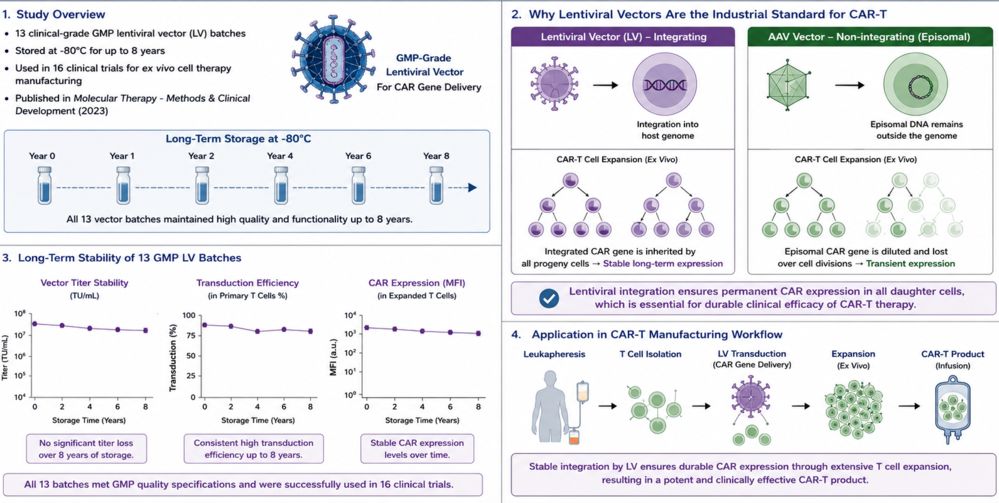 Figure 2. Achieving stable long-term expression with GMP-grade lentiviral vectors in CAR-T cell manufacturing.
Frequently Asked Questions
Q: Which viral vector provides the longest expression?
A: There is no universal winner. Integrating lentiviral or retroviral vectors can provide cell-lifetime expression in successfully modified proliferating cells. AAV can support very long expression in post-mitotic tissues, but episomal genomes may be diluted when cells divide.
Q: Is transient expression always safer than stable expression?
A: Not automatically. Transient delivery can reduce prolonged exposure to an editor or immunogenic protein, but high peak expression may still cause toxicity. Safety depends on dose, tissue, payload, immune response, and vector design.
Q: Can AAV expression be permanent?
A: AAV expression can be long lasting, especially in post-mitotic cells, but it is better described as persistent rather than guaranteed permanent. Most recombinant AAV genomes remain episomal and may be lost through cell division or clearance.
Q: Why can transgene expression decline even when vector DNA remains detectable?
A: Promoter silencing, epigenetic changes, transcript instability, loss of a specific expressing cell type, or immune pressure can reduce RNA and protein output without eliminating every vector genome.
Q: How long should an expression-duration study run?
A: The study should extend beyond the intended biological window and include enough early and late time points to characterize onset, peak, decay, and plateau. The appropriate length varies from days for transient editors to months or longer for durable gene addition.
Q: Can expression duration be intentionally controlled?
A: Yes. Promoter choice, inducible systems, microRNA target sites, destabilization domains, self-limiting circuits, and transient delivery formats can help shape the onset, magnitude, tissue specificity, and duration of expression.
Overview of What Creative Biolabs Can Provide
Creative Biolabs supports research programs in which expression kinetics must be matched to target-cell biology, payload function, and the required study window. Relevant support can span vector design, production, and analytical characterization.
| Research Need | Related Creative Biolabs Support | How It Connects to the Current Resource Topic |
|---|---|---|
| Long-term expression in nondividing tissue | AAV Vector Design for Gene Expression | Supports cassette and AAV design decisions for sustained expression studies. |
| AAV platform selection and development | Adeno-associated Virus Vector Development Service | Provides a starting point for serotype, cassette, and application-specific AAV development. |
| Short-term high-level expression | Custom Adenoviral Vector Production Service | Supports adenoviral vector production for transient or immunostimulatory applications. |
| Stable ex vivo modification | Lentiviral Vector Design Services for Gene Editing | Connects durable expression requirements with integrating lentiviral designs for edited cells. |
| Vector quality and persistence analysis | Viral Vector Analysis | Links expression-duration claims to vector genome, potency, purity, and related analytical readouts. |
Researchers can contact us today to discuss vector selection, study design, and a project-specific delivery strategy.
References
- Wang Y, Shao W. Innate immune response to viral vectors in gene therapy. Viruses, 2023, 15(9): 1801. https://doi.org/10.3390/v15091801 Distributed under Open Access license CC BY 4.0, with modification.
- Jadlowsky J K, Leskowitz R, McKenna S, et al. Long-term stability of clinical-grade lentiviral vectors for cell therapy. Molecular Therapy Methods & Clinical Development, 2024, 32(1). 10.1016/j.omtm.2024.101186
