
AAV Vector Overview
Introduction
Adeno-associated virus (AAV) vectors are among the most widely used delivery systems for in vivo gene transfer because they can be engineered to carry defined expression cassettes while removing viral coding sequences from the final recombinant genome. This overview explains how AAV vectors are organized, why capsid and cassette design must be considered together, and when specialized formats such as self-complementary and dual-vector AAV become useful. For readers planning AAV-mediated gene addition, the central question is how to match the biological objective with vector capacity, tissue tropism, expression durability, and safety readouts.
What Makes AAV a Distinct Gene Delivery Platform?
AAV is a small, non-enveloped parvovirus with a single-stranded DNA genome. Recombinant AAV vectors retain the inverted terminal repeats required for genome rescue and packaging, while the rep and cap genes are supplied during production rather than being carried by the delivered vector. This design separates the therapeutic or experimental cassette from the viral proteins needed to manufacture particles. In many non-dividing cells, delivered AAV genomes persist mainly as episomal concatemers, which can support long-term expression without requiring intentional genomic integration.
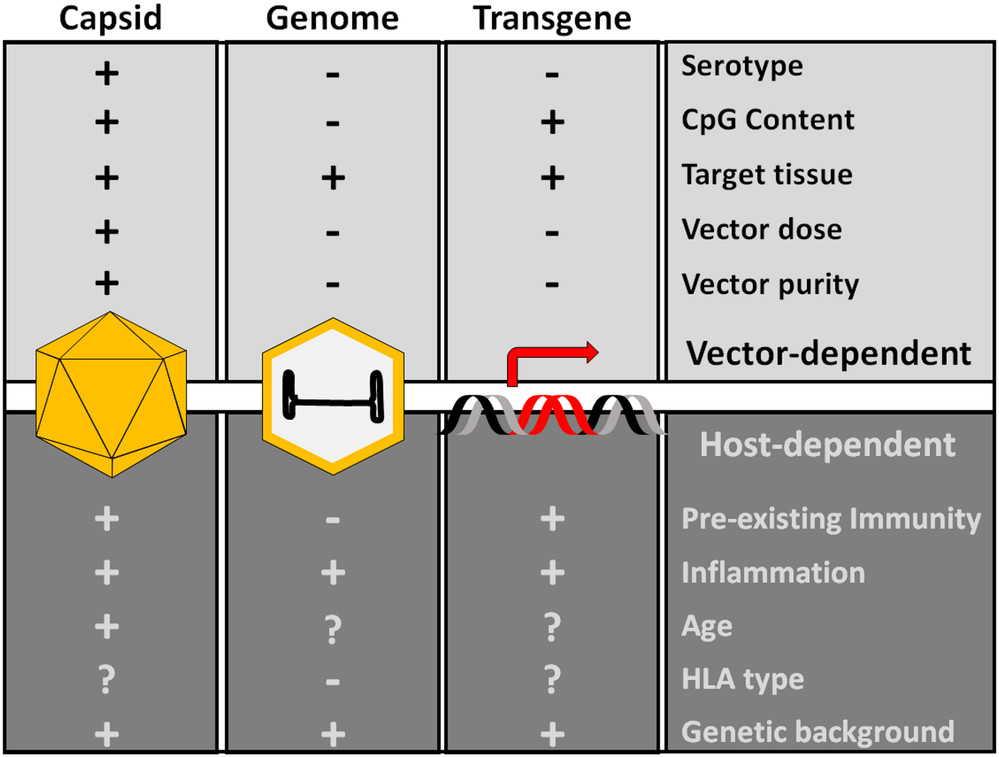 Figure 1. Factors influencing AAV capsid immunogenicity.1
The practical value of AAV arises from modularity. A research team can alter the capsid serotype, promoter, enhancer, codon usage, untranslated regions, polyadenylation signal, and route of administration to shape tissue exposure and expression. In proof-of-concept vector design, these elements are often adjusted stepwise so that expression level, tissue exposure, and study readouts remain interpretable. At the same time, AAV is not automatically low risk. High vector doses, pre-existing antibodies, dorsal root ganglion exposure, liver tropism, innate immune activation, and payload-specific toxicity can all affect interpretation. A strong overview therefore treats AAV as a design framework rather than a universal carrier.
Core Structure of a Recombinant AAV Vector
- Core Components of AAV Vector Design
AAV design begins with three linked components: the vector genome, the capsid, and the manufacturing system. The vector genome contains the expression or editing cassette flanked by inverted terminal repeats. The capsid determines extracellular stability, receptor engagement, trafficking, tissue tropism, and part of the immune profile. The production system supplies Rep, Cap, and helper functions in producer cells, then the vector is purified and characterized before use.
- Expression Cassette Planning and Packaging Constraints
Within the cassette, each element consumes packaging space and affects expression. A compact promoter may help fit a large coding sequence but may not provide sufficient activity in the target cell type. A strong ubiquitous promoter can simplify proof-of-concept work but may create off-target expression in vivo. For gene expression cassette planning, regulatory elements, tags, introns, miRNA target sites, and polyadenylation signals should therefore be included only when they serve a defined purpose.
Table 1. Key AAV vector components and design implications
| Component | Main Function | Design Considerations |
|---|---|---|
| Inverted terminal repeats (ITRs) | Enable genome rescue, replication, and packaging during production. | ITR integrity is essential; recombination or mutation can reduce yield and genome quality. |
| Expression cassette | Carries the promoter, payload, regulatory elements, and polyadenylation signal. | Must fit within packaging capacity while preserving cell specificity and expression strength. |
| Capsid | Controls particle assembly, receptor binding, trafficking, and biodistribution. | Natural or engineered capsids should be matched to tissue, species, route, and immune context. |
| Payload | Encodes a transgene, RNAi element, editor, reporter, or regulatory module. | Sequence size, toxicity, subcellular localization, and expression level must be evaluated early. |
| Analytical readouts | Confirm titer, purity, potency, identity, and safety-related attributes. | Readouts should be selected before production so vector design and testing are aligned. |
Table 2. AAV format selection guide
| AAV Format | Best-Fit Research Use | Main Limitation |
|---|---|---|
| Single-stranded rAAV | General gene expression, gene addition, reporter delivery, and many tissue-directed studies. | Second-strand synthesis can delay expression onset in some settings. |
| Self-complementary AAV | Rapid expression when the cassette is small enough to fit the reduced capacity. | Payload capacity is approximately half of standard AAV. |
| Dual vector AAV | Large genes, split editors, large regulatory cassettes, and oversized reporters. | Requires co-transduction and efficient molecular reconstitution in target cells. |
| AAV for RNAi delivery | Long-term shRNA or microRNA expression in defined cells or tissues. | Overexpression and off-target silencing must be controlled. |
| AAV for gene editing | Delivery of gRNAs, donor templates, compact nucleases, or split editing systems. | Editing outcome depends on payload design, DNA repair, tissue exposure, and safety testing. |
Serotype, Tropism, and Expression Cassette Design
Serotype choice is often the first visible AAV decision, but it should not be made separately from the expression cassette. AAV2, AAV5, AAV8, AAV9, and engineered capsids can show different tissue preferences, species dependence, receptor use, and immune recognition. The same capsid can produce different results after intravitreal, subretinal, systemic, intrathecal, or local injection. Route, animal model, target tissue, and expected dose should therefore be considered before a serotype is selected.
Expression control adds another layer of specificity. A ubiquitous promoter may be appropriate for a simple reporter, whereas a cell-restricted promoter, miRNA-regulated cassette, or disease-responsive element may be needed for sensitive applications. In some programs, tissue- or cell-specific targeting is combined with expression-layer control to reduce background activity in non-target cells.
Dual Vector AAV for Large Genetic Payloads
Dual vector AAV strategies address the payload-size limit by dividing a large transgene or editing system between two AAV genomes. After co-transduction, the two halves can reconstitute a functional product through DNA recombination, mRNA trans-splicing, overlapping homologous regions, hybrid overlap-trans-splicing designs, or split-intein protein reassembly. This approach is particularly relevant for large genes, oversized reporters, split Cas enzymes, base editors, prime editors, and gene-editing vector delivery designs that require regulatory elements too large for a single vector. Dual AAV can also increase total capsid dose because two vectors are administered. A strong dual-vector plan therefore includes split-site selection, junction testing, expression comparison with a single-vector benchmark when possible, and tissue-specific validation rather than assuming that two halves will automatically reassemble.
Advantages, Constraints, and Safety of AAV
AAV offers durable expression in many non-dividing tissues, adaptable capsid choices, and compatibility with in vivo delivery routes. Its constraints include limited capacity, variable species translation, immune responses, capsid-dose burden, and manufacturing complexity. These constraints are manageable only when they are converted into measurable questions: What is the minimum active dose? Which cells express the payload? How much vector reaches non-target organs? Is the immune response driven by capsid, payload, route, or dose? safety readouts for viral vectors should be planned before animal studies rather than added only after unexpected findings.
Table 3. Common AAV study questions and useful readouts
| Research Question | Useful Readouts | Interpretation Notes |
|---|---|---|
| Is the vector genome intact? | ITR analysis, restriction digest, sequencing, ddPCR/qPCR assays. | Genome integrity should be assessed before biological data are interpreted. |
| Does the vector reach the intended tissue? | Vector genome biodistribution, reporter signal, tissue PCR, immunostaining. | Capsid tropism can differ between species and administration routes. |
| Is expression cell-selective? | mRNA/protein readouts, promoter specificity, single-cell or histological analysis. | Promoter activity and capsid tropism should be interpreted together. |
| Is the dose biologically tolerable? | Clinical chemistry, cytokines, tissue pathology, body weight, immune markers. | Safety windows depend on payload, route, capsid, animal model, and dose. |
Overview of What Creative Biolabs Can Provide
Creative Biolabs supports AAV-related research by connecting vector architecture, payload size, capsid selection, expression control, and preclinical readouts. The services below were selected from the Gene Therapy service branch because they directly support the design decisions discussed in this overview rather than serving as generic company links.
| Research Need | Related Creative Biolabs Support | How It Connects to the Current Resource Topic |
|---|---|---|
| General AAV vector strategy | AAV Vector Design for Gene Therapy | Supports selection of AAV format, cassette architecture, serotype logic, and downstream study needs for gene delivery programs. |
| Exploratory gene-function studies | AAV Vector Design for Basic Research | Fits proof-of-concept experiments where the goal is to express, trace, silence, or perturb a biological pathway in cells or animal models. |
| Gene supplementation | AAV Design for Gene Addition | Connects directly with AAV-mediated gene addition, including payload sizing, promoter selection, and expression cassette planning. |
| Loss-of-function or deficient-gene models | AAV Design for Gene Replacement | Relevant when a project requires replacement of a missing or defective coding sequence within AAV packaging constraints. |
| Faster onset from compact cassettes | Self-complementary AAV Vector Service | Useful for projects where rapid expression is valuable and the payload can fit the smaller self-complementary AAV capacity. |
| Genome-editing delivery | AAV Vector Design for Gene Editing | Helps connect AAV vector format to nuclease, editor, gRNA, donor, or split-editor payload requirements. |
| Preclinical safety planning | Toxicity and Safety Determination of AAV Vector Service | Supports interpretation of dose, route, tissue exposure, and immune or toxicity readouts for AAV-based studies. |
For projects that require an integrated plan across vector format, payload design, analytical testing, and preclinical readouts, contact us today to discuss the research goal and select the most appropriate AAV strategy.
Frequently Asked Questions
Q: What is the main advantage of AAV vectors in gene delivery research?
A: AAV vectors combine relatively broad tissue access, low pathogenicity, and sustained episomal expression in many non-dividing cells. Their main value is not that one vector fits every project, but that serotype, cassette, promoter, dose, and route can be adjusted for a defined biological question.
Q: Why is the AAV packaging capacity considered a major design limitation?
A: The practical genome capacity of AAV is about 4.7 kilobases, including ITRs and regulatory elements. Once a promoter, coding sequence, intron, tag, enhancer, and polyadenylation signal exceed this space, production efficiency and genome integrity may decline, making cassette compression or dual-vector design necessary.
Q: When should a dual vector AAV strategy be considered?
A: Dual AAV can be considered when the therapeutic or experimental cassette is too large for a single AAV but the target tissue can be efficiently co-transduced. It is most useful for large genes, split base editors, split Cas systems, and complex regulatory constructs, but reconstitution efficiency must be validated carefully.
Q: How are AAV serotype and promoter choices connected?
A: The capsid influences which cells are reached and how efficiently the vector enters them, whereas the promoter controls where the delivered genome is transcriptionally active. A strong design often combines both layers: a capsid with suitable biodistribution and a promoter or regulatory element matched to the target cell type.
Q: What readouts are important before moving an AAV design into animal studies?
A: Key readouts usually include vector genome integrity, titer, empty/full capsid ratio, transduction efficiency, expression level, cell specificity, innate immune activation, cytotoxicity, and dose-response behavior. The exact panel depends on route, tissue, payload, and study stage.
Reference
- Ronzitti G, Gross D A, Mingozzi F. Human immune responses to adeno-associated virus (AAV) vectors[J]. Frontiers in Immunology, 2020, 11: 670. https://doi.org/10.3389/fimmu.2020.00670. Distributed under Open Access license CC BY 4.0, without modification.
