
Viral Vector Selection by Application
Introduction
Viral vector selection changes when the application changes. A vector that is ideal for stable ex vivo cell engineering may be inappropriate for a transient vaccine study, and a vector that works in a reporter assay may not support a disease-relevant in vivo endpoint. This Resource organizes selection by application, helping readers compare gene addition, genome editing, RNA interference, vaccine development, cancer research, and disease modeling while using custom viral vector development as a planning concept rather than a one-size-fits-all answer.
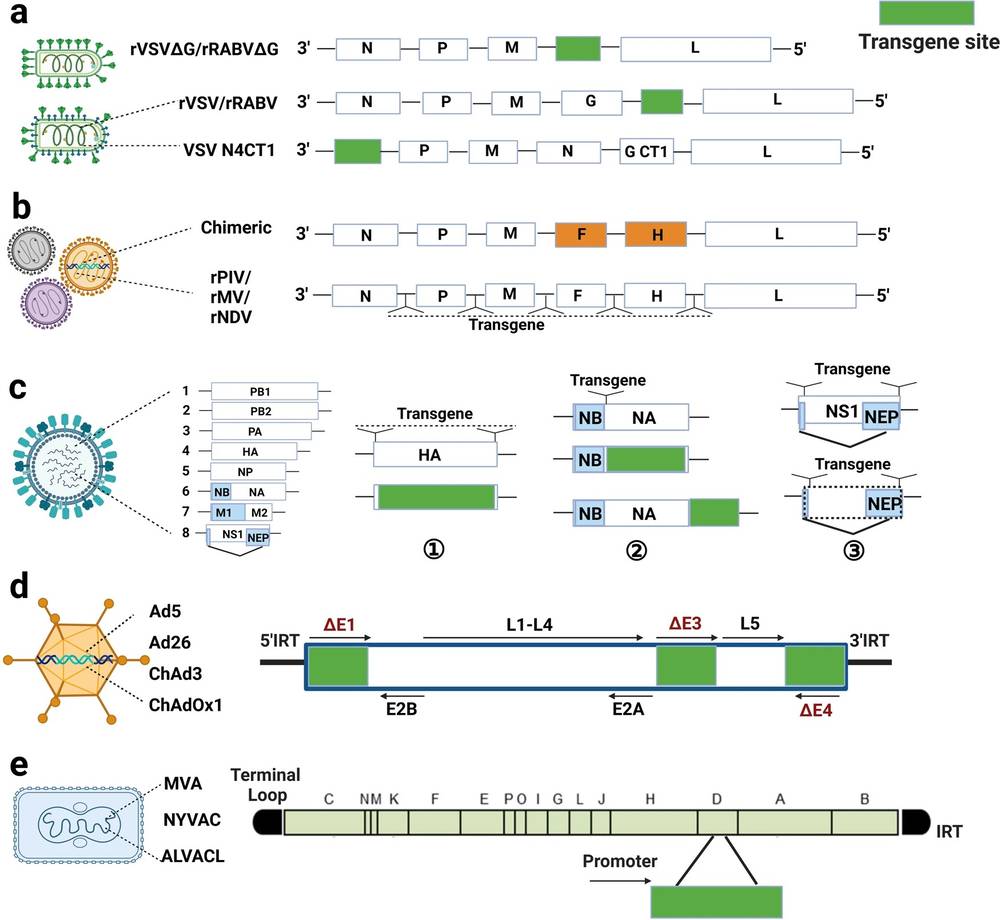 Figure 1. Design strategies for Vesicular stomatitis virus (VSV), rabies virus (RABV), parainfluenza virus (PIV), measles virus (MeV), Newcastle disease virus (NDV), influenza virus (IFV), Adenovirus (AdV) and poxvirus for vaccine platforms.1
Application-Oriented Vector Selection Map
The first selection layer is the intended application. Each application carries assumptions about payload size, expression duration, target-cell state, immune involvement, and downstream assays. The vector should be chosen because it supports those assumptions, not because it is familiar.
| Application | Often considered vector options | Selection logic |
|---|---|---|
| In vivo gene addition | AAV; sometimes adenovirus or lentivirus in specific research contexts | Prioritize tissue access, long-duration expression, dose, capsid immunity, and cassette size. |
| Genome editing | AAV, lentivirus, adenovirus, or non-viral alternatives | Select based on editor size, transient versus persistent expression, target tissue, and off-target assessment plan. |
| RNAi or gene silencing | Lentiviral shRNA, AAV RNAi, adenoviral RNAi | Match knockdown duration and model type; long-term cell models differ from transient in vivo studies. |
| Ex vivo cell therapy research | Lentivirus, retrovirus, transposon, or editing systems | Stable integration and expansion compatibility are often central, but clonal safety readouts are required. |
| Vaccine or immunotherapy research | Adenovirus, poxvirus, mRNA, or protein platforms | Immune activation may be beneficial, so antigen expression and vector immunogenicity become design features. |
| Cancer mechanism studies | Adenovirus, lentivirus, AAV, or hybrid strategies | Vector selection depends on tumor access, cytotoxic payload, immune stimulation, and expression control. |
Matching Payload Goals to Vector Biology
Applications can be grouped by the function of the payload. The payload is not just the coding sequence; it includes promoters, regulatory elements, tags, guide RNAs, shRNA cassettes, miRNA target sites, reporters, and polyadenylation signals. These elements change vector feasibility and performance.
Gene addition and replacement
For compact monogenic payloads, AAV gene addition designs are often explored because recombinant AAV can support durable expression in many post-mitotic tissues. When the gene is large, researchers may consider dual AAV, mini-gene design, lentiviral delivery, or adenoviral high-capacity systems. The application determines whether partial expression, transient testing, or durable rescue is acceptable.
Genome editing
Editing applications require additional questions: how long should the editor be expressed, how large is the editor system, and how will on-target and off-target outcomes be measured? AAV vector design for gene editing may be suitable for compact systems or split delivery, while lentiviral or adenoviral systems may be used for specific ex vivo, screening, or transient-expression goals.
Gene silencing and regulatory payloads
RNAi, CRISPR interference, dominant-negative constructs, transcriptional regulators, and inducible systems require sustained and controllable expression. A stable lentiviral shRNA model may be excellent for discovery, but an in vivo RNAi project may favor a different vector if tissue specificity, dose, or expression persistence is the limiting variable.
| Payload goal | Key constraint | Application-sensitive choice |
|---|---|---|
| Restore missing gene function | Coding sequence size and desired expression duration | AAV for compact in vivo cassettes; lentivirus or adenovirus when size or cell expansion changes the constraints. |
| Introduce nuclease, base editor, or prime editor | Editor size, duration of expression, and off-target risk | Compare AAV split systems, lentivirus for ex vivo models, and adenovirus for transient high expression. |
| Knock down a transcript | Knockdown duration and target-cell type | Lentiviral shRNA for stable models; AAV or adenovirus when in vivo or transient applications dominate. |
| Express antigen or immune modulator | Immunogenicity, antigen load, and tissue presentation | Adenovirus may be useful because immune activation can support the application. |
| Build a disease model | Reproducibility, marker expression, and cell viability | Use the vector that creates interpretable biology, even if it is not the final therapeutic candidate. |
Discovery, Screening, and Model-Building Uses
Discovery applications often prioritize speed, reproducibility, and assay dynamic range. Lentiviral libraries are widely used for pooled perturbation screens because integrated barcodes or shRNAs can be tracked after selection. Adenoviral vectors may be useful for high-efficiency delivery into difficult primary cultures or for transient pathway perturbation. AAV may be used when the model must resemble the intended in vivo delivery route or tissue exposure.
Cell model construction
Stable overexpression, lineage tracing, pooled shRNA studies, and engineered reporter lines often rely on lentiviral systems. In these applications, tissue-specific promoter-regulated lentiviral vectors can improve biological relevance by limiting expression to the intended cell state or differentiation stage.
Functional screening
Screening vectors should be evaluated for representation, multiplicity of infection, copy number, selection pressure, and readout compatibility. A vector that produces high expression but uneven library distribution can distort hit calling. Conversely, a lower expression system may be preferable if it preserves physiological signaling and reduces toxicity.
Translational Readouts by Application Type
Application-based selection becomes convincing only when the readouts match the application. A gene-addition project should not be judged by the same readout set as a vaccine project or a pooled shRNA screen. The table below summarizes application-specific evidence that helps move a project beyond initial transduction.
| Application type | Primary readouts | Secondary readouts |
|---|---|---|
| Gene addition/replacement | Protein expression, localization, functional rescue, and dose response. | Vector genome distribution, promoter durability, immune markers, and tissue pathology. |
| Genome editing | Editing frequency, allele profile, protein restoration or knockout effect. | Off-target analysis, editor expression duration, genotoxicity markers, and mosaicism. |
| RNAi/gene silencing | mRNA reduction, protein reduction, pathway response, and rescue controls. | Off-target transcriptome effects, innate RNA sensing, and expression stability. |
| Cell therapy engineering | Transduction efficiency, vector copy number, phenotype, expansion, and potency. | Insertion-site profile, clonal skewing, sterility, and replication-competent virus testing. |
| Vaccine/immunotherapy | Antigen expression, innate cytokines, T-cell or antibody readouts. | Anti-vector immunity, reactogenicity models, durability, and boosting feasibility. |
Application-Specific Pitfalls
Application-based selection can fail when researchers carry assumptions from one use case into another. A vector that supports a stable reporter cell line may not be appropriate for transient antigen expression. A vector that produces strong editing in cultured cells may not be suitable for in vivo delivery if the editor remains active too long or if the cassette must be split. A vector that is useful for pooled screening may not be ideal for mechanism validation because copy number, selection pressure, or promoter strength can exaggerate a phenotype.
| Application pitfall | Why it creates risk | Correction |
|---|---|---|
| Using a screening vector as the final candidate | Screening conditions may tolerate copy number or expression artifacts. | Validate hits in a vector format closer to the intended final use. |
| Assuming editing output equals therapeutic benefit | Editing frequency may not map directly to protein restoration or functional rescue. | Add protein, phenotype, and safety readouts to editing assays. |
| Optimizing antigen expression only | Vaccine applications require immune quality, not only antigen abundance. | Measure innate activation, antigen presentation, and adaptive immune readouts. |
| Using one RNAi readout | mRNA knockdown alone may miss protein half-life or off-target effects. | Measure mRNA, protein, pathway response, and rescue controls. |
Minimum Information Needed for Application Planning
Application planning should begin with the payload function and the decision-making endpoint. A gene-addition application should state the required expression level and whether partial correction is biologically meaningful. A genome-editing application should define the intended edit, the acceptable editor exposure time, and the method for off-target evaluation. An RNAi application should state whether transient knockdown is enough or whether stable suppression is required. A vaccine or immunotherapy application should define the desired immune response rather than only antigen expression.
The model system should be described with similar precision. Primary cells, immortalized cell lines, organoids, explants, small animals, and large-animal models can respond differently to the same vector. Cell state, differentiation stage, passage number, innate immune competence, and disease-associated stress can influence transduction and expression. A good application plan therefore includes both the vector construction goal and the biological context in which the vector will be judged.
When to Revisit the Initial Application Choice
Initial vector choice should be revisited when the project changes stage or when the first data reveal a mismatch. Examples include weak expression despite good vector quality, strong expression with unacceptable toxicity, inconsistent performance between cell types, poor scale-up behavior, or a payload redesign that changes cassette size. Reassessment is not a setback; it is a normal part of aligning a delivery system with the application. A well-documented comparison makes the second decision faster because the team can identify which variable changed and which constraints remain fixed.
Published Data
Case 1: Head-to-Head Comparison of Viral Vectors for Ocular Gene Therapy
This study systematically compared the transduction efficiency, safety, and biodistribution of Adeno-associated virus (AAV), Adenovirus (AdV), Baculovirus (BV), and Lentivirus (LV) for retinal gene therapy. Following intravitreal injection in mouse models, researchers identified distinct advantages and limitations for each delivery system. AAV demonstrated the most robust comprehensive profile, exhibiting the weakest immune response and successfully driving stable transgene expression across both inner and outer retinal layers for up to six months. In contrast, while lentiviral vectors achieved durable long-term expression, their cellular targeting was largely restricted to retinal pigment epithelium (RPE) cells. AdV primarily transduced anterior chamber cells but only provided transient expression and provoked the strongest immunogenic response. Ultimately, this foundational research concludes that while intravitreal delivery is generally safe for AAV, AdV, and LV, AAV stands out as the optimal choice for ocular gene therapies due to its broad cellular tropism, extended expression duration, and superior safety profile.
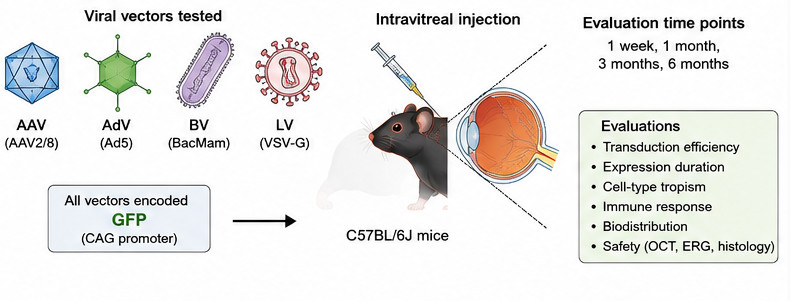 Figure 2. Direct comparative evaluation of viral vector platforms for ocular gene delivery.
Frequently Asked Questions
What vector is preferred for stable gene expression in engineered cells?
Lentiviral vectors are commonly considered when stable expression through cell expansion is required. The selection should include promoter stability, copy-number control, insertion-site analysis, and assays for replication-competent lentivirus.
Which vector is suitable for vaccine antigen delivery?
Adenoviral vectors are often evaluated for vaccine antigen delivery because they can induce strong immune responses and carry relatively large antigen cassettes. The final choice depends on antigen design, pre-existing anti-vector immunity, route, and immunogenicity readouts.
Can AAV be used for CRISPR delivery?
AAV can be used for in vivo genome-editing delivery when the editing components fit within capacity limits or are split across vectors. Researchers must evaluate editing efficiency, off-target activity, tissue specificity, and the consequences of persistent nuclease or editor expression.
How should RNAi delivery be matched to vector type?
For persistent knockdown in cultured or engineered cells, lentiviral shRNA approaches may be useful. For tissue-directed in vivo RNAi, AAV or adenoviral designs may be compared depending on duration, cassette size, dose, and safety goals.
Should discovery applications use the same vector as later translational studies?
Not always. Discovery screens may prioritize speed and assay signal, while translational studies require stricter attention to biodistribution, vector quality, immunogenicity, genotoxicity, and manufacturing feasibility. A bridging plan should explain how early results will be re-tested in the final platform.
Overview of What Creative Biolabs Can Provide
Creative Biolabs can support viral-vector selection projects by connecting the biological objective with vector design, targeting strategy, expression control, and safety-related readouts. The support below is selected from the Gene Therapy service structure because each item directly relates to AAV, lentiviral, adenoviral, or tissue-directed vector decision-making rather than general promotion.
| Research Need | Related Creative Biolabs Support | How It Connects to the Current Resource Topic |
|---|---|---|
| Application-level platform comparison | Custom Viral Vector Development | Supports selection across AAV, adenoviral, lentiviral, and related vector strategies. |
| In vivo gene addition or replacement | AAV Design for Gene Addition | Relevant when the application requires durable expression of a compact therapeutic gene. |
| In vivo genome-editing delivery | AAV Vector Design for Gene Editing | Connects vector choice with editing component size, promoter control, and target tissue needs. |
| Stable knockdown studies | Custom shRNA Lentivirus Service | Supports lentiviral shRNA applications that require persistent suppression in target cells. |
| Ex vivo stem-cell applications | Lentiviral Vector Design for Stem Cell Research | Matches lentiviral integration logic with stem-cell engineering and expansion workflows. |
| Adenoviral vaccine or antigen studies | Adenoviral Vector-based Vaccine Development | Relevant when immune activation and antigen expression are application-defining features. |
| Adenoviral RNAi or cancer mechanism studies | Adenoviral Vector Design for RNAi Delivery | Supports transient or high-efficiency RNAi delivery in adenovirus-compatible research models. |
For projects where vector choice remains uncertain, researchers can contact us today to discuss the target tissue, payload, model system, and readout plan before committing to construction.
References
- Wang S, Liang B, Wang W, et al. Viral vectored vaccines: design, development, preventive and therapeutic applications in human diseases. Signal transduction and targeted therapy, 2023, 8(1): 149. https://doi.org/10.1038/s41392-023-01408-5 Distributed under Open Access license CC BY 4.0, with modification.
- Kalesnykas G, Kokki E, Alasaarela L, et al. Comparative study of adeno-associated virus, adenovirus, bacu lovirus and lentivirus vectors for gene therapy of the eyes. Current gene therapy, 2017, 17(3): 235-247. https://doi.org/10.2174/1566523217666171003170348
