
Virus Vector Integration Considerations
Introduction
Vector integration considerations are central to any research program that uses retroviral, lentiviral, hybrid, or engineered integrating systems for durable gene transfer. Integration can support long-term expression in dividing cells, stable cell-line generation, lineage tracing, and ex vivo gene-modified cell studies. The same feature also creates questions about insertional mutagenesis, clonal expansion, promoter activation, vector copy number, and persistence of unwanted sequences. This resource explains how integration is understood, when it is useful, and how integration-focused vector design should be connected with safety, identity, and expression analysis.
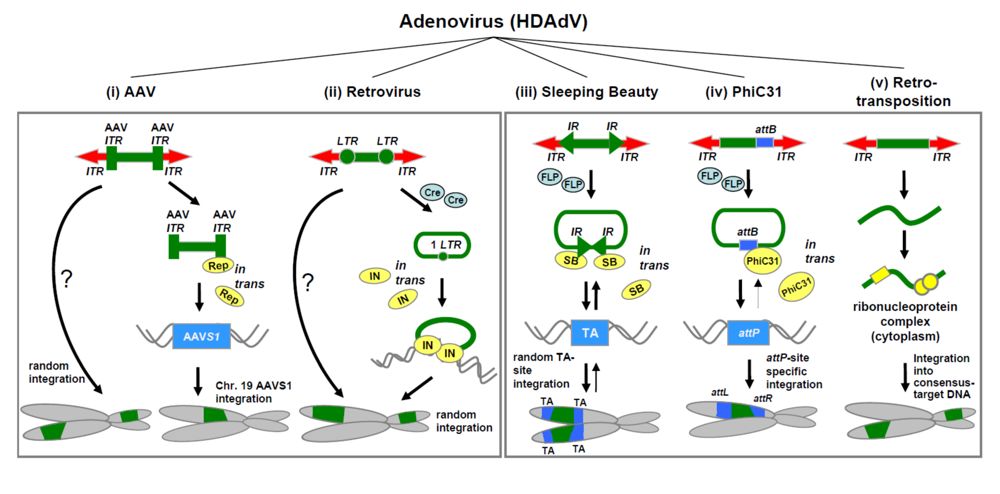 Figure 1. Schematic diagram of all integrating hybrid vector systems based on helper- dependent adenoviral vectors (HDAdV) as delivery vehicles (i-v).1
Virus Vector Integration Overview
Integration means that vector-derived DNA has become joined to the host genome. In retroviral and lentiviral systems, integration is part of the natural viral life cycle and is mediated by integrase after reverse transcription. In hybrid systems, integration may be supplied by a retroviral, AAV-related, transposase, or recombinase-linked module. Stable expression after cell division often suggests genomic maintenance, but it should not be accepted as proof of integration without molecular analysis.
Integration does not automatically mean uniform expression, safe expression, or predictable genomic placement. Different vector classes show different integration biases. Gamma-retroviral vectors tend to integrate near promoters and regulatory regions more often than some lentiviral systems, while HIV-derived lentiviral vectors show preference for transcriptionally active genes. Host-cell chromatin, transcriptional state, cell type, vector design, and selection pressure all influence the observed integration landscape.
Integration Considerations by Vector Type
Different vector platforms create different integration-related questions. Lentiviral and retroviral vectors are usually selected when durable genetic marking or long-term expression is needed, but their integration profiles must be interpreted together with vector copy number, promoter design, target-cell biology, and expansion conditions. AAV and adenoviral vectors are often discussed as non-integrating or predominantly episomal systems, but long-term persistence, rare integration, concatemer formation, and tissue-specific expression durability can still affect interpretation. Hybrid vectors require the most careful project-specific analysis because delivery, expression, and integration may be controlled by separate modules.
The table below gives a practical comparison for early project planning. It should not replace platform-specific assay design, but it helps researchers decide which integration questions need to be asked before vector construction, transduction, or long-term culture begins.
| Vector class | Typical integration behavior | Main research value | Integration-related control |
|---|---|---|---|
| Lentiviral vector | Stable integration is an intended feature; integration often occurs within transcriptionally active regions. | Durable expression in dividing cells, stable models, pooled screens, and ex vivo cell modification. | VCN analysis, promoter review, integration-site analysis, RCL testing, and clonal tracking when cells are expanded. |
| Gamma-retroviral vector | Stable integration, with comparatively stronger concern for promoter- or enhancer-proximal insertion patterns. | Stable marking or modification of dividing cells in selected research contexts. | Integration-site mapping, careful promoter selection, and monitoring for clonal dominance. |
| AAV vector | Predominantly episomal persistence in many settings, with rare integration or concatemer-related questions depending on context. | Long-term expression in selected tissues and in vivo-oriented research models. | Assay strategy depends on tissue, duration, dose, and whether rare integration is a safety-relevant endpoint. |
| Adenoviral vector | Generally non-integrating, with strong transient expression and episomal persistence. | Transient expression, vaccination research, oncolytic vector studies, and high-level gene delivery. | Expression decay, innate response, vector persistence, and dose-related toxicity rather than routine integration mapping. |
| Hybrid vector | Depends on the delivery module and integration module; integration may be separated from transduction. | Customized delivery, regulated integration, or comparison of transient and stable effects. | Module-specific controls, helper-only controls, integration-deficient comparators, and residual integration testing. |
Benefits and Risks of Integrating Vector Systems
The benefit of integration is persistence. In dividing cells, episomal vectors may dilute with each division, while an integrated cassette can be inherited by daughter cells. This is why integrating vectors are useful in hematopoietic stem cell research, stable cellular models, pooled screening, and long-term reporter systems. The risk is that the inserted cassette can disrupt or alter host gene regulation, or that clones with favorable growth properties can become enriched during culture or after selection.
| Integration feature | Research advantage | Primary concern |
|---|---|---|
| Stable inheritance | Supports long-term expression in dividing cells | Insertional effects and clonal selection |
| Single-cell marking | Allows lineage tracing or pooled perturbation readouts | Uneven VCN and integration-site bias |
| Strong internal promoter | Enables robust payload expression | Enhancer or promoter activation of nearby genes |
| Self-inactivating LTR design | Reduces LTR-driven transcriptional activity | Internal cassette still requires evaluation |
| Integration-deficient design | Supports transient delivery or comparison studies | Residual episomal persistence or low-frequency integration may remain |
Design Variables That Influence Integration-Related Risk
Risk is not determined only by whether a vector integrates. It is shaped by vector copy number, promoter strength, enhancer activity, payload biology, integration-site distribution, target-cell type, expansion conditions, and the sensitivity of the analytical method. A low vector copy number is generally easier to interpret than multiple insertions per cell, but single insertions can still matter if they occur near growth-control genes or if the payload alters cell fitness.
- Use self-inactivating vector designs where LTR-driven enhancer activity is not required.
- Select internal promoters that match the biological need instead of defaulting to the strongest available promoter.
- Control vector copy number during transduction and avoid interpreting high expression without VCN context.
- Compare integrating and integration-deficient formats when the project can tolerate transient expression.
- Add integration-site analysis when cells will be expanded, selected, or used for long-term functional conclusions.
| Design decision | Why it matters | Useful readout |
|---|---|---|
| Promoter choice | Strong promoters can increase expression and regulatory influence | Expression level, silencing, nearby gene activation |
| Multiplicity of infection | Higher input can increase VCN and mixed integration events | VCN per cell, viability, dose-response curve |
| Target-cell expansion | Selection may enrich clones with growth advantage | Clonal abundance, integration-site tracking |
| Integrase mutation | Can reduce stable integration for transient applications | Residual integration assay, expression decay |
| Self-deleting configuration | Can remove vector sequences after a function is completed | Deletion efficiency, residual sequence mapping |
Assays for Integration and Long-Term Safety Interpretation
Integration analysis should be matched to the research stage. Early discovery may only need VCN, expression persistence, and a basic safety panel. More advanced studies require integration-site analysis, clonal tracking, replication-competent virus testing, identity testing, and payload-specific functional safety readouts. Importantly, no single assay provides a complete risk profile. VCN describes burden, integration-site analysis describes location, clonal tracking describes population behavior, and functional assays describe biological consequence.
- Vector copy number analysis estimates average copies per cell but does not reveal insertion locations.
- Integration-site analysis maps vector-host junctions and supports clonal abundance assessment.
- Longitudinal sampling helps distinguish stable polyclonal marking from emerging clonal dominance.
- Expression and phenotype assays show whether integration produces the intended biological effect.
- RCL or replication-competent virus assays are essential when lentiviral or retroviral vector production is involved.
| Question | Assay type | Interpretation boundary |
|---|---|---|
| How many vector copies are present? | qPCR or ddPCR-based VCN | Average values can hide cell-to-cell variation |
| Where did integration occur? | LAM-PCR, nrLAM-PCR, shearing-based ISA, or sequencing-based junction mapping | Sampling depth affects detection of low-frequency clones |
| Is a clone expanding? | Serial integration-site abundance analysis | Expansion may reflect culture conditions, payload effect, or insertion effect |
| Is expression durable? | Time-course expression and passaging | Durable expression is not proof of safe integration |
| Is there replication-competent vector? | RCL or platform-specific safety assay | Assay design must match the vector system used |
Integration in Hybrid and Non-Integrating Comparisons
Hybrid vectors complicate integration interpretation because delivery and integration may be separated into different modules. A hybrid system may deliver an integrating cassette transiently, produce a secondary integrating vector, or combine an episomal platform with an integration machinery. Each scenario requires a different control. A no-integrase or integration-deficient comparator can clarify whether stable expression is integration-dependent. A helper-only control can show whether helper functions influence cell behavior. A dose-matched non-integrating vector can reveal whether transient expression is sufficient for the biological endpoint.
Integration-deficient lentiviral vectors are particularly useful when the payload needs to enter difficult cells but durable genome insertion is not desired. They are also useful controls for gene-editing, recombinase, or reporter studies because they help distinguish delivery effects from integration effects. However, integration-deficient does not mean biologically invisible. Episomal DNA can persist, innate responses may occur, and rare integration events may still need sensitive detection when the study endpoint is safety-relevant.
Published Data
Case 1: hInGeTox Platform for Evaluating Lentiviral Vector Genotoxicity
This 2025 study published in Gene Therapy introduces "hInGeTox," an innovative human-based in vitro platform designed to assess the genotoxicity of lentiviral vector integrations. Utilizing hiPSC-derived hepatocyte-like cells (HLCs) and neural progenitor cells (NPCs), researchers mapped integration sites via S-EPTS/LM-PCR and next-generation sequencing to detect abnormal gene expression or cellular mutations. Crucially for early-stage drug discovery, this platform reliably screens for high-risk vector designs or production batches before clinical transition. By analyzing actual integration patterns in human cells, the system can identify potential insertional mutagenesis, such as oncogene activation or tumor suppressor disruption. This in vitro assay empowers researchers to evaluate how different promoters or integrase designs impact overall safety. By reducing reliance on animal models, hInGeTox provides a highly predictive, scalable screening tool to optimize lentiviral vector engineering, establishing robust preclinical safety profiles for advanced gene delivery systems.
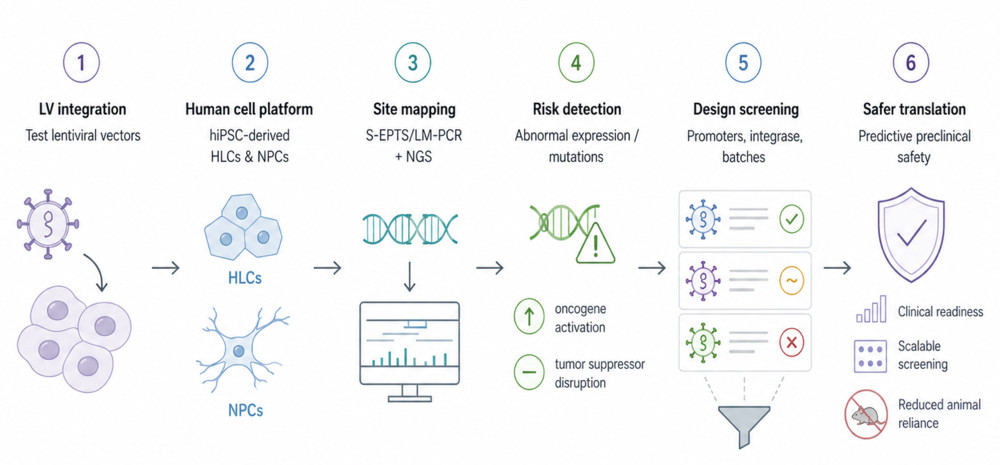 Figure 2. hInGeTox platform for lentiviral vector genotoxicity screening.
Frequently Asked Questions
Why do researchers use integrating vectors?
They are useful when stable, heritable expression or genetic marking is needed in dividing cells, long-term cell models, pooled screens, or ex vivo modified cells.
What is vector copy number?
Vector copy number is the average number of vector-derived DNA copies per cell. It helps describe genetic burden but does not show where integration occurred.
Can an integration-deficient lentiviral vector still integrate?
Integrase-defective designs greatly reduce integration, but rare integration or long-lived episomal persistence can still be relevant depending on assay sensitivity and study purpose.
Does a self-inactivating vector remove all genotoxic risk?
No. SIN design reduces LTR-driven enhancer activity, but internal promoters, payload effects, insertion location, and clonal selection still require evaluation.
When is integration-site analysis necessary?
It is important when cells are expanded, selected, used for long-term studies, compared across clones, or when integration-related safety is a key endpoint.
Overview of What Creative Biolabs Can Provide
Projects involving retroviral, lentiviral, adenoviral, or hybrid-vector concepts often require coordinated decisions about vector architecture, envelope selection, expression control, titer, identity, and safety readouts. Creative Biolabs can help researchers connect the scientific question with a practical vector-design and analysis plan while keeping service support aligned with the intended research stage.
| Research Need | Related Creative Biolabs Support | How It Connects to the Current Resource Topic |
|---|---|---|
| Durable-expression vector planning | Lentiviral Vector Design for Regulated Integration and Expression | Directly supports integration-aware design, expression control, and VCN-related planning. |
| Transient or reduced-integration comparison | Integration-Deficient Lentiviral Vector Service | Useful when researchers need delivery without intentional stable insertion. |
| Removal of vector sequences after function | Self-Deleting Lentiviral Vector Service | Relevant when a project needs a self-limiting design to reduce long-term vector sequence persistence. |
| Expression timing and dose control | Inducible Vector Systems Design for Lentiviral Vector | Connects integration with regulated payload expression and functional safety interpretation. |
| General lentiviral construction | Lentiviral Vector Development Service | Supports integrating vector construction for stable expression, marking, or perturbation studies. |
| Vector quality and identity testing | Viral Vector Analysis Service | Supports identity, potency, safety, and titer-related readouts needed for integration studies. |
| Lentiviral safety assessment | Safety Determination of Lentiviral Vector Service | Relevant for RCL-related evaluation and safety-oriented lentiviral vector testing. |
| Functional vector input normalization | Lentiviral Vectors Titration Service | Helps control input dose before interpreting VCN, expression, and integration results. |
For projects that require customized planning beyond the options listed above, researchers can contact us today to discuss the vector architecture, target cells, payload requirements, and safety readouts that best fit the study goal.
References
- Müther N, Noske N, Ehrhardt A. Viral hybrid vectors for somatic integration-are they the better solution? Viruses, 2009, 1(3): 1295-1324. https://doi.org/10.3390/v1031295 Distributed under Open Access license CC BY 4.0, with modification.
- Suleman S, Alhaque S, Guo A, et al. hInGeTox: a human-based in vitro platform to evaluate lentivirus/host interactions that contribute to genotoxicity. Gene Therapy, 2025: 1-16. https://doi.org/10.1038/s41434-025-00550-9
