
AAV Capsid Engineering
AAV Introduction
AAV capsid engineering focuses on changing the outer protein shell of adeno-associated virus vectors to improve delivery, specificity, manufacturability, or immune evasion for a defined research objective. Because the capsid controls receptor binding, intracellular trafficking, particle stability, and part of the host immune interaction, even small sequence changes can shift vector behavior. This page explains the logic behind AAV capsid modification, the main capsid engineering strategies, and the readouts needed to decide whether an engineered capsid is truly useful.
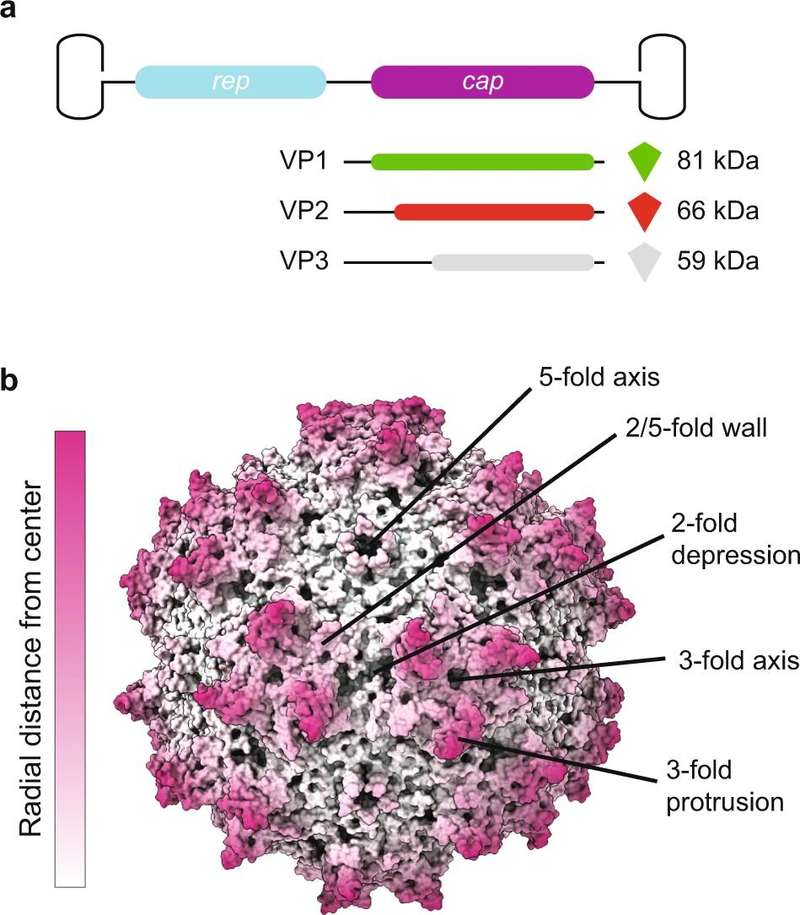 Figure. 1: Adeno-associated virus (AAV) capsid structure.1
Why Capsid Engineering Matters
Natural AAV serotypes provide useful starting points, but their native tropism may not match a specific human cell type, delivery route, or dose constraint. A capsid that works well in a mouse model may perform differently in non-human primates or human tissue. Some serotypes are strongly liver-tropic, while others are preferred for muscle, eye, or central nervous system applications. Pre-existing neutralizing antibodies can also reduce transduction, and high systemic doses may amplify immune and safety concerns.
Sequence-level capsid redesign addresses these problems by altering the sequence or surface features of the capsid. The goal may be to improve receptor engagement, reduce off-target uptake, increase blood-brain barrier crossing, improve intracellular escape, lower antibody recognition, or preserve high production yield. Importantly, a successful capsid is not defined by tropism alone. It must also assemble efficiently, package the genome, remain stable during purification and storage, and support the intended biological activity.
Capsid Structure and Functional Determinants of AAV
- Capsid Structure of AAV
The AAV capsid is assembled from VP1, VP2, and VP3 proteins into an icosahedral particle. These proteins share overlapping sequences but differ in N-terminal regions that influence infectivity and trafficking. Surface-exposed loops contribute to receptor interaction and antigenicity, making them common sites for mutation, surface peptide insertion, or domain swapping. Internal or structurally constrained residues may strongly affect assembly and particle fitness, so not every position is equally tolerant of engineering.
- Functional Determinants of AAV
Functional determinants are distributed across the particle. Some mutations alter primary receptor usage, others affect co-receptor engagement, endosomal escape, nuclear entry, uncoating, or genome release. A capsid variant that shows higher binding to a cultured cell line may still fail in vivo if it is cleared rapidly, trapped in non-target tissue, or unable to uncoat in the relevant cell. For this reason, capsid engineering programs should combine sequence design with tiered experimental selection.
Table 1. Major strategies in AAV capsid engineering
| Strategy | How It Works | Best-Fit Use |
|---|---|---|
| Rational design | Uses structural, receptor, or sequence knowledge to introduce targeted mutations. | Testing specific hypotheses about receptor binding, antigenicity, or known functional residues. |
| Directed evolution | Generates diverse capsid libraries and selects variants under defined biological pressure. | Discovering variants when receptor biology is incomplete or tissue barriers are complex. |
| Peptide insertion | Adds short targeting peptides to surface-exposed capsid loops. | Exploring receptor-guided cell targeting while preserving particle assembly. |
| DNA shuffling or chimeric capsids | Combines regions from related capsids to create new sequence mosaics. | Searching broader functional space while retaining many natural capsid features. |
| Machine-learning-guided design | Uses sequence, structure, and screening data to prioritize variants for testing. | Reducing library burden and optimizing multiple traits such as tropism, yield, and stability. |
Table 2. Desired capsid trait versus evaluation readout
| Desired Trait | Useful Readouts | Potential Trade-Offs |
|---|---|---|
| Higher target-cell transduction | Reporter expression, vector genomes per cell, single-cell or tissue imaging. | May also increase uptake in off-target tissues if specificity is not tested. |
| Reduced liver exposure | Biodistribution, serum biomarkers, liver histology, tissue vector genomes. | Lower liver uptake may reduce overall systemic vector recovery or expression. |
| Immune escape | Neutralization assays, antibody binding, cytokine readouts, repeat-exposure models. | Immune evasion must be balanced with stability and manufacturability. |
| Improved production fitness | Capsid titer, vector genome titer, empty/full ratio, assembly assays. | Highly productive capsids may not have the desired tissue selectivity. |
| Enhanced stability | Thermal shift, aggregation, storage stability, freeze-thaw assessment. | Stabilizing changes can alter receptor interaction or uncoating. |
Engineering Strategies: From Hypothesis to Selection
Rational design starts with a hypothesis: a receptor-binding region, antigenic epitope, phosphorylation site, or structural loop may be modified to improve a property. Directed evolution starts with diversity and applies selection pressure to recover variants that perform under the chosen conditions. Peptide insertion explores targeted binding motifs, while DNA shuffling and chimeric capsids combine sequence blocks from related capsids. More recently, machine-learning approaches have been used to prioritize variants before experimental testing, especially when large datasets connect sequence with production or tropism outcomes.
These strategies are increasingly combined. A project may use structural insight to define tolerant insertion sites, directed evolution to enrich functional variants, sequencing to map enriched motifs, and computational ranking to select candidates for a second round. The most reliable design cycle is iterative rather than one-step. integrated AAV vector design should therefore be viewed as a linked process across capsid, cassette, manufacturing, and assay design.
Table 3. Capsid engineering application scenarios
| Application Scenario | Engineering Focus | Design Notes |
|---|---|---|
| CNS delivery | Barrier crossing, neuronal or glial tropism, reduced peripheral exposure. | Species differences are important; in vivo validation should not rely only on cell culture. |
| Muscle or cardiac delivery | Broad myofiber transduction and durable expression at manageable dose. | Payload toxicity and immune response to expressed protein should be separated from capsid effects. |
| Retinal delivery | Cell-layer specificity, local dose efficiency, and durability. | Small injection volumes and local anatomy make formulation and titer especially important. |
| Liver de-targeting | Reduced hepatocyte uptake or expression in systemic administration. | Capsid changes may be paired with miRNA regulation or promoter selection. |
| Cancer or hypoxic tissue research | Targeted entry plus conditional expression in disease microenvironments. | Capsid specificity and transcriptional regulation should be evaluated as separate layers. |
Balancing Tropism, Immune Recognition, and Manufacturability
A common mistake is to optimize one capsid trait while ignoring others. Higher transduction in a target cell may come with lower yield, increased aggregation, unexpected liver uptake, or stronger antibody recognition. Conversely, a capsid that produces well may not be useful if it lacks target-tissue specificity. Engineering decisions should therefore use multi-parameter scoring rather than a single reporter readout. sequence-level capsid changes should be evaluated through production and biological assays in parallel.
Study Design for Engineered Capsid Evaluation
Capsid evaluation usually begins with production fitness and particle quality, followed by in vitro transduction screens, organoid or primary-cell testing when available, and in vivo biodistribution studies. Assays should distinguish entry from expression, and expression from functional correction. For tissue targeting, the background signal in off-target tissues can be as important as the signal in the intended tissue. If capsid engineering is paired with promoter-driven expression control or microenvironment-responsive control, each specificity layer should be tested separately and together.
Overview of What Creative Biolabs Can Provide
Creative Biolabs supports capsid-focused AAV research through modification, genetic engineering, targeting strategies, and functional readouts. The services below were selected because they match the key decision points in capsid engineering: design, targeting, expression control, testing, and interpretation.
| Research Need | Related Creative Biolabs Support | How It Connects to the Current Resource Topic |
|---|---|---|
| Capsid engineering strategy | AAV Capsid Modification | Directly supports rational modification, directed evolution concepts, and customized capsid improvement for gene delivery studies. |
| Sequence-level capsid redesign | Genetic Modification of AAV Vector | Relevant when capsid amino acid changes, chimeras, or sequence-level engineering are needed to alter vector behavior. |
| Cell-surface targeting | Peptide Insertion for Cell Surface Targeting of Advanced AAVs Vector | Connects to receptor-guided tropism engineering through peptide insertion or targeting motifs. |
| Tissue or cell specificity | Tissue/Cell Specific Targeting Advanced Adeno-Associated Virus Vector Service | Useful when engineered capsids must be evaluated against a defined target tissue or cell population. |
| Expression-layer targeting | Specific Promoter Driven Targeting of AAV Vector | Complements capsid engineering by restricting payload expression after vector entry. |
| Disease microenvironment targeting | Hypoxia Regulatory Element Targeting Strategy of AAV Vector | Supports cases where capsid delivery is paired with transcriptional control responsive to hypoxic tissues. |
| Functional performance testing | Potency of Viral Vector | Connects engineered capsid design to transduction or biological activity rather than capsid sequence alone. |
For projects that require an integrated plan across vector format, payload design, analytical testing, and preclinical readouts, contact us today to discuss the research goal and select the most appropriate AAV strategy.
Frequently Asked Questions
Q: What is AAV capsid engineering?
A: AAV capsid engineering is the intentional modification or selection of viral capsid sequences to alter properties such as tissue tropism, receptor use, intracellular trafficking, manufacturability, stability, and immune recognition. It can use rational design, peptide insertion, directed evolution, chimeric capsids, or machine-learning-guided selection.
Q: How does capsid engineering differ from promoter targeting?
A: Capsid engineering affects where particles travel, bind, enter, and traffic after administration. Promoter targeting affects which transduced cells express the payload. They are complementary layers, and strong specificity often requires both a suitable capsid and a properly selected regulatory cassette.
Q: Why are natural AAV serotypes sometimes insufficient?
A: Natural serotypes may not transduce the desired human cell population efficiently, may show species-specific performance, may require high dose, or may be neutralized by pre-existing antibodies. Engineering seeks to improve these limitations for a defined application rather than creating a universally optimal capsid.
Q: What are the main risks of modifying an AAV capsid?
A: Capsid changes can reduce assembly, lower titer, impair genome packaging, create instability, change biodistribution unexpectedly, or introduce new immune epitopes. Any engineered capsid should be tested for production fitness, identity, tropism, potency, and safety-related attributes.
Q: How are engineered capsids evaluated?
A: Evaluation usually includes production yield, genome titer, capsid integrity, thermal or storage stability, in vitro transduction, in vivo biodistribution, tissue specificity, off-target exposure, immune recognition, and functional payload expression. The best assay set depends on tissue, route, species, and payload.
Reference
- Wörner T P, Bennett A, Habka S, et al. Adeno-associated virus capsid assembly is divergent and stochastic. Nature communications, 2021, 12(1): 1642. https://doi.org/10.1038/s41467-021-21935-5. Distributed under Open Access license CC BY 4.0, without modification.
