
Self-Complementary AAV
Introduction
Self-complementary AAV (scAAV) is a recombinant AAV format designed to bypass one of the important rate-limiting steps of conventional single-stranded AAV: second-strand DNA synthesis. Instead of packaging a single-stranded expression cassette that must be converted inside the cell, scAAV packages an inverted repeat genome that can fold into a double-stranded transcription-ready form. This can accelerate and increase transgene expression in selected contexts, but it also reduces payload capacity and creates specific packaging and analytical challenges. When a small cassette requires rapid expression, self-complementary AAV vector planning may be considered alongside conventional ssAAV and dual-vector approaches.
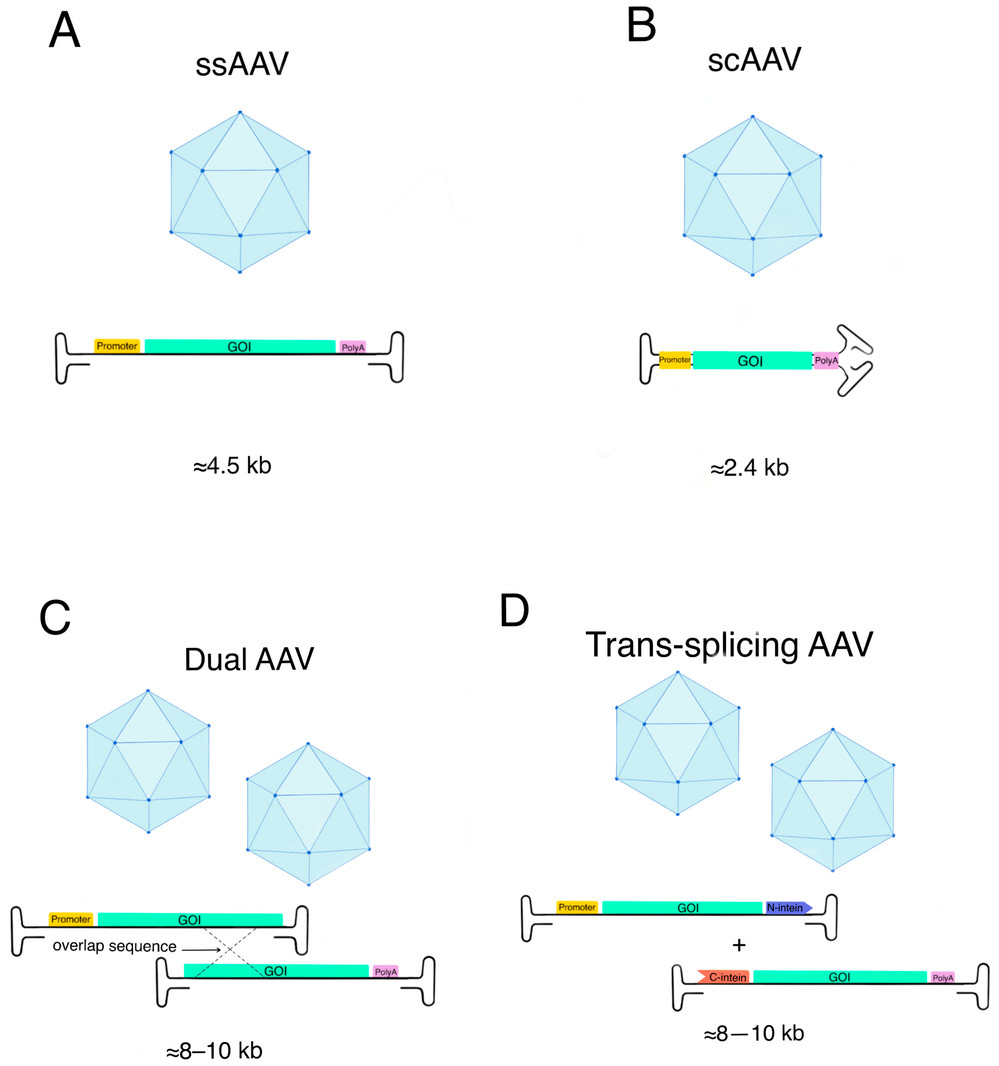 Figure 1. AAV vector structure.1
Core Principle of Self-Complementary AAV
scAAV is designed to overcome the need for second-strand synthesis after conventional single-stranded AAV enters the nucleus. By packaging complementary sequences within the same vector genome, scAAV can fold into a double-stranded template more rapidly after uncoating, which may accelerate the onset and efficiency of transgene expression. This modification mainly affects intracellular genome conversion rather than capsid behavior. Therefore, scAAV does not inherently change tropism, receptor binding, biodistribution, or immune exposure; these remain largely determined by capsid type, delivery route, and host context. Its key value is faster and often stronger expression for appropriately sized cassettes, not improved tissue specificity or immune evasion.
| Feature | Single-Stranded AAV | Self-Complementary AAV |
|---|---|---|
| Genome architecture | One single-stranded expression cassette flanked by ITRs. | Inverted complementary cassette capable of folding into a double-stranded form. |
| Expression onset | Often depends on second-strand synthesis or genome conversion. | Can support faster expression by bypassing much of the second-strand bottleneck. |
| Payload capacity | Approximately the conventional AAV genome capacity, depending on cassette design. | Roughly half the conventional capacity because the cassette is duplicated in complementary form. |
| Best fit | Larger genes, standard expression studies, or payloads near the AAV limit. | Small genes, compact reporters, regulatory elements, or settings where rapid expression is valuable. |
| Key QC concern | Genome integrity, titer, full/empty capsids, and potency. | Double-stranded genome form, single-stranded byproducts, size control, and potency. |
Molecular Design Features of scAAV
01 scAAV Structure – Engineered Dimeric Genomes for Rapid Expression
The defining feature of scAAV is an engineered terminal repeat configuration that favors packaging of a dimeric inverted-repeat genome. A mutation in the terminal resolution site prevents normal resolution at one end, allowing synthesis of a self-complementary molecule. When the vector enters the nucleus, complementary regions can anneal intramolecularly. This structural logic is powerful, but it makes cassette compactness and ITR stability especially important.
02 Compact Cassette Design – The Key to Stable and Efficient scAAV
An scAAV cassette usually requires a compact promoter, concise coding sequence, efficient polyadenylation element, and minimal nonessential regulatory sequence. Long promoters, large tags, multiple reporters, bulky untranslated regions, or oversized enhancer modules can quickly exceed the practical design space. For small therapeutic genes or compact research reporters, compact expression cassette design can help preserve the advantages of scAAV without pushing the genome into an unstable packaging range.
- Promoter selection should balance strength, specificity, and size rather than simply choosing the strongest regulatory element.
- Coding sequence optimization may reduce unnecessary length, but functional domains, secretion signals, localization tags, and safety-related sequence features must be preserved.
- Polyadenylation sequences should be efficient but compact, especially when the expression cassette is close to the scAAV capacity boundary.
- ITR integrity should be verified because recombination, deletions, or mutations can compromise packaging and expression interpretation.
- Analytical plans should distinguish total vector genomes from correctly formed self-complementary genomes whenever project risk justifies deeper characterization.
Where Self-Complementary AAV Is Most Useful
- Best Applications for scAAV – Speed and Small Payloads
scAAV is most useful when the biological question benefits from faster or more efficient early expression and the payload is small enough to fit comfortably. It may be attractive for small secreted proteins, compact enzymes, reporters, regulatory RNAs, or experimental systems where delayed expression would obscure interpretation. In some tissues, conventional single-stranded AAV already performs well, so the incremental benefit of scAAV must be tested rather than assumed.
- scAAV Is Not a Universal Upgrade – Know When to Choose ssAAV
Research applications often include proof-of-concept studies, rapid reporter expression, functional rescue with small coding sequences, and settings where transduction efficiency is limited by second-strand synthesis. However, scAAV is not a universal upgrade. If a project requires a large coding sequence, a complex promoter, multiple regulatory elements, or dual-function expression cassette, conventional ssAAV, AAV-mediated gene addition, gene replacement, or split-vector designs may be more practical.
Capacity and Packaging Trade-Offs
Payload capacity is the central limitation of scAAV. Because the vector carries complementary copies of the cassette in a single molecule, the usable cassette length is roughly half that of conventional AAV. In practice, many teams design scAAV genomes conservatively, often aiming for compact constructs rather than pushing theoretical limits. Larger scAAV genomes can increase the fraction of single-stranded or nonideal genome species, reducing the expression advantage that motivated the design.
This capacity issue affects biological strategy. A small transgene with a minimal promoter may be a strong scAAV candidate. A large disease gene, multi-cistronic construct, base editor, prime editor, or complex regulatory cassette is usually not. When the gene is too large, researchers may explore compact transgenes, mini-genes, dual AAV, protein engineering, RNA-based strategies, or alternative vectors. For scAAV production, genome titration and vector identity testing are especially important because total genome copy number does not automatically confirm the desired self-complementary structure.
| Design Factor | Why It Matters for scAAV | Practical Consideration |
|---|---|---|
| Promoter size | Large promoters quickly consume limited capacity. | Use tissue-relevant compact promoters when possible. |
| Coding sequence length | The transgene is duplicated in complementary form. | Prioritize small genes, micro-genes, compact reporters, or concise regulatory cargos. |
| PolyA and UTR elements | Regulatory sequences can push the genome beyond the preferred range. | Select efficient compact elements and avoid unnecessary sequence burden. |
| ITR stability | ITRs are essential but prone to instability during cloning and amplification. | Verify ITR integrity before production and after plasmid preparation. |
| Genome form | scAAV advantage depends on correct self-complementary genome formation. | Use suitable analytical methods to detect single-stranded byproducts or abnormal genome species. |
Selection Guide of ssAAV, scAAV, and Dual AAV
Choosing the right AAV format depends on the biological objective, cassette size, expression timeline, and analytical tolerance. Conventional ssAAV remains the most flexible format for many projects. scAAV can improve early expression for small cassettes. Dual AAV or overlapping strategies may help when the payload is too large, but they introduce reconstitution efficiency and product-complexity challenges.
| Research Need | Most Likely Fit | Main Caution |
|---|---|---|
| Small cassette with need for rapid expression | scAAV | Confirm that expression advantage remains after dose, capsid, promoter, and QC factors are controlled. |
| Large coding sequence near standard AAV capacity | ssAAV | Second-strand synthesis may slow expression, but capacity is more favorable. |
| Gene too large for single AAV | Dual AAV or alternative vector | Reconstitution efficiency and product heterogeneity must be evaluated. |
| Tissue-specific expression with compact gene | scAAV or ssAAV with selective promoter | Promoter size and specificity must be balanced against packaging capacity. |
| Genome editing payload | Usually ssAAV or split system | Editors and donor templates often exceed scAAV capacity; may require specialized design. |
Production and QC Considerations
scAAV production uses many of the same upstream and downstream principles as conventional AAV production, but analytical interpretation differs. A batch may contain empty capsids, full capsids with desired self-complementary genomes, single-stranded byproducts, truncated genomes, residual plasmid DNA, and process-related impurities. When comparing ssAAV and scAAV, it is important to control for capsid, dose, promoter, cell model, and assay timing.
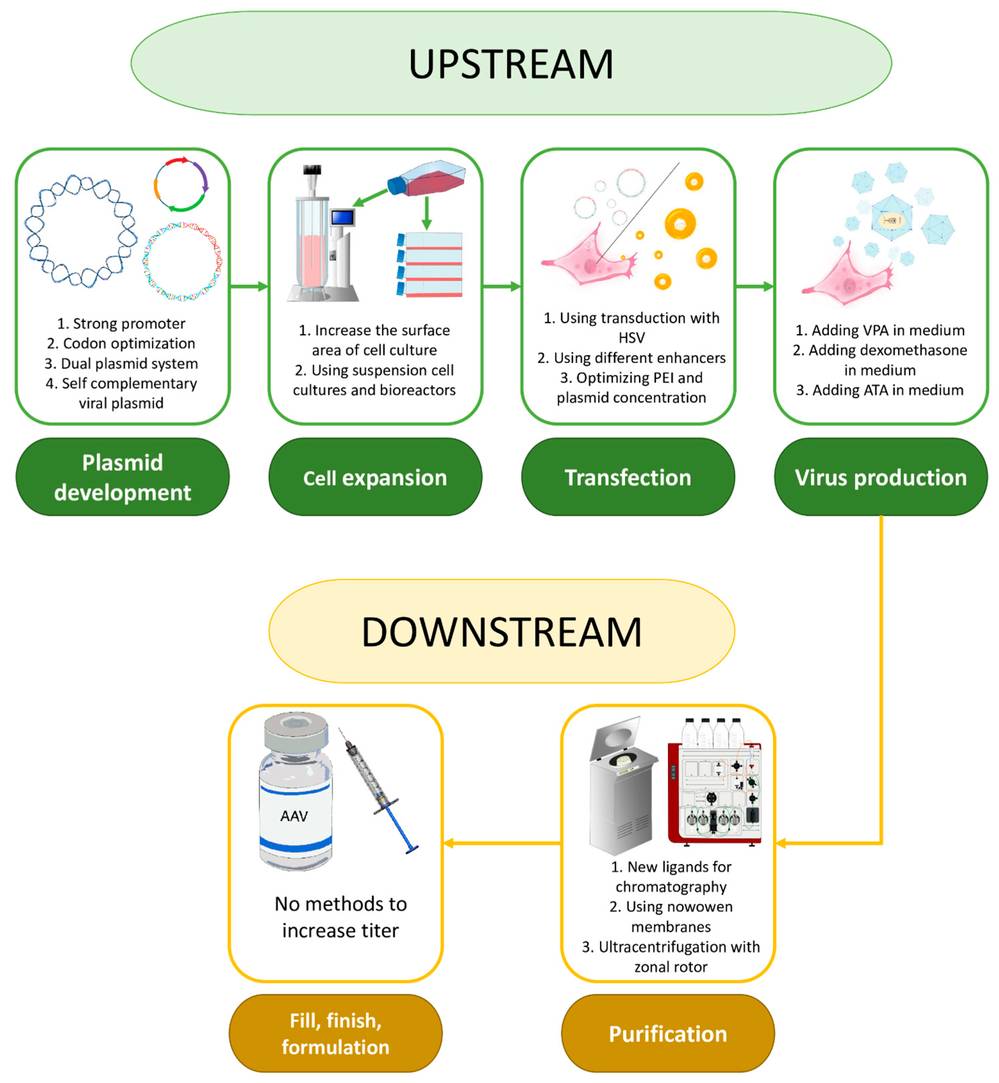 Figure 2. Stages of AAV-based drug development and approaches to increasing vector production at each stage.1
QC should include genome titer, capsid titer when relevant, purity, residual impurity testing, genome integrity, and functional potency. For high-risk or translational studies, deeper analysis of genome species can be useful. Digital or quantitative AAV genome titration provides copy-number information, but it should be interpreted alongside assays that address whether the packaged genome is structurally appropriate and biologically active. A vector that appears strong by qPCR can still underperform if the genome form or functional potency is compromised.
Challenges and Future Perspectives of scAAV
- The future of scAAV is linked to better cassette miniaturization, more informative genome analytics, and smarter comparison with conventional ssAAV.
- The format is valuable when its strengths match the payload and biology, but it should not be selected only because it is perceived as more efficient.
- In some cases, the payload penalty outweighs the expression benefit.
- In others, rapid expression enables a clearer experiment or improves the feasibility of a small-gene application.
- As AAV programs become more sophisticated, the decision between ssAAV and scAAV will increasingly be made using data from pilot production, genome-size modeling, transduction kinetics, potency assays, and tissue-specific expression analysis.
- This integrated approach helps researchers avoid two common mistakes: forcing an oversized cassette into scAAV, or overlooking scAAV when a compact payload could benefit from faster expression.
Overview of What Creative Biolabs Can Provide
Creative Biolabs can support self-complementary AAV projects by helping researchers evaluate whether scAAV is suitable for the payload, expression timeline, target tissue, and analytical requirements. Related support may include compact cassette design, scAAV vector generation, titration, genome analysis, and potency evaluation.
| Research Need | Related Creative Biolabs Support | How It Connects to the Current Resource Topic |
|---|---|---|
| Develop an scAAV strategy for a compact payload | Self-complementary AAV Vector Service | Directly supports projects where rapid expression is desired and cassette size is compatible with scAAV design. |
| Optimize expression cassette architecture | AAV Vector Design for Gene Expression | Relevant for promoter, transgene, polyA, and regulatory element choices under tight scAAV capacity limits. |
| Plan AAV-mediated gene addition | AAV Design for Gene Addition | Useful when a small functional gene can be added using a compact AAV expression cassette. |
| Evaluate gene replacement feasibility | AAV Design for Gene Replacement | Supports programs comparing ssAAV, scAAV, or alternative approaches for replacing a defective gene product. |
| Measure rAAV genome copy number | Titration of rAAV Genome Copy Number | Provides quantitative information needed to compare scAAV production batches and dose planning. |
| Apply quantitative or digital genome titration | Quantitative and Digital Droplet-Based AAV Genome Titration | Useful for precise copy-number analysis when scAAV genome design and batch comparison are critical. |
| Characterize vector quality and genome-related issues | Viral Vector Analysis | Connects scAAV design to vector identity, purity, and analytical interpretation. |
| Assess functional vector performance | Potency of Viral Vector | Helps determine whether faster expression translates into meaningful biological activity. |
For projects that require a tailored AAV strategy, researchers can contact us today to discuss vector design goals, tissue context, payload constraints, and analytical requirements.
Frequently Asked Questions
Q: What is self-complementary AAV?
A: Self-complementary AAV is an AAV vector format that packages complementary DNA sequences within the same molecule. After uncoating, the genome can fold into a double-stranded form, supporting faster expression than conventional single-stranded AAV in selected contexts.
Q: Why can scAAV express faster than ssAAV?
A: Conventional ssAAV often depends on second-strand DNA synthesis before strong transcription. scAAV is designed to bypass much of this step by forming an intramolecular double-stranded template.
Q: What is the main limitation of scAAV?
A: The main limitation is payload capacity. Because the cassette is effectively duplicated in complementary form, usable cassette size is roughly half that of conventional AAV, making compact design essential.
Q: Is scAAV always better than single-stranded AAV?
A: No. scAAV can improve expression kinetics for small cassettes, but ssAAV is more suitable for larger genes and many standard applications. The best format depends on payload size, tissue, route, expression timeline, and QC results.
Q: What should be tested in an scAAV preparation?
A: Important tests include genome copy number, capsid titer when relevant, genome integrity, self-complementary genome form, purity, residual impurities, infectious activity, and functional potency in a relevant assay.
Reference
- Moldavskii D, Gilazieva Z, Fattakhova A, et al. AAV-based gene therapy: opportunities, risks, and scale-up strategies. International Journal of Molecular Sciences, 2025, 26(17): 8282. https://doi.org/10.3390/ijms26178282. Distributed under Open Access license CC BY 4.0, without modification.
