
Gene Therapy for Primary Ciliary Dyskinesia
Introduction
Gene therapy for primary ciliary dyskinesia (PCD) examines whether inherited defects in motile cilia can be addressed by restoring the missing or dysfunctional ciliary protein, correcting the underlying genetic defect, or supplying a transient therapeutic transcript to airway epithelial cells. Because PCD is genetically heterogeneous and primarily affects multiciliated respiratory cells, the field must connect molecular rescue with ciliary motion, mucus clearance, and long-term airway safety. This page reviews disease biology, target selection, airway gene delivery, experimental models, readouts, and translational challenges without treating investigational approaches as approved therapies.
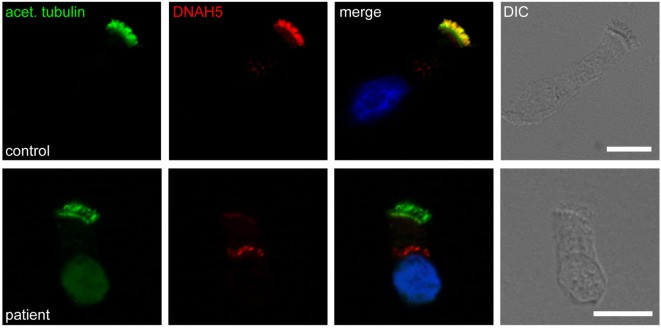 Figure 1. Immunofluorescence localization of DNAH5 in healthy and primary ciliary dyskinesia respiratory epithelial cells.1
Why Gene Therapy Is Being Explored for PCD
PCD is managed mainly through airway clearance, infection control, surveillance of chronic lung disease, and supportive care for associated ear, sinus, fertility, or situs abnormalities. These measures can reduce complications but do not repair the ciliary machinery that initiates impaired mucociliary clearance. A disease-modifying genetic approach is therefore attractive because a corrected or complemented airway epithelium could, in principle, restore ciliary beating at the surface where mucus transport is required.
- The therapeutic target is usually the airway epithelium, not a circulating protein depot.
- The biological endpoint is not only expression of a payload but recovery of coordinated ciliary motion.
- Durability matters because airway epithelium renews over time, yet repeated dosing may be limited by inflammation or immunity.
- Genetic heterogeneity means that one platform may need to be adapted for different genes, payload sizes, and mutation classes.
Disease Biology of PCD: From Ciliary Structure to Airway Disease
Motile cilia line the respiratory tract and generate coordinated beating that moves mucus, trapped particles, and microorganisms out of the airways. Their movement depends on the 9+2 axonemal structure, outer and inner dynein arms, radial spokes, nexin-dynein regulatory complexes, central-pair components, and assembly factors. Variants in genes encoding these components can reduce beat frequency, create abnormal beat patterns, or prevent effective ciliary motion even when cilia are present.
The result is impaired mucociliary clearance beginning early in life. Patients can experience chronic wet cough, recurrent respiratory infections, chronic rhinosinusitis, otitis media, and progressive bronchiectasis. Some genes also affect left-right patterning during development, leading to situs inversus or other laterality defects. A genetic therapy concept must therefore be evaluated in a target tissue that recapitulates motile-cilia assembly and function, not only in a convenient expression system.
Genetic Targets and Payload Selection For PCD Therapy
PCD is not one molecular disease. More than 50 genes have been associated with motile-cilia dysfunction, and the therapeutic payload may be limited by the size of the coding sequence. DNAI1 is relatively suitable for inhaled mRNA replacement, whereas very large genes such as DNAH5 raise packaging and expression-cassette challenges. Target prioritization should begin with genetic diagnosis, expected protein function, disease severity, payload size, and the feasibility of measuring rescue.
| Target group | Examples | Research implication for gene therapy |
|---|---|---|
| Dynein-arm components | DNAH5, DNAI1, DNAI2 | Replacement or gene addition must restore axonemal motor activity and coordinated ciliary beating. |
| Dynein assembly factors | DNAAF1, DNAAF2, LRRC6 | A single assembly factor may affect multiple dynein-arm proteins, so rescue can be assessed by protein localization and beat pattern. |
| Microtubule organization and radial spoke genes | CCDC39, CCDC40, RSPH1, RSPH4A | Payload size and structural rescue must be evaluated carefully because defects may alter ciliary ultrastructure. |
| Genes with atypical ultrastructure | DNAH11 | Normal-looking cilia by transmission electron microscopy may still require functional assays to demonstrate rescue. |
Therapeutic Strategies Under Investigation
The phrase PCD gene therapy can refer to several different approaches. mRNA replacement supplies a transient transcript encoding a missing ciliary protein and may be attractive when repeatable inhaled dosing is feasible. Gene addition delivers DNA that expresses the functional protein for a longer period, but vector capacity and epithelial turnover become important. Genome editing aims to repair or bypass disease-causing variants, yet efficient editing of enough relevant airway epithelial cells remains a major barrier.
| Strategy | Potential role in PCD | Main limitation |
|---|---|---|
| Inhaled mRNA replacement | Temporarily supplies a ciliary protein such as DNAI1 to airway cells and can be adjusted or repeated if delivery is tolerated. | Expression is transient; delivery through mucus and inflamed epithelium must be efficient enough to restore ciliary motion. |
| Viral gene addition | May support longer expression of a corrected coding sequence in airway epithelial cells. | Large ciliary genes may exceed packaging capacity, and repeated dosing can be limited by immune responses. |
| Non-viral DNA or RNA delivery | May reduce vector-immunity concerns and support adaptable payload design. | Cell entry, endosomal escape, mucus penetration, and durable expression remain difficult in the airway. |
| Genome editing | Could correct a pathogenic allele or install a functional sequence if delivered to appropriate progenitor cells. | Requires high on-target efficiency, low off-target activity, and clear evidence that edited cells persist and differentiate. |
| Ex vivo or regenerative approaches | Patient-derived or corrected airway cells may support modeling and future cell-based repair concepts. | Engraftment, epithelial integration, scale, and safety remain research-stage challenges. |
Airway Delivery Is the Central Technical Barrier
Non-viral System
Unlike liver-directed therapy, PCD requires payload access to the airway surface. Nebulized or aerosolized delivery must cross mucus, avoid excessive innate immune activation, enter the correct epithelial population, and express the protein in a cell type capable of building motile cilia. Lipid nanoparticle systems and other non-viral carriers can be redesigned for nucleic-acid payloads, but their airway performance depends on particle stability, mucus penetration, epithelial uptake, and tolerability after repeated administration.
Viral System
For viral systems, AAV capsid modification and tissue- or cell-specific design may help address tropism, but AAV packaging capacity is a practical limitation for large ciliary genes. Lentiviral or other vectors may support larger payloads, yet integration profile, manufacturing, epithelial tropism, and pulmonary safety require careful evaluation. No delivery platform should be chosen before defining the target gene, payload size, intended duration, and repeat-dosing plan.
Disease Models and Functional Readouts
PCD development programs need models that preserve ciliated epithelial differentiation. Air-liquid interface cultures from patient-derived airway basal cells are particularly informative because they can generate multiciliated cells and permit measurement of ciliary beat frequency, beat pattern, protein localization, and mucociliary transport. Gene-edited isogenic controls help distinguish mutation-specific rescue from donor-to-donor variability.
Animal models can support biodistribution, repeat-dose, inflammation, and airway-function studies, but species differences in airway anatomy and ciliary biology can complicate translation. Therefore, a strong package usually combines human cell models, molecular assays, imaging, functional ciliary readouts, and safety assays rather than relying on a single model.
Research question and recommended PCD model
| Research question | Recommended model | Most informative readouts |
|---|---|---|
| Can the missing axonemal protein be restored? | Patient-derived air-liquid interface culture | Localization, ultrastructure, beat waveform |
| Does editing correct the causal allele? | Isogenic organoid or basal-cell pair | Allele spectrum, off-targets, differentiation |
| Can an aerosol reach the intended airway region? | Large-animal deposition study | Regional biodistribution, dose recovery, tolerability |
| Is correction durable during epithelial renewal? | Long-term basal-cell differentiation model | Lineage contribution, ciliation, transport over time |
Study Design Considerations for Translational Research
A translational PCD program should define the minimum level of ciliary rescue expected to produce a meaningful effect on mucociliary clearance. It should also distinguish payload expression from functional correction. For example, transcript or protein detection alone is not sufficient if cilia remain immotile or poorly coordinated. When editing is used, nuclease activity measurement, allele-resolved sequencing, structural-variant analysis, and off-target assessment become essential.
| Research question | Preferred readout | Why it matters |
|---|---|---|
| Did the payload reach target epithelial cells? | Vector genome, RNA level, protein localization, single-cell or spatial assays | Confirms delivery to the cell type that forms motile cilia. |
| Was ciliary structure rescued? | Immunofluorescence, transmission electron microscopy, super-resolution imaging | Shows whether the missing component is correctly localized and assembled. |
| Was ciliary motion restored? | Ciliary beat frequency, beat pattern, high-speed video microscopy | Connects molecular correction to the defining functional defect. |
| Does epithelial clearance improve? | Mucociliary transport assays in ALI culture or ex vivo models | Links ciliary rescue to airway-level function. |
| Is the platform tolerable? | Cytokines, epithelial integrity, histopathology, biodistribution | Controls pulmonary inflammation, off-target exposure, and repeat-dose risk. |
Clinical Translation: Promise, Boundaries, and Evidence Needs
As of June 2026, no gene therapy for PCD has been approved. Early investigational efforts, including inhaled mRNA concepts for defined genotypes, are important because they test whether airway delivery can reach relevant cells and whether a transient payload can produce measurable biological rescue. Yet PCD remains a difficult target because the affected epithelium is exposed to mucus, infection, inflammation, and ongoing turnover.
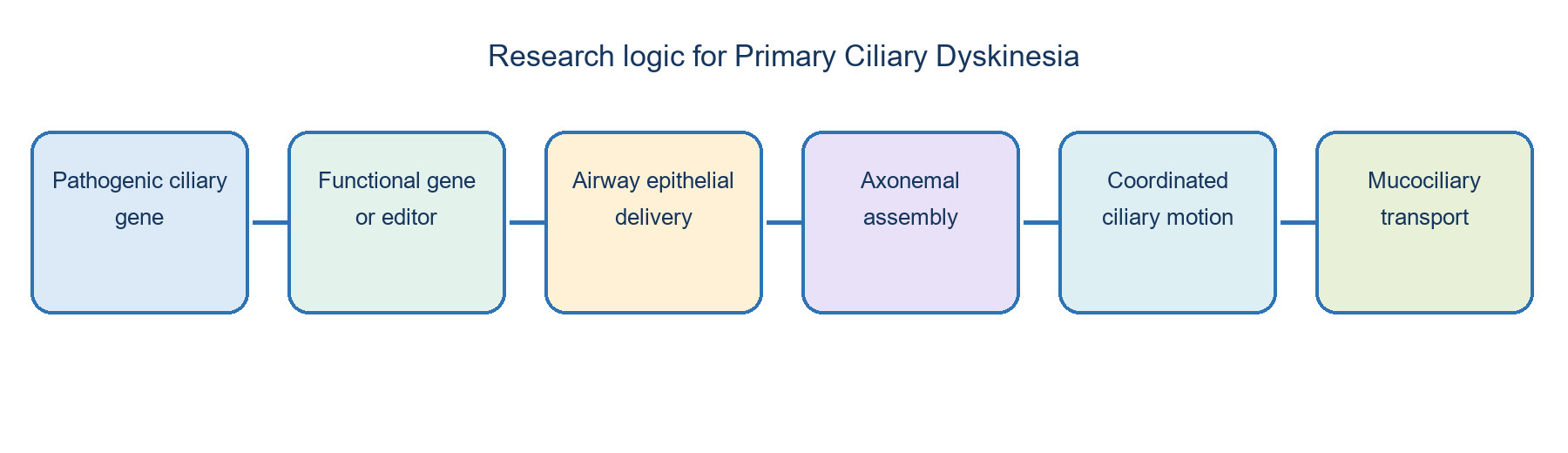 Figure 2. Research logic for Primary Ciliary Dyskinesia.
A credible development plan should avoid broad claims such as restoring normal lung health from expression data alone. Instead, it should move stepwise from target engagement to ciliary assembly, ciliary motion, epithelial clearance, pulmonary safety, and durability or repeat-dose feasibility. Genotype-specific development may be the most realistic path for early programs, while broader platforms will require modular payload engineering and standardized functional assays.
Overview of What Creative Biolabs Can Provide
PCD gene therapy research requires coordinated decisions about payload design, airway delivery, ciliated-cell models, functional readouts, and safety assessment. Creative Biolabs supports research-stage programs that need to evaluate whether a gene, mRNA, vector, or editing strategy can restore disease-relevant biology in airway systems. The following related capabilities were selected from the GT website link inventory because they directly match the technical decisions discussed on this page.
| Research Need | Related Creative Biolabs Support | How It Connects to the Current Resource Topic |
|---|---|---|
| Airway-relevant vector selection | Tissue/Cell Specific Targeting Advanced Adeno-Associated Virus Vector Service | Supports capsid and targeting decisions for epithelial cell access. |
| Mutation-specific correction | CRISPR assisted Gene Editing Solutions | Supports nuclease, base-editing, or related correction strategies. |
| Isogenic PCD model generation | Disease Modeling related Gene Editing Service | Creates edited disease and corrected cell pairs for mechanism and rescue studies. |
| Vector quality and functional testing | Viral Vector Analysis | Connects identity, titer, purity, and potency to airway assay performance. |
| Mechanism-linked potency assays | Potency of Viral Vector | Supports assays based on protein localization, ciliary motion, or transport. |
Creative Biolabs can help translate a PCD research hypothesis into a defined payload, vector or formulation, disease-model, and analytical workflow. Contact us today to discuss the genotype, target airway compartment, and functional evidence package required for your project.
Frequently Asked Questions
Q: Is there an approved gene therapy for primary ciliary dyskinesia?
A: No gene therapy for PCD was approved as of June 2026. Several gene and RNA therapy concepts are being investigated, including inhaled mRNA approaches for defined genotypes, but they remain investigational and require clinical validation.
Q: Why is PCD harder to target than some liver-directed genetic diseases?
A: PCD requires delivery to airway epithelial cells that form motile cilia. The payload must cross mucus, avoid excessive inflammation, reach relevant cell populations, and restore coordinated ciliary motion. In contrast, some liver-directed therapies can use systemic delivery to hepatocytes that secrete a therapeutic protein.
Q: Which PCD genes are most suitable for early gene therapy studies?
A: Genes with a clear loss-of-function mechanism, measurable cellular rescue, and manageable payload size are generally more tractable. DNAI1 has been explored for mRNA replacement, while very large genes such as DNAH5 create additional vector-capacity and expression challenges.
Q: Is mRNA therapy the same as permanent gene therapy?
A: No. mRNA therapy supplies a transient transcript that cells translate into protein. It does not change genomic DNA and usually requires repeat administration. Its advantages include non-integrating exposure and payload flexibility, while its limitations include transient expression and delivery challenges.
Q: What models are useful for testing PCD gene therapy?
A: Patient-derived airway epithelial cells differentiated at an air-liquid interface are highly useful because they generate multiciliated cells. Isogenic gene-corrected controls, organoids, and selected animal models can add information on rescue, airway delivery, inflammation, biodistribution, and safety.
Q: What readouts show that a PCD therapy is working?
A: Important readouts include payload delivery, ciliary protein localization, ciliary beat frequency and beat pattern, mucociliary transport, epithelial integrity, inflammatory markers, and durability or repeat-dose response. Expression alone is not enough if ciliary function is not restored.
Reference
- Mirra V, Werner C, Santamaria F. Primary Ciliary Dyskinesia: An Update on Clinical Aspects, Genetics, Diagnosis, and Future Treatment Strategies. Frontiers in Pediatrics. 2017;5:135. https://doi.org/10.3389/fped.2017.00135. Distributed under Open Access license CC BY 4.0, without modification.
