
Gene Therapy for Hemophilia
Introduction
Gene therapy for hemophilia seeks sustained endogenous production of coagulation factor VIII (FVIII) or factor IX (FIX) after a single administration, most commonly through liver-directed adeno-associated virus (AAV) delivery. The field provides clinical proof that modest factor expression can reduce bleeding, but it also exposes challenges in patient selection, immune management, manufacturing, durability, and long-term safety. This page reviews the biological rationale, hemophilia-directed AAV research, potency assessment, and emerging alternatives.
Disease Biology and the Therapeutic Threshold
Hemophilia A results from pathogenic F8 variants and FVIII deficiency; hemophilia B results from F9 variants and FIX deficiency. Severity is traditionally classified by residual factor activity, with severe disease below 1% of normal. Replacement factor, extended-half-life products, and nonfactor prophylaxis can provide effective control, but treatment remains chronic and breakthrough bleeding, inhibitor development, access, and treatment burden vary among patients.
Gene transfer aims to shift a person from severe deficiency toward a milder phenotype by enabling hepatocytes to secrete functional factor into the circulation. Complete normalization is not necessary for meaningful benefit, yet excessive expression may create thrombotic risk. The desired range must account for assay variability, individual bleeding phenotype, activity level, concomitant therapies, and the possibility that expression changes over time.
Why Liver-Directed AAV Became the Leading Strategy
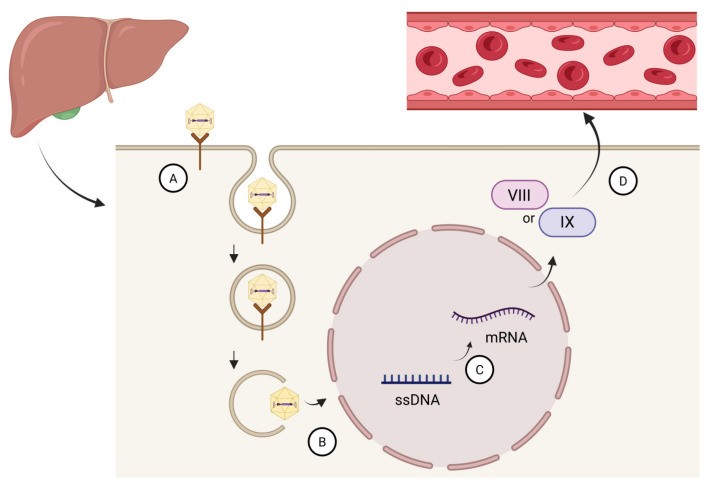 Figure 1. Conceptual framework for AAV-mediated hepatocyte transduction and coagulation-factor expression in hemophilia.1
01. Hepatocyte Transduction and Episomal Persistence
Hepatocytes efficiently synthesize and secrete plasma proteins and can maintain episomal AAV genomes for years because adult liver turnover is relatively low. Systemic infusion distributes vector to the liver, where a hepatocyte-active promoter drives FVIII or FIX expression. Capsid choice, dose, pre-existing antibodies, innate sensing, and cellular immune responses influence transduction and persistence.
02. Immunity, Liver Injury, and Redosing
AAV does not usually integrate as its primary mechanism, which limits but does not eliminate integration-related concerns. Episomal genomes can be diluted during liver growth, making pediatric treatment difficult, and neutralizing antibodies generally prevent straightforward redosing with the same capsid. Elevation of liver enzymes may accompany loss of expression and is often managed with immunosuppression, although responses vary and the mechanism is not fully predictable.
Engineering FVIII and FIX Expression Cassettes
FVIII Cassette Constraints
F8 is too large for full-length packaging in AAV, so hemophilia A vectors commonly use B-domain-deleted FVIII constructs. Codon optimization and regulatory elements increase expression but must be evaluated for transcript integrity, protein quality, cellular stress, and immunogenicity. FVIII is less efficiently secreted than FIX and is naturally associated with endothelial biology, even though hepatocyte expression can provide therapeutic circulating protein.
FIX Expression and the Padua Variant
FIX fits more comfortably within AAV. The high-specific-activity FIX Padua variant can increase functional output at a lower protein concentration, enabling lower vector doses, but expression must remain within a safe range. Potency assays should distinguish antigen quantity from coagulation activity and consider reagent-dependent differences among one-stage clotting and chromogenic methods.
Hemophilia A and B gene-transfer considerations
| Feature | Hemophilia A | Hemophilia B |
|---|---|---|
| Missing factor | FVIII | FIX |
| AAV cassette challenge | Large F8 requires B-domain deletion and compact regulation | F9 fits more readily within AAV |
| Expression engineering | Codon optimization and secretion efficiency | High-specific-activity FIX variants may reduce dose |
| Key assay issue | One-stage versus chromogenic FVIII discordance | Activity, antigen, and thrombogenicity balance |
Preclinical Models and Potency Readouts
Hemophilia mice provide rapid comparison of cassettes, dose response, and hemostatic correction. Dogs with naturally occurring hemophilia have been especially informative for long-term expression and bleeding phenotype, while nonhuman primates support capsid selection, biodistribution, immunology, and toxicology. Species differences in promoter activity, capsid tropism, and immune responses mean that human dose prediction remains uncertain.
A mechanism-linked potency strategy includes vector-genome integrity, transduction, factor antigen, coagulation activity, and functional clotting rescue. For FVIII, secretion and cellular stress may require particular attention; for FIX Padua, specific activity and thrombogenicity are important. Biodistribution, shedding, liver histopathology, anti-capsid and anti-transgene immunity, and integration-site analysis contribute to the safety package.
Evidence package for a liver-directed program
| Question | Representative readouts | Decision supported |
|---|---|---|
| Is the vector intact and active? | Genome integrity, capsid content, transduction, factor expression | Lot quality and dose selection |
| Is the factor functional? | Clotting activity, thrombin generation, bleeding challenge | Mechanism-linked potency |
| Where does the vector go? | Biodistribution, shedding, liver cell transduction | Targeting and environmental risk |
| Is expression acceptably safe? | Liver enzymes, histology, immunity, integration analysis | Clinical monitoring and follow-up |
Durability and Next-Generation Approaches for Hemophilia Therapy
Long-term factor expression differs among individuals and products. Hemophilia A studies have shown declining mean FVIII activity in some cohorts, whereas FIX expression after certain hemophilia B vectors has appeared more stable over comparable periods. Cross-study comparisons are hazardous because assays, constructs, doses, populations, and follow-up differ. Durability should be described with product-specific longitudinal data rather than assumed from AAV persistence.
Next-generation work includes engineered capsids, lower-dose high-expression cassettes, immune-evasion strategies, transient immunomodulation, nonviral delivery, and genome editing. Targeted insertion of F8 or F9 could enable endogenous or durable expression and potentially address redosing, but editing efficiency and genomic safety are decisive. Ex vivo approaches and cell therapies remain exploratory. Each alternative should be compared with increasingly effective prophylactic standards.
Study Design Priorities and Development Controls for Hemophilia
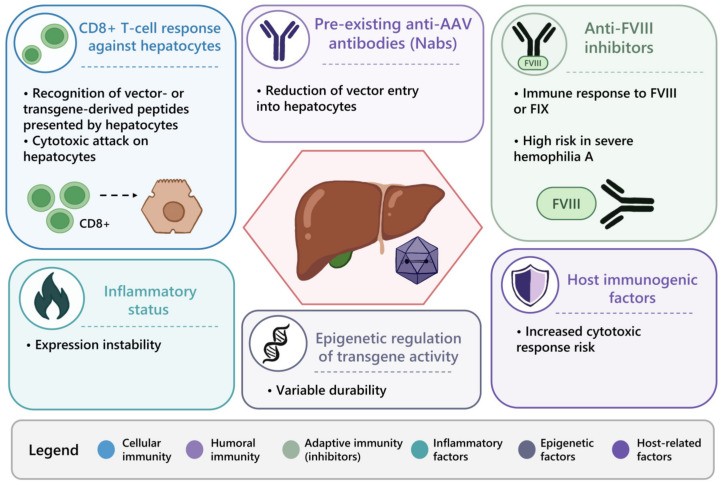 Figure 2. Key immunological barriers affecting AAV delivery, transduced hepatocytes, and factor expression.1
-
Define a Safe and Therapeutic Factor-Activity Target
A hemophilia vector program should establish a target factor-activity range before optimizing expression. Higher activity is not automatically better, particularly for high-specific-activity FIX variants or recipients with additional thrombotic risk. AAV vector design for gene therapy should integrate capsid dose, promoter strength, coding sequence, regulatory elements, and the expected assay response. -
Evaluate Liver Tropism, Biodistribution, and Cell-Specific Exposure
The liver is both the production organ and a principal safety focus. Capsid tropism, hepatocyte uptake, innate sensing, pre-existing liver disease, and adaptive immunity can influence expression. Tissue-specific AAV targeting should be evaluated with biodistribution and cell-type-resolved methods rather than whole-liver vector genomes alone. Kupffer cells, endothelial cells, and extrahepatic tissues may receive vector without contributing therapeutic factor, and their exposure can still influence inflammation or toxicology. -
Separate Immune Risks Across Capsid, Transgene, and Liver Responses
Preclinical immune studies should distinguish anti-capsid antibodies, capsid-specific T-cell responses, anti-FVIII or anti-FIX inhibitors, and nonspecific liver inflammation. Each has a different implication for eligibility, expression loss, and clinical management. Viral vector safety evaluation should include complement activation, cytokines, liver pathology, and dose-related findings. Animal immune responses do not perfectly predict humans, so clinical monitoring plans should be justified even when preclinical tolerance appears favorable. -
Standardize Coagulation Assays for Reliable Longitudinal Interpretation
Analytical methods can materially change the apparent treatment effect. One-stage and chromogenic assays may report different FVIII activity after gene transfer, and thromboplastin or factor-deficient plasma reagents can influence results. Viral vector analysis should be paired with validated coagulation assays and reference standards.
Overview of What Creative Biolabs Can Provide
Research on hemophilia requires coordinated vector engineering, disease-relevant models, functional assays, and analytical controls. Creative Biolabs can support research-stage programs by matching the delivery platform and experimental evidence to the biological objective described on this page.
Relevant research support
| Research Need | Related Creative Biolabs Support | How It Connects to the Current Resource Topic |
|---|---|---|
| Hemophilia-specific vector concept | Hemophilia A/B | Supports liver-directed FVIII and FIX cassette planning. |
| Liver-targeted AAV design | Liver Directed Disease | Connects capsid, promoter, and systemic delivery choices to hepatocyte expression. |
| Gene-addition cassette design | AAV Design for Gene Addition | Supports compact factor-expression cassettes and regulatory elements. |
| Tissue-specific expression control | Specific Promoter Driven Targeting of AAV Vector | Helps restrict and optimize expression in the intended cell population. |
| Vector quality characterization | Viral Vector Analysis | Evaluates identity, titer, purity, safety, and functional attributes. |
| Mechanism-linked potency testing | Potency of Viral Vector | Connects transduction and factor expression to coagulation activity. |
Creative Biolabs can help convert a disease hypothesis into a defined vector, model, and assay plan. Contact us today to discuss the intended cell target, mechanism of action, and evidence package.
Frequently Asked Questions
Q: Are gene therapies approved for hemophilia?
A: Yes. Regulatory authorities have approved AAV gene therapies for selected adults with hemophilia A or B. Product availability, eligibility, and recommendations can change, so current prescribing information and local guidance must be checked.
Q: Does gene therapy cure hemophilia permanently?
A: It can provide sustained factor expression and major reductions in bleeding for some recipients, but durability varies and lifelong cure should not be assumed. Long-term monitoring remains necessary.
Q: Why are liver enzymes monitored after treatment?
A: Aminotransferase elevation can indicate liver inflammation and may accompany declining transgene expression. Monitoring guides investigation and immunosuppressive management while also assessing other causes of liver injury.
Q: What is the difference between factor antigen and factor activity?
A: Antigen measures the amount of FVIII or FIX protein, whereas activity assays measure its coagulation function. Engineered variants and assay reagents can produce discordant results, so both may be informative.
Q: Can children receive current liver-directed AAV therapy?
A: Current approved use is generally focused on adults. Liver growth can dilute nonintegrating AAV genomes, and pediatric risk-benefit questions include durability, immunity, consent, and rapidly improving standard care.
Reference
- Serrafi A, Wasilewski A, Wawrzkiewicz A, et al. Gene Therapy in Hemophilia: Clinical Advances, Immunological Challenges, and Emerging Therapeutic Perspectives. International Journal of Molecular Sciences. 2026;27(9):3922. https://doi.org/10.3390/ijms27093922. Distributed under Open Access license CC BY 4.0, without modification.
