
Gene Therapy for Wiskott-Aldrich Syndrome
Introduction
Wiskott-Aldrich syndrome (WAS) is an X-linked inborn error of immunity caused by pathogenic variants in the WAS gene, which encodes Wiskott-Aldrich syndrome protein (WASp). Because WASp controls actin remodeling in hematopoietic and immune cells, the disease links thrombocytopenia, eczema, recurrent infection, immune dysregulation, and malignancy risk. Gene therapy for WAS aims to restore functional WASp expression in autologous hematopoietic stem and progenitor cells so that corrected blood and immune lineages can repopulate the patient. This page reviews the disease biology, ex vivo HSPC rationale, immune and platelet readouts, safety considerations, and research-development choices behind lentiviral vector development for Wiskott-Aldrich syndrome.
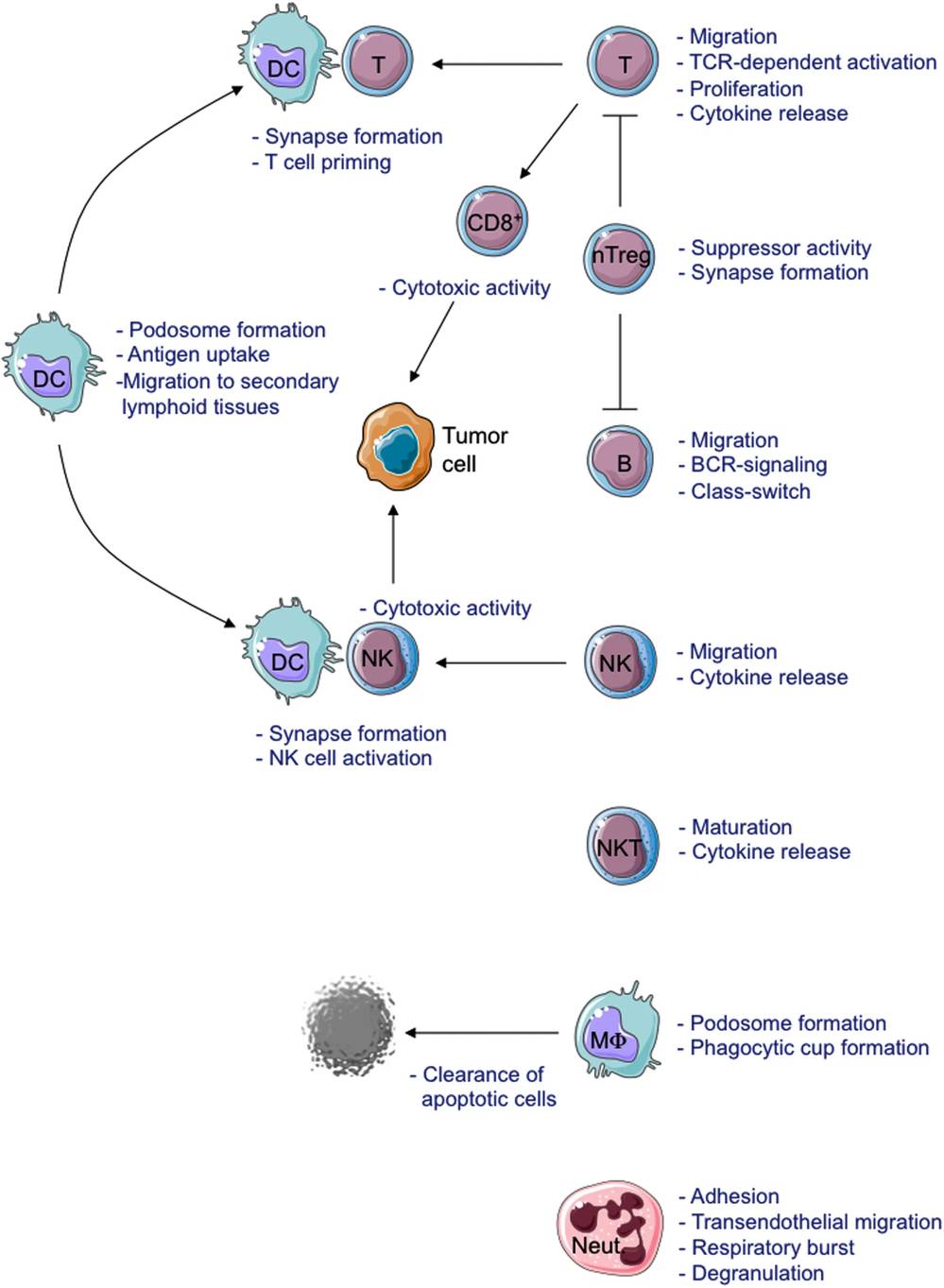 Figure 1. Schematic view of cellular defects described in WASP-deficient cells.1
Why WAS Biology Requires More Than a Single Immune Readout
WAS is not only an infection-susceptibility disorder. WASp deficiency affects T cells, B cells, natural killer cells, dendritic cells, macrophages, and platelets through impaired cytoskeletal organization and immune synapse formation. Patients can show small platelet size, bleeding, eczema, autoimmunity, inflammatory complications, and increased lymphoma risk. A gene therapy study therefore needs a readout set that captures both hematologic and immune reconstitution. Measuring transgene marking alone is not enough; researchers must ask whether restored WASp expression changes cell behavior in relevant lineages.
The recent approval of WASKYRA, an autologous CD34+ cell product transduced ex vivo with a lentiviral vector encoding the human WAS gene, has made WAS a particularly important case study for rare immunodeficiency gene therapy. Its development illustrates how small patient populations, severe disease biology, donor limitations, and long-term follow-up requirements shape the evidence package. For research groups, the lesson is that a WAS program should be built around mechanism-specific readouts rather than a generic vector-development checklist.
Ex Vivo HSPC Gene Therapy Rationale
The strongest rationale for WAS gene therapy is that most affected lineages arise from hematopoietic stem cells. If autologous CD34+ cells can be modified to express functional WASp, they may generate corrected progeny across immune and platelet lineages after reinfusion. Autologous therapy avoids graft-versus-host disease and eliminates the need for an HLA-matched donor, but it also places strict demands on the manufacturing process. CD34+ cells must be collected, enriched, transduced, tested, and returned while preserving engraftment potential.
Lentiviral vectors are commonly used because they can transduce non-dividing or slowly dividing HSPCs and support stable expression. For WAS, expression control is especially important. Overexpression, insufficient expression, or expression in inappropriate contexts may affect immune-cell behavior or complicate interpretation. Promoter selection, vector copy number, transduction conditions, and cell culture duration are therefore not merely technical settings; they are central design variables that influence both efficacy and safety.
Comparing Research Priorities in WAS Gene Therapy
| Research question | Relevant biology | Useful readouts |
|---|---|---|
| Does gene transfer restore WASp expression? | WASp is required for actin-dependent immune-cell function | WASp protein expression by lineage, vector copy number, transgene transcript level |
| Are T-cell functions improved? | T cells require actin remodeling for immune synapse formation and activation | T-cell activation, proliferation, cytokine secretion, migration, immune synapse morphology |
| Are platelet-related phenotypes addressed? | WAS is associated with thrombocytopenia and small platelets | Platelet count and size in model systems, megakaryocyte differentiation, bleeding-relevant markers |
| Is immune dysregulation reduced? | Autoimmunity and inflammation reflect multi-lineage immune imbalance | B-cell phenotype, regulatory T-cell markers, inflammatory cytokines, macrophage or dendritic-cell function |
Model Selection and Translation Strategy in WAS Gene Therapy
WAS gene therapy research can use several model layers. Patient-derived CD34+ cells are most informative when available, especially for transduction efficiency, lineage differentiation, and WASp expression. Healthy donor cells can support process optimization and vector comparison, while edited or knockdown cell models can help isolate mechanism. Immune-cell differentiation models allow researchers to examine lineage-specific rescue before moving into more complex systems. No single model answers every question, so model selection should follow the research decision that must be made.
For translational programs, comparability is critical. A change in promoter, vector backbone, transduction enhancer, culture medium, or cryopreservation approach can shift vector copy number, lineage output, or potency. A practical development plan should define which assays are release-like, which are mechanistic, and which are exploratory. This prevents a common problem in rare-disease programs: collecting many interesting measurements without a clear relationship to product performance or safety.
Safety and Long-Term Follow-up Considerations for WAS Gene Therapy
- Assessing Vector Safety and Long-Term Risk
The central safety questions for WAS gene therapy include insertional mutagenesis risk, clonal expansion, conditioning toxicity, immune dysregulation, and insufficient immune recovery. Integration-site analysis and vector copy number assessment help characterize the integrating vector component. Product testing also needs to address sterility, mycoplasma, replication-competent lentivirus, identity, viability, and potency. In rare immunodeficiency diseases, long-term follow-up is especially important because benefit and risk may unfold over years as corrected clones contribute to immune and hematopoietic compartments.
- Linking Gene Transfer to Lineage-Specific Immune Function
Researchers should avoid overclaiming early assay results. WASp expression in bulk cells does not automatically demonstrate broad immune correction, and improvement in one lineage may not predict platelet or myeloid recovery. The strongest research packages connect gene transfer to lineage-specific function, show preserved HSPC quality, and include a safety plan appropriate for an integrating vector. This integrated view is what makes WAS a sophisticated and instructive model for ex vivo HSPC gene therapy.
Future Directions for WAS Gene Therapy Research
Future work in WAS is likely to focus on optimizing conditioning intensity, refining potency assays, improving access for very young patients, and better understanding clonal dynamics after autologous HSPC gene therapy. Genome-editing concepts may also be explored for selected research questions, but precise correction of WAS in long-term HSPCs must balance efficiency, DNA damage response, and functional rescue. For now, ex vivo lentiviral HSPC gene therapy remains the most established research and translational framework for this disease area.
Development Variables That Shape a WAS HSPC Product
| Variable | Why it matters | Risk if poorly controlled |
|---|---|---|
| Vector design | Determines expression level, cell-type behavior, and insert size feasibility | Weak expression may not rescue function; excessive expression may complicate biology |
| Transduction conditions | Influence vector copy number, viability, and preservation of primitive HSPCs | Low marking can reduce benefit; high dose may increase integration burden |
| Cell-processing time | Affects stemness and manufacturing practicality | Prolonged culture can reduce long-term repopulating potential |
| Conditioning regimen model | Creates marrow niche for corrected cells but contributes toxicity | Insufficient conditioning may reduce engraftment; excessive intensity may not be acceptable |
Functional Readouts for WAS-Related Immune Reconstitution
| Cell type | Functional concern | Example assays |
|---|---|---|
| T cells | Activation, proliferation, immune synapse organization | CD69/CD25 expression, proliferation dye dilution, cytokine profile, synapse imaging |
| B cells | Antibody response and immune regulation | B-cell subset phenotyping, class-switch markers, immunoglobulin-related readouts |
| NK cells | Cytotoxic synapse and killing function | Degranulation, target-cell killing, actin polarization |
| Myeloid cells | Migration, antigen presentation, inflammatory signaling | Dendritic-cell maturation, macrophage response, chemotaxis, cytokine release |
Practical Planning Checklist for WAS Gene Therapy Research
A WAS gene therapy study should be planned around three core questions: which lineages need to be evaluated, which samples should be used, and which assays define potency versus safety.
- Lineage coverage: Bulk CD34+ modification is not enough. Study design should consider T cells, B cells, myeloid cells, and megakaryocytic progeny, depending on whether the goal is vector optimization, WASp-expression mapping, immune rescue, or platelet-related evaluation.
- Sample strategy: Patient-derived cells are valuable but limited. Healthy donor CD34+ cells, engineered systems, and staged differentiation models can first be used to optimize vectors, culture conditions, and analytical methods before rare WAS samples are applied.
- Potency vs. safety: Potency assays may focus on WASp expression, immune synapse formation, chemotaxis, cytokine response, platelet-related features, and lineage recovery. Safety evaluation should separately address vector copy number, integration patterns, replication-competent lentivirus risk, clonal expansion, and product stability.
This planning framework keeps WAS research disease-specific, linking actin remodeling, immune-cell dysfunction, platelet abnormalities, and autologous HSPC correction rather than relying on generic immunodeficiency language.
Overview of What Creative Biolabs Can Provide
Creative Biolabs can support WAS-related research by aligning lentiviral HSPC vector design, immune-function evaluation, and analytical testing with the specific biology of WASp deficiency. The services below are selected from the GT Excel because they connect directly to WAS gene restoration, immune-cell function, HSPC processing, or vector safety.
| Research Need | Related Creative Biolabs Support | How It Connects to the Current Resource Topic |
|---|---|---|
| Disease-specific WAS gene-transfer design | Lentiviral Vector Development for Wiskott-Aldrich Syndrome | Supports ex vivo lentiviral vector concepts for restoring WAS expression in hematopoietic lineages. |
| HSPC-centered ex vivo workflow | Lentiviral Vector Development for Hematopoietic Stem Cell-based Gene Therapy | Connects CD34+ cell processing, transduction conditions, and stemness-preserving development to WAS research. |
| Immune-cell biology and vector response | Lentiviral Vector Design for Immune Modulation | Useful when WAS programs need immune-cell-specific expression or functional modulation considerations. |
| Vector refinement for expression and consistency | Lentiviral Vector Optimization Service | Helps evaluate promoter, cassette, pseudotyping, and process parameters affecting WASp expression and vector performance. |
| Vector material for in vitro studies | Custom Lentiviral Vector Production Service | Provides LV material for cell-model optimization, immune-cell assays, and comparative vector testing. |
| Analytical testing of vector identity and potency | Viral Vector Analysis | Supports identity, titer, purity, safety, and potency testing relevant to integrating vector products. |
| Lineage and immune response profiling | RNA Profiling Service | Can help evaluate immune-cell transcriptional changes after WASp restoration or vector exposure. |
| Lentiviral safety testing | Safety Determination of Lentiviral Vector Service | Addresses RCL-related safety concerns and other lentiviral-vector risk evaluations. |
For projects that require disease-specific design, custom assay planning, or linked vector analytics, contact us today to discuss a fit-for-purpose research plan with Creative Biolabs.
Frequently Asked Questions
Q: What gene is targeted in Wiskott-Aldrich syndrome gene therapy?
A: Most WAS gene therapy strategies aim to restore functional WAS expression in autologous HSPCs so that blood and immune cells can produce Wiskott-Aldrich syndrome protein.
Q: Why is lentiviral HSPC gene therapy relevant to WAS?
A: WAS affects hematopoietic lineages, and lentiviral vectors can stably modify CD34+ HSPCs ex vivo. Corrected HSPCs may then generate multiple immune and platelet-related lineages after reinfusion.
Q: Which functional assays are important for WAS research?
A: Important assays include WASp expression, T-cell activation and proliferation, NK-cell cytotoxicity, myeloid-cell migration or cytokine response, platelet or megakaryocyte-related readouts, and vector safety testing.
Q: Can one assay prove that a WAS gene therapy strategy works?
A: No. WAS involves multiple lineages and immune functions. A convincing research package should combine molecular, cellular, functional, and safety readouts.
Q: What are major risks to consider in WAS gene therapy development?
A: Key risks include insertional effects, excessive or insufficient transgene expression, loss of HSPC stemness during processing, conditioning-related toxicity, incomplete immune recovery, and long-term clonal behavior.
Reference
- Catucci M, Castiello M C, Pala F, et al. Autoimmunity in Wiskott–Aldrich syndrome: an unsolved enigma. Frontiers in immunology, 2012, 3: 209. https://doi.org/10.3389/fimmu.2012.00209. Distributed under Open Access license CC BY 4.0, without modification.
