
Gene Therapy for SCID
Introduction
Severe combined immunodeficiency (SCID) refers to a group of life-threatening inborn errors of immunity in which T-cell development or function is profoundly impaired, often with additional B-cell or NK-cell defects depending on the genotype. Gene therapy for SCID is built around a clear principle: genetically correct autologous hematopoietic stem and progenitor cells so they can generate functional immune lineages. This page explains how ADA-SCID, X-linked SCID (SCID-X1), and related forms shape gene therapy design, why immune reconstitution must be measured over time, and how lentiviral vector development for ADA-SCID and other HSPC-oriented strategies are evaluated in research settings.
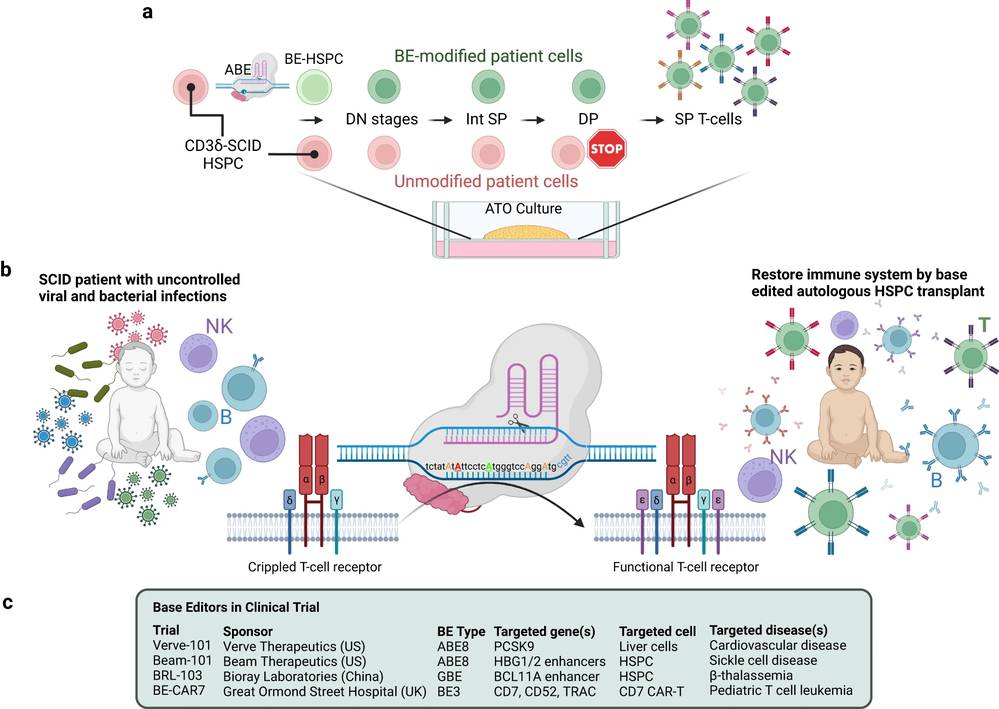 Figure 1. Base editor relieved blockade of T-cell development from CD3δ-SCID HSPC.1
SCID Is a Syndrome, Not a Single Gene Disease
- Genetic Heterogeneity Shapes SCID Gene Therapy Design
SCID can result from mutations in ADA, IL2RG, JAK3, RAG1, RAG2, DCLRE1C, IL7R, and other genes required for lymphocyte development, signaling, or antigen-receptor formation. This diversity matters because the therapeutic transgene, target cell population, expected immune recovery, and safety concerns differ across genotypes. ADA-SCID is caused by toxic purine metabolite accumulation due to adenosine deaminase deficiency. SCID-X1 results from IL2RG defects that disrupt common gamma-chain cytokine signaling and impair T-cell and NK-cell development. Other SCID forms may involve V(D)J recombination or DNA repair, creating different risks and correction challenges.
- Research Context Determines When Gene Therapy Is Most Relevant
Because untreated SCID can lead to severe infections early in life, speed and safety are both critical. Allogeneic hematopoietic stem cell transplantation remains a key curative option, especially when a matched sibling donor is available. Gene therapy is most relevant when suitable donors are unavailable, when autologous correction could avoid graft-versus-host disease, or when a specific genotype has strong biological precedent for HSPC correction. A research page on SCID gene therapy should therefore avoid treating all SCID forms as identical.
How Ex Vivo HSPC Gene Therapy Works in SCID
In ex vivo HSPC gene therapy, patient-derived CD34+ cells are collected, genetically modified outside the body, tested, and reinfused after conditioning. The therapeutic goal differs by SCID subtype: ADA-SCID programs aim to restore ADA expression and reduce toxic metabolite accumulation, while SCID-X1 programs focus on restoring IL2RG-dependent cytokine signaling to support T-cell and NK-cell recovery.
Key research considerations include:
- Stable gene addition: Lentiviral vectors are widely explored because they can support durable transgene expression in hematopoietic stem and progenitor cells.
- Subtype-specific design: ADA-SCID, SCID-X1, and recombination-related SCID forms require different transgenes, readouts, and safety questions.
- Editing-related risk: Genome-editing strategies must carefully assess off-target changes, DNA repair responses, cell fitness, and long-term repopulating potential.
- Core challenge: The program must correct enough true stem cells to rebuild immunity without compromising the cells needed for durable engraftment.
SCID Gene Therapy Strategy Comparison
| SCID context | Therapeutic concept | Key benefit | Main development concern |
|---|---|---|---|
| ADA-SCID | Add a functional ADA gene to autologous HSPCs | Can restore metabolic detoxification and lymphocyte development in corrected lineages | Long-term ADA expression, cell dose, conditioning, and access to manufacturing must be controlled |
| SCID-X1 | Add a functional IL2RG gene to autologous HSPCs | Can support T-cell and NK-cell reconstitution without an allogeneic donor | Expression regulation and insertional safety are central concerns |
| RAG or Artemis-related SCID | Correct recombination or DNA repair pathway defects | Could theoretically restore antigen-receptor development | Precise regulation and DNA damage sensitivity make development more complex |
| Genome-editing approaches | Repair or insert genes at selected genomic sites | May support more physiological regulation if efficient and safe | Editing efficiency, off-target effects, p53 response, and HSPC fitness need extensive assessment |
What Makes ADA-SCID and X-SCID Different?
- ADA-SCID is a metabolic disorder. ADA deficiency causes toxic metabolite buildup and damages lymphocyte survival.
- ADA-SCID gene therapy aims to restore ADA activity. The goal is corrected HSPCs that support long-term immune recovery.
- SCID-X1 is a signaling disorder. IL2RG mutations disrupt common gamma-chain signaling and impair T-cell and NK-cell development.
- SCID-X1 requires careful vector safety evaluation. Earlier retroviral studies showed insertional risk, so modern programs emphasize integration-site and clonal analysis.
- The endpoint is immune rebuilding. Key readouts include lymphocyte recovery, naive T cells, TCR diversity, NK-cell function, and infection protection.
Model Systems and Product Characterization for SCID Gene Therapy
SCID gene therapy research often begins with vector or editing design in cell models, then moves to CD34+ HSPC transduction or editing, lineage differentiation, and functional immune assays. Patient-derived cells provide genotype-relevant biology, but sample volume can be limited. Healthy donor CD34+ cells can help optimize vector production, transduction, culture conditions, and analytical assays before patient material is used. Disease modeling through gene editing can also be useful when primary cells are scarce.
Product characterization should include identity, purity, viability, potency, safety, and stability-oriented readouts. For integrating vectors, vector copy number and integration-site analysis are important. For editing approaches, on-target outcome distribution, off-target analysis, chromosomal structural changes, residual nuclease or guide RNA, and cell-fitness assays are central.
Current Challenges and Future Directions of SCID Gene Therapy
- Key Challenges for SCID Gene Therapy
The key challenges for SCID gene therapy include preserving HSPC potency during processing, achieving adequate immune reconstitution without excessive conditioning, preventing insertional or editing-related genotoxicity, and designing potency assays that predict durable clinical benefit. Access is also a scientific and manufacturing issue: cryopreserved cell products, decentralized collection, and robust release testing can influence whether rare-disease therapies can be delivered beyond a few specialized centers.
- Future Directions for SCID Gene Therapy
Future directions include safer conditioning, improved lentiviral designs, targeted gene insertion, base or prime editing for selected genotypes, better newborn-screening integration, and more standardized immune reconstitution endpoints. For researchers, the most useful approach is genotype-specific. ADA-SCID, SCID-X1, and recombination-defect SCID share a name, but they differ in molecular cause, therapeutic target, and evaluation logic.
Immune Reconstitution for SCID Studies
| Readout level | Examples | Why it matters |
|---|---|---|
| Molecular correction | Vector copy number, transgene expression, editing pattern | Confirms that the intended genetic event occurred in the product or progeny |
| T-cell recovery | Naive T-cell counts, TCR diversity, proliferation, thymic output markers | Central to SCID benefit because T-cell immunity is severely impaired |
| B-cell function | Immunoglobulin levels, vaccine response models, B-cell subsets | Some genotypes require B-cell recovery or supportive therapy assessment |
| NK-cell recovery | NK-cell number and cytotoxic activity | Particularly relevant to IL2RG/JAK3-related disease biology |
| Safety and product quality | Sterility, viability, RCL testing, integration site analysis, clonal monitoring | Defines risk controls for integrating vector or edited HSPC products |
Design Decisions Before Starting a SCID Gene Therapy Study
| Decision | Recommended reasoning | Potential consequence |
|---|---|---|
| Genotype selection | Define the causal gene and immune phenotype before vector design | A generic immune-restoration approach may miss genotype-specific biology |
| Transgene expression control | Match expression level and lineage context to disease mechanism | Too little expression may fail; poorly regulated expression may create risk |
| Conditioning model | Balance marrow niche creation against toxicity, especially in infants | Under-conditioning may reduce engraftment; over-conditioning increases burden |
| Follow-up duration | Plan for immune recovery, durability, and clonal behavior over time | Short assays may miss late immune maturation or delayed safety signals |
Practical Research Planning Notes
- Build a genotype-to-readout map first. ADA-SCID should link ADA expression with detoxification and lymphocyte survival.
- Define SCID-X1 readouts separately. IL2RG restoration should be connected with cytokine signaling, T-cell development, and NK-cell recovery.
- Use models for rare SCID genotypes. Some subtypes may first require a reliable cellular model of the immune-development block.
- Do not rely only on early expression. Short-term transgene expression is useful, but it does not prove immune reconstitution.
- Plan layered assays. Useful readouts include colony formation, lymphoid differentiation, TCR diversity, cytokine response, and clonal safety.
- Clarify the study objective. Proof-of-mechanism, vector selection, assay qualification, and translational packages require different levels of testing.
- Balance samples and depth. Final design should consider sample limits, immune readouts, manufacturing conditions, and long-term safety analytics.
Overview of What Creative Biolabs Can Provide
Creative Biolabs can support SCID-focused research by matching genotype-specific vector design, HSPC workflow development, gene-editing construction, and immune or vector analytics to the scientific question. The selected services below are all from the GT Excel Services branch and directly relate to ADA-SCID, X-SCID, HSPC correction, or vector safety.
| Research Need | Related Creative Biolabs Support | How It Connects to the Current Resource Topic |
|---|---|---|
| ADA-SCID HSPC gene addition | Lentiviral Vector Development for ADA-SCID | Supports ADA-focused lentiviral strategies for restoring enzyme expression in hematopoietic lineages. |
| X-linked SCID gene-transfer research | Lentiviral Vector Development for X-SCID | Connects IL2RG restoration concepts with ex vivo HSPC vector development. |
| General HSPC gene therapy workflow | Lentiviral Vector Development for Hematopoietic Stem Cell-based Gene Therapy | Supports CD34+ cell transduction, stemness preservation, and HSPC-centered assay planning. |
| Gene-editing model or repair concepts | Lentiviral Vector Design for Gene Editing | Relevant when SCID studies require vector-assisted editing, reporter systems, or editing-tool delivery design. |
| Broader CRISPR strategy support | CRISPR assisted Gene Editing Solutions | Supports guide design, editing workflow concepts, and genotype-specific model construction for SCID research. |
| Disease-model construction | Disease Modeling related Gene Editing Service | Useful for building SCID-relevant cellular models when patient material is limited or mechanistic questions need controlled systems. |
| LV production for assay development | Custom Lentiviral Vector Production Service | Provides lentiviral material for transduction optimization and immune-cell assay development. |
| Vector safety characterization | Safety Determination of Lentiviral Vector Service | Addresses replication-competent lentivirus and other safety concerns relevant to integrating vector studies. |
For projects that require disease-specific design, custom assay planning, or linked vector analytics, contact us today to discuss a fit-for-purpose research plan with Creative Biolabs.
Frequently Asked Questions
Q: What does SCID mean in gene therapy research?
A: SCID refers to a group of severe inherited immune disorders with profound T-cell defects. Gene therapy research usually focuses on correcting autologous HSPCs so they can generate functional immune cells.
Q: Are ADA-SCID and X-SCID treated with the same gene therapy design?
A: No. ADA-SCID strategies restore ADA enzyme expression, while X-SCID strategies restore IL2RG function. The transgene, expression requirements, immune readouts, and safety considerations differ.
Q: Why are lentiviral vectors often used for SCID HSPC gene therapy?
A: Lentiviral vectors can stably modify CD34+ HSPCs ex vivo and support long-term expression in hematopoietic progeny. Their design and safety profile must still be carefully tested.
Q: What readouts show immune reconstitution after SCID gene therapy?
A: Important readouts include T-cell counts, naive T-cell recovery, TCR diversity, proliferation, B-cell function, NK-cell recovery where relevant, infection-related outcomes, and long-term clonal monitoring.
Q: Can genome editing be used for SCID?
A: Genome editing is being investigated for selected SCID contexts, but it requires careful evaluation of editing efficiency, off-target effects, DNA damage response, and whether corrected HSPCs retain long-term function.
Reference
- Ha T C, Morgan M, Schambach A. Base editing: a novel cure for severe combined immunodeficiency. Signal Transduction and Targeted Therapy, 2023, 8(1): 354. https://doi.org/10.1038/s41392-023-01586-2. Distributed under Open Access license CC BY 4.0, without modification.
