
Gene Therapy for Sickle Cell Disease
Introduction
Sickle cell disease (SCD) is a monogenic red blood cell disorder in which a single HBB variant produces hemoglobin S and drives polymerization, hemolysis, vaso-occlusion, inflammation, and progressive organ injury. Gene therapy for SCD is therefore not only a delivery challenge; it is a hematopoietic stem and progenitor cell (HSPC) engineering problem that must convert a molecular correction into durable erythroid output. This Resource page explains the biological rationale, ex vivo HSPC strategies, genome-editing directions, evaluation models, and practical readouts used to study SCD gene therapy. It also naturally connects readers to lentiviral vector-mediated HSPC gene addition and related research support without replacing scientific discussion with service advertising.
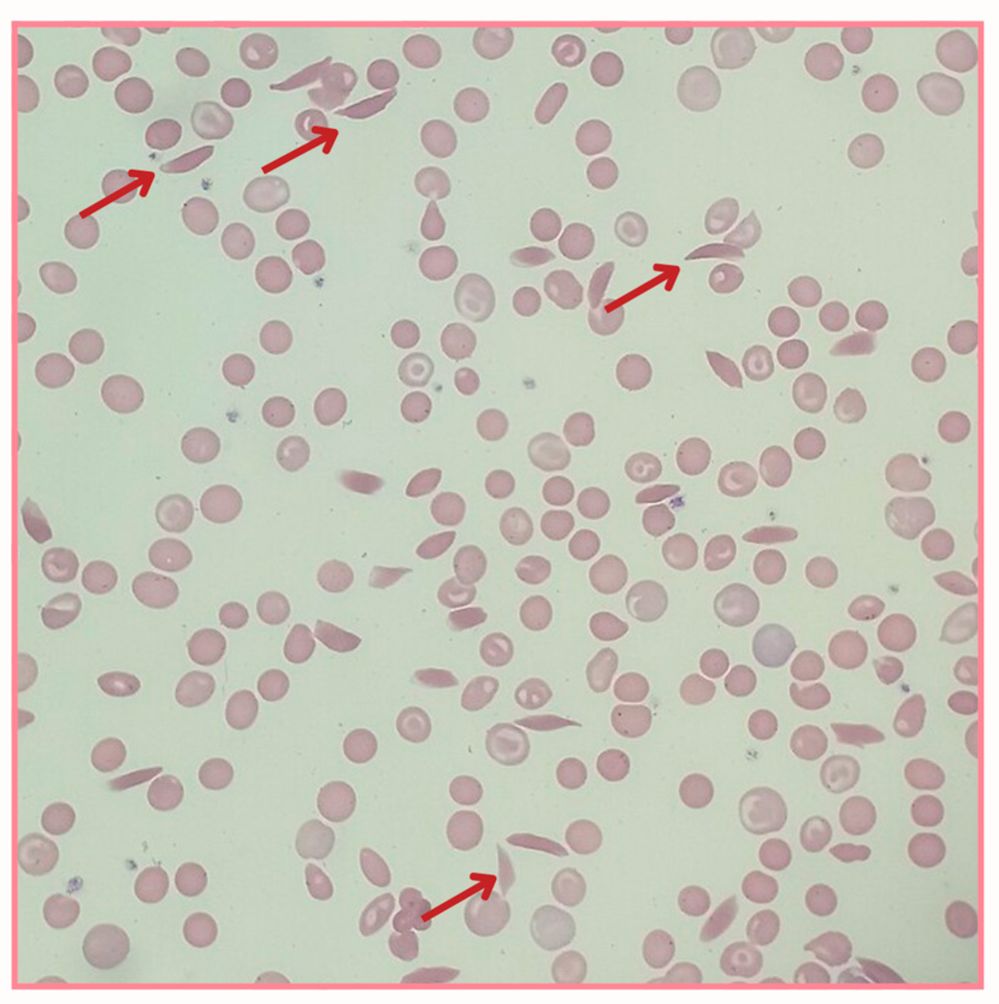 Figure 1. Blood smear from a patient with SCD.1
Why Sickle Cell Disease Is a Strong Gene Therapy Target
- SCD Overview
SCD has long been considered suitable for genetic intervention because the causal lesion is well defined, the affected lineage derives from transplantable HSPCs, and even partial biologic correction can produce meaningful changes in red blood cell behavior. The therapeutic aim is not necessarily to repair every hematopoietic cell. Instead, a sufficient fraction of long-term repopulating HSPCs must generate erythroid progeny that express anti-sickling hemoglobin or retain high fetal hemoglobin (HbF). This biology creates a measurable bridge from vector copy number, editing efficiency, or HbF induction to protein expression and cellular phenotype.
- Current State of Research
The clinical landscape has also changed. Autologous cell-based approaches using CRISPR/Cas9-mediated HbF induction and lentiviral addition of an anti-sickling beta-globin have received regulatory approvals in the United States for eligible patients with recurrent vaso-occlusive disease. For research teams, this does not mean that SCD gene therapy is a solved problem. Conditioning toxicity, manufacturing complexity, long-term monitoring, equitable access, and applicability to broader patient groups remain active areas of investigation. The research focus is moving toward safer conditioning, improved HSPC collection and transduction, more predictable editing, and assays that can forecast durable benefit before expensive translational studies.
Disease Biology Behind Therapeutic Design for SCD
The sickle mutation alters hemoglobin behavior under low-oxygen conditions, causing hemoglobin S polymerization, red blood cell distortion, reduced deformability, membrane damage, and vascular adhesion that together drive vaso-occlusion and inflammation. Therefore, SCD gene therapy programs should evaluate not only HBB correction or modification efficiency, but also whether engineered erythroid cells resist sickling stress, preserve membrane integrity, and reduce adhesive or inflammatory phenotypes. Because hematopoietic stem and progenitor cell processing involves mobilization, CD34+ enrichment, ex vivo culture, vector exposure or editing, conditioning, and reinfusion, successful development also depends on maintaining stemness, engraftment potential, potency, and safety throughout manufacturing.
Main Gene Therapy Strategies Being Explored
Two broad therapeutic concepts dominate SCD gene therapy research: adding a functional anti-sickling globin program and reactivating fetal hemoglobin. Lentiviral gene addition introduces a modified beta-globin expression cassette into autologous HSPCs. The cassette is usually designed with erythroid regulatory elements that drive expression after differentiation. Genome-editing approaches more often target regulatory regions, such as erythroid enhancers controlling BCL11A, to release endogenous gamma-globin expression and increase HbF. Each approach has a different risk profile, analytical package, and development path.
Other investigational directions include precise correction of the HBB mutation, base or prime editing, non-viral delivery of editing components, and in vivo HSPC targeting. These strategies remain technically demanding because hematopoietic stem cells are sensitive to DNA damage responses and because off-target or structural genome changes must be carefully excluded. In practical research planning, strategy selection depends on the available cells, intended endpoint, assay depth, risk tolerance, and whether the program is designed for mechanistic discovery or translational development.
Comparing SCD Gene Therapy Platforms
| Strategy | Core mechanism | Key research advantage | Main limitation to evaluate |
|---|---|---|---|
| Lentiviral beta-globin addition | Stable integration of an anti-sickling globin cassette into autologous HSPCs | Directly supplies an engineered globin program and can be evaluated through vector copy number and globin expression | Insertional profile, transduction efficiency, payload design, and product consistency require careful testing |
| CRISPR/Cas9 HbF induction | Disruption of erythroid regulatory control, often involving BCL11A enhancer regions, to increase gamma-globin | Uses endogenous fetal hemoglobin regulation and avoids adding a large globin cassette | Editing distribution, off-target events, chromosomal changes, and allelic heterogeneity must be characterized |
| Precise HBB correction | Repair or replacement of the disease-causing HBB sequence in HSPCs | Conceptually restores native beta-globin regulation | Current efficiencies, donor-template delivery, and DNA repair outcomes can limit translational feasibility |
| Non-viral editing delivery | Transient delivery of editing components by electroporation, LNP, or related platforms | May reduce persistent nuclease exposure and simplify some vector-related concerns | Efficient, gentle delivery to true long-term HSPCs remains a central challenge |
Advantages, Limitations, and Future Directions of SCD Gene Therapy
1. Advantages of SCD Gene Therapy
- Addresses the root hematopoietic defect rather than only managing downstream complications
- Autologous approaches avoid graft-versus-host disease (GVHD)
- Eliminates donor matching constraints associated with allogeneic transplantation
2. Limitations of SCD Gene Therapy
- Most current approaches require myeloablative conditioning
- Specialized manufacturing facilities and expertise are needed
- Long-term safety monitoring is essential
- Robust quality control is required throughout the process
- Small process differences can create major downstream consequences
3. Future Directions of SCD Gene Therapy
- Reduced-toxicity conditioning regimens
- Improved HSPC editing efficiency
- In vivo delivery concepts
- More predictable and standardized potency assays
- Better methods to measure clonal behavior after genetic modification
4. Key Takeaway for Research Teams
- A useful resource connects disease mechanism to practical experimental choices
- SCD gene therapy is best understood as a continuum from molecular design to:
- Cell processing
- Erythroid function
- Safety analytics
- Clinical translation
Study Design Considerations for SCD HSPC Programs
| Design question | Why it matters | Typical evaluation |
|---|---|---|
| What CD34+ source and mobilization approach will be used? | Starting material quality influences transduction, editing, expansion, and engraftment potential | Cell viability, CD34 purity, primitive marker retention, colony-forming capacity |
| How much genetic modification is sufficient? | SCD benefit depends on modified erythroid output rather than bulk editing alone | Vector copy number, allelic editing, HbF or anti-sickling globin expression after erythroid differentiation |
| Does the process preserve stemness? | Overmanipulation can produce impressive short-term expression but weak long-term repopulation | Phenotype, transcriptomics, colony assays, xenograft or surrogate engraftment models |
| How will safety be de-risked? | Genome-integrating and editing approaches require evidence of controlled risk | Integration site analysis, off-target profiling, RCL/RCR assays, genotoxicity-oriented readouts |
Key Readouts for Sickle Cell Gene Therapy Research
| Readout category | Examples | Interpretation |
|---|---|---|
| Molecular modification | VCN, editing percentage, on-target indel spectrum, globin cassette integrity | Shows whether the engineering event occurred as intended |
| Erythroid expression | HbF percentage, gamma-globin, beta-like globin ratios, HbA-like transgene expression | Connects genotype modification to hemoglobin-level activity |
| Cellular phenotype | Sickling under hypoxia, deformability, hemolysis markers, RBC adhesion assays | Demonstrates whether modified cells resist SCD-relevant stress |
| Product quality | Viability, sterility, mycoplasma, purity, potency, residual nuclease or vector components | Supports comparability and translational readiness |
Practical Research Planning Notes
A well-designed SCD study should define the decision it needs to make before assays are selected. If the question is whether a globin cassette works, erythroid differentiation and hemoglobin analysis may be central. If the question is whether an editing condition is suitable for further development, stemness, off-target profiling, chromosomal integrity, and product consistency become equally important. Keeping these questions separate prevents early experiments from producing attractive but non-actionable data.
Overview of What Creative Biolabs Can Provide
Creative Biolabs can support SCD-related gene therapy research by connecting HSPC-oriented vector design, lentiviral production, editing-related construction, and analytical testing into a fit-for-purpose study plan. The most relevant services from the GT promotion Excel are selected below because they directly connect to SCD mechanisms, ex vivo cell processing, or product characterization.
| Research Need | Related Creative Biolabs Support | How It Connects to the Current Resource Topic |
|---|---|---|
| HSPC gene addition for anti-sickling globin expression | Lentiviral Vector Development for Sickle Cell Disease | Supports disease-specific lentiviral vector design and evaluation for SCD-relevant beta-globin expression strategies. |
| Autologous HSPC platform development | Lentiviral Vector Development for Hematopoietic Stem Cell-based Gene Therapy | Connects vector engineering with CD34+ cell handling, transduction, and stemness-preserving workflow design. |
| Vector optimization before translational studies | Lentiviral Vector Optimization Service | Helps compare promoters, regulatory elements, pseudotyping, and process parameters that influence expression and yield. |
| Research-grade or process-development LV supply | Custom Lentiviral Vector Production Service | Provides lentiviral material for in vitro HSPC studies, erythroid differentiation assays, and method optimization. |
| Editing-oriented alternative strategy | CRISPR assisted Gene Editing Solutions | Supports design considerations for HbF induction, HBB correction concepts, or editing model construction. |
| Vector and product characterization | Viral Vector Analysis | Connects SCD programs to identity, titer, safety, purity, and potency-oriented analytical packages. |
| Lentiviral safety assessment | Safety Determination of Lentiviral Vector Service | Addresses replication-competent lentivirus and related safety concerns relevant to integrating vectors. |
For projects that require disease-specific design, custom assay planning, or linked vector analytics, contact us today to discuss a fit-for-purpose research plan with Creative Biolabs.
Frequently Asked Questions
Q: What is the main goal of gene therapy for sickle cell disease?
A: The goal is to produce enough red blood cells that either express anti-sickling beta-like hemoglobin or retain high fetal hemoglobin so that hemoglobin S polymerization, sickling, and vaso-occlusive biology are reduced.
Q: Why are hematopoietic stem cells central to SCD gene therapy?
A: All mature red blood cells arise from HSPCs. If long-term HSPCs are modified and engraft successfully, their erythroid progeny can continuously generate corrected or functionally compensated red blood cells.
Q: How does lentiviral gene addition differ from CRISPR-based HbF induction?
A: Lentiviral gene addition supplies an engineered globin cassette, while CRISPR-based HbF induction usually edits a regulatory element to increase endogenous gamma-globin expression. They require different potency, safety, and characterization assays.
Q: Which assays are most informative during early SCD gene therapy research?
A: Useful assays include vector copy number or editing analysis, erythroid differentiation, HbF or transgene expression, sickling resistance, cell viability, colony-forming potential, and safety testing for vector or editing-related risks.
Q: Is gene therapy for SCD considered complete after genetic modification is shown?
A: No. Genetic modification is only one layer. Researchers also need evidence that modified cells preserve stemness, engraft potential, produce functional erythroid output, and do not introduce unacceptable safety risks.
Reference
- Dorneles J, de Menezes Mayer A, Chies J A B. Sickle cell anemia and inflammation: a review of stones and landmarks paving the road in the last 25 years. Hematology Reports, 2025, 17(1): 2. https://doi.org/10.3390/hematolrep17010002. Distributed under Open Access license CC BY 4.0, without modification.
