Glycosylation in Disease Research
Introduction
Glycosylation—the enzymatic modification of proteins and lipids with glycans—is a ubiquitous and finely tuned biological process. It governs protein folding, receptor signaling, immune surveillance, and intercellular communication. Glycosylation affects over 50% of human proteins. These carbohydrate additions:
-
Influence protein folding and stability.
-
Regulate receptor-ligand interactions.
-
Mediate immune cell recognition.
-
Control serum protein half-life.
Aberrant glycosylation patterns have been implicated in a wide range of human diseases, including cancer, autoimmune syndromes, and congenital metabolic disorders. At Creative Biolabs, we recognize glycosylation as both a hallmark and a driver of pathology. To support disease-focused research, we provide a full spectrum of glycosylation analysis services, enabling scientists to precisely map disease-associated glycan alterations across protein, lipid, and nucleic acid targets.
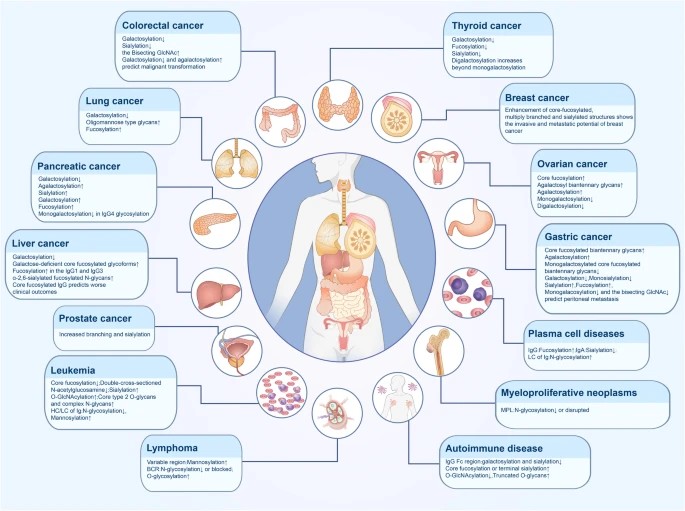 Fig.1 Glycosylation changes in human disease.1
Aberrant Glycosylation as a Hallmark of Disease
Glycosylation is highly sensitive to cellular state. In disease, especially cancer and inflammatory disorders, cells reprogram their glycosylation machinery—intentionally or as a consequence of mutation. This reprogramming leads to aberrant glycoforms that not only mark disease but actively modulate its progression.
|
Aberration Type
|
Example
|
Impact
|
|
Truncated O-glycans
|
Tn and sTn antigens
|
Immune evasion, enhanced metastasis
|
|
Hypersialylation
|
α2,6-sialylated N-glycans
|
Suppression of NK cell cytotoxicity
|
|
Increased branching
|
β1,6-branched N-glycans
|
Enhanced integrin signaling and migration
|
|
Altered fucosylation
|
Core fucosylation loss
|
Modulates growth factor signaling
|
Congenital Disorders of Glycosylation (CDGs)
Congenital Disorders of Glycosylation (CDGs), particularly CDG-Ia, represent a group of complex metabolic diseases that can affect multiple systems in the body. CDGs are classified into two broad categories based on the type of glycosylation affected: N-glycosylation defects and O-glycosylation defects. There are over 20 types of CDGs, each caused by defects in specific enzymes involved in glycosylation. At Creative Biolabs, we are committed to advancing research for rare genetic conditions like CDGs. With our extensive expertise in glycosylation, we offer a comprehensive range of glycosylation analysis services to aid in the understanding of CDGs.
|
CDG Type
|
Affected Pathway
|
Gene Involved
|
Main Clinical Symptoms
|
|
PMM2-CDG
|
N-glycosylation
|
PMM2
|
Developmental delay, ataxia, hepatomegaly
|
|
MPI-CDG
|
N-glycosylation
|
MPI
|
Hypoglycemia, dysmorphic features, liver dysfunction
|
|
ALG1-CDG
|
N-glycosylation
|
ALG1
|
Intellectual disability, seizures, liver failure
|
|
Cosmc-CDG
|
O-glycosylation
|
COSMC
|
Severe developmental delay, dysphagia, immunodeficiency
|
Analytical Techniques for Detecting Abnormal Glycosylation
Modern tools enable high-throughput and highly specific glycosylation analysis. Each technique offers distinct strengths for profiling abnormal glycoforms. Creative Biolabs offers integrated services for glycan release, labeling, derivatization, and downstream MS/LC profiling—supporting projects from cancer biology to rare disease diagnostics.
|
Method
|
Application
|
Sensitivity
|
Notes
|
|
MALDI-TOF MS
|
Released glycan profiling
|
High
|
Rapid, semi-quantitative
|
|
LC-ESI-MS/MS
|
Glycopeptide mapping
|
Very high
|
Structural and site-specific analysis
|
|
Lectin microarrays
|
Glycan pattern detection
|
Moderate
|
High-throughput and comparative
|
|
HPAEC-PAD
|
Monosaccharide composition analysis
|
High
|
Quantitative, limited structural info
|
|
Capillary electrophoresis
|
Sialylation and isomeric separation
|
High
|
Excellent resolution for glyco-variants
|
Decoding Molecular Drivers of Aberration with Custom Solutions
Dysregulated pathways reshape the cellular glycome, resulting in aberrant glycan patterns that are often consistent within a disease subtype—offering diagnostic precision and therapeutic windows.
|
Multiple factors contribute to glycosylation abnormalities:
|
Get your custom solutions
|
|
Altered expression of glycosyltransferases and glycosidases
|
-
Glycomics/Glycoproteomics Analysis: We use advanced mass spectrometry, liquid chromatography, and lectin microarray techniques to provide a detailed qualitative and quantitative look at glycan structures and distributions.
-
Expression & Activity Assays: Our offerings include qPCR, Western blot, and enzymatic activity assays, ensuring you can precisely track cancer-specific expression changes and enzyme functionality.
|
|
Mutations in nucleotide-sugar transporters or chaperones
|
-
Gene Editing Construction: With our expertise in gene-editing technologies, we can create targeted mutation models for nucleotide-sugar transporters and chaperones, helping you directly assess their impact on glycosylation.
-
Cell Line Engineering: We provide robust knockout/knock-in cell line construction and validation services to support your functional studies and glycosylation phenotype evaluations.
|
|
Hypoxia-induced stress and metabolic rewiring in tumors
|
-
Custom Glyco Analytics: Our team leverages both targeted and high-throughput glycomics techniques to dissect and quantify the changes in glycan assembly under hypoxic stress, ensuring you have a clear view of the underlying glycosylation dynamics.
|
|
Epigenetic changes influencing glycosylation-related gene networks
|
-
Integrated Glyco Synthesis Strategy: We'll help you construct detailed maps that illustrate how epigenetic modifications impact glyco-related gene expression and glycan synthesis, guiding the development of strategies to modulate glycosylation for functional studies.
|
Examples of Glycan-Based Biomarkers
Glycosylation biomarkers offer sensitive and specific tools for early detection and disease monitoring. Creative Biolabs offers glycoprofiling services tailored for biomarker discovery, supporting glycomic and glycoproteomic workflows using high-resolution mass spectrometry and glycan array platforms.
-
Liver cancer is associated with AFP-L3, a core-fucosylated form of AFP.
-
Prostate cancer can be identified through PSA glycoforms.
-
Rheumatoid arthritis is linked to the IgG Fc galactosylation profile.
-
COVID-19 severity is marked by hyper-sialylated IgG variants.
Glycosylation Analysis Services at Creative Biolabs
To support researchers exploring glycosylation in disease mechanisms, diagnostics, and therapeutic development, Creative Biolabs provides a comprehensive suite of customized glycomics solutions. Our platform integrates advanced analytical tools to deliver accurate, reproducible, and biologically relevant glycoprofiling data, enabling enable clients to investigate disease-associated glycan alterations with unmatched specificity and throughput, supporting biomarker validation, immune-oncology development, and therapeutic glycoprotein design.
Aberrant glycosylation is more than a molecular signature—it actively shapes disease trajectory by altering signaling cascades, immune interactions, and cell fate. From uncovering cancer biomarkers to characterizing glycosylation disorders, high-resolution glycan analysis is essential for biomedical discovery and therapeutic innovation. At Creative Biolabs, our advanced glycomics platform integrates state-of-the-art LC-MS, lectin profiling, and enzymatic assays to deliver actionable data with high specificity and throughput. Whether you're validating a biomarker, optimizing a therapeutic antibody, or exploring glycoRNA biology, our customized glycosylation profiling solutions are designed to accelerate translational research with precision and reliability.
Reference
-
He, Mengyuan, Xiangxiang Zhou, and Xin Wang. "Glycosylation: mechanisms, biological functions and clinical implications." Signal Transduction and Targeted Therapy 9.1 (2024): 194. Distributed under Open Access license CC BY 4.0, without modification. https://doi.org/10.1038/s41392-024-01886-1
Related Services
Resources
For Research Use Only.